Loading...
Charles IV vs Mansa Musa
Mansa Musa leads by 12.0 pts · 2 figures compared
…

Charles IV
Emperor · Medieval
59.7Total
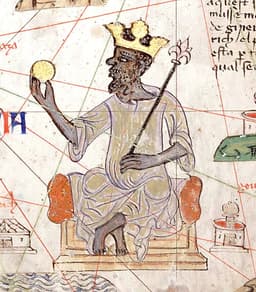
Mansa Musa
Emperor · Medieval
71.7Total
Basic Information
Born
1316
1280
Died
1378
1337
Era
Medieval
Medieval
Nationality
Holy Roman Empire
Mali Empire
Occupation
Emperor
Emperor
Civilization
Western
Other
Score Comparison
Military (10%)
50.0
63.3
Political (20%)
78.0
78.0
Influence (20%)
55.0
75.0
Legacy (20%)
52.0
70.0
Leadership (15%)
78.0
72.0
Strategy (15%)
45.0
66.3
TOTAL
59.7
71.7
Charles IV — Complete Timeline
1344 AD
Made Prague the Imperial CapitalPolitical Action◆ Major
Charles IV, as King of Bohemia and Holy Roman Emperor, established Prague as the permanent imperial capital. He initiated extensive building projects including the Charles Bridge and St. Vitus Cathedral, transforming Prague into a major European cultural and political center.
Urban DevelopmentImperial CapitalPrague
Impact: regionalconstructive
1348 AD
Founded Charles UniversityCultural◆ Major
Charles IV founded the University of Prague, later named Charles University, as the first university in Central Europe. It became a leading center for learning and attracted scholars from across the continent, strengthening Prague's intellectual reputation.
EducationUniversityCultural Development
Impact: regionalconstructive
1356 AD
Issued the Golden Bull of 1356Reform
Charles IV issued the Golden Bull, a constitutional document that regulated the election of the Holy Roman Emperor by seven prince-electors. This law stabilized imperial succession and defined the electoral process for centuries, reducing papal influence.
Constitutional LawImperial ReformElectoral System
Impact: regionalconstructive
1373 AD
Acquired BrandenburgPolitical Action
Charles IV secured the Margraviate of Brandenburg for the Luxembourg dynasty through a treaty with the Wittelsbachs. This territorial acquisition expanded his family's holdings in northern Germany and strengthened imperial authority.
Territorial ExpansionLuxembourg DynastyBrandenburg
Impact: regional
Mansa Musa — Complete Timeline
1324 AD
Pilgrimage to Mecca (Hajj)Cultural◆ Major
Mansa Musa embarked on a pilgrimage to Mecca, traveling with a large caravan and distributing vast amounts of gold in Cairo, Medina, and Mecca. His spending caused significant inflation in Egypt and the broader region, lasting for over a decade, and introduced the wealth of Mali to the Islamic world.
PilgrimageEconomic ImpactIslamic World
Impact: regional
1325 AD
Annexation of the Songhai Empire's western provincesWar◆ Major
Mansa Musa led a military campaign that annexed the western provinces of the Songhai Empire, including the city of Gao, into the Mali Empire. This expansion extended Mali's control over key trans-Saharan trade routes and increased its access to gold and salt resources.
ConquestTerritorial ExpansionTrade
Impact: regional
1327 AD
Construction of the Djinguereber MosqueCultural◆ Major
Mansa Musa commissioned the construction of the Djinguereber Mosque in Timbuktu, designed by the Andalusian architect Abu Ishaq al-Sahili. The mosque became a major center of Islamic learning and a symbol of Mali's wealth and cultural patronage, solidifying Timbuktu's status as a scholarly hub.
ArchitectureIslamic ScholarshipTimbuktu
Impact: regionalconstructive
Expert Analysis
Origins
Charles IV was born in 1316 to John of Luxembourg, King of Bohemia, and Elizabeth of Bohemia. He was raised in the French court and educated in Paris, deeply influenced by French culture and governance. His early exposure to political maneuvering shaped his pragmatic approach. Mansa Musa, born around 1280, was a grandson of Sundiata Keita, the founder of the Mali Empire. He ascended to the throne after his predecessor, Mansa Abu Bakr II, reportedly embarked on an Atlantic expedition. Musa inherited a wealthy empire rich in gold and salt mines, which he would exploit to legendary status.
Rise to Power
Charles IV's rise was marked by careful diplomacy and strategic marriages. Elected King of Germany in 1346, he faced opposition from the Wittelsbach and Habsburg families. His turning point came in 1355 when he was crowned Holy Roman Emperor, after securing the support of Pope Innocent VI. He consolidated power by issuing the Golden Bull of 1356, which regulated imperial elections and reduced papal influence, earning him a political score of 78.0. Mansa Musa's rise was more direct: he became emperor around 1312, likely through a smooth succession. His power was solidified by his immense wealth and the loyalty of his generals. His military score of 63.3 reflects his successful annexation of the Songhai Empire's western provinces, including Gao, around 1325.
Leadership & Governance
Charles IV governed through legal codification and centralization. The Golden Bull established a permanent electoral college of seven prince-electors, stabilizing the empire and reducing conflicts. He made Prague the imperial capital and founded Charles University in 1348, the first university in Central Europe, which became a cultural hub. His leadership score of 78.0 reflects his effective administration, though his military ventures were limited (military score 50.0). Mansa Musa's governance was characterized by his patronage of Islam and architecture. He built the Djinguereber Mosque in Timbuktu and promoted the city as a center of learning. His leadership score of 72.0 indicates strong control, but his empire's size made direct governance challenging. His political score 78.0 matches Charles's, but his influence score of 75.0 exceeds Charles's 55.0 due to his gold's global impact.
Triumph & Tragedy
Charles IV's greatest triumph was the Golden Bull, which provided a stable framework for the Holy Roman Empire until its dissolution. He also expanded Luxembourg territories by acquiring Brandenburg in 1373. His tragedy was his failure to secure the imperial throne for his son Sigismund without conflict, leading to later struggles. Mansa Musa's triumph was his 1324 pilgrimage to Mecca, which demonstrated Mali's wealth and spread its fame across the Islamic world. He distributed so much gold in Cairo that it caused inflation lasting over a decade. His tragedy was that his expansionist policies may have overstretched the empire; after his death, Mali declined. His total score of 71.7 exceeds Charles's 59.7, driven by higher influence and legacy.
Character & Destiny
Charles IV was pragmatic, cautious, and diplomatic. He avoided costly wars and focused on legal and administrative reforms. His character shaped a stable but less expansionist empire. Mansa Musa was ambitious, devout, and ostentatious. His pilgrimage highlighted his piety and wealth, but his spending may have destabilized local economies. Historians note that his gold distribution was both a display of power and a strategic error. Charles's strategy score of 45.0 reflects his defensive posture; Mansa's 66.3 indicates more aggressive expansion.
Legacy
Charles IV's legacy endures through the Golden Bull, which remained a constitutional law until 1806, and Charles University, still a leading institution. His architectural projects, like Prague's Charles Bridge and St. Vitus Cathedral, define the city. Mansa Musa's legacy is his wealth; he is often cited as the richest person in history. The Djinguereber Mosque and Sankore University in Timbuktu became symbols of Islamic scholarship. However, his empire's decline began within a century of his death. In terms of lasting institutional impact, Charles scores higher in legacy (52.0) than Mansa (70.0) if measured by endurance, but Mansa's global fame is unparalleled.
Conclusion
While Charles IV achieved significant political and cultural feats that shaped Central Europe for centuries, Mansa Musa had a greater overall impact due to his unmatched wealth and influence across continents. Charles's political reforms were crucial but regionally confined, whereas Mansa Musa's pilgrimage integrated West Africa into global trade and Islamic culture. With a total score of 71.7 against 59.7, Mansa Musa emerges as the more influential figure in terms of scale and lasting global recognition. His ability to project power through wealth and religion changed perceptions of Africa and solidified Mali's place in world history.
Rankings
🥇
Mansa MusaLeader
Mil: 63.3Pol: 78.0Inf: 75.0
71.7
🥈
Charles IV
Mil: 50.0Pol: 78.0Inf: 55.0
59.7
+12.0 behind
How This Comparison Works
Algorithm
Each figure is scored on 6 dimensions (0—100 scale) based on structured historical data: Military (10%), Political (20%), Influence (20%), Legacy (20%), Leadership (15%), Strategy (15%). The weighted total produces the final ranking.
Data Sources
Scores are computed from structured sub-indicators in the database. Scale factors adjust for era (Ancient ×0.85, Modern ×1.0) and civilization size (Eastern ×1.05, Other ×0.80) to account for differences in population and military scale.
Maximum 3 Figures
Comparisons are limited to 2—3 figures to ensure readability and statistical meaningfulness.
Error Margins
±5 points per dimension — Sub-scores are derived from historical records with inherent uncertainty. Two figures within 5 points on a dimension should be considered roughly equivalent in that area.
Total Score Accuracy
±3 points overall — The weighted combination of 6 dimensions produces a total score with approximately ±3 points of uncertainty. Differences of less than 3 points are not statistically significant— the figures are effectively tied.
Known Limitations
- Historical records are incomplete and uneven across civilizations
- Figures from oral-tradition societies may be underrepresented
- Occupation labels can misclassify multi-role figures
- Scores measure capability and impact, not moral character
- Quantitative scoring is a comparison tool, not absolute truth
Capability Radar
Military (10%) — Battles & Warfare
Battles
25
60
Win Rate
20
65
Expansion
15
75
Political (20%) — Governance & Reform
Reform
80
70
Diplomacy
85
80
Economy
80
95
Influence (20%) — Cultural & Global Reach
Cultural
75
85
Global
55
85
Legacy (20%) — Historical Impact
Historical
70
90
Longevity
65
80
Leadership (15%) — Power & Stability
Tenure
85
75
Stability
75
70
Strategy (15%) — Tactics & Innovation
Strategy
35
70
Tactics
30
55
Reform
20
50
Similar Comparisons
Comments & Discussion
No comments yet. Be the first to share your thoughts!