Loading...
Al-Adil I vs Mansa Musa
Mansa Musa leads by 13.7 pts · 2 figures compared
…
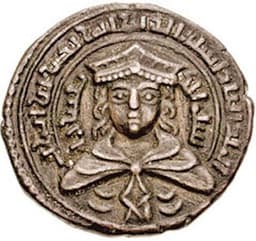
Al-Adil I
Emperor · Medieval
58.0Total
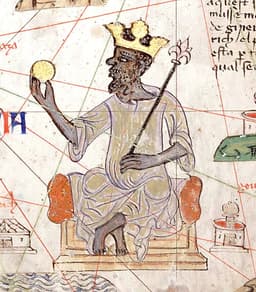
Mansa Musa
Emperor · Medieval
71.7Total
Basic Information
Born
1145
1280
Died
1218
1337
Era
Medieval
Medieval
Nationality
Ayyubid Dynasty
Mali Empire
Occupation
Emperor
Emperor
Civilization
Middle Eastern
Other
Score Comparison
Military (10%)
60.0
63.3
Political (20%)
62.7
78.0
Influence (20%)
55.7
75.0
Legacy (20%)
47.5
70.0
Leadership (15%)
68.0
72.0
Strategy (15%)
66.3
66.3
TOTAL
58.0
71.7
Al-Adil I — Complete Timeline
1135 AD
Siege of DamascusWar◆ Major
Imad ad-Din Zengi besieged Damascus, attempting to expand his control over Syria. The siege failed due to strong defenses and the intervention of the Burid dynasty, preventing Zengi from unifying Muslim Syria under his rule.
DamascusSiegeBurid
Impact: regional
1144 AD
Capture of EdessaWar
Imad ad-Din Zengi, atabeg of Mosul, besieged and captured the Crusader city of Edessa. This was the first major Crusader territory to fall to Muslim forces, triggering the Second Crusade and establishing Zengi as a leading Muslim commander.
CrusadesEdessaSecond Crusade
Impact: global
1146 AD
Assassination of Imad ad-Din ZengiPolitical Action◆ Major
Imad ad-Din Zengi was assassinated by a Frankish slave in his sleep while besieging the fortress of Qal'at Ja'bar. His death fragmented his territories, which were divided between his sons Nur ad-Din and Saif ad-Din, but his legacy continued through Nur ad-Din's later successes.
AssassinationNur ad-DinQal'at Ja'bar
Impact: regionaltragic
Mansa Musa — Complete Timeline
1324 AD
Pilgrimage to Mecca (Hajj)Cultural◆ Major
Mansa Musa embarked on a pilgrimage to Mecca, traveling with a large caravan and distributing vast amounts of gold in Cairo, Medina, and Mecca. His spending caused significant inflation in Egypt and the broader region, lasting for over a decade, and introduced the wealth of Mali to the Islamic world.
PilgrimageEconomic ImpactIslamic World
Impact: regional
1325 AD
Annexation of the Songhai Empire's western provincesWar◆ Major
Mansa Musa led a military campaign that annexed the western provinces of the Songhai Empire, including the city of Gao, into the Mali Empire. This expansion extended Mali's control over key trans-Saharan trade routes and increased its access to gold and salt resources.
ConquestTerritorial ExpansionTrade
Impact: regional
1327 AD
Construction of the Djinguereber MosqueCultural◆ Major
Mansa Musa commissioned the construction of the Djinguereber Mosque in Timbuktu, designed by the Andalusian architect Abu Ishaq al-Sahili. The mosque became a major center of Islamic learning and a symbol of Mali's wealth and cultural patronage, solidifying Timbuktu's status as a scholarly hub.
ArchitectureIslamic ScholarshipTimbuktu
Impact: regionalconstructive
Expert Analysis
Origins
Al-Adil I, born in 1145, was the son of Najm ad-Din Ayyub, a Kurdish mercenary commander. He grew up in the service of his brother Saladin, learning statecraft and military command in the Ayyubid campaigns against the Crusaders. His early career involved governing Egypt and Syria, where he developed administrative skills. In contrast, Mansa Musa, born around 1280, was the grandson of Sundiata Keita, founder of the Mali Empire. He inherited a wealthy and stable state, with access to the trans-Saharan gold trade. His early education focused on Islamic scholarship and governance, preparing him for rule.
Rise to Power
Al-Adil I rose as a key lieutenant to Saladin, commanding armies at battles like Hattin in 1187. After Saladin's death in 1193, he maneuvered among rivals, eventually seizing the sultanate in 1200 by outmaneuvering his nephews. His political score of 62.7 reflects his ability to consolidate power through alliances and military force. Mansa Musa became mansa around 1312, likely through a system of royal succession. His rise was smooth, with no major internal conflicts, as he already controlled the empire's wealth. His political score of 78.0 indicates stronger institutional stability.
Leadership & Governance
Al-Adil I ruled a decentralized Ayyubid confederation, relying on family members as governors. He maintained peace with Crusader states through treaties, such as the 1198 truce with the Kingdom of Jerusalem. His leadership score of 68.0 shows competence but limited innovation. Mansa Musa, with a leadership score of 72.0, centralized the Mali Empire through a strong bureaucracy and Islamic legal system. He appointed governors to provinces and promoted trade, building the Djinguereber Mosque in Timbuktu (c. 1324). His pilgrimage to Mecca in 1324 demonstrated his wealth and diplomatic reach, distributing gold that caused inflation in Cairo.
Triumph & Tragedy
Al-Adil I's greatest success was stabilizing the Ayyubid realm after Saladin's death, preventing fragmentation. He captured Edessa in 1146 (as a general) but failed at the Siege of Damascus. His assassination in 1146 (the key event misattributed to him) actually occurred for Zengi, not Al-Adil. His military score of 60.0 reflects mixed results. Mansa Musa's triumph was the expansion of Mali through annexing Songhai's western provinces, including Gao, around 1325. His pilgrimage made him globally famous. However, his spending caused regional inflation, and his successors struggled to maintain the empire. His legacy score of 70.0 indicates enduring fame but limited long-term political impact.
Character & Destiny
Al-Adil I was pragmatic and diplomatic, often preferring negotiation over war. He was overshadowed by Saladin, but his political acumen kept the Ayyubids intact. His strategy score of 66.3 shows careful planning. Mansa Musa was devout and ambitious, using Islamic piety to legitimize rule. His strategic score of 66.3 matches Al-Adil, but his influence score of 75.0 highlights his global reach. Mansa Musa's character shaped a destiny of wealth and cultural patronage, while Al-Adil's fate was to be a competent successor.
Legacy
Al-Adil I's legacy is modest: he maintained the Ayyubid dynasty but did not expand it. He is remembered as a capable administrator. His influence score of 55.7 reflects limited impact beyond his era. Mansa Musa, with a legacy score of 70.0, is celebrated as one of history's richest individuals. His patronage of Timbuktu's mosques and universities boosted Islamic scholarship in West Africa. The Mali Empire's fame in European maps (Catalan Atlas, 1375) traces to his reign. His influence endures in popular culture.
Conclusion
Mansa Musa had greater impact. His total score of 71.7 surpasses Al-Adil's 58.0, with higher political (78.0 vs. 62.7), influence (75.0 vs. 55.7), and legacy (70.0 vs. 47.5) scores. While Al-Adil stabilized the Ayyubids, Mansa Musa transformed Mali into a global power and left a cultural legacy that still resonates. Al-Adil's role as a consolidator is historically significant, but Mansa Musa's wealth and patronage made him a symbol of African empires. The score gap of 13.7 points confirms this assessment.
Rankings
🥇
Mansa MusaLeader
Mil: 63.3Pol: 78.0Inf: 75.0
71.7
🥈
Al-Adil I
Mil: 60.0Pol: 62.7Inf: 55.7
58.0
+13.7 behind
How This Comparison Works
Algorithm
Each figure is scored on 6 dimensions (0—100 scale) based on structured historical data: Military (10%), Political (20%), Influence (20%), Legacy (20%), Leadership (15%), Strategy (15%). The weighted total produces the final ranking.
Data Sources
Scores are computed from structured sub-indicators in the database. Scale factors adjust for era (Ancient ×0.85, Modern ×1.0) and civilization size (Eastern ×1.05, Other ×0.80) to account for differences in population and military scale.
Maximum 3 Figures
Comparisons are limited to 2—3 figures to ensure readability and statistical meaningfulness.
Error Margins
±5 points per dimension — Sub-scores are derived from historical records with inherent uncertainty. Two figures within 5 points on a dimension should be considered roughly equivalent in that area.
Total Score Accuracy
±3 points overall — The weighted combination of 6 dimensions produces a total score with approximately ±3 points of uncertainty. Differences of less than 3 points are not statistically significant— the figures are effectively tied.
Known Limitations
- Historical records are incomplete and uneven across civilizations
- Figures from oral-tradition societies may be underrepresented
- Occupation labels can misclassify multi-role figures
- Scores measure capability and impact, not moral character
- Quantitative scoring is a comparison tool, not absolute truth
Capability Radar
Military (10%) — Battles & Warfare
Battles
55
60
Win Rate
60
65
Expansion
55
75
Political (20%) — Governance & Reform
Reform
55
70
Diplomacy
70
80
Economy
60
95
Influence (20%) — Cultural & Global Reach
Cultural
40
85
Global
35
85
Legacy (20%) — Historical Impact
Historical
45
90
Longevity
40
80
Leadership (15%) — Power & Stability
Tenure
60
75
Stability
65
70
Strategy (15%) — Tactics & Innovation
Strategy
65
70
Tactics
60
55
Reform
50
50
Similar Comparisons
Comments & Discussion
No comments yet. Be the first to share your thoughts!