Loading...
Charles IV of Spain vs Louis II of Hungary
Charles IV of Spain leads by 6.7 pts · 2 figures compared
…

Charles IV of Spain
Emperor · Modern
42.5Total
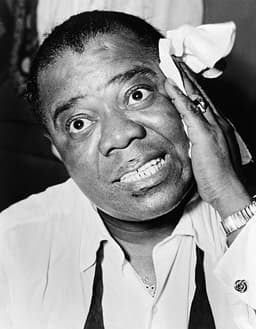
Louis II of Hungary
Emperor · Modern
35.8Total
Basic Information
Born
1748
1506
Died
1819
1526
Era
Modern
Modern
Nationality
Spain
Hungary
Occupation
Emperor
Emperor
Civilization
Western
Western
Score Comparison
Military (10%)
20.0
10.2
Political (20%)
29.3
27.9
Influence (20%)
48.6
47.1
Legacy (20%)
37.5
36.7
Leadership (15%)
67.0
38.1
Strategy (15%)
45.0
39.6
TOTAL
42.5
35.8
Charles IV of Spain — Complete Timeline
1788 AD
Accession to the thronePolitical Action◆ Major
Charles IV became King of Spain upon the death of his father Charles III. His reign was marked by reliance on his wife Maria Luisa and her favorite Manuel Godoy, leading to ineffective governance and growing discontent.
SuccessionMonarchy
Impact: national
1807 AD
Treaty of FontainebleauPolitical Action◆ Major
Charles IV signed the Treaty of Fontainebleau with Napoleon, allowing French troops to cross Spain to invade Portugal. This agreement led to the French occupation of Spain and triggered the Peninsular War.
Napoleonic WarsTreatyOccupation
Impact: regionaldestructive
1808 AD
Abdication at BayonnePolitical Action
Under pressure from Napoleon, Charles IV abdicated the Spanish throne in favor of his son Ferdinand VII at Bayonne, France. This abdication was part of Napoleon's plan to install his brother Joseph as king of Spain.
AbdicationNapoleonic WarsSuccession
Impact: nationaltragic
Exile in FrancePolitical Action
After abdication, Charles IV lived in exile in France under Napoleon's supervision. He remained there until his death in 1819, never returning to Spain, while the Peninsular War raged.
ExileNapoleonic Wars
Impact: nationaltragic
Louis II of Hungary — Complete Timeline
1526 AD
Battle of MohacsWar
Louis II led the Hungarian army against the Ottoman forces of Suleiman the Magnificent at Mohacs. The battle ended in a catastrophic Hungarian defeat, with Louis II killed and much of the Hungarian nobility wiped out.
BattleDefeatOttoman Victory
Impact: regionaltragic
Death at MohacsOther◆ Major
Louis II died during the Battle of Mohacs, either killed in action or drowned while fleeing. His death without an heir led to a succession crisis and the division of Hungary between the Habsburgs and the Ottomans.
DeathSuccession Crisis
Impact: regionaltragic
Expert Analysis
Origins
Charles IV of Spain was born on November 11, 1748, in Naples, the second son of King Charles III of Spain. He received a limited education, focusing on hunting and music rather than statecraft. His father's death in 1788 made him king at age 39, but he was ill-prepared for rule, heavily influenced by his wife Maria Luisa of Parma and her favorite, Manuel Godoy. Louis II of Hungary was born on July 1, 1506, in Buda, the only son of King Vladislaus II of Hungary and Bohemia. His early life was marked by political instability; his father's weak rule allowed noble factions to dominate. Louis became king at age 10 upon his father's death in 1516, with a regency council governing until he came of age. Both rulers inherited thrones during periods of external threat: Spain facing revolutionary France, Hungary facing the Ottoman Empire.
Rise to Power
Charles IV ascended the Spanish throne peacefully on December 14, 1788, after his father's death. His reign initially continued the reforms of Charles III, but the French Revolution (1789) shifted priorities. He relied heavily on Godoy, who became prime minister in 1792. Godoy's influence grew after Spain's brief war with France (1793-1795) ended with the Treaty of Basel, aligning Spain with France. Louis II became king in 1516 at age 10. His coronation as King of Hungary and Bohemia was delayed until 1522 due to noble opposition. The Hungarian nobility, led by John Zápolya, resisted centralized authority. Louis's marriage to Mary of Austria in 1522 aligned him with the Habsburgs, but internal divisions weakened Hungary. Both rulers rose to power not through personal ambition but through inheritance, and both faced powerful external enemies.
Leadership & Governance
Charles IV's leadership was passive; he delegated governance to Godoy, who pursued a policy of appeasement toward France. In 1801, Godoy led Spain into the War of the Oranges against Portugal, gaining minor territory. In 1805, Spain allied with France at Trafalgar, resulting in the destruction of the Spanish fleet. Charles's governance score of 67.0 reflects his ability to maintain power, but his political score of 29.3 shows his failure to control events. Louis II's leadership was similarly weak; he lacked military experience and relied on advisors. He failed to modernize the Hungarian army or secure alliances. His leadership score of 38.1 indicates his inability to command respect. Both rulers were overshadowed by stronger personalities: Charles by Godoy and Napoleon, Louis by his wife Mary and the Habsburgs.
Triumph & Tragedy
Charles IV's greatest triumph was surviving on the throne for 20 years (1788-1808) despite the upheavals of the French Revolution and Napoleonic Wars. His greatest tragedy was the abdication at Bayonne on May 6, 1808, where Napoleon forced him to renounce the throne in favor of his son Ferdinand VII. This led to the Peninsular War, devastating Spain. Charles died in exile in Rome in 1819. Louis II's only significant triumph was leading a campaign against the Ottomans in 1526, but his tragedy was the Battle of Mohacs on August 29, 1526. He led an army of about 25,000 against Suleiman's 50,000. The Hungarian forces were routed; Louis died fleeing, either killed in action or drowning in a stream. His death without an heir led to a succession crisis, allowing the Ottomans to occupy much of Hungary for 150 years. Charles's military score of 20.0 and Louis's of 10.2 reflect their catastrophic failures in war.
Character & Destiny
Charles IV was characterized by indecisiveness and dependence. He was described by contemporaries as well-meaning but weak, preferring hunting to governing. His decision to abdicate at Bayonne, hoping to save his dynasty, instead led to its temporary collapse. Louis II was similarly weak, described as inexperienced and rash. His decision to face the Ottomans at Mohacs with insufficient forces was a fatal miscalculation. Both rulers' characters—passive, reliant on others, and unable to adapt—shaped their destinies. Their scores: Charles total 42.5, Louis 35.8, reflecting their limited capabilities. Historians assess Charles as a pawn of Napoleon, and Louis as a victim of noble disunity.
Legacy
Charles IV's legacy is negative: his reign allowed Napoleon to invade Spain, triggering the Peninsular War that cost hundreds of thousands of lives. He is remembered as a weak king who lost the Spanish Empire's prestige. Louis II's legacy is more tragic: his death at Mohacs is seen as the end of independent Hungary. The Ottoman occupation that followed shaped Central Europe for centuries. Both rulers' influence scores (Charles 48.6, Louis 47.1) are similar, but Charles's legacy score of 37.5 versus Louis's 36.7 indicates a slightly more lasting impact due to the scale of the Napoleonic Wars. In terms of systems, Charles's abdication led to the Spanish Constitution of 1812, while Louis's death led to Habsburg rule in Hungary.
Conclusion
Charles IV of Spain had a greater impact than Louis II of Hungary, as reflected in his total score of 42.5 versus 35.8. While both were weak rulers, Charles's reign triggered the Peninsular War, which weakened Napoleon and contributed to the rise of Spanish nationalism. Louis's defeat at Mohacs ended Hungary's independence but had less global consequence. Charles's decisions directly affected the Napoleonic era, while Louis's death was a regional tragedy. Thus, Charles IV's higher leadership (67.0) and strategy (45.0) scores, despite his failures, give him a slight edge in historical significance.
Rankings
🥇
Charles IV of SpainLeader
Mil: 20.0Pol: 29.3Inf: 48.6
42.5
🥈
Louis II of Hungary
Mil: 10.2Pol: 27.9Inf: 47.1
35.8
+6.7 behind
How This Comparison Works
Algorithm
Each figure is scored on 6 dimensions (0—100 scale) based on structured historical data: Military (10%), Political (20%), Influence (20%), Legacy (20%), Leadership (15%), Strategy (15%). The weighted total produces the final ranking.
Data Sources
Scores are computed from structured sub-indicators in the database. Scale factors adjust for era (Ancient ×0.85, Modern ×1.0) and civilization size (Eastern ×1.05, Other ×0.80) to account for differences in population and military scale.
Maximum 3 Figures
Comparisons are limited to 2—3 figures to ensure readability and statistical meaningfulness.
Error Margins
±5 points per dimension — Sub-scores are derived from historical records with inherent uncertainty. Two figures within 5 points on a dimension should be considered roughly equivalent in that area.
Total Score Accuracy
±3 points overall — The weighted combination of 6 dimensions produces a total score with approximately ±3 points of uncertainty. Differences of less than 3 points are not statistically significant— the figures are effectively tied.
Known Limitations
- Historical records are incomplete and uneven across civilizations
- Figures from oral-tradition societies may be underrepresented
- Occupation labels can misclassify multi-role figures
- Scores measure capability and impact, not moral character
- Quantitative scoring is a comparison tool, not absolute truth
Capability Radar
Military (10%) — Battles & Warfare
Battles
5
15
Win Rate
5
5
Expansion
5
5
Political (20%) — Governance & Reform
Reform
15
10
Diplomacy
10
15
Economy
15
10
Influence (20%) — Cultural & Global Reach
Cultural
10
10
Global
10
10
Legacy (20%) — Historical Impact
Historical
15
20
Longevity
10
10
Leadership (15%) — Power & Stability
Tenure
60
20
Stability
10
5
Strategy (15%) — Tactics & Innovation
Strategy
5
10
Tactics
5
10
Reform
5
5
Similar Comparisons
Comments & Discussion
No comments yet. Be the first to share your thoughts!