Loading...
Charles IV of Spain vs Ivan the Terrible
Ivan the Terrible leads by 22.5 pts · 2 figures compared
…

Charles IV of Spain
Emperor · Modern
42.5Total
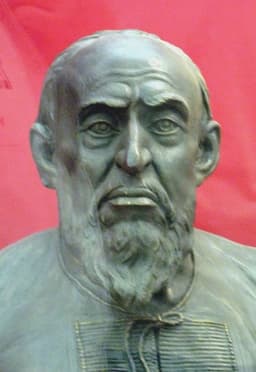
Ivan the Terrible
Emperor · Modern
65.0Total
Basic Information
Born
1748
1530
Died
1819
1584
Era
Modern
Modern
Nationality
Spain
Russia
Occupation
Emperor
Emperor
Civilization
Western
Western
Score Comparison
Military (10%)
20.0
74.7
Political (20%)
29.3
60.0
Influence (20%)
48.6
72.0
Legacy (20%)
37.5
55.0
Leadership (15%)
67.0
68.0
Strategy (15%)
45.0
66.3
TOTAL
42.5
65.0
Charles IV of Spain — Complete Timeline
1788 AD
Accession to the thronePolitical Action◆ Major
Charles IV became King of Spain upon the death of his father Charles III. His reign was marked by reliance on his wife Maria Luisa and her favorite Manuel Godoy, leading to ineffective governance and growing discontent.
SuccessionMonarchy
Impact: national
1807 AD
Treaty of FontainebleauPolitical Action◆ Major
Charles IV signed the Treaty of Fontainebleau with Napoleon, allowing French troops to cross Spain to invade Portugal. This agreement led to the French occupation of Spain and triggered the Peninsular War.
Napoleonic WarsTreatyOccupation
Impact: regionaldestructive
1808 AD
Abdication at BayonnePolitical Action
Under pressure from Napoleon, Charles IV abdicated the Spanish throne in favor of his son Ferdinand VII at Bayonne, France. This abdication was part of Napoleon's plan to install his brother Joseph as king of Spain.
AbdicationNapoleonic WarsSuccession
Impact: nationaltragic
Exile in FrancePolitical Action
After abdication, Charles IV lived in exile in France under Napoleon's supervision. He remained there until his death in 1819, never returning to Spain, while the Peninsular War raged.
ExileNapoleonic Wars
Impact: nationaltragic
Ivan the Terrible — Complete Timeline
1547 AD
Coronation as First Tsar of RussiaPolitical Action
Ivan IV was crowned as the first Tsar of All Russia, adopting the title of Caesar. This coronation asserted Russia's independence from Mongol influence and claimed imperial status. It marked the beginning of centralized autocratic rule in Russia.
CoronationTsarAutocracy
Impact: national
1552 AD
Conquest of KazanWar◆ Major
Ivan IV led a Russian army to conquer the Khanate of Kazan, ending Tatar rule in the Volga region. The siege lasted several weeks and resulted in the annexation of the khanate. This victory opened the way for Russian expansion into Siberia and the Caspian region.
ConquestKazanExpansion
Impact: regional
1558 AD
Livonian WarWar◆ Major
Ivan IV launched a war against the Livonian Confederation to gain access to the Baltic Sea. The war lasted 25 years and involved Poland-Lithuania, Sweden, and Denmark. It ended in Russian defeat, with Ivan failing to secure a Baltic port.
WarBalticDefeat
Impact: regionaldestructive
1565 AD
Establishment of the OprichninaReform
Ivan IV created the Oprichnina, a separate territory and state apparatus under his direct control. He used the Oprichniki, a corps of secret police, to eliminate his political opponents. This policy led to widespread terror, executions, and confiscation of lands.
TerrorOprichninaRepression
Impact: nationaldestructive
1570 AD
Massacre of NovgorodWar◆ Major
Ivan IV led the Oprichniki in a brutal campaign against the city of Novgorod, suspected of treason. Thousands of inhabitants were killed, and the city was looted and destroyed. This massacre broke the power of Novgorod and terrorized the Russian population.
MassacreNovgorodTerror
Impact: regionaldestructive
1581 AD
Killing of His Son IvanOther◆ Major
Ivan IV struck and killed his eldest son and heir, Ivan Ivanovich, during an argument. The tsarevich died from his injuries days later. This event left Russia without a capable successor and contributed to the Time of Troubles after Ivan's death.
PatricideSuccessionTragedy
Impact: nationaltragic
Expert Analysis
Origins
Charles IV of Spain was born in 1748, the second son of Charles III. He received a limited education, more interested in hunting and manual crafts than statecraft. His father's reforms modernized Spain, but Charles IV lacked the intellect and drive to continue them. He ascended the throne in 1788, relying heavily on his wife, Maria Luisa of Parma, and her favorite, Manuel Godoy, a commoner who rose to become prime minister. This trio ruled Spain, with Charles IV often a passive figure.
Ivan IV of Russia, born in 1530, was the grandson of Ivan III. His father Vasili III died when Ivan was three, leading to a turbulent regency by boyars who fought for power. Ivan grew up in an atmosphere of intrigue and violence, which shaped his later paranoia. He was crowned the first Tsar of All Russia in 1547, at age 16, asserting independence from Mongol influence and claiming continuity with the Byzantine Empire.
Rise to Power
Charles IV became king upon his father's death in 1788. He inherited a stable, reform-minded monarchy but soon reversed many of Charles III's policies. His reliance on Godoy caused resentment among the nobility and the people. The French Revolution (1789) terrified Spanish elites, leading to a conservative turn. Charles IV's reign saw Spain become a pawn in Napoleonic politics, culminating in the 1808 Treaty of Fontainebleau, which allowed French troops to cross Spain to invade Portugal. This led to the French occupation and Charles's abdication at Bayonne in 1808.
Ivan IV's rise was marked by his coronation as tsar, which centralized power. In 1552, he conquered the Khanate of Kazan, ending Tatar dominance in the Volga region. This victory boosted his prestige and allowed him to expand Russian territory. He then reformed the military and legal system, creating a standing army and a new law code. However, his later years saw the establishment of the Oprichnina (1565-1572), a separate territory under his direct control, where he unleashed terror against perceived enemies, including the boyars.
Leadership & Governance
Charles IV's leadership was weak and indecisive. He delegated authority to Godoy, who mismanaged the economy and foreign policy. Spain's navy declined, and the country became increasingly dependent on France. Charles IV's governance score of 67.0 reflects his passive style, which ultimately led to the loss of the throne. He failed to modernize the state or respond effectively to the Napoleonic threat.
Ivan IV's leadership was autocratic and brutal. He centralized power, reduced the influence of the boyars, and created the Oprichnina as a tool of repression. His governance score of 68.0 is similar to Charles's, but for different reasons: Ivan was active and decisive, but his rule descended into paranoia and violence. He implemented reforms in law and administration but also terrorized his own subjects, killing thousands in the Massacre of Novgorod (1570).
Triumph & Tragedy
Charles IV's greatest success was maintaining Spain's neutrality during the early Napoleonic Wars, but this collapsed with the Treaty of Fontainebleau. His greatest failure was his abdication and exile, which left Spain in chaos and led to the Peninsular War. He died in 1819 in Rome, having never returned to Spain. His total score of 42.5 reflects his ineffectiveness.
Ivan IV's triumphs include the conquest of Kazan and the expansion of Russia's borders. He also established the first Russian navy and reformed the legal code. However, his tragedies are numerous: the Livonian War (1558-1583) ended in defeat, exhausting Russia's resources. The Oprichnina terror killed tens of thousands, including his own son Ivan Ivanovich in 1581, an act that left Russia without a capable heir. His legacy is tarnished by his brutality, though he scored 65.0 overall.
Character & Destiny
Charles IV was amiable but weak-willed, more interested in hunting than ruling. His character made him a puppet of his wife and Godoy, leading to his downfall. He lacked the strategic vision to navigate the Napoleonic era, scoring 45.0 in strategy.
Ivan IV was intelligent and energetic but increasingly paranoid and cruel. His character led him to centralize power but also to destroy the very elites who could have supported him. His strategy score of 66.3 reflects his early military successes, but his later decisions undermined his achievements.
Legacy
Charles IV's legacy is one of decline. His reign is seen as a prelude to the loss of the Spanish Empire in the Americas. He is remembered as a weak king who allowed Spain to be overrun by Napoleon. His influence score of 48.6 reflects his limited long-term impact.
Ivan IV's legacy is profound. He established the autocratic tradition of Russian tsars, which lasted until 1917. His centralization of power and use of terror influenced later rulers like Peter the Great and Stalin. He is remembered as both a unifier and a tyrant, with an influence score of 72.0.
Conclusion
Ivan the Terrible had a far greater impact than Charles IV of Spain. Despite his brutality, Ivan transformed Russia into a centralized state and expanded its territory. Charles IV, by contrast, presided over Spain's decline and failed to resist Napoleon. The score gap of 22.5 points reflects this disparity. Ivan's legacy shaped Russian history for centuries, while Charles's reign is a footnote in the decline of the Spanish Empire. The clear position is that Ivan's impact, for better or worse, was more significant.
Rankings
🥇
Ivan the TerribleLeader
Mil: 74.7Pol: 60.0Inf: 72.0
65.0
🥈
Charles IV of Spain
Mil: 20.0Pol: 29.3Inf: 48.6
42.5
+22.5 behind
How This Comparison Works
Algorithm
Each figure is scored on 6 dimensions (0—100 scale) based on structured historical data: Military (10%), Political (20%), Influence (20%), Legacy (20%), Leadership (15%), Strategy (15%). The weighted total produces the final ranking.
Data Sources
Scores are computed from structured sub-indicators in the database. Scale factors adjust for era (Ancient ×0.85, Modern ×1.0) and civilization size (Eastern ×1.05, Other ×0.80) to account for differences in population and military scale.
Maximum 3 Figures
Comparisons are limited to 2—3 figures to ensure readability and statistical meaningfulness.
Error Margins
±5 points per dimension — Sub-scores are derived from historical records with inherent uncertainty. Two figures within 5 points on a dimension should be considered roughly equivalent in that area.
Total Score Accuracy
±3 points overall — The weighted combination of 6 dimensions produces a total score with approximately ±3 points of uncertainty. Differences of less than 3 points are not statistically significant— the figures are effectively tied.
Known Limitations
- Historical records are incomplete and uneven across civilizations
- Figures from oral-tradition societies may be underrepresented
- Occupation labels can misclassify multi-role figures
- Scores measure capability and impact, not moral character
- Quantitative scoring is a comparison tool, not absolute truth
Capability Radar
Military (10%) — Battles & Warfare
Battles
5
75
Win Rate
5
65
Expansion
5
80
Political (20%) — Governance & Reform
Reform
15
90
Diplomacy
10
40
Economy
15
50
Influence (20%) — Cultural & Global Reach
Cultural
10
60
Global
10
65
Legacy (20%) — Historical Impact
Historical
15
75
Longevity
10
70
Leadership (15%) — Power & Stability
Tenure
60
85
Stability
10
20
Strategy (15%) — Tactics & Innovation
Strategy
5
70
Tactics
5
60
Reform
5
85
Similar Comparisons
Comments & Discussion
No comments yet. Be the first to share your thoughts!