Loading...
Charles IV of Luxembourg vs George of Podebrady
Charles IV of Luxembourg leads by 8.0 pts · 2 figures compared
…
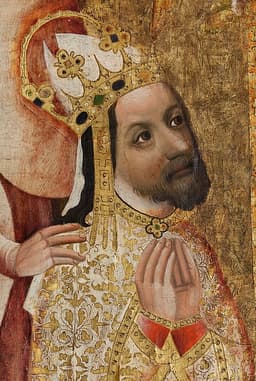
Charles IV of Luxembourg
Emperor · Medieval
66.6Total
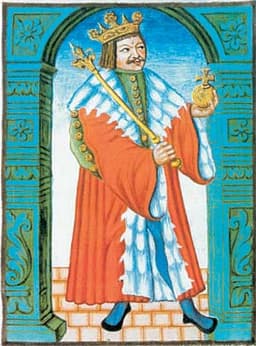
George of Podebrady
Emperor · Medieval
58.6Total
Basic Information
Born
1316
1420
Died
1378
1471
Era
Medieval
Medieval
Nationality
Holy Roman Empire
Bohemia
Occupation
Emperor
Emperor
Civilization
Western
Western
Score Comparison
Military (10%)
45.0
30.0
Political (20%)
70.3
72.0
Influence (20%)
72.0
60.0
Legacy (20%)
72.0
52.0
Leadership (15%)
78.0
74.0
Strategy (15%)
38.6
57.5
TOTAL
66.6
58.6
Charles IV of Luxembourg — Complete Timeline
1346 AD
Election as King of GermanyPolitical Action◆ Major
Charles, Margrave of Moravia and grandson of Henry VII, was elected King of Germany by a faction of electors opposed to Louis IV. His election was supported by Pope Clement VI, leading to a double kingship.
ElectionDouble Kingship
Impact: national
1348 AD
Foundation of the University of PragueCultural◆ Major
Charles IV founded the University of Prague (Charles University), the first university in Central Europe. It became a major center of learning and culture, attracting scholars from across Europe.
University FoundationEducation
Impact: regionalconstructive
1355 AD
Coronation as Holy Roman EmperorPolitical Action◆ Major
Charles IV was crowned Holy Roman Emperor in Rome by a papal legate. His coronation was the first by a pope in decades and marked a reconciliation between the empire and papacy.
CoronationImperial-Papal Reconciliation
Impact: globalconstructive
1356 AD
Promulgation of the Golden Bull of 1356Reform
Charles IV issued the Golden Bull, a constitutional document that regulated the election of the German king by seven prince-electors. It established a fixed electoral college and reduced papal influence, remaining in effect until 1806.
Constitutional ReformGolden Bull
Impact: globalconstructive
George of Podebrady — Complete Timeline
1458 AD
Elected King of BohemiaPolitical Action◆ Major
Following the death of King Ladislaus the Posthumous, the Bohemian Diet elected George of Pod
ElectionHussiteBohemian Politics
Impact: nationalconstructive
1464 AD
Proposed a European Peace LeaguePolitical Action◆ Major
George proposed a treaty for a European league of Christian princes to maintain peace and coordinate defense against the Ottoman Empire. The plan included a common council and army. It was not implemented but is considered an early precursor to the European Union.
DiplomacyPeace PlanEuropean Unity
Impact: globalconstructive
1466 AD
Conflict with the PapacyPolitical Action◆ Major
Pope Paul II excommunicated George for his Hussite beliefs and refusal to enforce Catholic uniformity. The pope declared a crusade against Bohemia and supported the rival claim of Matthias Corvinus of Hungary. This led to a war that weakened George's position.
ExcommunicationReligious ConflictPapal-Hussite War
Impact: regionaldestructive
1468 AD
War with Matthias CorvinusWar◆ Major
Matthias Corvinus of Hungary invaded Bohemia, claiming the throne with papal support. George's forces fought a defensive war, losing territory. The conflict ended inconclusively, but George was forced to recognize Matthias as heir to the Bohemian crown.
WarHungarian InvasionSuccession
Impact: regionaldestructive
1471 AD
Compacted with the Catholic NobilityPolitical Action
On his deathbed, George negotiated a compromise with the Catholic nobility of Bohemia. He agreed to recognize Vladislaus II of Poland as his successor, ensuring a Catholic king but preserving religious tolerance for Hussites. This helped prevent further civil war.
CompromiseSuccessionReligious Tolerance
Impact: nationalconstructive
Expert Analysis
Origins
Charles IV of Luxembourg was born in 1316 in Prague to John of Luxembourg, King of Bohemia, and Elisabeth of Bohemia. He was raised in the French court, receiving a sophisticated education under future Pope Clement VI. This bilingual upbringing (French and Czech) and exposure to high politics shaped his diplomatic acumen. George of Podebrady was born in 1420 into a noble Czech Hussite family. His father, Victor of Podebrady, was a prominent Hussite leader. George grew up amid the Hussite Wars, learning military strategy and religious politics from an early age. While Charles had the advantages of royal lineage and international exposure, George's origins were more provincial but deeply rooted in Bohemian religious conflict.
Rise to Power
Charles's rise began with his election as King of Germany in 1346, supported by Pope Clement VI against Louis IV. He secured coronation as Holy Roman Emperor in 1355, the first emperor crowned by a pope in decades, signaling reconciliation with the Church. His key turning point was the 1356 Golden Bull, which standardized imperial elections and reduced papal influence. George's rise was more tumultuous. After the death of King Ladislaus the Posthumous in 1457, the Bohemian Diet elected George as king in 1458, despite his Hussite faith. His election was a compromise between Catholic and Utraquist nobles. George's political scores (72.0) reflect his ability to navigate religious divisions, but his military score (30.0) lagged behind Charles's (45.0).
Leadership & Governance
Charles IV's governance was marked by centralization and cultural patronage. He made Prague the imperial capital, building the Charles Bridge and founding the University of Prague in 1348, the first in Central Europe. His Golden Bull of 1356 created a stable electoral system that lasted until 1806. He pursued a policy of diplomacy over warfare, avoiding costly conflicts. George's leadership was defined by religious compromise. He attempted to maintain peace between Catholics and Hussites, confirming the Compact of Basel. His proposal for a European peace league in 1464 was visionary but unrealistic. However, his political score (72.0) nearly matches Charles's (70.3), showing adeptness in internal politics. Yet his strategy score (57.5) exceeded Charles's (38.6), indicating more calculated moves despite fewer resources.
Triumph & Tragedy
Charles's greatest triumph was the Golden Bull, which stabilized the Empire. He also expanded Bohemian territory through purchase and marriage, notably acquiring Brandenburg. His tragedy was his failure to secure a strong succession; his sons were less capable, leading to later conflicts. George's triumph was his election as a Hussite king, a remarkable achievement in Catholic Europe. He also resisted papal excommunication and a crusade for several years. His tragedy was his war with Matthias Corvinus of Hungary (1468-1478), which drained Bohemia's resources and ended with George losing territory. On his deathbed in 1471, he compromised with Catholic nobles, accepting Vladislaus II as successor, undermining Hussite gains.
Character & Destiny
Charles was pragmatic and scholarly, often called the "father of his country." His diplomatic approach avoided war, but his reliance on alliances sometimes left him vulnerable. George was stubborn and idealistic, willing to risk his kingdom for religious principles. His proposal for a European peace league shows his visionary side, but his refusal to convert to Catholicism sealed his conflict with the papacy. Charles's character led to a stable, prosperous reign; George's led to isolation and war. Historians note Charles's influence score (72.0) versus George's (60.0), reflecting Charles's broader impact on European institutions.
Legacy
Charles IV's legacy is immense. The Golden Bull remained a cornerstone of imperial law. Charles University still operates, and Prague's Gothic architecture is a testament to his patronage. His total score (66.6) outranks George's (58.6). George's legacy is more mixed. He is remembered as the "Hussite king" and a pioneer of European unity, but his reign ended in compromise. His peace league idea foreshadowed later concepts like the United Nations, but it never materialized. In Bohemia, he is a national hero, but his impact on broader European history is limited.
Conclusion
Charles IV had a greater impact on history. His political and institutional reforms shaped the Holy Roman Empire for centuries, while George's achievements were largely confined to Bohemia and cut short by war. Charles's total score of 66.6 versus George's 58.6 reflects his superior leadership (78.0 to 74.0) and legacy (72.0 to 52.0). George's strategic vision was ahead of its time, but execution failed. Charles built enduring structures; George fought losing battles. Thus, Charles IV stands as the more consequential figure.
Rankings
🥇
Charles IV of LuxembourgLeader
Mil: 45.0Pol: 70.3Inf: 72.0
66.6
🥈
George of Podebrady
Mil: 30.0Pol: 72.0Inf: 60.0
58.6
+8.0 behind
How This Comparison Works
Algorithm
Each figure is scored on 6 dimensions (0—100 scale) based on structured historical data: Military (10%), Political (20%), Influence (20%), Legacy (20%), Leadership (15%), Strategy (15%). The weighted total produces the final ranking.
Data Sources
Scores are computed from structured sub-indicators in the database. Scale factors adjust for era (Ancient ×0.85, Modern ×1.0) and civilization size (Eastern ×1.05, Other ×0.80) to account for differences in population and military scale.
Maximum 3 Figures
Comparisons are limited to 2—3 figures to ensure readability and statistical meaningfulness.
Error Margins
±5 points per dimension — Sub-scores are derived from historical records with inherent uncertainty. Two figures within 5 points on a dimension should be considered roughly equivalent in that area.
Total Score Accuracy
±3 points overall — The weighted combination of 6 dimensions produces a total score with approximately ±3 points of uncertainty. Differences of less than 3 points are not statistically significant— the figures are effectively tied.
Known Limitations
- Historical records are incomplete and uneven across civilizations
- Figures from oral-tradition societies may be underrepresented
- Occupation labels can misclassify multi-role figures
- Scores measure capability and impact, not moral character
- Quantitative scoring is a comparison tool, not absolute truth
Capability Radar
Military (10%) — Battles & Warfare
Battles
25
45
Win Rate
30
50
Expansion
20
35
Political (20%) — Governance & Reform
Reform
90
70
Diplomacy
85
75
Economy
80
55
Influence (20%) — Cultural & Global Reach
Cultural
75
50
Global
60
40
Legacy (20%) — Historical Impact
Historical
80
55
Longevity
70
45
Leadership (15%) — Power & Stability
Tenure
85
65
Stability
80
45
Strategy (15%) — Tactics & Innovation
Strategy
25
50
Tactics
20
55
Reform
15
40
Similar Comparisons
Comments & Discussion
No comments yet. Be the first to share your thoughts!