Loading...
Charles IV of Bohemia vs Sebuk Tigin
Charles IV of Bohemia leads by 5.6 pts · 2 figures compared
…
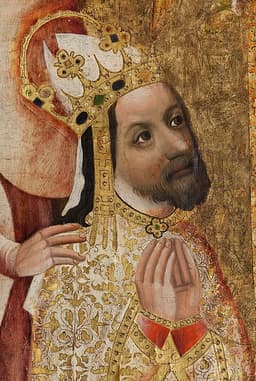
Charles IV of Bohemia
Emperor · Medieval
61.6Total
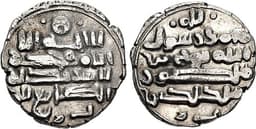
Sebuk Tigin
Emperor · Medieval
56.0Total
Basic Information
Born
1316
942
Died
1378
997
Era
Medieval
Medieval
Nationality
Bohemia
Ghaznavid Empire
Occupation
Emperor
Emperor
Civilization
Western
Middle Eastern
Score Comparison
Military (10%)
46.7
72.5
Political (20%)
78.0
68.0
Influence (20%)
65.0
58.0
Legacy (20%)
55.0
49.2
Leadership (15%)
78.0
40.0
Strategy (15%)
35.0
57.5
TOTAL
61.6
56.0
Charles IV of Bohemia — Complete Timeline
1348 AD
Foundation of Charles UniversityCultural◆ Major
Charles IV founded Charles University in Prague, the first university in Central Europe. The institution became a center of learning and culture, attracting scholars from across Europe and fostering the development of Czech intellectual life.
EducationUniversityCultural Center
Impact: regionalconstructive
1355 AD
Coronation as Holy Roman EmperorPolitical Action◆ Major
Charles IV was crowned Holy Roman Emperor in Rome by Pope Innocent VI. This coronation solidified his authority over the empire and allowed him to implement reforms that strengthened imperial governance.
CoronationImperial AuthorityPapal Relations
Impact: global
1356 AD
Golden Bull of 1356Reform
Charles IV issued the Golden Bull, a constitutional document that regulated the election of the Holy Roman Emperor. It established the seven prince-electors and defined their privileges, stabilizing the empire's political structure for centuries.
ConstitutionHoly Roman EmpireElectoral System
Impact: globalconstructive
1357 AD
Construction of Charles BridgeCultural◆ Major
Charles IV commissioned the construction of the Charles Bridge in Prague, a stone bridge connecting the Old Town with the Lesser Quarter. The bridge became a vital trade route and a symbol of Prague's architectural heritage.
ArchitectureInfrastructurePrague
constructive
Sebuk Tigin — Complete Timeline
977 AD
Consolidation of the Ghaznavid StatePolitical Action◆ Major
Sebuk Tigin succeeded his father-in-law Alp Tigin as ruler of Ghazni and consolidated the Ghaznavid state. He defeated rival Turkic commanders, secured the borders against the Samanids and Karakhanids, and established a stable succession.
ConsolidationGhaznavidSuccession
Impact: regionalconstructive
986 AD
Expansion into IndiaWar◆ Major
Sebuk Tigin launched the first Ghaznavid campaigns into the Indian subcontinent, defeating the Hindu Shahi kingdom of Kabul. He annexed the region of Peshawar and established Ghaznavid control over the Khyber Pass, opening the way for future invasions.
Indian CampaignHindu ShahiExpansion
Impact: regional
994 AD
Defeat of the Samanids at the Battle of BalkhWar
Sebuk Tigin allied with the Samanid ruler Nuh II to defeat the rebel Fa'iq at Balkh. This victory secured Ghaznavid influence over Khorasan and marked the beginning of Ghaznavid expansion into Central Asia.
BattleSamanidKhorasan
Impact: regional
Expert Analysis
Origins
Charles IV of Bohemia was born in 1316 in Prague to John of Luxembourg and Elizabeth of Bohemia. He was educated at the French court and later in Italy, gaining a broad cultural and political perspective. His early years were marked by conflict with his father, who neglected Bohemia. Charles's upbringing emphasized diplomacy and learning, setting the stage for his later reforms.
Sebuk Tigin was born around 942 in Central Asia, likely of Turkic origin. He was captured as a slave and rose through military ranks under the Samanids. His early life was shaped by warfare and loyalty to his commander Alp Tigin, whom he succeeded as ruler of Ghazni in 977. Sebuk Tigin's background was purely martial, with no exposure to European courtly culture.
Rise to Power
Charles IV became King of Bohemia in 1346 after his father's death at the Battle of Crécy. He was elected King of the Romans in the same year, but faced opposition from rival candidates. His coronation as Holy Roman Emperor in 1355 by Pope Innocent VI solidified his authority. Charles used diplomacy and legal reforms to strengthen his position, notably issuing the Golden Bull of 1356, which regulated imperial elections and reduced papal influence.
Sebuk Tigin rose by military prowess. After Alp Tigin's death, he defeated rival Turkic commanders and secured Ghazni. His decisive victory over the Hindu Shahi kingdom in 977 opened the door to Indian conquests. He allied with the Samanids to defeat rebels at the Battle of Balkh (994), gaining control over Khorasan. His rise was a classic story of a slave becoming a ruler through force.
Leadership & Governance
Charles IV governed through legal codification and cultural patronage. The Golden Bull of 1356 established a permanent electoral college of seven prince-electors, reducing chaos in imperial succession. He founded Charles University in 1348, the first in Central Europe, attracting scholars from across the continent. He also commissioned the Charles Bridge and other Gothic buildings, transforming Prague into a cultural capital. His leadership score is 78.0, reflecting effective administration, but his military score is only 46.7, as he avoided costly wars.
Sebuk Tigin led through conquest and consolidation. He expanded Ghaznavid territory into India, annexing regions up to the Indus River. He maintained a strong centralized state by integrating Turkic and Persian elites. His military score of 72.5 indicates success in campaigns, but his leadership score of 40.0 suggests harshness and lack of institutional reforms. Unlike Charles, Sebuk Tigin left no legal or educational legacy.
Triumph & Tragedy
Charles IV's greatest triumph was the Golden Bull, which stabilized the Holy Roman Empire for centuries. His building projects made Prague one of Europe's finest cities. However, his failure to secure a strong successor weakened the empire after his death. His reliance on diplomacy over force meant he could not prevent the rise of rival powers.
Sebuk Tigin's triumph was the conquest of the Hindu Shahi kingdom and the foundation of the Ghaznavid Empire as a major Islamic power. His tragedy was that his son Mahmud overshadowed him, and his empire eventually fell to the Seljuks. His military gains were not matched by political structures, leading to instability.
Character & Destiny
Charles IV was pragmatic and scholarly, preferring negotiation to battle. His character shaped a destiny of cultural flourishing but limited territorial expansion. Historians see him as a builder and reformer, not a warrior.
Sebuk Tigin was a ruthless commander, driven by ambition. His character led to rapid expansion but also to overextension. He is remembered as a capable general but not a visionary ruler.
Legacy
Charles IV's legacy endures in the Golden Bull, which influenced German constitutional law until 1806. Charles University still operates, and Prague's architecture remains a UNESCO World Heritage site. His political influence score is 78.0, and legacy 55.0.
Sebuk Tigin's legacy is more limited. He opened the door for Islamic rule in India, but his empire was short-lived. His military influence score is 72.5, but legacy only 49.2. He is less known than his son Mahmud.
Conclusion
Charles IV had greater overall impact due to his enduring political and cultural institutions. With a total score of 61.6 versus Sebuk Tigin's 56.0, Charles's reforms shaped Europe for centuries, while Sebuk Tigin's conquests were ephemeral. The builder of Prague surpasses the conqueror of Ghazni.
Rankings
🥇
Charles IV of BohemiaLeader
Mil: 46.7Pol: 78.0Inf: 65.0
61.6
🥈
Sebuk Tigin
Mil: 72.5Pol: 68.0Inf: 58.0
56.0
+5.6 behind
How This Comparison Works
Algorithm
Each figure is scored on 6 dimensions (0—100 scale) based on structured historical data: Military (10%), Political (20%), Influence (20%), Legacy (20%), Leadership (15%), Strategy (15%). The weighted total produces the final ranking.
Data Sources
Scores are computed from structured sub-indicators in the database. Scale factors adjust for era (Ancient ×0.85, Modern ×1.0) and civilization size (Eastern ×1.05, Other ×0.80) to account for differences in population and military scale.
Maximum 3 Figures
Comparisons are limited to 2—3 figures to ensure readability and statistical meaningfulness.
Error Margins
±5 points per dimension — Sub-scores are derived from historical records with inherent uncertainty. Two figures within 5 points on a dimension should be considered roughly equivalent in that area.
Total Score Accuracy
±3 points overall — The weighted combination of 6 dimensions produces a total score with approximately ±3 points of uncertainty. Differences of less than 3 points are not statistically significant— the figures are effectively tied.
Known Limitations
- Historical records are incomplete and uneven across civilizations
- Figures from oral-tradition societies may be underrepresented
- Occupation labels can misclassify multi-role figures
- Scores measure capability and impact, not moral character
- Quantitative scoring is a comparison tool, not absolute truth
Capability Radar
Military (10%) — Battles & Warfare
Battles
30
55
Win Rate
40
60
Expansion
25
65
Political (20%) — Governance & Reform
Reform
80
45
Diplomacy
85
50
Economy
80
55
Influence (20%) — Cultural & Global Reach
Cultural
80
40
Global
60
40
Legacy (20%) — Historical Impact
Historical
75
50
Longevity
70
45
Leadership (15%) — Power & Stability
Tenure
85
60
Stability
75
55
Strategy (15%) — Tactics & Innovation
Strategy
45
55
Tactics
35
50
Reform
20
40
Similar Comparisons
Comments & Discussion
No comments yet. Be the first to share your thoughts!