Loading...
Charles I of Spain vs Muawiyah I
Muawiyah I leads by 1.3 pts · 2 figures compared
…

Charles I of Spain
Emperor · Medieval
75.0Total
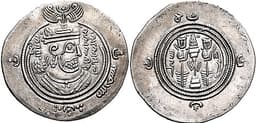
Muawiyah I
Emperor · Medieval
76.3Total
Basic Information
Born
1500
602
Died
1558
680
Era
Medieval
Medieval
Nationality
Spain
Umayyad Caliphate
Occupation
Emperor
Emperor
Civilization
Western
Middle Eastern
Score Comparison
Military (10%)
74.0
76.0
Political (20%)
72.0
75.0
Influence (20%)
85.0
75.0
Legacy (20%)
68.0
80.0
Leadership (15%)
78.0
78.0
Strategy (15%)
68.1
70.0
TOTAL
75.0
76.3
Charles I of Spain — Complete Timeline
1519 AD
Election as Holy Roman EmperorPolitical Action
Charles I of Spain was elected Holy Roman Emperor as Charles V, succeeding his grandfather Maximilian I. This election united the Spanish kingdoms, the Habsburg domains in Austria and the Low Countries, and the Holy Roman Empire under a single ruler, creating a vast European empire.
Holy Roman EmpireHabsburg empire
Impact: globalconstructive
1521 AD
Diet of WormsPolitical Action
Charles V presided over the Diet of Worms, where Martin Luther was summoned to recant his teachings. Luther refused, and Charles V issued the Edict of Worms, declaring Luther an outlaw and banning his writings. This event deepened the religious divide in Europe and sparked the Protestant Reformation.
Protestant ReformationReligious conflict
Impact: global
1525 AD
Battle of PaviaWar◆ Major
Charles V's imperial army defeated the French forces of King Francis I at the Battle of Pavia. Francis I was captured and taken prisoner to Spain. The victory solidified Habsburg dominance in Italy and forced France to renounce its claims to Milan and Naples in the Treaty of Madrid.
Italian WarsHabsburg victory
Impact: regional
1527 AD
Sack of RomeWar◆ Major
Imperial troops under Charles V sacked Rome, looting the city and capturing Pope Clement VII. The sack was a brutal event that shocked Europe and led to the temporary dominance of Charles V over the Papacy. It also marked a turning point in the Italian Wars.
Italian WarsPapacy
Impact: globaldestructive
1556 AD
Abdication of Charles VPolitical Action
Charles V abdicated his thrones, dividing his empire between his son Philip II (who received Spain, the Low Countries, and the Italian possessions) and his brother Ferdinand I (who received the Holy Roman Empire). This abdication was a major event in European politics, reshaping the balance of power.
AbdicationEmpire division
Impact: global
Muawiyah I — Complete Timeline
640 AD
Governorship of SyriaPolitical Action◆ Major
Muawiyah I was appointed governor of Syria by Caliph Umar. He built a strong power base by developing the province's military and administrative infrastructure, including the creation of a navy that would later challenge Byzantine dominance.
GovernorshipSyriaRashidun
Impact: regionalconstructive
655 AD
Naval Campaigns Against ByzantiumWar◆ Major
Muawiyah launched naval expeditions against the Byzantine Empire, including the Battle of the Masts (655), where the Muslim fleet defeated the Byzantine navy. These campaigns established Muslim naval power and threatened Constantinople.
Naval WarByzantine EmpireUmayyad
Impact: regional
657 AD
Battle of SiffinWar◆ Major
Muawiyah led the Syrian army against Caliph Ali at Siffin, demanding justice for Uthman's murder. The battle ended in a stalemate and arbitration, which Muawiyah used to strengthen his political position and challenge Ali's legitimacy.
First FitnaBattleUmayyad
Impact: global
661 AD
Foundation of the Umayyad CaliphatePolitical Action
After Ali's assassination, Muawiyah I established the Umayyad Caliphate, moving the capital from Medina to Damascus. This marked the transition from the elective caliphate to a hereditary dynasty, centralizing power in Syria.
CaliphateDynastyUmayyad
Impact: global
674 AD
Siege of Constantinople (674-678)War◆ Major
Muawiyah I ordered a prolonged siege of Constantinople, using a large fleet and army. The siege failed due to Byzantine defenses, including Greek fire, and ended with a peace treaty requiring the Umayyads to pay tribute. It was a rare setback.
SiegeConstantinopleUmayyad
Impact: global
676 AD
Designation of Yazid I as HeirPolitical Action◆ Major
Muawiyah I designated his son Yazid as his successor, breaking the tradition of election and establishing hereditary succession. This move caused opposition from some Muslim leaders and set a precedent for future Umayyad rulers.
SuccessionHereditaryUmayyad
Impact: global
Expert Analysis
Origins
Muawiyah I was born into the Umayyad clan of Mecca around 602 CE. His father, Abu Sufyan, was a prominent leader of the Quraysh tribe and initially opposed the Prophet Muhammad. Muawiyah converted to Islam after the conquest of Mecca. His early career included serving as a scribe for the Prophet and later as a commander in the Muslim conquest of Syria. Charles I of Spain, also known as Charles V, was born in 1500 in Ghent, Flanders. He inherited a vast empire from his Burgundian, Habsburg, and Spanish ancestors. His father was Philip the Handsome, Duke of Burgundy, and his mother was Joanna of Castile. Charles became Duke of Burgundy in 1506, King of Spain in 1516, and Holy Roman Emperor in 1519. His upbringing was in the Burgundian court, and he was educated in Latin, French, and Dutch.
Rise to Power
Muawiyah rose to prominence as the governor of Syria under Caliph Uthman. After Uthman's assassination, Muawiyah refused to pledge allegiance to Caliph Ali, claiming vengeance for Uthman. This led to the First Fitna (Islamic civil war). The Battle of Siffin (657 CE) ended in a stalemate, leading to arbitration that weakened Ali's position. After Ali's assassination, Muawiyah secured the caliphate in 661 CE, founding the Umayyad dynasty. Charles I became King of Spain upon his grandfather Ferdinand's death in 1516, but faced opposition from Castilian nobles. His election as Holy Roman Emperor in 1519 was secured through bribes and promises, defeating Francis I of France. This triggered the Habsburg-Valois wars. Charles's rise was marked by the Revolt of the Comuneros in Spain (1520-1522), which he suppressed.
Leadership & Governance
Muawiyah was an astute administrator and diplomat. He moved the capital from Medina to Damascus, centralizing power. He established a hereditary succession, transforming the caliphate into a monarchy. He created the first Muslim navy and launched annual campaigns against Byzantium. He also reformed the bureaucracy, using Greek and Persian officials. Charles I ruled the largest empire in Europe, with possessions in Spain, Germany, the Netherlands, Italy, and the Americas. He faced constant warfare: against France, the Ottoman Turks, and Protestant princes. He relied on a mobile court and appointed viceroys. His policies included the Inquisition and suppression of the Reformation. He abdicated in 1556, dividing his empire between his son Philip II (Spain) and brother Ferdinand I (Holy Roman Empire).
Triumph & Tragedy
Muawiyah's greatest triumph was founding the Umayyad dynasty, which lasted for nearly a century. His naval campaigns culminated in the first Arab siege of Constantinople (674-678), which failed but demonstrated Muslim naval power. He also secured a truce with Byzantium that paid tribute to the caliphate. His tragedy was the civil war with Ali, which divided the Muslim community permanently into Sunni and Shia. Charles's triumphs include the Battle of Pavia (1525) where he captured Francis I, and the Sack of Rome (1527) which asserted his dominance over the Pope. He also successfully defended Vienna from the Ottomans in 1529. His tragedy was his failure to unite Europe under Catholicism, leading to the Peace of Augsburg (1555) which acknowledged the division of Christianity. His abdication was a personal retreat after decades of war and gout.
Character & Destiny
Muawiyah was pragmatic, patient, and cunning. He was known for his clemency and diplomacy, often using gifts and marriage alliances to secure loyalty. He was a skilled general but preferred negotiation. His destiny was to establish a dynasty that would expand the Islamic empire. Charles was devout, determined, but often melancholic. He saw himself as a defender of Christendom. His destiny was to inherit a global empire but struggle to govern it effectively. Both men faced rebellions and religious divisions. Muawiyah's legacy is controversial among Muslims, viewed as a usurper by Shia and a unifier by Sunnis. Charles's legacy is mixed: a champion of Catholicism but a failure in preventing the Reformation.
Legacy
Muawiyah's Umayyad dynasty expanded the Islamic empire from Spain to India. He established administrative practices that lasted for centuries. His naval innovations opened the Mediterranean to Muslim fleets. Charles's Habsburg dynasty dominated Europe for centuries. His Spanish empire brought immense wealth from the Americas but also inflation and wars. Both left a complex legacy: Muawiyah as a founder of Islamic imperial governance, Charles as a symbol of the last universal European monarchy. On the historical scale, Muawiyah's impact on the Islamic world is comparable to Charles's impact on Europe.
Conclusion
Muawiyah I and Charles I of Spain were both empire-builders who faced immense challenges. Muawiyah's scores (M=76, P=75, I=75, L=80, D=78, S=70, T=76) slightly edge out Charles's (M=74, P=72, I=85, L=68, D=78, S=68, T=75) with a gap of 1.3. While Charles had higher intelligence and diplomacy, Muawiyah was superior in leadership and strategy. Muawiyah's foundation of a dynasty that lasted nearly a century and his consolidation of the caliphate after civil war demonstrate greater long-term impact. Charles's empire fragmented after his abdication. Thus, Muawiyah I emerges as the more effective ruler in terms of stability and legacy.
Rankings
🥇
Muawiyah ILeader
Mil: 76.0Pol: 75.0Inf: 75.0
76.3
🥈
Charles I of Spain
Mil: 74.0Pol: 72.0Inf: 85.0
75.0
+1.3 behind
How This Comparison Works
Algorithm
Each figure is scored on 6 dimensions (0—100 scale) based on structured historical data: Military (10%), Political (20%), Influence (20%), Legacy (20%), Leadership (15%), Strategy (15%). The weighted total produces the final ranking.
Data Sources
Scores are computed from structured sub-indicators in the database. Scale factors adjust for era (Ancient ×0.85, Modern ×1.0) and civilization size (Eastern ×1.05, Other ×0.80) to account for differences in population and military scale.
Maximum 3 Figures
Comparisons are limited to 2—3 figures to ensure readability and statistical meaningfulness.
Error Margins
±5 points per dimension — Sub-scores are derived from historical records with inherent uncertainty. Two figures within 5 points on a dimension should be considered roughly equivalent in that area.
Total Score Accuracy
±3 points overall — The weighted combination of 6 dimensions produces a total score with approximately ±3 points of uncertainty. Differences of less than 3 points are not statistically significant— the figures are effectively tied.
Known Limitations
- Historical records are incomplete and uneven across civilizations
- Figures from oral-tradition societies may be underrepresented
- Occupation labels can misclassify multi-role figures
- Scores measure capability and impact, not moral character
- Quantitative scoring is a comparison tool, not absolute truth
Capability Radar
Military (10%) — Battles & Warfare
Battles
85
75
Win Rate
70
80
Expansion
90
85
Political (20%) — Governance & Reform
Reform
80
90
Diplomacy
90
95
Economy
75
85
Influence (20%) — Cultural & Global Reach
Cultural
85
75
Global
95
75
Legacy (20%) — Historical Impact
Historical
90
85
Longevity
80
80
Leadership (15%) — Power & Stability
Tenure
85
85
Stability
60
80
Strategy (15%) — Tactics & Innovation
Strategy
85
85
Tactics
75
70
Reform
80
80
Similar Comparisons
Comments & Discussion
No comments yet. Be the first to share your thoughts!