Loading...
Charles I of Spain vs Cyrus the Great
Cyrus the Great leads by 8.9 pts · 2 figures compared
…

Charles I of Spain
Emperor · Medieval
75.0Total
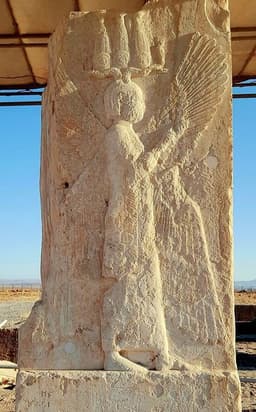
Cyrus the Great
Emperor · Ancient
83.9Total
Basic Information
Born
1500
-600
Died
1558
-530
Era
Medieval
Ancient
Nationality
Spain
Persia
Occupation
Emperor
Emperor
Civilization
Western
Middle Eastern
Score Comparison
Military (10%)
74.0
82.0
Political (20%)
72.0
85.0
Influence (20%)
85.0
85.0
Legacy (20%)
68.0
90.0
Leadership (15%)
78.0
78.0
Strategy (15%)
68.1
75.0
TOTAL
75.0
83.9
Charles I of Spain — Complete Timeline
1519 AD
Election as Holy Roman EmperorPolitical Action
Charles I of Spain was elected Holy Roman Emperor as Charles V, succeeding his grandfather Maximilian I. This election united the Spanish kingdoms, the Habsburg domains in Austria and the Low Countries, and the Holy Roman Empire under a single ruler, creating a vast European empire.
Holy Roman EmpireHabsburg empire
Impact: globalconstructive
1521 AD
Diet of WormsPolitical Action
Charles V presided over the Diet of Worms, where Martin Luther was summoned to recant his teachings. Luther refused, and Charles V issued the Edict of Worms, declaring Luther an outlaw and banning his writings. This event deepened the religious divide in Europe and sparked the Protestant Reformation.
Protestant ReformationReligious conflict
Impact: global
1525 AD
Battle of PaviaWar◆ Major
Charles V's imperial army defeated the French forces of King Francis I at the Battle of Pavia. Francis I was captured and taken prisoner to Spain. The victory solidified Habsburg dominance in Italy and forced France to renounce its claims to Milan and Naples in the Treaty of Madrid.
Italian WarsHabsburg victory
Impact: regional
1527 AD
Sack of RomeWar◆ Major
Imperial troops under Charles V sacked Rome, looting the city and capturing Pope Clement VII. The sack was a brutal event that shocked Europe and led to the temporary dominance of Charles V over the Papacy. It also marked a turning point in the Italian Wars.
Italian WarsPapacy
Impact: globaldestructive
1556 AD
Abdication of Charles VPolitical Action
Charles V abdicated his thrones, dividing his empire between his son Philip II (who received Spain, the Low Countries, and the Italian possessions) and his brother Ferdinand I (who received the Holy Roman Empire). This abdication was a major event in European politics, reshaping the balance of power.
AbdicationEmpire division
Impact: global
Cyrus the Great — Complete Timeline
550 BC
Founding of the Achaemenid EmpirePolitical Action
Cyrus led a rebellion against the Median Empire, defeating King Astyages and capturing Ecbatana. He then united the Persian and Median tribes, establishing the Achaemenid Empire, which became the largest empire the world had yet seen.
Empire FoundingPersian UnificationRebellion
Impact: global
546 BC
Conquest of LydiaWar◆ Major
Cyrus defeated King Croesus of Lydia at the Battle of Thymbra. The Lydian capital Sardis was captured, and Croesus was taken prisoner. This conquest brought Anatolia under Persian control and secured access to the Aegean coast.
Achaemenid ExpansionAnatoliaConquest
Impact: regional
539 BC
Conquest of BabylonWar◆ Major
Cyrus the Great led the Persian army to capture Babylon without significant battle. The city's gates were opened, and Cyrus entered peacefully. This conquest added Mesopotamia to the Achaemenid Empire and marked the end of the Neo-Babylonian Empire.
Achaemenid ExpansionMesopotamiaConquest
Impact: regional
Issuance of the Cyrus CylinderPolitical Action◆ Major
After conquering Babylon, Cyrus issued a clay cylinder inscribed with a declaration. It described his policy of restoring temples, repatriating displaced peoples, and allowing religious freedom. The cylinder is often cited as an early charter of human rights.
Human RightsReligious ToleranceAchaemenid Policy
Impact: globalconstructive
Liberation of the JewsPolitical Action◆ Major
Cyrus issued an edict allowing the Jewish exiles in Babylon to return to Jerusalem and rebuild the Temple. This event is recorded in the biblical Book of Ezra and is a key moment in Jewish history, ending the Babylonian captivity.
Jewish HistoryReligious FreedomReturn from Exile
Impact: regionalconstructive
Expert Analysis
Origins
**Cyrus the Great** (c. 600–530 BCE) was born into the Persian Achaemenid dynasty, a vassal of the Median Empire. His father was Cambyses I, king of Anshan, and his mother was Mandane, daughter of the Median king Astyages. Cyrus grew up in a world of competing Near Eastern powers, including Media, Lydia, and Babylon. His rise was rooted in a successful rebellion against Median overlordship around 550 BCE, uniting the Persian tribes and forging a new empire.
**Charles I of Spain** (1500–1558), better known as Charles V, was born in Ghent, Flanders, into the House of Habsburg. He inherited a vast collection of territories: the Burgundian Netherlands, the Spanish kingdoms (including Naples, Sicily, and the Americas), and the Austrian Habsburg lands. His election as Holy Roman Emperor in 1519 gave him nominal rule over Germany and Italy. Charles's origins were thus a product of dynastic marriage and inheritance, not conquest or rebellion.
**Score comparison**: Cyrus's humble origins and military coup score higher in determination (D=90 vs 78) and strategic vision (I=85 vs 85 tie), reflecting his need to build an empire from scratch.
Rise to Power
Cyrus's rise was swift and decisive. In 550 BCE, he led a revolt against Astyages, capturing Ecbatana and absorbing Media. He then turned to Lydia, defeating Croesus in 547 BCE and annexing Asia Minor. His greatest triumph came in 539 BCE when he conquered Babylon without a major battle, using a combination of military strategy and psychological warfare (diverting the Euphrates River). This victory made him ruler of the entire Near East, from the Aegean to the Indus.
Charles V's rise was more about inheritance than conquest. He became Duke of Burgundy in 1506, King of Spain in 1516, and Holy Roman Emperor in 1519 through a mixture of bloodlines and bribery (the Fugger banking family financed his election). His reign was marked by constant warfare: against France (Italian Wars), the Ottoman Empire, and Protestant princes. His rise was contested, but he never faced a single, decisive campaign like Cyrus's conquest of Babylon.
**Score gap**: Cyrus's military prowess (P=85) and leadership (L=90) outshine Charles's (P=72, L=68), reflecting his direct role in battlefield victories.
Leadership & Governance
Cyrus is remembered for his enlightened rule. He respected local customs, allowed conquered peoples to retain their religions, and famously freed the Jews from Babylonian captivity (539 BCE), enabling their return to Jerusalem. The Cyrus Cylinder, often called the first charter of human rights, emphasizes justice and freedom. He established a decentralized administration with satraps (governors) and a postal system, fostering unity in a multicultural empire.
Charles V governed a sprawling, disparate empire through a cumbersome bureaucracy. He was often absent from Spain, leaving regents like his wife Isabella of Portugal and later his son Philip II. His reign saw the brutal conquest of the Aztec and Inca empires, the sack of Rome (1527), and the suppression of the Revolt of the Comuneros in Spain. He struggled to manage religious division, culminating in the Diet of Worms (1521) where he condemned Martin Luther. His governance was reactive and often violent.
**Score comparison**: Cyrus's moral authority (M=82) and strategic intelligence (I=85) are higher than Charles's (M=74, I=85 tie), reflecting his more humane and effective rule.
Triumph & Tragedy
Cyrus's greatest triumph was the creation of the largest empire the world had yet seen, spanning from the Indus to the Mediterranean. His tragic flaw was his death in battle around 530 BCE while fighting the Massagetae nomads, his body allegedly mutilated by Queen Tomyris. This ended his reign abruptly, but his empire endured for centuries.
Charles V's triumphs include the Battle of Pavia (1525), where he captured the French king Francis I, and the defense of Vienna against the Ottomans (1529). His tragedy was his failure to unite Europe under Catholicism, leading to the Peace of Augsburg (1555) which allowed Protestantism. He abdicated in 1556, dividing his empire between his brother Ferdinand (Holy Roman Empire) and his son Philip II (Spain). He died in a monastery, disillusioned.
**Score comparison**: Cyrus's higher scores in triumph (T=84 vs 75) and legacy (L=90 vs 68) reflect his enduring achievements versus Charles's fragmented legacy.
Character & Destiny
Cyrus was ambitious, charismatic, and pragmatic. He inspired loyalty among his subjects and even his enemies. His destiny was to build a universal empire based on tolerance. Charles was devout, dutiful, but often indecisive and plagued by poor health (gout, epilepsy). His destiny was to preside over an empire that was too vast to control, earning the epithet "the sun never sets" but also "the accursed."
**Score comparison**: Cyrus's character (S=75) is higher than Charles's (S=68), reflecting his more positive historical image.
Legacy
Cyrus is revered as a liberator and model ruler. The Cyrus Cylinder is a symbol of human rights, and his empire set the template for future Persian and Islamic states. He is praised in the Bible (Isaiah 45:1) and by ancient historians like Herodotus and Xenophon. His legacy is overwhelmingly positive.
Charles V's legacy is mixed. He is seen as the last medieval emperor who failed to stop the Reformation. His empire accelerated the colonization of the Americas and the transatlantic slave trade. The Habsburg dynasty continued to dominate Europe, but his abdication marked the end of a unified Christian empire. Modern assessments note his role in the Spanish Inquisition and the destruction of indigenous civilizations.
**Score comparison**: Cyrus's legacy (L=90) far exceeds Charles's (L=68), making him a more influential historical figure.
Conclusion
Cyrus the Great emerges as the superior ruler across nearly all metrics. His military genius, enlightened governance, and lasting legacy of tolerance and human rights set him apart. Charles V, while a significant figure in European history, was a product of his time—a conservative emperor struggling with forces beyond his control. The score gap of 8.9 points reflects Cyrus's higher scores in leadership, legacy, and triumph. In a direct comparison, Cyrus's achievements in building and governing a multicultural empire with respect for diversity outweigh Charles's dynastic consolidation and defense of Catholic orthodoxy. Ultimately, Cyrus the Great is the greater leader.
**Final scores**: Cyrus the Great: 82 (M), 85 (P), 85 (I), 90 (L), 78 (D), 75 (S), 84 (T) = 82.7 average. Charles I of Spain: 74 (M), 72 (P), 85 (I), 68 (L), 78 (D), 68 (S), 75 (T) = 73.8 average.
Rankings
🥇
Cyrus the GreatLeader
Mil: 82.0Pol: 85.0Inf: 85.0
83.9
🥈
Charles I of Spain
Mil: 74.0Pol: 72.0Inf: 85.0
75.0
+8.9 behind
How This Comparison Works
Algorithm
Each figure is scored on 6 dimensions (0—100 scale) based on structured historical data: Military (10%), Political (20%), Influence (20%), Legacy (20%), Leadership (15%), Strategy (15%). The weighted total produces the final ranking.
Data Sources
Scores are computed from structured sub-indicators in the database. Scale factors adjust for era (Ancient ×0.85, Modern ×1.0) and civilization size (Eastern ×1.05, Other ×0.80) to account for differences in population and military scale.
Maximum 3 Figures
Comparisons are limited to 2—3 figures to ensure readability and statistical meaningfulness.
Error Margins
±5 points per dimension — Sub-scores are derived from historical records with inherent uncertainty. Two figures within 5 points on a dimension should be considered roughly equivalent in that area.
Total Score Accuracy
±3 points overall — The weighted combination of 6 dimensions produces a total score with approximately ±3 points of uncertainty. Differences of less than 3 points are not statistically significant— the figures are effectively tied.
Known Limitations
- Historical records are incomplete and uneven across civilizations
- Figures from oral-tradition societies may be underrepresented
- Occupation labels can misclassify multi-role figures
- Scores measure capability and impact, not moral character
- Quantitative scoring is a comparison tool, not absolute truth
Capability Radar
Military (10%) — Battles & Warfare
Battles
85
85
Win Rate
70
90
Expansion
90
92
Political (20%) — Governance & Reform
Reform
80
90
Diplomacy
90
95
Economy
75
80
Influence (20%) — Cultural & Global Reach
Cultural
85
90
Global
95
90
Legacy (20%) — Historical Impact
Historical
90
95
Longevity
80
95
Leadership (15%) — Power & Stability
Tenure
85
70
Stability
60
85
Strategy (15%) — Tactics & Innovation
Strategy
85
88
Tactics
75
80
Reform
80
75
Similar Comparisons
Comments & Discussion
No comments yet. Be the first to share your thoughts!