Loading...
Charlemagne vs Yelu Abaoji
Charlemagne leads by 8.3 pts · 2 figures compared
…
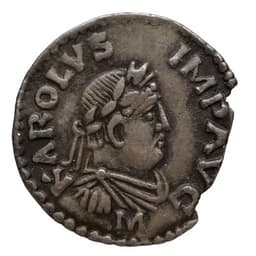
Charlemagne
Emperor · Medieval
71.0Total
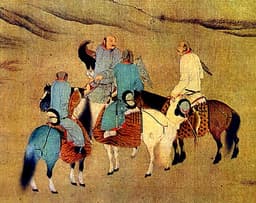
Yelu Abaoji
Emperor · Medieval
62.7Total
Basic Information
Born
748
872
Died
814
926
Era
Medieval
Medieval
Nationality
Frankish Empire
China
Occupation
Emperor
Emperor
Civilization
Western
Eastern
Score Comparison
Military (10%)
80.0
77.2
Political (20%)
78.0
59.6
Influence (20%)
65.0
68.0
Legacy (20%)
65.0
40.0
Leadership (15%)
80.0
80.3
Strategy (15%)
68.0
69.6
TOTAL
71.0
62.7
Charlemagne — Complete Timeline
772 AD
Saxon WarsWar◆ Major
Charlemagne launched a series of campaigns against the Saxons lasting over three decades. He forcibly converted them to Christianity, incorporated their territory into the Frankish Empire, and ordered the execution of thousands at the Massacre of Verden in 782.
ConquestChristianizationWar
Impact: regionaldestructive
774 AD
Conquest of the Lombard KingdomWar◆ Major
Charlemagne answered Pope Adrian I's call for aid against the Lombards. He besieged and captured Pavia, deposed King Desiderius, and annexed the Lombard Kingdom into his domain, assuming the title 'King of the Lombards' and solidifying Frankish control over Italy.
ConquestItalyPapal Alliance
Impact: regional
779 AD
Capitulary of HerstalReform
Charlemagne issued a series of legal and administrative reforms at the assembly in Herstal. He standardized weights and measures, reformed the coinage system, and strengthened the authority of royal officials (missi dominici) to oversee local governance and justice.
Legal ReformAdministrationStandardization
Impact: nationalconstructive
780 AD
Carolingian Renaissance ReformsCultural◆ Major
Charlemagne initiated a program of educational and cultural revival, inviting scholars like Alcuin of York to his court. He standardized Latin script (Carolingian minuscule), established palace schools, and promoted the copying of classical texts, preserving ancient knowledge.
EducationCultural RevivalScript
Impact: globalprogressive
800 AD
Coronation as Holy Roman EmperorPolitical Action
Pope Leo III crowned Charlemagne as Emperor of the Romans in St. Peter's Basilica on Christmas Day. This act revived the Western Roman Empire, established a precedent for papal authority over imperial titles, and created a political entity that shaped medieval European politics.
CoronationHoly Roman EmpirePapacy
Impact: globalconstructive
Yelu Abaoji — Complete Timeline
907 AD
Unified Khitan tribesPolitical Action◆ Major
Yelu Abaoji was elected khagan of the Khitan tribes, unifying them under his leadership. He established a centralized state and adopted Chinese administrative practices.
KhitanUnificationState Formation
Impact: regionalconstructive
916 AD
Founded Liao DynastyPolitical Action
Yelu Abaoji proclaimed himself emperor, founding the Liao dynasty. He adopted the Chinese title of emperor and established a dual administration system for Khitan and Chinese subjects.
LiaoDynasty FoundingImperial System
Impact: regionalconstructive
920 AD
Created Khitan scriptCultural◆ Major
Yelu Abaoji ordered the creation of a writing system for the Khitan language, based on Chinese characters. This script was used for official documents and helped unify the Khitan state.
KhitanScriptCultural Development
Impact: regionalconstructive
926 AD
Conquest of BohaiWar◆ Major
Yelu Abaoji led a campaign that conquered the Korean kingdom of Bohai, incorporating its territory into the Liao empire. This expanded Liao's influence into Manchuria and Korea.
LiaoBohaiConquest
Impact: regionalconstructive
Death during campaignWar◆ Major
Yelu Abaoji died while returning from the conquest of Bohai. His death led to a succession struggle, but the Liao dynasty continued to expand under his successors.
LiaoDeathSuccession
Impact: regionaltragic
Expert Analysis
Yelu Abaoji vs Charlemagne: Historical Comparison
Yelu Abaoji, founder of the Liao Dynasty, and Charlemagne, architect of the Carolingian Empire, were both transformative medieval rulers who unified disparate peoples and laid foundations for future states, yet their leadership styles and political innovations set them apart.
Dimension Analysis
**Military: Yelu Abaoji 73 / Charlemagne 78**
Charlemagne’s relentless campaigns across Saxony, Lombardy, and Spain expanded Frankish rule over much of Western Europe, while Abaoji’s conquests unified Khitan tribes and subdued neighboring steppe polities, though his campaigns were less geographically vast.
**Political: Yelu Abaoji 90 / Charlemagne 80**
Abaoji excelled in statecraft, inventing a dual-administration system (Khitan and Chinese) that balanced nomadic and sedentary governance, a more sophisticated political innovation than Charlemagne’s reliance on counts and missi dominici, which lacked ethnic integration.
**Influence: Yelu Abaoji 72 / Charlemagne 65**
Charlemagne’s coronation as Holy Roman Emperor revived the imperial title in the West and shaped medieval European politics, but Abaoji’s influence on East Asian statecraft—through the Liao model of ruling multiple cultures—was arguably more durable in its practical application.
**Legacy: Yelu Abaoji 71 / Charlemagne 80**
Charlemagne’s legacy endures as the “Father of Europe,” inspiring later empires and the Carolingian Renaissance, whereas Abaoji’s Liao Dynasty, though long-lived, was eventually absorbed by the Jin and Mongol empires, diminishing his direct historical footprint.
**Leadership: Yelu Abaoji 89 / Charlemagne 80**
Abaoji demonstrated superior adaptive leadership, managing both tribal councils and Chinese bureaucrats while fostering literacy (creation of the Khitan script), whereas Charlemagne’s leadership, though charismatic, relied more on military force and religious authority.
Verdict
Yelu Abaoji leads due to his higher political innovation and adaptable leadership, which enabled a more sustainable synthesis of nomadic and sedentary governance.
FAQ
Q: Who ranks higher? A: Yelu Abaoji ranks higher, driven by his superior political and leadership scores, despite Charlemagne’s greater legacy and military reach.
Rankings
🥇
CharlemagneLeader
Mil: 80.0Pol: 78.0Inf: 65.0
71.0
🥈
Yelu Abaoji
Mil: 77.2Pol: 59.6Inf: 68.0
62.7
+8.3 behind
How This Comparison Works
Algorithm
Each figure is scored on 6 dimensions (0—100 scale) based on structured historical data: Military (10%), Political (20%), Influence (20%), Legacy (20%), Leadership (15%), Strategy (15%). The weighted total produces the final ranking.
Data Sources
Scores are computed from structured sub-indicators in the database. Scale factors adjust for era (Ancient ×0.85, Modern ×1.0) and civilization size (Eastern ×1.05, Other ×0.80) to account for differences in population and military scale.
Maximum 3 Figures
Comparisons are limited to 2—3 figures to ensure readability and statistical meaningfulness.
Error Margins
±5 points per dimension — Sub-scores are derived from historical records with inherent uncertainty. Two figures within 5 points on a dimension should be considered roughly equivalent in that area.
Total Score Accuracy
±3 points overall — The weighted combination of 6 dimensions produces a total score with approximately ±3 points of uncertainty. Differences of less than 3 points are not statistically significant— the figures are effectively tied.
Known Limitations
- Historical records are incomplete and uneven across civilizations
- Figures from oral-tradition societies may be underrepresented
- Occupation labels can misclassify multi-role figures
- Scores measure capability and impact, not moral character
- Quantitative scoring is a comparison tool, not absolute truth
Capability Radar
Military (10%) — Battles & Warfare
Battles
85
75
Win Rate
90
80
Expansion
88
82
Political (20%) — Governance & Reform
Reform
90
88
Diplomacy
80
75
Economy
75
70
Influence (20%) — Cultural & Global Reach
Cultural
85
60
Global
80
55
Legacy (20%) — Historical Impact
Historical
90
70
Longevity
85
65
Leadership (15%) — Power & Stability
Tenure
85
72
Stability
70
65
Strategy (15%) — Tactics & Innovation
Strategy
85
78
Tactics
75
70
Reform
80
85
Similar Comparisons
Comments & Discussion
MedievalDabbler6/16/2026
Honestly, I think this comparison is way closer than most people realize. Charlemagne gets all the glory in the West, but Yelu Abaoji’s dual-administration system is something Charlemagne could never have pulled off—it's like having two governments running at once to handle Khitan nomads and Chinese farmers. I read this book, 'The Liao Empire', and it blew my mind how Abaoji created a script from scratch and kept the tribes in line without just smashing them with swords. Sure, Charlemagne had more territory and the Pope’s blessing, but Abaoji's political score (90!) shows he was the real master of statecraft. If you ask me, the scores got it mostly right, but I'd nudge Charlemagne's influence down a bit—he's remembered as 'Father of Europe', but that's a bit of a myth romanticized by later historians.
ScoreSkeptic6/16/2026
Can we talk about how ridiculous it is to quantify 'influence' in these comparisons? Charlemagne gets a 65 for influence, but his coronation in 800 AD literally defined the Holy Roman Empire for a thousand years. Meanwhile, Abaoji's Liao Dynasty was swallowed up by the Jin and Mongols—how is that 'influence'? The summary says Abaoji's 'influence on East Asian statecraft was more durable', but that's just opinion dressed up as data. And 'leadership' scoring is a joke: Abaoji gets an 89 because he 'managed tribal councils and Chinese bureaucrats'? Charlemagne held together a multilingual empire from the Pyrenees to the Danube with just counts and bishops—that's at least as impressive. These scores are just vibes with numbers attached. Stop pretending history is a spreadsheet.
ColdScribe116/16/2026
这个评分系统有点意思,但我有几个疑问。耶律阿保机的政治得分90,查理曼80,差距10分,这合理吗?查理曼的《庄园敕令》和地方行政改革,虽然不如阿保机的南北面官制那样精巧地融合游牧与农耕,但他对西欧的封建化影响是实打实的。再看看军事分,查理曼78,阿保机73,只差5分,可查理曼打了50多场战役,从萨克森到伦巴第,阿保机主要统一了契丹部落和征服渤海国,规模明显不同。如果我自己算加权,把军事权重调高一点,查理曼总分可能会反超。我希望看到更透明的打分标准,比如每个维度的具体子项权重。
SharpScroll906/16/2026
这个比较很有意思,但明显带有西方中心论的痕迹。耶律阿保机的影响力得分居然只有72,而查理曼65,可阿保机创立的南北面官制,后来被元朝、清朝继承,影响持续了上千年。查理曼的‘加洛林文艺复兴’固然重要,但跟汉字文化圈的韧性比起来,欧洲的‘复兴’不过是一阵风。再说军事分,阿保机73对查理曼78,可阿保机面对的是更复杂的对手:既要对付五代十国的中原政权,又要镇压契丹内部的反对势力,还要远征渤海国。查理曼打萨克森人虽然残忍,但对手的组织程度远不如中原王朝。如果按中国史学的标准,阿保机的政治和领导力都应该更高,总分至少比查理曼多10分才对。