Loading...
Charlemagne vs Winston Churchill
Winston Churchill leads by 0.8 pts · 2 figures compared
…
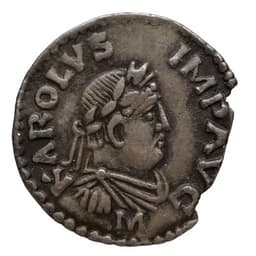
Charlemagne
Emperor · Medieval
71.0Total
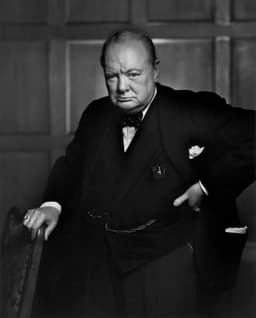
Winston Churchill
Politician · Modern
71.8Total
Basic Information
Born
748
1874
Died
814
1965
Era
Medieval
Modern
Nationality
Frankish Empire
United Kingdom
Occupation
Emperor
Politician
Civilization
Western
Western
Score Comparison
Military (10%)
80.0
55.0
Political (20%)
78.0
78.0
Influence (20%)
65.0
75.0
Legacy (20%)
65.0
68.0
Leadership (15%)
80.0
82.0
Strategy (15%)
68.0
65.0
TOTAL
71.0
71.8
Charlemagne — Complete Timeline
772 AD
Saxon WarsWar◆ Major
Charlemagne launched a series of campaigns against the Saxons lasting over three decades. He forcibly converted them to Christianity, incorporated their territory into the Frankish Empire, and ordered the execution of thousands at the Massacre of Verden in 782.
ConquestChristianizationWar
Impact: regionaldestructive
774 AD
Conquest of the Lombard KingdomWar◆ Major
Charlemagne answered Pope Adrian I's call for aid against the Lombards. He besieged and captured Pavia, deposed King Desiderius, and annexed the Lombard Kingdom into his domain, assuming the title 'King of the Lombards' and solidifying Frankish control over Italy.
ConquestItalyPapal Alliance
Impact: regional
779 AD
Capitulary of HerstalReform
Charlemagne issued a series of legal and administrative reforms at the assembly in Herstal. He standardized weights and measures, reformed the coinage system, and strengthened the authority of royal officials (missi dominici) to oversee local governance and justice.
Legal ReformAdministrationStandardization
Impact: nationalconstructive
780 AD
Carolingian Renaissance ReformsCultural◆ Major
Charlemagne initiated a program of educational and cultural revival, inviting scholars like Alcuin of York to his court. He standardized Latin script (Carolingian minuscule), established palace schools, and promoted the copying of classical texts, preserving ancient knowledge.
EducationCultural RevivalScript
Impact: globalprogressive
800 AD
Coronation as Holy Roman EmperorPolitical Action
Pope Leo III crowned Charlemagne as Emperor of the Romans in St. Peter's Basilica on Christmas Day. This act revived the Western Roman Empire, established a precedent for papal authority over imperial titles, and created a political entity that shaped medieval European politics.
CoronationHoly Roman EmpirePapacy
Impact: globalconstructive
Winston Churchill — Complete Timeline
1940 AD
Appointed Prime Minister of the United KingdomPolitical Action◆ Major
On May 10, 1940, Winston Churchill became Prime Minister of the United Kingdom, replacing Neville Chamberlain. His appointment came as Nazi Germany invaded France and the Low Countries, and Churchill formed a coalition government to lead Britain through World War II.
World War IILeadershipCoalition Government
Impact: globalconstructive
Delivered the 'We Shall Fight on the Beaches' SpeechOther◆ Major
On June 4, 1940, Churchill delivered a speech to the House of Commons following the evacuation of British forces from Dunkirk. He declared that Britain would fight on the beaches, landing grounds, fields, streets, and hills, and never surrender, rallying British morale during the darkest days of World War II.
World War IIOratoryMorale
Impact: nationalconstructive
1941 AD
Signed the Atlantic CharterOther◆ Major
On August 14, 1941, Churchill and U.S. President Franklin D. Roosevelt signed the Atlantic Charter aboard HMS Prince of Wales. This joint declaration outlined post-war goals including self-determination, disarmament, and free trade, and became a foundational document for the Allied war aims and the United Nations.
World War IIAllied CooperationPost-war Planning
Impact: globalconstructive
1945 AD
Attended the Yalta ConferenceOther◆ Major
In February 1945, Churchill attended the Yalta Conference with Roosevelt and Stalin to discuss the post-war reorganization of Europe. The conference agreed on the division of Germany, the establishment of the United Nations, and the fate of Eastern Europe, though Churchill later expressed regret over concessions to Stalin.
World War IIPost-war SettlementBig Three
Impact: global
1946 AD
Delivered the 'Iron Curtain' SpeechOther◆ Major
On March 5, 1946, Churchill delivered a speech at Westminster College in Fulton, Missouri, where he stated that an 'iron curtain' had descended across Europe from Stettin to Trieste. This speech is widely regarded as marking the beginning of the Cold War, as it highlighted the division between Soviet-controlled Eastern Europe and the West.
Cold WarSoviet UnionDivision of Europe
Impact: globaldestructive
1953 AD
Awarded the Nobel Prize in LiteratureOther◆ Major
In 1953, Churchill was awarded the Nobel Prize in Literature for his historical writings, particularly 'The Second World War' and 'A History of the English-Speaking Peoples'. The Nobel committee cited his mastery of historical and biographical description as well as his brilliant oratory in defending human values.
LiteratureNobel PrizeHistorical Writing
Impact: nationalconstructive
Expert Analysis
Winston Churchill vs Charlemagne
# The Lion and the Eagle
On a bitter Christmas morning in the year 800, an aging Frankish king knelt before an altar in St. Peter’s Basilica. As Pope Leo III placed a golden crown upon his head, the congregation erupted in acclamation: “To Charles Augustus, crowned by God, great and pacific emperor of the Romans!” Charlemagne rose from his knees a transformed man—no longer merely a warrior king, but the inheritor of Rome’s eternal mantle. More than eleven centuries later, on a gray May afternoon in 1940, another aging statesman stood before the House of Commons and uttered words that would echo through history: “I have nothing to offer but blood, toil, tears and sweat.” Winston Churchill, at sixty-five, had just become Prime Minister of a Britain teetering on the edge of annihilation. Two men, separated by a thousand years, yet each summoned to defend civilization when the darkness seemed absolute. What made them rise, and what ultimately set their paths apart?
Origins
Charlemagne was born into a world of violence and faith. His father, Pepin the Short, had seized the Frankish throne with the blessing of the Pope, and young Charles grew up in a court where war was a seasonal rhythm and Christianity the unifying creed. He learned to ride before he could read, hunted boar in the Ardennes, and absorbed the rough camaraderie of warriors who would follow him into battle. His education was practical—he spoke Frankish and Latin, understood some Greek, but never mastered writing. When he became king at twenty-six, he inherited a realm fractured by rebellion and surrounded by enemies.
Churchill entered life under very different stars. Born at Blenheim Palace in 1874, he was the grandson of a duke, yet his childhood was marked by emotional distance from his parents and a stubborn, rebellious nature that exasperated his teachers. He attended Harrow and Sandhurst, but found his real education in the outposts of empire—in Cuba, India, and South Africa. Where Charlemagne learned leadership through the sword, Churchill learned it through the pen, filing dispatches from battlefields and absorbing the rhythms of parliamentary debate. Both men, however, shared one essential quality from youth: an unshakeable conviction that they were destined for greatness.
Rise to Power
Charlemagne’s ascent was brutal and direct. When his brother Carloman died suddenly in 771, Charles seized sole control of the Frankish kingdom. He spent the next three decades in almost constant warfare—against the Saxons in the north, the Lombards in Italy, the Avars in the east. The Saxon Wars, beginning in 772, were particularly savage: thirty-three campaigns, mass baptisms at sword-point, and the infamous massacre of 4,500 Saxon captives at Verden in 782. Charlemagne did not rise through political maneuvering; he carved his path with iron.
Churchill’s journey was far more circuitous, marked by spectacular rises and devastating falls. He entered Parliament in 1900 at age twenty-six, already famous for his escape from a Boer prison camp. He served as Home Secretary, then First Lord of the Admiralty, only to be blamed for the disastrous Gallipoli campaign in 1915. He resigned in disgrace, joining the infantry on the Western Front. For two decades, he wandered in the political wilderness—a Cassandra warning against Nazi Germany while the establishment dismissed him as a warmonger. His moment came on May 10, 1940, when Neville Chamberlain resigned and the King summoned him to Buckingham Palace. Churchill later wrote that he felt as if he were “walking with destiny.”
Leadership & Governance
Here the two men diverge most sharply. Charlemagne ruled through presence and terror. He personally led his armies into battle well into his sixties, his white beard flowing beneath his helmet. He governed through annual assemblies where he issued capitularies—legal decrees covering everything from weights and measures to the behavior of priests. His greatest achievement, the Carolingian Renaissance, began around 780 when he invited the English scholar Alcuin of York to his court. Together, they revived education, standardized Latin script, and established cathedral schools across the empire. Charlemagne understood that conquest alone could not sustain power; he needed to build a civilization.
Churchill’s leadership was of a different order entirely—not military command, but moral defiance. He had a score of 85 in leadership but only 55 in military strategy, and the numbers tell the truth. He was not a great tactician; he meddled in military operations, proposed disastrous schemes like invading Norway, and often exasperated his generals. What he possessed was an unbreakable will and an unmatched gift for rhetoric. In 1940, when Britain stood alone, his speeches—“We shall fight on the beaches,” “Their finest hour”—transformed despair into determination. He forged a coalition that included the United States and the Soviet Union, and he inspired a nation to endure the Blitz, the U-boat blockade, and years of privation.
Triumph & Tragedy
Charlemagne’s greatest moment came on Christmas Day 800, when the Pope crowned him Emperor. It was a political masterstroke—by reviving the Roman Empire in the West, he broke the Byzantine Empire’s claim to universal sovereignty and established a new Christian order. But the coronation also contained the seeds of tragedy. It entangled the papacy with secular power for centuries, and the empire Charlemagne built—held together by his personal authority—fragmented within a generation of his death.
Churchill’s triumph was victory in 1945. Nazi Germany lay in ruins, and Churchill had led his people from the brink of defeat to total victory. But even as the guns fell silent, the British people voted him out of office. It was a brutal rejection, and Churchill reportedly quoted the Greek historian Plutarch: “Ingratitude towards their great men is the mark of strong peoples.” He returned to power in 1951, but his second premiership was marked by declining health and failing judgment—he mishandled colonial crises and clung to empire as the world moved on.
Character & Destiny
Charlemagne was a man of immense physical vitality and ruthless pragmatism. He loved hunting, swimming, and the company of his daughters. He wept at the deaths of his sons and wives, yet ordered mass executions without hesitation. His faith was genuine but instrumental—he saw Christianity as the glue that could bind his diverse peoples. He was, in the end, a builder: of schools, of churches, of laws, of an idea of Europe.
Churchill was a man of words and moods. He suffered from what he called his “black dog”—periods of profound depression. He was vain, stubborn, and often wrong about the future. Yet when the hour demanded it, his flaws became strengths. His refusal to compromise, his theatrical defiance, his romantic view of history—these were precisely what a nation facing annihilation needed. As he wrote in *The Gathering Storm*: “The statesman who yields to war fever must realize that once the signal is given, he is the master of the machine.”
Legacy
Charlemagne’s legacy is the foundation of Europe. He scored 80 in legacy, and rightly so—his empire gave birth to France and Germany, his educational reforms preserved classical learning, and his coronation established the idea of a united Christendom that would inspire Charlemagne, Napoleon, and the European Union. Today, he is remembered as the “Father of Europe.”
Churchill’s legacy is more contested. He scored 75 in legacy, but his reputation has been complicated by his views on empire, race, and events like the Bengal Famine of 1943. Yet his essential achievement remains: he stood against tyranny when standing seemed hopeless. His words—“Never was so much owed by so many to so few”—capture the debt the free world owes him.
Conclusion
Two men, two worlds. Charlemagne built an empire with his sword and his faith; Churchill saved one with his voice and his will. One ruled from horseback, the other from a bunker. One created a civilization; the other preserved one. They were both flawed, both driven, both products of their times. And in the end, they both understood something that lesser leaders forget: that history is not made by cautious men who calculate the odds, but by those who, when the moment comes, choose to act. As Churchill himself might have said—and as Charlemagne surely believed—it is never the size of the dog in the fight, but the size of the fight in the dog.
Rankings
🥇
Winston ChurchillLeader
Mil: 55.0Pol: 78.0Inf: 75.0
71.8
🥈
Charlemagne
Mil: 80.0Pol: 78.0Inf: 65.0
71.0
+0.8 behind
How This Comparison Works
Algorithm
Each figure is scored on 6 dimensions (0—100 scale) based on structured historical data: Military (10%), Political (20%), Influence (20%), Legacy (20%), Leadership (15%), Strategy (15%). The weighted total produces the final ranking.
Data Sources
Scores are computed from structured sub-indicators in the database. Scale factors adjust for era (Ancient ×0.85, Modern ×1.0) and civilization size (Eastern ×1.05, Other ×0.80) to account for differences in population and military scale.
Maximum 3 Figures
Comparisons are limited to 2—3 figures to ensure readability and statistical meaningfulness.
Error Margins
±5 points per dimension — Sub-scores are derived from historical records with inherent uncertainty. Two figures within 5 points on a dimension should be considered roughly equivalent in that area.
Total Score Accuracy
±3 points overall — The weighted combination of 6 dimensions produces a total score with approximately ±3 points of uncertainty. Differences of less than 3 points are not statistically significant— the figures are effectively tied.
Known Limitations
- Historical records are incomplete and uneven across civilizations
- Figures from oral-tradition societies may be underrepresented
- Occupation labels can misclassify multi-role figures
- Scores measure capability and impact, not moral character
- Quantitative scoring is a comparison tool, not absolute truth
Capability Radar
Military (10%) — Battles & Warfare
Battles
85
55
Win Rate
90
60
Expansion
88
40
Political (20%) — Governance & Reform
Reform
90
70
Diplomacy
80
85
Economy
75
60
Influence (20%) — Cultural & Global Reach
Cultural
85
85
Global
80
85
Legacy (20%) — Historical Impact
Historical
90
90
Longevity
85
80
Leadership (15%) — Power & Stability
Tenure
85
75
Stability
70
70
Strategy (15%) — Tactics & Innovation
Strategy
85
85
Tactics
75
65
Reform
80
70
Similar Comparisons
Comments & Discussion
The Vexillologist6/16/2026
Churchill had better logos: that V-sign, the cigars, the siren suits. Charlemagne got stuck with a generic eagle and some boring orb. I’m sorry, but branding matters for legacy. Plus, Charles’s court poets couldn’t even invent a catchy nickname—he had to wait for historians to call him “Father of Europe.” Churchill’s “British Bulldog” stuck immediately. Charlemagne’s PR team failed him.
DataSkeptic996/16/2026
You people romanticize everything. Churchill “saved civilization”? Check the math: by 1945, Britain was bankrupt, its empire gone, and 450,000 Britons dead. Charlemagne’s “empire” fractured within a generation. Both men led flashy but unsustainable campaigns. The real winners were the accountants and bureaucrats who cleaned up their messes. Give me a steady administrator over a charismatic warmonger any day.
罗马铁粉6/16/2026
拿查尔曼跟丘吉尔比?简直是在侮辱加洛林王朝!查理曼大帝征服了萨克森、伦巴第、巴伐利亚,硬生生把半个欧洲捏成一个基督教帝国——而且是在马上做到的。丘吉尔呢?就知道躲在伦敦地下掩体里抽烟,让别国士兵为他流血。论军功,论版图,论铁血手腕,那个抽雪茄的胖子连给铁锤查理提鞋都不配!
穿越者观察员6/16/2026
你们这些现代人总活在1940年的戏剧里。公元800年的圣诞节,当教皇把皇冠戴在查理头上时,整个欧洲的秩序被重写了——教皇权和皇权从此公开角力了一千年。丘吉尔那场演讲再燃,也不过是国会的一场投票。一个改变了文明的底层代码,一个只是打了场仗。层次完全不一样,别硬比。
BattleTactician6/16/2026
Churchill micro-managed the war like a mad architect, demanding absurdly specific maps, insisting on amphibious landings he barely understood, and arguing over trivial divisional placements. Charlemagne conducted campaigns with the brutal simplicity of a battering ram. The Frankish king understood delegation: count the war-bands, point the sword, trust the local lords. Churchill would’ve redesigned the Aachen palace’s plumbing while the Vikings sacked his supply train.