Loading...
Charlemagne vs Suleiman the Magnificent
Suleiman the Magnificent leads by 2.2 pts · 2 figures compared
…
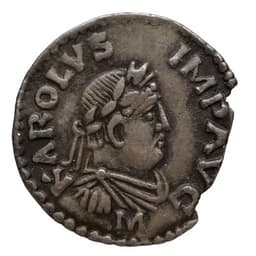
Charlemagne
Emperor · Medieval
71.0Total
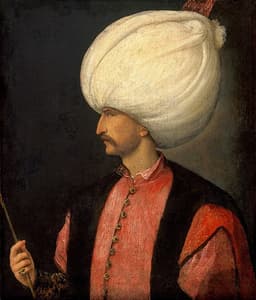
Suleiman the Magnificent
Emperor · Medieval
73.2Total
Basic Information
Born
748
1494
Died
814
1566
Era
Medieval
Medieval
Nationality
Frankish Empire
Ottoman Empire
Occupation
Emperor
Emperor
Civilization
Western
Middle Eastern
Score Comparison
Military (10%)
80.0
85.0
Political (20%)
78.0
78.0
Influence (20%)
65.0
72.0
Legacy (20%)
65.0
68.0
Leadership (15%)
80.0
72.0
Strategy (15%)
68.0
72.0
TOTAL
71.0
73.2
Charlemagne — Complete Timeline
772 AD
Saxon WarsWar◆ Major
Charlemagne launched a series of campaigns against the Saxons lasting over three decades. He forcibly converted them to Christianity, incorporated their territory into the Frankish Empire, and ordered the execution of thousands at the Massacre of Verden in 782.
ConquestChristianizationWar
Impact: regionaldestructive
774 AD
Conquest of the Lombard KingdomWar◆ Major
Charlemagne answered Pope Adrian I's call for aid against the Lombards. He besieged and captured Pavia, deposed King Desiderius, and annexed the Lombard Kingdom into his domain, assuming the title 'King of the Lombards' and solidifying Frankish control over Italy.
ConquestItalyPapal Alliance
Impact: regional
779 AD
Capitulary of HerstalReform
Charlemagne issued a series of legal and administrative reforms at the assembly in Herstal. He standardized weights and measures, reformed the coinage system, and strengthened the authority of royal officials (missi dominici) to oversee local governance and justice.
Legal ReformAdministrationStandardization
Impact: nationalconstructive
780 AD
Carolingian Renaissance ReformsCultural◆ Major
Charlemagne initiated a program of educational and cultural revival, inviting scholars like Alcuin of York to his court. He standardized Latin script (Carolingian minuscule), established palace schools, and promoted the copying of classical texts, preserving ancient knowledge.
EducationCultural RevivalScript
Impact: globalprogressive
800 AD
Coronation as Holy Roman EmperorPolitical Action
Pope Leo III crowned Charlemagne as Emperor of the Romans in St. Peter's Basilica on Christmas Day. This act revived the Western Roman Empire, established a precedent for papal authority over imperial titles, and created a political entity that shaped medieval European politics.
CoronationHoly Roman EmpirePapacy
Impact: globalconstructive
Suleiman the Magnificent — Complete Timeline
1522 AD
Siege of RhodesWar◆ Major
Suleiman personally led a massive Ottoman campaign against the Knights Hospitaller on Rhodes. After a six-month siege, the knights surrendered and were allowed to leave. This victory secured Ottoman control over the eastern Mediterranean.
SiegeMediterraneanKnights Hospitaller
Impact: regional
1526 AD
Battle of MohácsWar
Suleiman's Ottoman army defeated the Hungarian forces of King Louis II at Moh
BattleHungaryOttoman expansion
Impact: regional
1529 AD
Siege of ViennaWar◆ Major
Suleiman besieged Vienna, the Habsburg capital, with a large army. The siege failed due to supply issues, disease, and strong defenses. This defeat halted Ottoman expansion into central Europe and marked the empire's furthest advance westward.
SiegeViennaDefeat
Impact: regional
1530 AD
Codification of Ottoman lawReform◆ Major
Suleiman oversaw the compilation and standardization of Ottoman legal codes, known as Kanun. These laws regulated criminal justice, land tenure, and taxation, creating a unified legal system that balanced sharia with secular law. He earned the title 'Kanuni' (the Lawgiver).
Legal reformKanunOttoman Empire
Impact: nationalconstructive
1536 AD
Execution of Ibrahim PashaPolitical Action◆ Major
Suleiman ordered the execution of his grand vizier and close friend Ibrahim Pasha, who had served for 13 years. The reasons remain debated, but likely involved Ibrahim's growing power and conflicts with Suleiman's wife, Hurrem Sultan. This event demonstrated the absolute power of the sultan.
ExecutionCourt politicsPower
Impact: nationaltragic
Expert Analysis
Charlemagne vs Suleiman the Magnificent
# The Emperor and the Sultan
On Christmas Day in the year 800, an aging Frankish king knelt before the altar of St. Peter's Basilica in Rome. As Pope Leo III placed a golden crown upon his head, the congregation erupted in acclamation: "To Charles, Augustus, crowned by God, great and pacific emperor of the Romans!" Seven centuries later, in 1529, a different monarch stood before the walls of Vienna, the very city that would become the eastern bastion of that same empire. Suleiman, son of Selim, had brought the might of the Ottoman world to the gates of Christendom. These two men—Charlemagne and Suleiman the Magnificent—never met, but their lives trace an arc of power, faith, and ambition that shaped the destiny of Europe and the Middle East.
Origins
Charlemagne was born in 748 into a world of fractured kingdoms and constant warfare. His father, Pepin the Short, had seized the Frankish throne from the Merovingian dynasty, and young Charles grew up in a court where legitimacy was won through the sword. The Franks were a Germanic people, recently converted to Christianity, still rough around the edges of Roman civilization. Charlemagne learned to read but never mastered writing—a detail that speaks volumes about his world, where power was personal and physical.
Suleiman entered history in 1494, the son of Sultan Selim I, a conqueror who had doubled Ottoman territory in just eight years. Unlike Charlemagne, Suleiman was born into an empire already vast and sophisticated. He was educated in the palace school of Constantinople, studying history, law, poetry, and military science. Where Charlemagne's world was still being built, Suleiman's was already polished. The Ottoman Empire had inherited the administrative traditions of Byzantium and the military innovations of the steppe, fused with the spiritual authority of Islam.
Rise to Power
Charlemagne's path to supremacy was forged in blood. Upon his father's death in 768, he ruled jointly with his brother Carloman, but when Carloman died suddenly in 771, Charlemagne absorbed his territories without hesitation. He then launched the Saxon Wars in 772, a brutal three-decade campaign of conquest and forced conversion that would define his reign. The Saxons resisted fiercely, but Charlemagne was relentless—when they rebelled, he executed 4,500 prisoners in a single day at Verden. This was not cruelty for its own sake; it was state-building through terror, the only language his age understood.
Suleiman's rise was smoother but no less dramatic. He became sultan in 1520 upon his father's death, inheriting an empire that stretched from the Danube to the Nile. There was no civil war, no rival brother to eliminate—Selim had already killed his own brothers and nephews. Suleiman's first major act was the Siege of Rhodes in 1522, where he personally led a six-month campaign against the Knights Hospitaller. When the knights finally surrendered, he allowed them to leave with honor—a gesture of magnanimity that Charlemagne would have found incomprehensible.
Leadership & Governance
Charlemagne ruled through personal presence and constant movement. He had no fixed capital—his court traveled between royal villas, hearing cases, issuing decrees, and displaying power. The Capitulary of Herstal in 779 standardized weights and measures and reformed legal procedures, but enforcement depended on local counts whom Charlemagne could never fully control. His greatest achievement was the Carolingian Renaissance: he invited the scholar Alcuin of York to his court, established palace schools, and commissioned the copying of classical texts. Yet this was a fragile flower, planted in soil that would soon be overrun by Viking raids.
Suleiman governed through bureaucracy. The Ottoman Empire had a sophisticated administrative system, with provinces governed by pashas and a legal code known as Kanun. In 1530, Suleiman codified these laws, creating a uniform system that regulated everything from taxation to criminal punishment. He was called "Suleiman the Lawgiver" by his own people, and "the Magnificent" by Europeans who marveled at his wealth. His court in Constantinople was a center of art, poetry, and architecture—the great architect Sinan built mosques that still define the city's skyline. But Suleiman's governance had a dark side: the execution of his grand vizier and childhood friend Ibrahim Pasha in 1536 revealed how absolute power corrupts even the closest bonds.
Triumph & Tragedy
Charlemagne's greatest moment was his coronation in 800. By reviving the Roman Empire in the West, he created a political entity that would shape European history for a millennium. His tragedy was the fragility of his creation—his empire fractured within a generation of his death, divided among his grandsons. The Saxon Wars, his most ambitious project, ended in nominal victory but left a legacy of resentment that would simmer for centuries.
Suleiman's triumph was the Battle of Mohács in 1526, where he crushed the Hungarian army and killed King Louis II, opening Central Europe to Ottoman influence. His tragedy was the Siege of Vienna in 1529, where his vast army was defeated by logistics, disease, and stubborn resistance. That failure marked the high-water mark of Ottoman expansion; after Vienna, the empire began its slow, centuries-long retreat. Suleiman also faced personal tragedy: his beloved wife Roxelana schemed to have his eldest son Mustafa executed, a act that haunted the sultan's final years.
Character & Destiny
Charlemagne was a man of action, not reflection. He ate sparingly, dressed simply, and slept little. He was deeply religious but saw Christianity as a tool of unification rather than personal piety. His personality was forged in the crucible of constant warfare—he needed to be ruthless to survive, but his vision extended beyond mere conquest. He wanted to build something that would outlast him.
Suleiman was more complex. He wrote poetry under the pen name "Muhibbi" (the Lover), and his letters reveal a man capable of both tenderness and cold calculation. He ordered the execution of his son Mustafa with the same hand that had composed verses about justice. His personality reflected the contradictions of empire: magnificent and terrible, cultured and brutal, visionary and paranoid.
Legacy
Charlemagne's legacy is paradoxical. His empire crumbled, but his idea endured. The Holy Roman Empire he founded lasted until 1806, and his coronation established the precedent that European rulers derived their authority from both God and the pope. The Carolingian Renaissance preserved classical learning that would later fuel the flowering of medieval culture. Today, he is remembered as the "Father of Europe," a symbol of unity in a continent that has often been divided.
Suleiman's legacy is more tangible. The legal codes he established remained in force until the 19th century. The Ottoman Empire reached its greatest extent under his rule and maintained its power for another three centuries. Yet his failure at Vienna set limits that his successors could never overcome. Today, he is remembered as the greatest Ottoman sultan, a figure of golden age nostalgia in Turkey and the broader Muslim world.
Conclusion
Two emperors, seven centuries apart, each building an empire on the foundations of faith and force. Charlemagne united Western Europe through blood and conversion; Suleiman expanded an already vast empire through law and conquest. One created a civilization that would evolve into modern Europe; the other presided over a golden age that would eventually fade into memory. Their differences reflect the chasm between a world still being born and one already mature. Yet both faced the same fundamental challenge: how to build something that endures beyond the lifetime of a single ruler. Neither fully succeeded—empires, like men, are mortal. But the stories of their ambition, their triumphs, and their failures continue to shape how we understand power, faith, and the human drive to leave a mark on history.
Rankings
🥇
Suleiman the MagnificentLeader
Mil: 85.0Pol: 78.0Inf: 72.0
73.2
🥈
Charlemagne
Mil: 80.0Pol: 78.0Inf: 65.0
71.0
+2.2 behind
How This Comparison Works
Algorithm
Each figure is scored on 6 dimensions (0—100 scale) based on structured historical data: Military (10%), Political (20%), Influence (20%), Legacy (20%), Leadership (15%), Strategy (15%). The weighted total produces the final ranking.
Data Sources
Scores are computed from structured sub-indicators in the database. Scale factors adjust for era (Ancient ×0.85, Modern ×1.0) and civilization size (Eastern ×1.05, Other ×0.80) to account for differences in population and military scale.
Maximum 3 Figures
Comparisons are limited to 2—3 figures to ensure readability and statistical meaningfulness.
Error Margins
±5 points per dimension — Sub-scores are derived from historical records with inherent uncertainty. Two figures within 5 points on a dimension should be considered roughly equivalent in that area.
Total Score Accuracy
±3 points overall — The weighted combination of 6 dimensions produces a total score with approximately ±3 points of uncertainty. Differences of less than 3 points are not statistically significant— the figures are effectively tied.
Known Limitations
- Historical records are incomplete and uneven across civilizations
- Figures from oral-tradition societies may be underrepresented
- Occupation labels can misclassify multi-role figures
- Scores measure capability and impact, not moral character
- Quantitative scoring is a comparison tool, not absolute truth
Capability Radar
Military (10%) — Battles & Warfare
Battles
85
95
Win Rate
90
90
Expansion
88
95
Political (20%) — Governance & Reform
Reform
90
90
Diplomacy
80
88
Economy
75
85
Influence (20%) — Cultural & Global Reach
Cultural
85
90
Global
80
88
Legacy (20%) — Historical Impact
Historical
90
92
Longevity
85
85
Leadership (15%) — Power & Stability
Tenure
85
95
Stability
70
85
Strategy (15%) — Tactics & Innovation
Strategy
85
92
Tactics
75
85
Reform
80
80
Similar Comparisons
Comments & Discussion
No comments yet. Be the first to share your thoughts!