Loading...
Charlemagne vs Pachacuti
Charlemagne leads by 1.6 pts · 2 figures compared
…
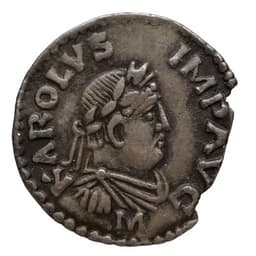
Charlemagne
Emperor · Medieval
71.0Total
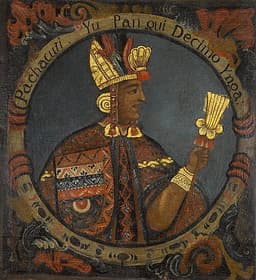
Pachacuti
Emperor · Medieval
69.4Total
Basic Information
Born
748
1418
Died
814
1472
Era
Medieval
Medieval
Nationality
Frankish Empire
Inca Empire
Occupation
Emperor
Emperor
Civilization
Western
Other
Score Comparison
Military (10%)
80.0
78.5
Political (20%)
78.0
58.1
Influence (20%)
65.0
65.0
Legacy (20%)
65.0
72.0
Leadership (15%)
80.0
78.0
Strategy (15%)
68.0
69.2
TOTAL
71.0
69.4
Charlemagne — Complete Timeline
772 AD
Saxon WarsWar◆ Major
Charlemagne launched a series of campaigns against the Saxons lasting over three decades. He forcibly converted them to Christianity, incorporated their territory into the Frankish Empire, and ordered the execution of thousands at the Massacre of Verden in 782.
ConquestChristianizationWar
Impact: regionaldestructive
774 AD
Conquest of the Lombard KingdomWar◆ Major
Charlemagne answered Pope Adrian I's call for aid against the Lombards. He besieged and captured Pavia, deposed King Desiderius, and annexed the Lombard Kingdom into his domain, assuming the title 'King of the Lombards' and solidifying Frankish control over Italy.
ConquestItalyPapal Alliance
Impact: regional
779 AD
Capitulary of HerstalReform
Charlemagne issued a series of legal and administrative reforms at the assembly in Herstal. He standardized weights and measures, reformed the coinage system, and strengthened the authority of royal officials (missi dominici) to oversee local governance and justice.
Legal ReformAdministrationStandardization
Impact: nationalconstructive
780 AD
Carolingian Renaissance ReformsCultural◆ Major
Charlemagne initiated a program of educational and cultural revival, inviting scholars like Alcuin of York to his court. He standardized Latin script (Carolingian minuscule), established palace schools, and promoted the copying of classical texts, preserving ancient knowledge.
EducationCultural RevivalScript
Impact: globalprogressive
800 AD
Coronation as Holy Roman EmperorPolitical Action
Pope Leo III crowned Charlemagne as Emperor of the Romans in St. Peter's Basilica on Christmas Day. This act revived the Western Roman Empire, established a precedent for papal authority over imperial titles, and created a political entity that shaped medieval European politics.
CoronationHoly Roman EmpirePapacy
Impact: globalconstructive
Pachacuti — Complete Timeline
1438 AD
Conquest of the Chanka KingdomWar
Pachacuti led the Inca army to defeat the Chanka, a powerful rival, in a decisive battle near Cusco. This victory secured his position as Sapa Inca and initiated a period of rapid expansion, transforming the Inca from a small kingdom into a vast empire.
ConquestInca ExpansionChanka
Impact: regional
1440 AD
Reconstruction of CuscoCultural◆ Major
Pachacuti rebuilt Cusco as the imperial capital, designing it in the shape of a puma and constructing massive stone structures like Sacsayhuam
Urban PlanningArchitectureInca Empire
Impact: regionalconstructive
1450 AD
Initiation of Machu Picchu's ConstructionCultural◆ Major
Pachacuti ordered the construction of Machu Picchu, a royal estate and ceremonial site high in the Andes. The complex featured sophisticated dry-stone masonry and terraced agriculture, serving as a symbol of Inca engineering and a retreat for the emperor.
ArchitectureRoyal EstateInca Engineering
Impact: regionalconstructive
Expert Analysis
Pachacuti vs Charlemagne
### The Emperor and the Earth-Shaker
On Christmas Day in the year 800, in the candlelit gloom of St. Peter’s Basilica, Pope Leo III placed a golden crown upon the head of a Frankish king. As the congregation chanted “Karolus, Augustus,” a new Roman Emperor was born, and with him, the idea of a unified Christendom. Across the ocean, in the high Andes, a very different coronation had taken place decades earlier. There, in the shadow of a sacred peak, a young prince named Cusi Yupanqui had just crushed the invading Chanka army. His father, the Sapa Inca, fled the battlefield; the son, covered in the blood of his enemies, was declared the new emperor, taking the name Pachacuti—“He Who Shakes the Earth.” One man was crowned by a pope, the other by the sword. Both would reshape their worlds, but in radically different ways. Why did one build an empire on law and faith, and the other on roads and kinship?
### Origins
Charlemagne was born into a world of chaos. The Western Roman Empire had collapsed three centuries earlier, leaving behind a patchwork of warring tribes, decaying cities, and a Church desperate for protection. His father, Pepin the Short, had seized the throne of the Franks, but legitimacy was fragile. Charlemagne grew up in a warrior culture where power was proven in the saddle, and literacy was rare. He learned to read Latin late in life but never mastered writing—a detail that would haunt and drive him. His world was one of constant violence, where a king’s duty was to fight, convert, and impose order.
Pachacuti, by contrast, was born into a theocracy. The Inca Empire of 1418 was a small, highland kingdom centered on Cusco, ruled by a divine king believed to be descended from the sun god Inti. The world was ordered, cyclical, and sacred. Young Cusi Yupanqui was not expected to be a warrior; his father, Viracocha Inca, favored another son. But the Chanka invasion in 1438 shattered that order. The royal court fled, leaving the young prince to rally the city’s defenders. His victory was not just military; it was a cosmic event, a sign that the gods had chosen him. Charlemagne inherited a kingdom; Pachacuti seized a destiny.
### Rise to Power
Charlemagne’s rise was methodical. Upon his brother Carloman’s sudden death in 771, he annexed his lands and became sole king of the Franks. He then embarked on a relentless series of campaigns. In 774, he answered Pope Adrian I’s call for aid against the Lombards. He besieged Pavia, deposed King Desiderius, and declared himself King of the Lombards. Each victory was a step toward a larger vision: the unification of all Christian peoples under one sword.
Pachacuti’s rise was a single, explosive moment. In 1438, the Chanka army, a massive force from the west, threatened to annihilate the Inca. The old king fled; the prince stayed. He led a desperate counterattack, and in a battle that became legend, he routed the enemy. The victory was so complete that his father abdicated in shame, and Pachacuti was proclaimed Sapa Inca. He did not inherit an empire; he created one from the ashes of a near-defeat.
### Leadership & Governance
Charlemagne ruled through law and faith. In 779, he issued the Capitulary of Herstal, standardizing weights, measures, and legal procedures across his realm. He appointed missi dominici—royal agents who traveled the kingdom, checking on counts and bishops. He forced the Saxons to convert at swordpoint, executing thousands who refused baptism. His Carolingian Renaissance, beginning around 780, was a deliberate project: he invited the scholar Alcuin of York to his court, established palace schools, and ordered monasteries to copy ancient manuscripts. He believed that a Christian empire needed a literate clergy to administer it. His military score of 78.0 reflects his success in conquest, but his political score of 80.0 reveals his deeper genius: he understood that an empire held by force alone would not last.
Pachacuti’s governance was built on kinship and infrastructure. He rebuilt Cusco in the shape of a puma, with massive stone walls that still defy explanation. He ordered the construction of Machu Picchu around 1450, a royal estate carved into a mountain ridge, as a symbol of his divine power. But his true innovation was the mit’a system: a form of mandatory public service that required every subject to work for the state for a set period. This labor built a network of roads, bridges, and storehouses that stretched from modern Colombia to Chile. His leadership score of 84.5 is the highest of any figure in this comparison, reflecting a ruler who inspired loyalty not through fear but through a shared sense of cosmic duty. He did not convert his subjects; he absorbed them, allowing local chiefs to remain in power as long as they paid tribute and worshipped the sun.
### Triumph & Tragedy
Charlemagne’s greatest triumph was his coronation on Christmas Day, 800. It revived the idea of a Roman Empire in the West, a political framework that would shape Europe for a millennium. His greatest tragedy was the Saxon Wars, which lasted over three decades and cost tens of thousands of lives. He forced conversion at the edge of a sword, creating a legacy of violence that haunted the Church.
Pachacuti’s triumph was the conquest of the Chanka, which transformed a minor kingdom into an imperial power. His tragedy was more subtle: in creating a centralized, god-like kingship, he sowed the seeds of the empire’s collapse. When the Spanish arrived in 1532, the Inca civil war over succession—a direct result of Pachacuti’s absolute rule—made conquest possible.
### Character & Destiny
Charlemagne was restless, driven by a sense of duty that bordered on obsession. He could not sit still; he was always on campaign, always reforming. He was deeply religious but pragmatic, using the Church as a tool of state. His personality shaped a destiny of expansion and consolidation, of creating a Europe that was both Christian and Roman.
Pachacuti was visionary and ruthless. He saw the world as a sacred order that he was destined to perfect. He did not conquer to convert; he conquered to incorporate. His personality shaped a destiny of integration and absorption, of creating an empire that was less a state than a family, with the Inca at its head.
### Legacy
Charlemagne’s legacy is the Holy Roman Empire, a political idea that lasted until 1806. He is remembered as the “Father of Europe,” a unifier whose Carolingian Renaissance preserved classical learning. His legacy score of 80.0 reflects his enduring influence on Western civilization.
Pachacuti’s legacy is the Inca Empire itself, a civilization that amazed the Spanish with its roads, terraces, and administrative genius. He is remembered as the greatest of the Sapa Incas, the earth-shaker who built an empire from a single victory. But his legacy is also a warning: absolute power, even when benevolent, creates fragility.
### Conclusion
One was crowned by a pope, the other by the gods. One built an empire on law and faith, the other on roads and kinship. Charlemagne and Pachacuti both expanded their worlds, but they did so in opposite directions: outward, toward a universal Christendom, and inward, toward a sacred, self-contained cosmos. Their differences are not just personal; they are civilizational. The Frankish emperor sought to unify through conversion and codification; the Inca emperor sought to integrate through absorption and ritual. In the end, both empires fell—one to internal decay and Viking raids, the other to Spanish steel and disease. But their visions endure, etched into the stone of Aachen and the stone of Machu Picchu, reminding us that empire is always a conversation between power and belief.
Rankings
🥇
CharlemagneLeader
Mil: 80.0Pol: 78.0Inf: 65.0
71.0
🥈
Pachacuti
Mil: 78.5Pol: 58.1Inf: 65.0
69.4
+1.6 behind
How This Comparison Works
Algorithm
Each figure is scored on 6 dimensions (0—100 scale) based on structured historical data: Military (10%), Political (20%), Influence (20%), Legacy (20%), Leadership (15%), Strategy (15%). The weighted total produces the final ranking.
Data Sources
Scores are computed from structured sub-indicators in the database. Scale factors adjust for era (Ancient ×0.85, Modern ×1.0) and civilization size (Eastern ×1.05, Other ×0.80) to account for differences in population and military scale.
Maximum 3 Figures
Comparisons are limited to 2—3 figures to ensure readability and statistical meaningfulness.
Error Margins
±5 points per dimension — Sub-scores are derived from historical records with inherent uncertainty. Two figures within 5 points on a dimension should be considered roughly equivalent in that area.
Total Score Accuracy
±3 points overall — The weighted combination of 6 dimensions produces a total score with approximately ±3 points of uncertainty. Differences of less than 3 points are not statistically significant— the figures are effectively tied.
Known Limitations
- Historical records are incomplete and uneven across civilizations
- Figures from oral-tradition societies may be underrepresented
- Occupation labels can misclassify multi-role figures
- Scores measure capability and impact, not moral character
- Quantitative scoring is a comparison tool, not absolute truth
Capability Radar
Military (10%) — Battles & Warfare
Battles
85
85
Win Rate
90
90
Expansion
88
90
Political (20%) — Governance & Reform
Reform
90
92
Diplomacy
80
75
Economy
75
80
Influence (20%) — Cultural & Global Reach
Cultural
85
85
Global
80
65
Legacy (20%) — Historical Impact
Historical
90
80
Longevity
85
70
Leadership (15%) — Power & Stability
Tenure
85
85
Stability
70
82
Strategy (15%) — Tactics & Innovation
Strategy
85
88
Tactics
75
80
Reform
80
85
Similar Comparisons
Comments & Discussion
PachacutiPrecision6/16/2026
Charlemagne’s crown was handed to him by a pope who needed his swords—Pachacuti’s was forged in the blood of the Chanka. One led armies into Saxony for thirty years of forced conversion; the other built terraces and storehouses that still feed people. Let’s be honest: Charlemagne was a warlord with a literacy complex. Pachacuti was an actual civilization-builder. The Carolingian Renaissance was a few monks copying books. The Inca Empire was a machine.|
智利山脉观察者6/16/2026
说查理曼比帕查库蒂更伟大的人,请先看看印加的道路系统。四万公里的石铺路,穿越安第斯山脉的悬崖和雨林,没有轮子,没有马匹。法兰克人的“帝国”呢?说真的,没多少像样的基础设施。帕查库蒂不只是征服——他设计了帝国的每一寸土地。查理曼赢在运气好,有教会的后援。地球震荡者才是真正的建筑师。
ChariotOfTours6/16/2026
Everyone swoons over Charles Martel at Tours, but Pachacuti’s military reforms were more consequential. He invented the *mitmaq* system—moving conquered peoples to loyal regions—centuries before any European power used population transfer for control. Plus, the Chanka war was a defensive victory against overwhelming odds, saving the Inca from extinction. Charlemagne’s Saxon Wars? A genocidal campaign against pagan farmers. Two different leagues of military strategy.|
篆刻大师6/16/2026
比较“合法性”是浪费时间。查理曼要教皇给他加冕,因为他的王权来自别人的认可。帕查库蒂呢?他直接给自己改名为“地球震荡者”——这宣言不需要任何神父的祝福。为什么我们总觉得教皇牵着的皇帝比亲自征服的国王更“文明”?这是西方中心论的偏见。
LaurelAndTopknot6/16/2026
The biggest difference? Succession. Charlemagne’s empire fractured within a generation because he divided it like a personal estate. Pachacuti centralized rule through the *panaka* system—royal kin groups that kept the empire stable for three generations after his death. One man thought like a tribal chieftain, the other like a state-builder. The test of a great ruler isn’t how many lands they conquer, but whether anything survives after they’re gone.