Loading...
Charlemagne vs Otto von Bismarck
Charlemagne leads by 5.2 pts · 2 figures compared
…
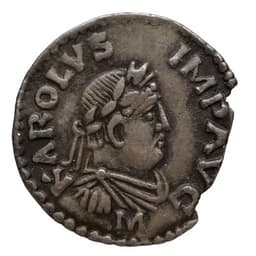
Charlemagne
Emperor · Medieval
71.0Total
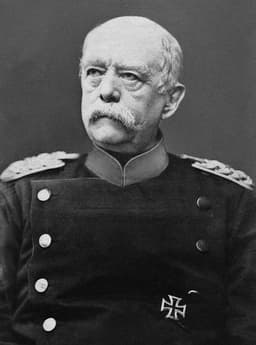
Otto von Bismarck
Politician · Modern
65.8Total
Basic Information
Born
748
1815
Died
814
1898
Era
Medieval
Modern
Nationality
Frankish Empire
Germany
Occupation
Emperor
Politician
Civilization
Western
Western
Score Comparison
Military (10%)
80.0
55.0
Political (20%)
78.0
85.0
Influence (20%)
65.0
82.0
Legacy (20%)
65.0
40.0
Leadership (15%)
80.0
80.0
Strategy (15%)
68.0
50.0
TOTAL
71.0
65.8
Charlemagne — Complete Timeline
772 AD
Saxon WarsWar◆ Major
Charlemagne launched a series of campaigns against the Saxons lasting over three decades. He forcibly converted them to Christianity, incorporated their territory into the Frankish Empire, and ordered the execution of thousands at the Massacre of Verden in 782.
ConquestChristianizationWar
Impact: regionaldestructive
774 AD
Conquest of the Lombard KingdomWar◆ Major
Charlemagne answered Pope Adrian I's call for aid against the Lombards. He besieged and captured Pavia, deposed King Desiderius, and annexed the Lombard Kingdom into his domain, assuming the title 'King of the Lombards' and solidifying Frankish control over Italy.
ConquestItalyPapal Alliance
Impact: regional
779 AD
Capitulary of HerstalReform
Charlemagne issued a series of legal and administrative reforms at the assembly in Herstal. He standardized weights and measures, reformed the coinage system, and strengthened the authority of royal officials (missi dominici) to oversee local governance and justice.
Legal ReformAdministrationStandardization
Impact: nationalconstructive
780 AD
Carolingian Renaissance ReformsCultural◆ Major
Charlemagne initiated a program of educational and cultural revival, inviting scholars like Alcuin of York to his court. He standardized Latin script (Carolingian minuscule), established palace schools, and promoted the copying of classical texts, preserving ancient knowledge.
EducationCultural RevivalScript
Impact: globalprogressive
800 AD
Coronation as Holy Roman EmperorPolitical Action
Pope Leo III crowned Charlemagne as Emperor of the Romans in St. Peter's Basilica on Christmas Day. This act revived the Western Roman Empire, established a precedent for papal authority over imperial titles, and created a political entity that shaped medieval European politics.
CoronationHoly Roman EmpirePapacy
Impact: globalconstructive
Otto von Bismarck — Complete Timeline
1870 AD
Franco-Prussian WarWar
Bismarck provoked France into declaring war by editing the Ems Dispatch to appear insulting. The resulting conflict saw Prussia and its allies decisively defeat France, leading to the fall of Napoleon III, the capture of Paris, and the annexation of Alsace-Lorraine.
WarProvocationAnnexation
Impact: globaldestructive
1871 AD
Unification of Germany ProclaimedPolitical Action
Following the Franco-Prussian War, Bismarck orchestrated the proclamation of the German Empire in the Hall of Mirrors at Versailles. King Wilhelm I of Prussia was declared German Emperor, uniting the German states under Prussian leadership and establishing the Second Reich.
UnificationGerman EmpireNationalism
Impact: globalconstructive
1878 AD
Enactment of the Anti-Socialist LawsPolitical Action◆ Major
After two assassination attempts on Kaiser Wilhelm I, Bismarck pushed through laws banning socialist organizations, publications, and meetings. The laws remained in force until 1890, suppressing the Social Democratic Party while Bismarck simultaneously introduced welfare reforms to undercut its appeal.
RepressionSocialismWelfare State
Impact: nationaldestructive
Congress of BerlinPolitical Action◆ Major
Bismarck hosted the Congress of Berlin to revise the Treaty of San Stefano and resolve the Eastern Crisis. He acted as 'honest broker,' reducing Russian gains, granting independence to Romania, Serbia, and Montenegro, and placing Bosnia-Herzegovina under Austro-Hungarian administration.
DiplomacyBalkansBalance of Power
Impact: global
1883 AD
Establishment of the Welfare StateReform◆ Major
Bismarck introduced the Health Insurance Bill (1883), Accident Insurance Bill (1884), and Old Age and Disability Insurance Bill (1889). These laws created the first modern welfare state, providing workers with social security and aiming to reduce support for socialist movements.
Social ReformWelfareInsurance
Impact: globalprogressive
1890 AD
Dismissal as ChancellorPolitical Action◆ Major
Emperor Wilhelm II forced Bismarck to resign due to policy disagreements, particularly over anti-socialist laws and foreign policy. Bismarck's departure marked the end of an era, leading to a more aggressive German foreign policy and the eventual unraveling of his alliance system.
ResignationWilhelm IIPolicy Shift
Impact: global
Expert Analysis
Charlemagne vs Otto von Bismarck
# The Iron Emperor and the Iron Chancellor
On Christmas Day in the year 800, an aging Frankish king knelt before the altar of St. Peter's Basilica in Rome, and Pope Leo III placed a golden crown upon his head. The congregation erupted in acclamation: "To Charles the Augustus, crowned by God, great and pacific emperor of the Romans, life and victory!" Nearly eleven centuries later, on a cold January morning in 1871, a stooped Prussian statesman stood in the Hall of Mirrors at Versailles, watching as a gaggle of German princes proclaimed a new emperor. Otto von Bismarck had engineered this moment with cold precision, yet when King Wilhelm I of Prussia became Kaiser Wilhelm I of Germany, Bismarck wept. Two men, two coronations, two visions of power. What drove Charlemagne to forge an empire with sword and scripture, and Bismarck to stitch one together with diplomacy and deceit?
Origins
Charlemagne was born into a world of violence and faith. The year 748 found Europe fractured: Roman roads crumbled, barbarian kingdoms warred, and the Church in Rome clutched at temporal power like a drowning man. His father, Pepin the Short, had seized the Frankish throne from the Merovingian line, and young Charles grew up in a court where loyalty meant steel and betrayal meant death. The boy learned to ride before he could read, to hunt before he could write, and to pray—always to pray—for the Carolingian dynasty needed divine favor as much as military might.
Otto von Bismarck entered a different world entirely. Born in 1815, the year Napoleon met his final defeat at Waterloo, he emerged into a Europe of nation-states and balance-of-power politics. His Junker family owned estates in Brandenburg, and young Otto learned to despise liberalism, democracy, and the very idea of German unification—at least at first. He studied law, dueled with fellow students, and drank prodigiously. Where Charlemagne's youth was forged in the clash of swords, Bismarck's was sharpened in the clash of ideas, though he would later claim that "the great questions of the time will not be resolved by speeches and majority decisions—but by blood and iron."
Rise to Power
Charlemagne's path to power ran through rivers of Saxon blood. In 772, he launched the first campaign of the Saxon Wars, a brutal thirty-year struggle that would define his reign. He did not merely conquer; he converted. At sword-point, he forced the Saxons to accept Christianity, massacring thousands at Verden in 782 when they rebelled. In 774, he answered Pope Adrian I's call and besieged Pavia, conquering the Lombard Kingdom and adding its iron crown to his own. Each victory brought more territory, more souls to save, more enemies to crush.
Bismarck's rise was quieter but no less ruthless. He entered Prussian politics as a reactionary, earning the nickname "the mad Junker" for his opposition to liberal reform. But in 1862, when King Wilhelm I faced a parliamentary deadlock over military funding, he summoned Bismarck to serve as Minister President. Bismarck simply ignored the parliament, collected the taxes anyway, and declared that "not by speeches and majority resolutions are the great questions of the time decided—but by iron and blood." He provoked wars with Denmark in 1864, Austria in 1866, and finally France in 1870, each conflict carefully calibrated to isolate the enemy and unify German sentiment.
Leadership & Governance
Charlemagne ruled as a warrior-king who never stopped moving. He traveled constantly, holding assemblies in different corners of his vast realm, issuing capitularies that standardized weights, measures, and laws across his empire. The Capitulary of Herstal in 779 attempted to impose order on a chaos of local customs. But his greatest achievement was the Carolingian Renaissance: he invited the scholar Alcuin of York to his court, established palace schools, and ordered monasteries to copy ancient manuscripts. He could barely write himself—biographers note he kept wax tablets under his pillow to practice at night—yet he preserved the learning of antiquity for future generations.
Bismarck governed from a desk. As Chancellor of the newly unified Germany after 1871, he played the "honest broker" in European affairs, hosting the Congress of Berlin in 1878 to prevent a general war over the Balkans. Domestically, he fought two wars simultaneously: against the Catholic Church in the *Kulturkampf*, and against the rising socialist movement. When two assassination attempts on the Kaiser gave him pretext, he enacted the Anti-Socialist Laws in 1878, banning socialist organizations. Yet this same man, the iron chancellor, also invented the modern welfare state—health insurance in 1883, accident insurance in 1884, old-age pensions—not from compassion, but to steal socialism's thunder.
Triumph & Tragedy
Charlemagne's triumph came on that Christmas morning in 800, when the Pope crowned him Emperor of the Romans. He had revived an institution that had lain dead for over three centuries. But the tragedy was already seeded: his empire was too vast, his successors too weak. He divided it among his sons before his death in 814, and within a generation, the Carolingian Empire had fractured into warring kingdoms.
Bismarck's triumph was the Hall of Mirrors in 1871, where he watched Germany unite under Prussian leadership. But his tragedy came in 1890, when the young Emperor Wilhelm II forced his resignation. The man who had made Germany now watched it unmade by a vain, impulsive monarch. "We cannot go to Canossa, either physically or spiritually," Bismarck had once said, defying the Pope. Yet he spent his final years at Friedrichsruh, writing bitter memoirs, watching his creation drift toward catastrophe.
Character & Destiny
Charlemagne was a man of immense physical presence—tall, barrel-chested, with a booming laugh and a terrible temper. He fathered at least eighteen children, legitimate and illegitimate, and loved his daughters so much he refused to let them marry. His faith was genuine, his violence casual, his learning earnest. He believed God had chosen him to build Christendom, and that belief made him both merciful and merciless.
Bismarck was a study in contradictions: a romantic who wrote poetry, a realist who lied without compunction, a conservative who revolutionized politics. He suffered from psychosomatic illnesses—vomiting, insomnia, neuralgia—that flared during crises. He once said, "A statesman cannot create anything himself. He must wait and listen until he hears the steps of God echoing through events." But he also edited the Ems Dispatch to provoke the Franco-Prussian War, proving that he was perfectly willing to manufacture those footsteps.
Legacy
Charlemagne left behind a myth. Medieval kings claimed descent from him; Napoleon invoked his name; the European Union places his image on coins. His empire crumbled, but the idea of a united Christendom, of a single ruler ordained by God to guide Western civilization, never died. He is remembered as the Father of Europe, though he would likely find that title ironic—he could barely keep his own family united.
Bismarck left behind a state. The German Empire he created lasted only forty-seven years, but the welfare state he invented still exists, and the nation he unified remains a European power. Yet his legacy is haunted by what came after: the World Wars, the Holocaust, the destruction of everything he built. He warned against colonial adventures, against conflict with Russia, against the very arrogance that Wilhelm II embodied. They did not listen.
Conclusion
Both men built empires on the foundations of their times—Charlemagne on faith and steel, Bismarck on diplomacy and deceit. Both succeeded beyond measure, and both failed in ways they could not foresee. Perhaps the deepest difference lies in their relationship to history itself. Charlemagne believed he was fulfilling God's plan; Bismarck believed he was managing chaos. The Frankish king sought to save souls; the Prussian chancellor sought to secure borders. One built a civilization that would last a thousand years in memory; the other built a nation that would last barely fifty in reality. In the end, perhaps the greatest lesson of their lives is this: power is easier to seize than to hold, and empires—whether of faith or of iron—are always built on ground that will one day shift beneath them.
Rankings
🥇
CharlemagneLeader
Mil: 80.0Pol: 78.0Inf: 65.0
71.0
🥈
Otto von Bismarck
Mil: 55.0Pol: 85.0Inf: 82.0
65.8
+5.2 behind
How This Comparison Works
Algorithm
Each figure is scored on 6 dimensions (0—100 scale) based on structured historical data: Military (10%), Political (20%), Influence (20%), Legacy (20%), Leadership (15%), Strategy (15%). The weighted total produces the final ranking.
Data Sources
Scores are computed from structured sub-indicators in the database. Scale factors adjust for era (Ancient ×0.85, Modern ×1.0) and civilization size (Eastern ×1.05, Other ×0.80) to account for differences in population and military scale.
Maximum 3 Figures
Comparisons are limited to 2—3 figures to ensure readability and statistical meaningfulness.
Error Margins
±5 points per dimension — Sub-scores are derived from historical records with inherent uncertainty. Two figures within 5 points on a dimension should be considered roughly equivalent in that area.
Total Score Accuracy
±3 points overall — The weighted combination of 6 dimensions produces a total score with approximately ±3 points of uncertainty. Differences of less than 3 points are not statistically significant— the figures are effectively tied.
Known Limitations
- Historical records are incomplete and uneven across civilizations
- Figures from oral-tradition societies may be underrepresented
- Occupation labels can misclassify multi-role figures
- Scores measure capability and impact, not moral character
- Quantitative scoring is a comparison tool, not absolute truth
Capability Radar
Military (10%) — Battles & Warfare
Battles
85
60
Win Rate
90
70
Expansion
88
80
Political (20%) — Governance & Reform
Reform
90
90
Diplomacy
80
95
Economy
75
80
Influence (20%) — Cultural & Global Reach
Cultural
85
65
Global
80
75
Legacy (20%) — Historical Impact
Historical
90
85
Longevity
85
70
Leadership (15%) — Power & Stability
Tenure
85
85
Stability
70
70
Strategy (15%) — Tactics & Innovation
Strategy
85
85
Tactics
75
55
Reform
80
75
Similar Comparisons
Comments & Discussion
No comments yet. Be the first to share your thoughts!