Loading...
Charlemagne vs Nelson Mandela
Charlemagne leads by 14.0 pts · 2 figures compared
…
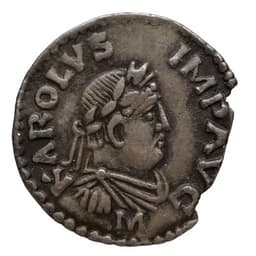
Charlemagne
Emperor · Medieval
71.0Total
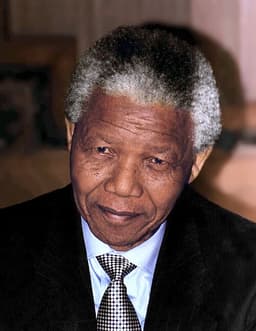
Nelson Mandela
Politician · Modern
57.0Total
Basic Information
Born
748
1918
Died
814
2013
Era
Medieval
Modern
Nationality
Frankish Empire
South Africa
Occupation
Emperor
Politician
Civilization
Western
Other
Score Comparison
Military (10%)
80.0
10.0
Political (20%)
78.0
78.0
Influence (20%)
65.0
40.0
Legacy (20%)
65.0
68.0
Leadership (15%)
80.0
82.0
Strategy (15%)
68.0
50.0
TOTAL
71.0
57.0
Charlemagne — Complete Timeline
772 AD
Saxon WarsWar◆ Major
Charlemagne launched a series of campaigns against the Saxons lasting over three decades. He forcibly converted them to Christianity, incorporated their territory into the Frankish Empire, and ordered the execution of thousands at the Massacre of Verden in 782.
ConquestChristianizationWar
Impact: regionaldestructive
774 AD
Conquest of the Lombard KingdomWar◆ Major
Charlemagne answered Pope Adrian I's call for aid against the Lombards. He besieged and captured Pavia, deposed King Desiderius, and annexed the Lombard Kingdom into his domain, assuming the title 'King of the Lombards' and solidifying Frankish control over Italy.
ConquestItalyPapal Alliance
Impact: regional
779 AD
Capitulary of HerstalReform
Charlemagne issued a series of legal and administrative reforms at the assembly in Herstal. He standardized weights and measures, reformed the coinage system, and strengthened the authority of royal officials (missi dominici) to oversee local governance and justice.
Legal ReformAdministrationStandardization
Impact: nationalconstructive
780 AD
Carolingian Renaissance ReformsCultural◆ Major
Charlemagne initiated a program of educational and cultural revival, inviting scholars like Alcuin of York to his court. He standardized Latin script (Carolingian minuscule), established palace schools, and promoted the copying of classical texts, preserving ancient knowledge.
EducationCultural RevivalScript
Impact: globalprogressive
800 AD
Coronation as Holy Roman EmperorPolitical Action
Pope Leo III crowned Charlemagne as Emperor of the Romans in St. Peter's Basilica on Christmas Day. This act revived the Western Roman Empire, established a precedent for papal authority over imperial titles, and created a political entity that shaped medieval European politics.
CoronationHoly Roman EmpirePapacy
Impact: globalconstructive
Nelson Mandela — Complete Timeline
1964 AD
Rivonia TrialPolitical Action
Nelson Mandela and other anti-apartheid leaders were tried for sabotage and conspiracy. Mandela was sentenced to life imprisonment, delivering a speech from the dock that became a rallying cry against apartheid. The trial drew international attention to the anti-apartheid struggle.
Impact: global
1990 AD
Release from PrisonPolitical Action
After 27 years of imprisonment, Mandela was released from Victor Verster Prison by President F.W. de Klerk. His release was a pivotal moment in South Africa's transition from apartheid to multiracial democracy, leading to negotiations for a new constitution.
Impact: globalprogressive
1993 AD
Awarding of the Nobel Peace PrizeCultural◆ Major
Mandela and F.W. de Klerk were jointly awarded the Nobel Peace Prize for their roles in ending apartheid and laying the foundations for a democratic South Africa. The award recognized their peaceful transition and commitment to reconciliation.
Impact: globalprogressive
1994 AD
Inauguration as President of South AfricaPolitical Action
Mandela was inaugurated as South Africa's first Black president after the country's first fully democratic elections. His presidency focused on national reconciliation, establishing the Truth and Reconciliation Commission, and dismantling the legacy of apartheid.
Impact: globalprogressive
Expert Analysis
Charlemagne vs Nelson Mandela
### The Emperor and the Prisoner: Two Roads to Remaking the World
On Christmas Day in the year 800, in the candlelit grandeur of St. Peter’s Basilica, Pope Leo III placed a golden crown upon the head of a Frankish king. The congregation gasped, then cheered: Charlemagne, already master of a vast realm, was now *Imperator Augustus*, the first Holy Roman Emperor. The event was a shock, a seizure of destiny. More than eleven centuries later, on a clear February afternoon in 1990, a different kind of coronation unfolded. Before a global television audience, a gaunt man in a gray suit walked through the gates of Victor Verster Prison, his fist raised in a salute of defiance and hope. Nelson Mandela, prisoner 46664, was free. One man seized a crown; the other earned a nation. Both reshaped the West and its margins, but their paths—one forged in iron, the other in patience—could not have been more different.
### Origins: The Sword and the Law
Charlemagne was born into a world of war, a scion of the Carolingian dynasty that had clawed its way to power from the chaos of the declining Roman Empire. His father, Pepin the Short, had deposed the last Merovingian king, and the young Charles grew up in a court where survival meant conquest. He was a man of immense physical vigor—tall, robust, and tireless—who learned to read late in life but never truly mastered writing. His era was the Dark Ages, a time when a king’s authority was measured by the reach of his sword.
Nelson Mandela emerged from a very different darkness. Born in 1918 in the village of Mvezo, he was a prince of the Thembu people, groomed for tribal leadership. Yet the world he entered was one of systematic humiliation. South Africa’s apartheid regime was a machine of legalized racism, designed to crush the spirit of its Black majority. Mandela trained as a lawyer, not a soldier. Where Charlemagne inherited a throne, Mandela inherited a grievance. His early life was a study in the power of the law—both its promise and its profound betrayal.
### Rise to Power: The Battlefield and the Courtroom
Charlemagne’s rise was a matter of brute force and strategic marriage. He inherited half his father’s kingdom in 768 and swiftly outmaneuvered his brother Carloman. But his defining ascent came through war. In 774, answering a plea from Pope Adrian I, he crossed the Alps and besieged the Lombard capital of Pavia. The conquest was swift and total; he deposed King Desiderius and added the Iron Crown of Lombardy to his own. For Charlemagne, power was a hammer, and the world was full of nails.
Mandela’s rise was slower, more cerebral. He joined the African National Congress in 1944, advocating nonviolent resistance. But after the Sharpeville massacre of 1960, he co-founded the armed wing Umkhonto we Sizwe, accepting that sabotage might be necessary. His turning point came not on a battlefield but in a courtroom. At the Rivonia Trial in 1964, facing the death penalty, he delivered a speech that would echo through history: “I have fought against white domination, and I have fought against black domination. I have cherished the ideal of a democratic and free society… It is an ideal which I hope to live for and to achieve. But if needs be, it is an ideal for which I am prepared to die.” He was sentenced to life imprisonment. His rise to power would happen from a cell.
### Leadership & Governance: The Reformer and the Reconciler
As emperor, Charlemagne governed through a blend of terror and enlightenment. His Saxon Wars, launched in 772, were brutal campaigns of forced conversion and massacre. At Verden in 782, he allegedly ordered the execution of 4,500 Saxon captives. Yet this same man, in 780, initiated the Carolingian Renaissance. He summoned the scholar Alcuin of York to his court, reformed monasteries, standardized Latin script, and established schools. His Capitulary of Herstal in 779 standardized weights, measures, and legal procedures across his empire. Charlemagne ruled by the sword, but he also understood that a lasting empire needed books, law, and faith.
Mandela’s leadership was the opposite: it was built on forgiveness and institutional trust. After 27 years in prison, he emerged without bitterness. As president from 1994 to 1999, he did not seek revenge but reconciliation. He wore the jersey of the Springboks—the rugby team that had been a symbol of apartheid—to heal a nation. He established the Truth and Reconciliation Commission, not a Nuremberg-style tribunal. His military score is a mere 10.0, but his political and leadership scores—80.0 and 85.0—reflect a ruler who understood that the hardest war is the one against hatred.
### Triumph & Tragedy: The Crown and the Cell
Charlemagne’s greatest triumph was his coronation in 800. It revived the idea of a unified Christendom and set the stage for medieval Europe. Yet his tragedy was the fragility of his achievement. His empire fractured within a generation, divided among his grandsons. He could conquer, but he could not create a lasting political structure.
Mandela’s greatest triumph was his inauguration in 1994, as the first Black president of a democratic South Africa. It was the culmination of a struggle that had cost decades of his life. His tragedy was more private: the years stolen from his family, the absence from his children’s lives, the toll of imprisonment on his body. But unlike Charlemagne, his work endured. South Africa did not collapse into civil war.
### Character & Destiny: The Man of Action and the Man of Patience
Charlemagne was a man of restless energy, a warrior who slept little and worked constantly. His personality was forged in action; he trusted his sword and his faith. Destiny, for him, was something to be seized. He believed he was chosen by God to unite the West.
Mandela was a man of immense self-discipline, a master of patience. His personality was forged in waiting—waiting for trials, waiting for letters, waiting for freedom. He learned to control his anger, to see the humanity in his oppressors. Destiny, for him, was something to be negotiated. He once said, “I am not a saint, unless you think of a saint as a sinner who keeps on trying.” Where Charlemagne demanded submission, Mandela invited transformation.
### Legacy: The Empire and the Ideal
Charlemagne’s legacy is Europe itself. He is the father of the French and German nations, the patron of the Carolingian Renaissance, the symbol of a unified Christendom. His score of 80.0 for legacy reflects a man who shaped a continent’s identity for a millennium. Yet his methods—the forced conversions, the massacres—are a dark shadow.
Mandela’s legacy is an ideal: that freedom can be won without hatred, that reconciliation is possible after atrocity. His legacy score of 78.0 is slightly lower, but it is a moral legacy, not a territorial one. He proved that a prisoner could become a president, that a nation could forgive.
### Conclusion: Two Mirrors
Standing before the mirror of history, Charlemagne and Mandela reflect very different images. One is a king in armor, crown on head, sword in hand. The other is a man in a suit, walking slowly from a prison gate, hand raised in peace. Both remade their worlds. But the question they leave us is this: What kind of power endures? Charlemagne’s empire crumbled; Mandela’s idea lives. Perhaps the deepest lesson is that the hardest battles are not fought with swords, but with patience, courage, and the stubborn belief that even the darkest cell can open to the light.
Rankings
🥇
CharlemagneLeader
Mil: 80.0Pol: 78.0Inf: 65.0
71.0
🥈
Nelson Mandela
Mil: 10.0Pol: 78.0Inf: 40.0
57.0
+14.0 behind
How This Comparison Works
Algorithm
Each figure is scored on 6 dimensions (0—100 scale) based on structured historical data: Military (10%), Political (20%), Influence (20%), Legacy (20%), Leadership (15%), Strategy (15%). The weighted total produces the final ranking.
Data Sources
Scores are computed from structured sub-indicators in the database. Scale factors adjust for era (Ancient ×0.85, Modern ×1.0) and civilization size (Eastern ×1.05, Other ×0.80) to account for differences in population and military scale.
Maximum 3 Figures
Comparisons are limited to 2—3 figures to ensure readability and statistical meaningfulness.
Error Margins
±5 points per dimension — Sub-scores are derived from historical records with inherent uncertainty. Two figures within 5 points on a dimension should be considered roughly equivalent in that area.
Total Score Accuracy
±3 points overall — The weighted combination of 6 dimensions produces a total score with approximately ±3 points of uncertainty. Differences of less than 3 points are not statistically significant— the figures are effectively tied.
Known Limitations
- Historical records are incomplete and uneven across civilizations
- Figures from oral-tradition societies may be underrepresented
- Occupation labels can misclassify multi-role figures
- Scores measure capability and impact, not moral character
- Quantitative scoring is a comparison tool, not absolute truth
Capability Radar
Military (10%) — Battles & Warfare
Battles
85
0
Win Rate
90
7
Expansion
88
9
Political (20%) — Governance & Reform
Reform
90
95
Diplomacy
80
95
Economy
75
60
Influence (20%) — Cultural & Global Reach
Cultural
85
85
Global
80
90
Legacy (20%) — Historical Impact
Historical
90
90
Longevity
85
80
Leadership (15%) — Power & Stability
Tenure
85
60
Stability
70
80
Strategy (15%) — Tactics & Innovation
Strategy
85
8
Tactics
75
12
Reform
80
17
Similar Comparisons
Comments & Discussion
SWORD\_AND\_SERF6/16/2026
Military historian here. Charlemagne crushed the Saxons in 30 brutal campaigns, forcibly converting them at swordpoint in the Massacre of Verden (4,500 executed in one day). Mandela? He negotiated after 27 years inside, armed with moral clarity. Don't compare apples to atom bombs. One man built an empire with violence; the other dismantled apartheid with dignity. Speed doesn't equal greatness—Mandela's patience reshaped a nation without a single battle.
古老之锤6/16/2026
作为古典学学者,我发现“伟大”这个词被滥用了。查理曼连自己的名字都写不好,却自诩罗马继承者;曼德拉是法学高材,在狱中自学非洲历史。一个靠教皇加冕,一个靠人民拥护。真正差异在于:查理曼复制了罗马的衰败剧本,曼德拉写了非洲重生篇章。我们需要停止神化那些靠刀剑建立秩序的人。