Loading...
Charlemagne vs Mahatma Gandhi
Charlemagne leads by 2.3 pts · 2 figures compared
…
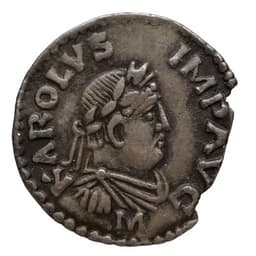
Charlemagne
Emperor · Medieval
71.0Total
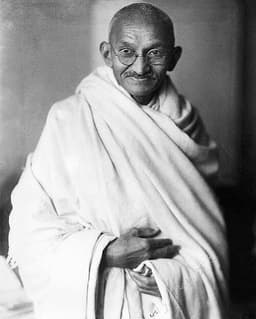
Mahatma Gandhi
Politician · Modern
68.7Total
Basic Information
Born
748
1869
Died
814
1948
Era
Medieval
Modern
Nationality
Frankish Empire
India
Occupation
Emperor
Politician
Civilization
Western
Indian
Score Comparison
Military (10%)
80.0
42.3
Political (20%)
78.0
65.0
Influence (20%)
65.0
80.0
Legacy (20%)
65.0
75.0
Leadership (15%)
80.0
70.0
Strategy (15%)
68.0
55.0
TOTAL
71.0
68.7
Charlemagne — Complete Timeline
772 AD
Saxon WarsWar◆ Major
Charlemagne launched a series of campaigns against the Saxons lasting over three decades. He forcibly converted them to Christianity, incorporated their territory into the Frankish Empire, and ordered the execution of thousands at the Massacre of Verden in 782.
ConquestChristianizationWar
Impact: regionaldestructive
774 AD
Conquest of the Lombard KingdomWar◆ Major
Charlemagne answered Pope Adrian I's call for aid against the Lombards. He besieged and captured Pavia, deposed King Desiderius, and annexed the Lombard Kingdom into his domain, assuming the title 'King of the Lombards' and solidifying Frankish control over Italy.
ConquestItalyPapal Alliance
Impact: regional
779 AD
Capitulary of HerstalReform
Charlemagne issued a series of legal and administrative reforms at the assembly in Herstal. He standardized weights and measures, reformed the coinage system, and strengthened the authority of royal officials (missi dominici) to oversee local governance and justice.
Legal ReformAdministrationStandardization
Impact: nationalconstructive
780 AD
Carolingian Renaissance ReformsCultural◆ Major
Charlemagne initiated a program of educational and cultural revival, inviting scholars like Alcuin of York to his court. He standardized Latin script (Carolingian minuscule), established palace schools, and promoted the copying of classical texts, preserving ancient knowledge.
EducationCultural RevivalScript
Impact: globalprogressive
800 AD
Coronation as Holy Roman EmperorPolitical Action
Pope Leo III crowned Charlemagne as Emperor of the Romans in St. Peter's Basilica on Christmas Day. This act revived the Western Roman Empire, established a precedent for papal authority over imperial titles, and created a political entity that shaped medieval European politics.
CoronationHoly Roman EmpirePapacy
Impact: globalconstructive
Mahatma Gandhi — Complete Timeline
1917 AD
Champaran SatyagrahaPolitical Action
Gandhi led his first nonviolent protest in India, supporting indigo farmers in Champaran, Bihar, against exploitative British planters. He organized a campaign of civil disobedience and negotiations, resulting in the abolition of the oppressive tinkathia system.
Civil disobedienceFarmers' rightsBritish Raj
Impact: nationalprogressive
1919 AD
Jallianwala Bagh massacre aftermathPolitical Action◆ Major
After British troops killed hundreds of unarmed civilians in Amritsar, Gandhi organized a nationwide hartal (strike) and nonviolent protests. He returned his medals and launched the Rowlatt Satyagraha, marking a shift from cooperation to non-cooperation with British rule.
ProtestBritish RajMassacre
Impact: nationaltragic
1930 AD
Salt MarchPolitical Action
Gandhi led a 240-mile march from Sabarmati to Dandi, Gujarat, to defy the British salt monopoly. Thousands joined him, making salt from seawater. This act of civil disobedience sparked mass protests across India and drew global attention to the independence movement.
Civil disobedienceSalt taxIndependence movement
Impact: globalprogressive
1942 AD
Quit India Movement launchPolitical Action◆ Major
Gandhi launched the Quit India Movement, calling for an end to British rule with the slogan 'Do or Die'. The British arrested him and other leaders, but the movement led to widespread protests and repression, accelerating the end of colonial rule.
IndependenceCivil disobedienceBritish Raj
Impact: nationalprogressive
1948 AD
AssassinationPolitical Action
Gandhi was shot and killed by Nathuram Godse, a Hindu nationalist, during a prayer meeting in New Delhi. His assassination shocked the world and led to a wave of grief and violence, but also reinforced his legacy as a martyr for nonviolence.
AssassinationMartyrdomNonviolence
Impact: globaltragic
Expert Analysis
Charlemagne vs Mahatma Gandhi
### The Emperor and the Saint: Two Paths to Power, Two Visions of the World
On Christmas Day in the year 800, in St. Peter’s Basilica in Rome, Pope Leo III placed a crown upon the head of a broad-shouldered, battle-scarred Frankish king. The congregation roared its approval. Charlemagne, master of half of Europe, wept. The act was a fusion of sword and altar, of earthly might and divine sanction. Nearly twelve centuries later, on a sweltering March morning in 1930, a frail, loincloth-clad lawyer named Mohandas Karamchand Gandhi bent down on a beach in Dandi, Gujarat, and picked up a lump of salt. It was a crime; it was a prayer. With that gesture, he defied the British Empire. One man built an empire with iron; the other dismantled one with salt. How did two men, both driven by a fierce moral purpose, arrive at such radically different conclusions about how to change the world?
### Origins
Charlemagne was born in 748 into a world of warring tribes and crumbling Roman ruins. His father, Pepin the Short, had seized the Frankish throne, and the boy was raised in a warrior’s saddle, learning to hunt, fight, and command. The air he breathed was thick with the clash of steel and the chants of Christian monks. His era demanded strength; mercy was a luxury for the weak. In contrast, Gandhi was born in 1869 in the coastal town of Porbandar, India, into a devout Hindu family. His father was a local administrator, his mother a deeply religious woman who fasted and prayed. The young Gandhi was timid, a poor student, but he absorbed the Jain principles of *ahimsa* (non-violence) and *satya* (truth) as naturally as he breathed. His era was one of imperial certainty, where the British Raj seemed as permanent as the sun. One man was forged in the furnace of a world that worshipped power; the other in a tradition that questioned its very foundation.
### Rise to Power
Charlemagne’s rise was a story of relentless, bloody expansion. In 774, he answered a papal plea for aid and besieged the Lombard kingdom of Pavia, deposing King Desiderius and adding the Iron Crown of Lombardy to his own. He did not negotiate; he conquered. His power flowed from the point of a sword. Gandhi’s rise was a story of patient, moral resistance. The turning point came in 1917 in Champaran, Bihar, where he took up the cause of exploited indigo farmers. He did not storm a palace; he simply refused to leave until the British authorities investigated the grievances. It was a legal and moral ambush. The Jallianwala Bagh massacre of 1919, where British troops fired on unarmed civilians, hardened his resolve and transformed him from a lawyer into the soul of a nation.
### Leadership & Governance
Charlemagne governed as a king-commander. His leadership was personal, itinerant, and absolute. He issued decrees known as capitularies—the 779 Capitulary of Herstal standardized weights, measures, and legal procedures across his vast realm. He was a reformer, but his reforms were tools of control. He invited the scholar Alcuin of York to his court, sparking the Carolingian Renaissance, a revival of learning that preserved Latin classics and standardized the liturgy. Yet this cultural flowering was built on a foundation of forced conversions, as seen in the brutal Saxon Wars that began in 772 and dragged on for three decades. He gave the Saxons a choice: baptism or death. Gandhi’s governance was of a different order entirely. He led a movement, not a state. His “reforms” were acts of personal sacrifice. The 1930 Salt March was a masterpiece of political theater—a 240-mile walk to the sea to defy the British salt monopoly. He did not command armies; he mobilized conscience. His *Satyagraha* (truth-force) was a strategy of mass civil disobedience designed to shame the oppressor, not destroy him.
### Triumph & Tragedy
Charlemagne’s greatest triumph was his coronation on Christmas Day, 800. It revived the Roman Empire in the West and established a political order that would shape Europe for a millennium. But his tragedy was the same as his triumph: the empire he built with blood and faith did not survive him. It fractured, a testament to the limits of force. Gandhi’s triumph was the Quit India Movement of 1942, when he called for an end to British rule with the slogan “Do or Die.” The British arrested him, but the moral authority of his cause was unshakeable. India won independence in 1947. Yet his tragedy was immediate and devastating: the partition of India into Hindu-majority India and Muslim-majority Pakistan, a bloody vivisection he had opposed with all his being. And then, on January 30, 1948, a Hindu nationalist named Nathuram Godse shot him dead during a prayer meeting. The apostle of non-violence died by violence.
### Character & Destiny
Charlemagne was a man of immense physical vigor, a warrior who loved the hunt, who could read but preferred to listen to stories. He was ruthless but also curious; he wept at his coronation, a rare glimpse of a soul overwhelmed by its own fate. His character drove him to unify, to codify, to impose order. Gandhi was a man of radical simplicity. He wore a loincloth, spun his own cloth, and lived on a diet of nuts and goat’s milk. He was stubborn, sometimes manipulative, and possessed of a terrifying moral certainty. His character drove him to purify, to witness, to suffer. One man’s destiny was to build; the other’s was to tear down the walls that separate men from their own souls.
### Legacy
Charlemagne’s legacy is the shape of Europe itself. His empire gave birth to the idea of a unified Christendom, and his reforms laid the groundwork for medieval learning. He is remembered as the Father of Europe, a figure of grand, stone-faced authority. Gandhi’s legacy is the shape of modern protest. His philosophy of non-violent resistance inspired Martin Luther King Jr., Nelson Mandela, and countless others. He is remembered as the Mahatma, the Great Soul, a figure of frail, luminous power. One left behind cathedrals and crowns; the other left behind a method for changing the world without firing a shot.
### Conclusion
Standing back, the contrast is not just about methods—it is about the very definition of power. Charlemagne believed that power flowed from the sword and the altar, from the ability to command and to punish. Gandhi believed that true power flowed from the soul, from the willingness to suffer without striking back. One shaped stone; the other shaped conscience. Which one is more lasting? The cathedrals of Charlemagne still stand, but the empire is gone. Gandhi’s body was buried in ashes, but his idea—that the meek can inherit the earth—walks the streets of every city where people gather to demand justice. Perhaps the final lesson is not that one was right and the other wrong, but that history needs both: the builder and the witness, the emperor and the saint.
Rankings
🥇
CharlemagneLeader
Mil: 80.0Pol: 78.0Inf: 65.0
71.0
🥈
Mahatma Gandhi
Mil: 42.3Pol: 65.0Inf: 80.0
68.7
+2.3 behind
How This Comparison Works
Algorithm
Each figure is scored on 6 dimensions (0—100 scale) based on structured historical data: Military (10%), Political (20%), Influence (20%), Legacy (20%), Leadership (15%), Strategy (15%). The weighted total produces the final ranking.
Data Sources
Scores are computed from structured sub-indicators in the database. Scale factors adjust for era (Ancient ×0.85, Modern ×1.0) and civilization size (Eastern ×1.05, Other ×0.80) to account for differences in population and military scale.
Maximum 3 Figures
Comparisons are limited to 2—3 figures to ensure readability and statistical meaningfulness.
Error Margins
±5 points per dimension — Sub-scores are derived from historical records with inherent uncertainty. Two figures within 5 points on a dimension should be considered roughly equivalent in that area.
Total Score Accuracy
±3 points overall — The weighted combination of 6 dimensions produces a total score with approximately ±3 points of uncertainty. Differences of less than 3 points are not statistically significant— the figures are effectively tied.
Known Limitations
- Historical records are incomplete and uneven across civilizations
- Figures from oral-tradition societies may be underrepresented
- Occupation labels can misclassify multi-role figures
- Scores measure capability and impact, not moral character
- Quantitative scoring is a comparison tool, not absolute truth
Capability Radar
Military (10%) — Battles & Warfare
Battles
85
45
Win Rate
90
46
Expansion
88
51
Political (20%) — Governance & Reform
Reform
90
85
Diplomacy
80
80
Economy
75
40
Influence (20%) — Cultural & Global Reach
Cultural
85
85
Global
80
90
Legacy (20%) — Historical Impact
Historical
90
90
Longevity
85
85
Leadership (15%) — Power & Stability
Tenure
85
60
Stability
70
55
Strategy (15%) — Tactics & Innovation
Strategy
85
52
Tactics
75
56
Reform
80
55
Similar Comparisons
Comments & Discussion
Saladin's Scourge6/16/2026
Charlemagne's conversion campaigns were functionally genocidal. The Massacre of Verden in 782 where he ordered 4,500 Saxon prisoners beheaded isn't "spreading Christianity" — it's state-sponsored slaughter dressed in holy robes. Gandhi's nonviolence actually worked against a modern empire. Frankish "moral purpose" meant submission or death. That's not leadership; that's terrorism with a papal blessing. Emperor of corpses doesn't impress me.
数椽史勘6/16/2026
拿沙皇跟苦行僧比,本身就是范畴错误。查理曼是用铁与血把半个欧洲绑进封建帝国,甘地是用绝食和纺车瓦解了整个殖民体系。前者死后帝国分裂,后者留下了一个独立的国家和一个反抗范式。你说谁更成功?查理曼的帝国如今只剩教科书里的名字,但甘地的非暴力还在伯明翰、开罗、华沙的街头被实践。这根本不是同级的较量。
Aethelred's Ghost6/16/2026
Charlemagne admirers conveniently ignore he couldn't read or write properly. He kept wax tablets under his pillow to practice letters. Meanwhile, the Carolingian Renaissance he supposedly sparked was largely run by Alcuin and other imported scholars. Gandhi wrote voluminously, edited newspapers, and crafted a philosophical framework that influenced King and Mandela. One was a literate intellectual leading ideas; the other was a barely literate warlord following Alcuin's instructions. Different t
铁砧与木槌6/16/2026
查理曼的加冕之所以被吹捧,是因为西方史家需要一根神圣罗马帝国的精神拐杖。对比一下:两人都面对暴力,查理曼选择制造更多暴力,甘地选择吸收暴力再转化它。前者走的是罗马帝国的老路,后者开创了人类从未见过的斗争模式。说句实话,如果历史上只有查理曼没有甘地,人类的政治想象力会贫瘠得多。
Wotan's Recruit6/16/2026
The comparison fundamentally misunderstands Charlemagne's era. In the 9th century, mercy was literally a survival risk — decentralized power meant constant rebellion. When Charlemagne "wept" at his coronation, he understood the crushing weight of ruling a fractured Europe. Gandhi faced a bureaucratic empire with telegraphs and trains, not feuding warlords. Apples and hand grenades. Charlemagne's forced conversions look brutal today, but they integrated Europe when integration meant survival.