Loading...
Charlemagne vs Joseph Stalin
Charlemagne leads by 2.2 pts · 2 figures compared
…
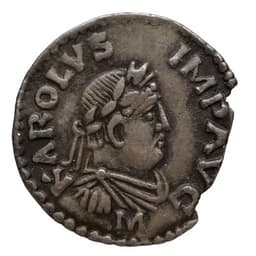
Charlemagne
Emperor · Medieval
71.0Total
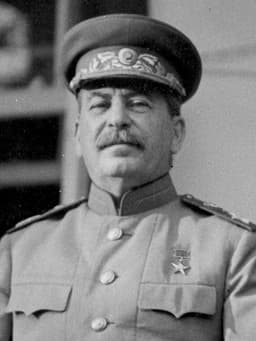
Joseph Stalin
Politician · Modern
68.8Total
Basic Information
Born
748
1878
Died
814
1953
Era
Medieval
Modern
Nationality
Frankish Empire
Russia
Occupation
Emperor
Politician
Civilization
Western
Western
Score Comparison
Military (10%)
80.0
75.0
Political (20%)
78.0
70.0
Influence (20%)
65.0
72.0
Legacy (20%)
65.0
55.0
Leadership (15%)
80.0
80.0
Strategy (15%)
68.0
70.0
TOTAL
71.0
68.8
Charlemagne — Complete Timeline
772 AD
Saxon WarsWar◆ Major
Charlemagne launched a series of campaigns against the Saxons lasting over three decades. He forcibly converted them to Christianity, incorporated their territory into the Frankish Empire, and ordered the execution of thousands at the Massacre of Verden in 782.
ConquestChristianizationWar
Impact: regionaldestructive
774 AD
Conquest of the Lombard KingdomWar◆ Major
Charlemagne answered Pope Adrian I's call for aid against the Lombards. He besieged and captured Pavia, deposed King Desiderius, and annexed the Lombard Kingdom into his domain, assuming the title 'King of the Lombards' and solidifying Frankish control over Italy.
ConquestItalyPapal Alliance
Impact: regional
779 AD
Capitulary of HerstalReform
Charlemagne issued a series of legal and administrative reforms at the assembly in Herstal. He standardized weights and measures, reformed the coinage system, and strengthened the authority of royal officials (missi dominici) to oversee local governance and justice.
Legal ReformAdministrationStandardization
Impact: nationalconstructive
780 AD
Carolingian Renaissance ReformsCultural◆ Major
Charlemagne initiated a program of educational and cultural revival, inviting scholars like Alcuin of York to his court. He standardized Latin script (Carolingian minuscule), established palace schools, and promoted the copying of classical texts, preserving ancient knowledge.
EducationCultural RevivalScript
Impact: globalprogressive
800 AD
Coronation as Holy Roman EmperorPolitical Action
Pope Leo III crowned Charlemagne as Emperor of the Romans in St. Peter's Basilica on Christmas Day. This act revived the Western Roman Empire, established a precedent for papal authority over imperial titles, and created a political entity that shaped medieval European politics.
CoronationHoly Roman EmpirePapacy
Impact: globalconstructive
Joseph Stalin — Complete Timeline
1928 AD
Launched the First Five-Year PlanReform
Stalin initiated a series of centralized economic plans aimed at rapid industrialization and collectivization of agriculture. The First Five-Year Plan set ambitious targets for heavy industry, leading to significant growth but also severe shortages and human cost.
Impact: global
1929 AD
Implemented forced collectivization of agricultureReform
Stalin ordered the consolidation of individual peasant farms into collective farms (kolkhozy). This was met with resistance, leading to the liquidation of kulaks (wealthy peasants) as a class. The policy caused a catastrophic famine, particularly in Ukraine (Holodomor), resulting in millions of deaths.
Impact: nationaldestructive
1937 AD
Conducted the Great Purge (Great Terror)Political Action
Stalin orchestrated a campaign of political repression against alleged enemies of the state. Millions were arrested, executed, or sent to the Gulag labor camps. The purges targeted the Communist Party, military leadership, intellectuals, and ordinary citizens, consolidating Stalin's absolute power.
Impact: nationaldestructive
1945 AD
Led the Soviet Union to victory in World War IIWar
Stalin served as Supreme Commander of the Soviet armed forces. The Soviet Union bore the brunt of the war against Nazi Germany, suffering immense casualties. The Red Army's victory at Stalingrad and the capture of Berlin were key turning points. The war ended with Soviet domination of Eastern Europe.
Impact: global
Established the Eastern Bloc and the Iron CurtainPolitical Action◆ Major
After WWII, Stalin imposed communist governments in Eastern European countries occupied by the Red Army, creating a buffer zone against the West. This division of Europe into Soviet and Western spheres of influence marked the beginning of the Cold War.
Impact: globaldestructive
Expert Analysis
Charlemagne vs Joseph Stalin
# The Emperor and the Dictator: Charlemagne and Stalin, Architects of Order Through Blood and Iron
On a Christmas morning in the year 800, an aging Frankish king knelt before a trembling pope in St. Peter’s Basilica and rose as Emperor of the Romans—a title that had not existed in the West for three centuries. Just over a thousand years later, in a cramped Kremlin office, a Georgian revolutionary with a tobacco-stained mustache signed orders that would send millions to labor camps and millions more to the front lines of history’s greatest war. Charlemagne and Joseph Stalin ruled worlds apart in time and spirit, yet both faced the same elemental challenge: how to forge unity from chaos, and at what cost.
Origins
Charlemagne was born in 748 into a world of fractured kingdoms and marauding tribes. His father, Pepin the Short, had seized the Frankish throne from the Merovingian dynasty, a coup blessed by the pope. The young Charles grew up in military camps and royal estates, learning to ride, hunt, and command before he could read. His era was one of constant warfare—the old Roman order had crumbled, and a new Europe was struggling to be born.
Stalin’s origins could not have been more different. Born Ioseb Jughashvili in 1878 in the Georgian town of Gori, he was the son of a drunken cobbler and a devout mother who wanted him to become a priest. The Russian Empire was a vast, autocratic state groaning under modernization, plagued by inequality, and seething with revolutionary fervor. Where Charlemagne inherited a throne, Stalin inherited a world of poverty, violence, and ideological extremism. The boy who was beaten by his father and bullied by classmates would spend his life proving that he could never be beaten again.
Rise to Power
Charlemagne’s path was that of a hereditary warrior-king. Upon his brother Carloman’s sudden death in 771, the twenty-three-year-old Charles became sole ruler of the Franks. He spent his first decade consolidating power, subduing rebellious nobles, and answering the pope’s call for aid against the Lombards. In 774, he besieged and captured Pavia, deposing King Desiderius and adding the Iron Crown of Lombardy to his own. His rise was swift, but it was also expected—he was born to rule, and he ruled.
Stalin clawed his way to power through the dark corridors of the Bolshevik Party. A bank robber, an exile, a mediocre poet, and a ruthless organizer, he rose not by charisma but by cunning. He filled the party’s administrative posts with his own loyalists, positioning himself as Lenin’s indispensable lieutenant. After Lenin’s death in 1924, Stalin outmaneuvered rivals like Trotsky, Zinoviev, and Kamenev through a combination of bureaucratic control, ideological maneuvering, and sheer ruthlessness. By 1928, he was the undisputed master of the Soviet Union—a position he had won not through battle, but through patience and paranoia.
Leadership & Governance
Charlemagne ruled through personal presence, itinerant courts, and a blend of military force and religious authority. He issued legal reforms like the Capitulary of Herstal in 779, standardizing weights, measures, and administrative procedures. He invited the scholar Alcuin of York to his court, sparking the Carolingian Renaissance—a revival of learning that preserved classical texts and reformed education. He was a hands-on ruler who personally led campaigns, presided over councils, and corresponded with bishops and kings across Europe. His governance was imperfect, but it was built on the principle that order must be enforced and that culture must be cultivated.
Stalin ruled through terror, ideology, and a vast bureaucratic machine. In 1928, he launched the First Five-Year Plan, a centralized drive to industrialize the Soviet Union at breakneck speed. In 1929, he forced collectivization of agriculture, seizing grain from peasants and triggering a famine that killed millions. In 1937, he unleashed the Great Purge, executing or imprisoning over a million people—party officials, military officers, intellectuals, and ordinary citizens—on charges of treason. Where Charlemagne sought to unify through law and learning, Stalin unified through fear. The difference is not merely moral but structural: Charlemagne ruled a world of local loyalties; Stalin commanded a modern totalitarian state.
Triumph & Tragedy
Charlemagne’s greatest triumph was his coronation as Holy Roman Emperor on Christmas Day in 800. It was a political masterstroke that revived the idea of a universal Christian empire and cemented his alliance with the papacy. Yet his greatest tragedy was the Saxon Wars, launched in 772 and lasting over three decades. He forcibly converted the Saxons, massacred thousands at Verden in 782, and imposed Frankish law on a people who fought him to the last. The bloodshed stained his legacy, a reminder that even the most enlightened ruler of his age could be a ruthless conqueror.
Stalin’s greatest triumph was leading the Soviet Union to victory in World War II. By 1945, his armies had crushed Nazi Germany, driven the swastika from Berlin, and established the Eastern Bloc as a buffer zone of satellite states. The Iron Curtain descended across Europe, and Stalin stood as one of the most powerful men in history. Yet his tragedy was the human cost: the purges, the famines, the labor camps, the millions of soldiers he sent to die in battles like Stalingrad and Kursk. He saved his country and enslaved it in the same breath.
Character & Destiny
Charlemagne was a man of immense energy, curiosity, and ambition. He learned Latin and Greek, studied astronomy, and encouraged the arts. He was also a warrior who slept with his sword by his side and a father who wept at his sons’ deaths. His character drove him to build an empire that would outlast him, to unite Europe under a single Christian banner. His destiny was shaped by the opportunity of a broken continent and the will to piece it together.
Stalin was a man of immense suspicion, cruelty, and calculation. He trusted no one, not even his closest allies. He rewrote history to glorify himself and erased his enemies from photographs. His character drove him to destroy every rival, real or imagined, and to build a state that could never threaten his power. His destiny was shaped by the chaos of revolution, the brutality of civil war, and the paranoia of a man who had seen too many friends become corpses.
Legacy
Charlemagne’s legacy is paradoxical. He united much of Western Europe, but his empire fractured within a generation of his death. He sparked a cultural renaissance, but it faded after his reign. He was canonized by an antipope in the twelfth century and remembered as the father of Europe, but his methods were brutal. Today, his scores in history are high—Military 78, Political 80, Legacy 80—but they reflect a man who built a dream that others would fulfill.
Stalin’s legacy is darker and more contested. He industrialized the Soviet Union, defeated Nazi Germany, and expanded Soviet power across Eastern Europe. But he also killed millions of his own people, created a police state, and left a legacy of fear that poisoned his country for decades. His scores—Military 75, Political 72, Legacy 55—reflect a leader who achieved great things through terrible means. Today, he is remembered as a tyrant, but also as the man who made the Soviet Union a superpower.
Conclusion
Charlemagne and Stalin stand at opposite ends of the thousand-year arc of European history. One built an empire with sword and scripture; the other with terror and steel. One died in bed, mourned by his court and remembered as a saint; the other died in a dacha, feared by his successors and reviled by history. Yet both understood a truth that transcends time: that order is fragile, that unity is hard-won, and that the men who shape history are often the ones willing to pay the highest price—in blood, in tears, in the lives of others. The question they leave us is not whether they were great, but whether their greatness was worth the cost. And that is a question every age must answer for itself.
Rankings
🥇
CharlemagneLeader
Mil: 80.0Pol: 78.0Inf: 65.0
71.0
🥈
Joseph Stalin
Mil: 75.0Pol: 70.0Inf: 72.0
68.8
+2.2 behind
How This Comparison Works
Algorithm
Each figure is scored on 6 dimensions (0—100 scale) based on structured historical data: Military (10%), Political (20%), Influence (20%), Legacy (20%), Leadership (15%), Strategy (15%). The weighted total produces the final ranking.
Data Sources
Scores are computed from structured sub-indicators in the database. Scale factors adjust for era (Ancient ×0.85, Modern ×1.0) and civilization size (Eastern ×1.05, Other ×0.80) to account for differences in population and military scale.
Maximum 3 Figures
Comparisons are limited to 2—3 figures to ensure readability and statistical meaningfulness.
Error Margins
±5 points per dimension — Sub-scores are derived from historical records with inherent uncertainty. Two figures within 5 points on a dimension should be considered roughly equivalent in that area.
Total Score Accuracy
±3 points overall — The weighted combination of 6 dimensions produces a total score with approximately ±3 points of uncertainty. Differences of less than 3 points are not statistically significant— the figures are effectively tied.
Known Limitations
- Historical records are incomplete and uneven across civilizations
- Figures from oral-tradition societies may be underrepresented
- Occupation labels can misclassify multi-role figures
- Scores measure capability and impact, not moral character
- Quantitative scoring is a comparison tool, not absolute truth
Capability Radar
Military (10%) — Battles & Warfare
Battles
85
85
Win Rate
90
80
Expansion
88
85
Political (20%) — Governance & Reform
Reform
90
90
Diplomacy
80
70
Economy
75
85
Influence (20%) — Cultural & Global Reach
Cultural
85
70
Global
80
95
Legacy (20%) — Historical Impact
Historical
90
95
Longevity
85
80
Leadership (15%) — Power & Stability
Tenure
85
95
Stability
70
60
Strategy (15%) — Tactics & Innovation
Strategy
85
85
Tactics
75
60
Reform
80
90
Similar Comparisons
Comments & Discussion
铁血判官6/16/2026
"唐太宗杀兄逼父,斯大林饿殍千里,查理曼血洗萨克森。凭什么前者叫‘圣君’,后者是‘恶魔’?查理曼在782年费尔登屠杀4500名萨克森异教徒,斯大林1932年制造乌克兰大饥荒。时间能漂白残忍,还是胜利者修改了史书?我厌恶这种虚伪的文明叙事:野蛮就是野蛮,别因世纪不同就双重标准。"
ValorVexed6/16/2026
"Charlemagne’s Saxon massacres are a footnote, Stalin’s purges a full chapter—yet both used terror to “unify.” The Frankish king killed 4,500 nobles at Verden in 782 for refusing baptism; Stalin starved 4 million Ukrainians during Holodomor. Charlemagne is hailed as a father of Europe, Stalin a monster. But both were architects of order built on decimation. History’s moral math is selective: blood is only forgiven when it’s ancient."