Loading...
Charlemagne vs Henry the Fowler
Charlemagne leads by 10.1 pts · 2 figures compared
…
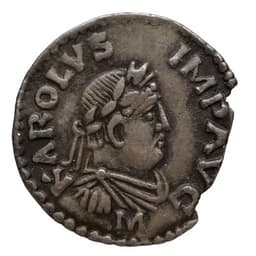
Charlemagne
Emperor · Medieval
71.0Total
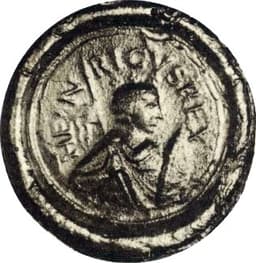
Henry the Fowler
Emperor · Medieval
60.9Total
Basic Information
Born
748
876
Died
814
936
Era
Medieval
Medieval
Nationality
Frankish Empire
East Francia
Occupation
Emperor
Emperor
Civilization
Western
Western
Score Comparison
Military (10%)
80.0
70.0
Political (20%)
78.0
59.3
Influence (20%)
65.0
55.0
Legacy (20%)
65.0
52.0
Leadership (15%)
80.0
85.0
Strategy (15%)
68.0
55.0
TOTAL
71.0
60.9
Charlemagne — Complete Timeline
772 AD
Saxon WarsWar◆ Major
Charlemagne launched a series of campaigns against the Saxons lasting over three decades. He forcibly converted them to Christianity, incorporated their territory into the Frankish Empire, and ordered the execution of thousands at the Massacre of Verden in 782.
ConquestChristianizationWar
Impact: regionaldestructive
774 AD
Conquest of the Lombard KingdomWar◆ Major
Charlemagne answered Pope Adrian I's call for aid against the Lombards. He besieged and captured Pavia, deposed King Desiderius, and annexed the Lombard Kingdom into his domain, assuming the title 'King of the Lombards' and solidifying Frankish control over Italy.
ConquestItalyPapal Alliance
Impact: regional
779 AD
Capitulary of HerstalReform
Charlemagne issued a series of legal and administrative reforms at the assembly in Herstal. He standardized weights and measures, reformed the coinage system, and strengthened the authority of royal officials (missi dominici) to oversee local governance and justice.
Legal ReformAdministrationStandardization
Impact: nationalconstructive
780 AD
Carolingian Renaissance ReformsCultural◆ Major
Charlemagne initiated a program of educational and cultural revival, inviting scholars like Alcuin of York to his court. He standardized Latin script (Carolingian minuscule), established palace schools, and promoted the copying of classical texts, preserving ancient knowledge.
EducationCultural RevivalScript
Impact: globalprogressive
800 AD
Coronation as Holy Roman EmperorPolitical Action
Pope Leo III crowned Charlemagne as Emperor of the Romans in St. Peter's Basilica on Christmas Day. This act revived the Western Roman Empire, established a precedent for papal authority over imperial titles, and created a political entity that shaped medieval European politics.
CoronationHoly Roman EmpirePapacy
Impact: globalconstructive
Henry the Fowler — Complete Timeline
919 AD
Election as King of East FranciaPolitical Action
Henry the Fowler was elected King of East Francia by the Saxon and Frankish nobles at Fritzlar on May 6, 919. He was the first Saxon king, marking the transition from Carolingian to Ottonian rule. His election was contested by other dukes but he prevailed.
ElectionAccessionOttonian Dynasty
Impact: regionalconstructive
921 AD
Treaty of Bonn (921)Political Action◆ Major
Henry the Fowler signed the Treaty of Bonn with Charles the Simple of West Francia, recognizing each other's royal titles and establishing peaceful relations. This treaty ended Carolingian claims over East Francia and solidified Henry's legitimacy as an independent king.
TreatyRecognitionDiplomacy
Impact: regionalconstructive
924 AD
Nine-Year Truce with the MagyarsPolitical Action◆ Major
Henry the Fowler negotiated a nine-year truce with the Magyars, agreeing to pay tribute in exchange for a halt to their raids. He used this period to fortify towns, reorganize the army, and train cavalry. This strategic pause was crucial for his later military reforms.
TruceMagyarsMilitary Reform
Impact: regionalconstructive
929 AD
Battle of Lenzen (929)War◆ Major
Henry the Fowler's forces defeated a Slavic army at the Battle of Lenzen, securing the eastern frontier of East Francia. This victory allowed Henry to consolidate control over the Elbe region and establish the March of Brandenburg, a key step in German eastward expansion.
BattleSlavic WarsEastern Expansion
Impact: regionalconstructive
933 AD
Battle of Riade (933)War
After the truce with the Magyars expired, Henry the Fowler led a German army to victory at the Battle of Riade (near Merseburg). The defeat of the Magyar cavalry ended their raids into East Francia for a generation and established Henry's reputation as a defender of Christendom.
BattleMagyarsVictory
Impact: regionalconstructive
936 AD
Death of Henry the FowlerOther◆ Major
Henry the Fowler died on July 2, 936, at Memleben. He was succeeded by his son, Otto I, who would become Holy Roman Emperor. Henry's reign laid the foundations for the Ottonian dynasty and the medieval German kingdom.
DeathSuccessionOttonian
Impact: regional
Expert Analysis
Henry the Fowler vs Charlemagne
# Two Founders of Europe
On Christmas Day in the year 800, an aging Frankish king knelt before the altar of St. Peter’s Basilica in Rome. As he rose, Pope Leo III placed a golden crown upon his head, proclaiming him Emperor of the Romans. The congregation erupted in acclamation. Charlemagne, already master of much of Western Europe, had just claimed a title that had lain vacant for over three centuries. A little over a century later, in a very different ceremony, a Saxon duke named Henry was offered the same crown of East Francia—and refused it. He would not be crowned, he declared, until God willed it. Between these two moments lies the story of how Europe’s foundations were laid, and how two very different men shaped its destiny.
Origins
Charlemagne was born into a world of ambition and blood. His father, Pepin the Short, had seized the Frankish throne from the Merovingian dynasty, and his grandfather, Charles Martel, had saved Christendom at the Battle of Tours. The young prince grew up in a court where war was a constant companion and the Church a powerful ally. He was tall, energetic, and voraciously curious—learning Latin, studying astronomy, and surrounding himself with scholars even as he led armies into battle.
Henry the Fowler came from a different world. Born in 876, he was the son of Otto the Illustrious, a Saxon duke who had spent his life defending his lands against Viking raids and Slavic incursions. The East Frankish kingdom was a fractured mosaic of duchies—Saxony, Bavaria, Swabia, Franconia—each with its own proud nobility. Henry grew up in a landscape of forests and fortified settlements, where power was personal and local. He learned to hunt, to negotiate, and to wait.
Rise to Power
Charlemagne’s path was one of conquest. In 774, when the Lombard king threatened the Pope, Charlemagne marched his army over the Alps, besieged Pavia, and deposed the king. He added the Iron Crown of Lombardy to his Frankish diadem. Then came the Saxons—a thirty-year war of fire and baptism. He destroyed the sacred Irminsul, forced mass conversions, and executed thousands who resisted. By 800, his realm stretched from the Pyrenees to the Danube, from the North Sea to central Italy.
Henry’s rise was more subtle. In 919, when the East Frankish nobles gathered at Fritzlar to elect a king, they chose Henry—not because he had conquered them, but because he could unite them. He was the first Saxon to hold the throne, and he understood that power in Germany had to be earned, not imposed. When the powerful Duke of Swabia refused to recognize him, Henry did not attack. He waited, negotiated, and eventually won the duke’s allegiance through marriage and diplomacy.
Leadership & Governance
Charlemagne ruled through constant movement. His court traveled from palace to palace, dispensing justice and collecting tribute. In 779, at the Capitulary of Herstal, he standardized weights, measures, and legal procedures across his realm. He launched the Carolingian Renaissance, inviting the English scholar Alcuin of York to his court to reform education, copy ancient manuscripts, and revive Latin learning. He built a chapel at Aachen that still stands, a monument to his vision of a Christian empire.
Henry governed differently. He understood that the German duchies could not be ruled from a distant capital. Instead, he forged alliances, granted privileges, and built a network of fortified towns called *Burgen*. He placed a garrison of every ninth man from his army in these strongholds, creating a defensive system that would protect his people for generations. When the Magyars—the most feared raiders of the age—demanded tribute in 924, Henry paid it. But he used the nine-year truce to build a new cavalry army, training his men to fight on horseback against the swift Magyar archers.
Triumph & Tragedy
Charlemagne’s greatest moment was his coronation in 800. It was a masterstroke of political theater: the Pope needed protection, and the Emperor needed legitimacy. By crowning Charlemagne, Leo III bound the Frankish kingdom to the Church, creating a partnership that would define medieval Europe. But the triumph came with a shadow. Charlemagne’s sons were weak, and his empire would not survive him. Within a generation, his grandsons would tear it apart.
Henry’s triumph came at the Battle of Riade in 933. When the truce with the Magyars expired, he refused to pay further tribute. The Magyar army invaded, and Henry met them near Merseburg. His new cavalry, trained and disciplined, shattered the nomadic horsemen. It was the first German victory over the Magyars, and it electrified the kingdom. Henry died three years later, in 936, at Memleben. He left his son Otto a realm that was united, defended, and ready for greatness.
Character & Destiny
Charlemagne was a man of immense energy and vision. He could read but not write—he kept a tablet under his pillow and practiced letters at night. He was ruthless in war but generous in peace, a patron of learning who also ordered the execution of 4,500 Saxon prisoners in a single day. His personality was a paradox: he wanted to build a Christian empire, but he used the sword to do it.
Henry was more cautious, more patient. He was called “the Fowler” because, according to legend, he was hunting birds when messengers arrived to tell him he had been elected king. He preferred negotiation to battle, fortification to conquest. He knew that the German kingdom could not be forged in a single campaign—it had to be built, stone by stone, alliance by alliance. His motto might have been: “First defend, then expand.”
Legacy
Charlemagne’s legacy is the idea of Europe itself. He revived the Roman Empire in the West, created a common script (Carolingian minuscule), and preserved classical learning. His reign gave Europe a cultural identity that would survive the chaos of the Viking Age. Today, he is called the “Father of Europe,” and his crown became the symbol of the Holy Roman Empire that lasted a thousand years.
Henry’s legacy is more modest but no less important. He founded the Ottonian dynasty, which would produce the most powerful German emperors of the Middle Ages. His son Otto I would be crowned Holy Roman Emperor in 962, fulfilling the dream that Henry had deferred. Henry showed that a German king could rule not by conquest alone, but by building trust among proud dukes and defending his people from foreign threats.
Conclusion
Standing at the crossroads of history, these two men faced the same challenge: how to build a lasting order in a violent world. Charlemagne chose the path of light and fire—conquest, conversion, and coronation. Henry chose the path of earth and stone—negotiation, fortification, and patience. One created an empire that collapsed; the other founded a dynasty that endured. Perhaps the lesson is that there is no single way to found a civilization. Some builders use the sword; others use the plow. Both, in their own way, planted seeds that still grow today.
Rankings
🥇
CharlemagneLeader
Mil: 80.0Pol: 78.0Inf: 65.0
71.0
🥈
Henry the Fowler
Mil: 70.0Pol: 59.3Inf: 55.0
60.9
+10.1 behind
How This Comparison Works
Algorithm
Each figure is scored on 6 dimensions (0—100 scale) based on structured historical data: Military (10%), Political (20%), Influence (20%), Legacy (20%), Leadership (15%), Strategy (15%). The weighted total produces the final ranking.
Data Sources
Scores are computed from structured sub-indicators in the database. Scale factors adjust for era (Ancient ×0.85, Modern ×1.0) and civilization size (Eastern ×1.05, Other ×0.80) to account for differences in population and military scale.
Maximum 3 Figures
Comparisons are limited to 2—3 figures to ensure readability and statistical meaningfulness.
Error Margins
±5 points per dimension — Sub-scores are derived from historical records with inherent uncertainty. Two figures within 5 points on a dimension should be considered roughly equivalent in that area.
Total Score Accuracy
±3 points overall — The weighted combination of 6 dimensions produces a total score with approximately ±3 points of uncertainty. Differences of less than 3 points are not statistically significant— the figures are effectively tied.
Known Limitations
- Historical records are incomplete and uneven across civilizations
- Figures from oral-tradition societies may be underrepresented
- Occupation labels can misclassify multi-role figures
- Scores measure capability and impact, not moral character
- Quantitative scoring is a comparison tool, not absolute truth
Capability Radar
Military (10%) — Battles & Warfare
Battles
85
55
Win Rate
90
60
Expansion
88
60
Political (20%) — Governance & Reform
Reform
90
75
Diplomacy
80
70
Economy
75
65
Influence (20%) — Cultural & Global Reach
Cultural
85
55
Global
80
40
Legacy (20%) — Historical Impact
Historical
90
65
Longevity
85
60
Leadership (15%) — Power & Stability
Tenure
85
70
Stability
70
70
Strategy (15%) — Tactics & Innovation
Strategy
85
65
Tactics
75
50
Reform
80
70
Similar Comparisons
Comments & Discussion
HREh8r6/16/2026
Charlemagne was a PR genius who understood that emperors need fancy titles and papal blessings to look legit. Henry the Fowler? He knew you need actual military power and a functional tax base. While Charles was busy having Alcuin write his propaganda, Henry was reforming the cavalry and building burgs. The refusal to be crowned wasn't piety—it was a strategic power play. He didn't need a pope's permission to rule.
铁锤传人6/16/2026
拿查理曼跟亨利比,简直是对日耳曼务实传统的侮辱。查理曼那套"从罗马人手里继承帝位"的说辞,纯属宗教忽悠。亨利一世才是真正奠定德意志帝国的人——他拒绝加冕不是因为谦卑,而是想摆脱教廷的控制。想想看,查理曼的帝国他儿子手里就分裂了,亨利的子孙统治了东法兰克一百多年。谁更会治国,数据摆在这。
Civ6SaveScummer6/16/2026
Stop romanticizing the "Father of Europe" narrative. Charlemagne's empire was a feudal mess held together by personality cult and forced conversion. Henry the Fowler actually built institutions—the March system, fortified towns, cavalry reforms. Charlemagne executed 4,500 Saxons at Verden; Henry negotiated with the Magyars after winning. One understood that governance requires consent, not just conquest.
神圣罗马粉6/16/2026
评论区清一色吹亨利贬查理曼?我不同意。亨利不称帝是因为他知道自己扛不起那个虚名——东法兰克内部的洛林问题还没解决,马扎尔人还在边境骚扰。查理曼称帝那套理论确实有表演成分,但他用"罗马帝国继承人"这个身份给整个西欧续了近千年的政治想象力。亨利能比?他连皇帝称号都不敢接。
AlcuinsGhost6/16/2026
The key difference isn't military or administrative—it's about how each man understood legitimacy. Charlemagne derived authority from Rome, the Church, and ancient imperial precedent. Henry derived it from Saxon tribal tradition and military consensus among the nobility. Charlemagne's model centralized power; Henry's model checked it. One led to the Investiture Controversy; the other to the Imperial Diet. Different systems, different problems, different solutions.