Loading...
Charlemagne vs George Washington
George Washington leads by 5.8 pts · 2 figures compared
…
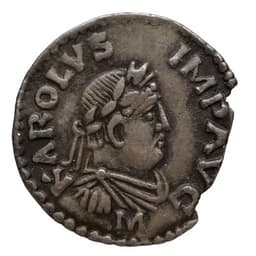
Charlemagne
Emperor · Medieval
71.0Total
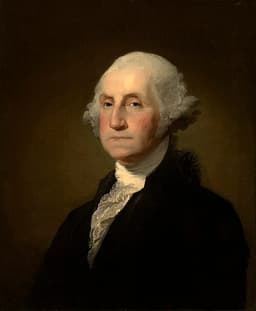
George Washington
Politician · Modern
76.8Total
Basic Information
Born
748
1732
Died
814
1799
Era
Medieval
Modern
Nationality
Frankish Empire
United States
Occupation
Emperor
Politician
Civilization
Western
Western
Score Comparison
Military (10%)
80.0
75.0
Political (20%)
78.0
82.0
Influence (20%)
65.0
75.0
Legacy (20%)
65.0
80.0
Leadership (15%)
80.0
85.0
Strategy (15%)
68.0
55.0
TOTAL
71.0
76.8
Charlemagne — Complete Timeline
772 AD
Saxon WarsWar◆ Major
Charlemagne launched a series of campaigns against the Saxons lasting over three decades. He forcibly converted them to Christianity, incorporated their territory into the Frankish Empire, and ordered the execution of thousands at the Massacre of Verden in 782.
ConquestChristianizationWar
Impact: regionaldestructive
774 AD
Conquest of the Lombard KingdomWar◆ Major
Charlemagne answered Pope Adrian I's call for aid against the Lombards. He besieged and captured Pavia, deposed King Desiderius, and annexed the Lombard Kingdom into his domain, assuming the title 'King of the Lombards' and solidifying Frankish control over Italy.
ConquestItalyPapal Alliance
Impact: regional
779 AD
Capitulary of HerstalReform
Charlemagne issued a series of legal and administrative reforms at the assembly in Herstal. He standardized weights and measures, reformed the coinage system, and strengthened the authority of royal officials (missi dominici) to oversee local governance and justice.
Legal ReformAdministrationStandardization
Impact: nationalconstructive
780 AD
Carolingian Renaissance ReformsCultural◆ Major
Charlemagne initiated a program of educational and cultural revival, inviting scholars like Alcuin of York to his court. He standardized Latin script (Carolingian minuscule), established palace schools, and promoted the copying of classical texts, preserving ancient knowledge.
EducationCultural RevivalScript
Impact: globalprogressive
800 AD
Coronation as Holy Roman EmperorPolitical Action
Pope Leo III crowned Charlemagne as Emperor of the Romans in St. Peter's Basilica on Christmas Day. This act revived the Western Roman Empire, established a precedent for papal authority over imperial titles, and created a political entity that shaped medieval European politics.
CoronationHoly Roman EmpirePapacy
Impact: globalconstructive
George Washington — Complete Timeline
1775 AD
Appointed Commander-in-Chief of the Continental ArmyOther◆ Major
The Second Continental Congress appointed Washington as commander-in-chief of the Continental Army on June 15, 1775. He accepted the position without pay, taking command of the forces besieging Boston at the start of the American Revolutionary War.
American RevolutionMilitary Leadership
Impact: national
1776 AD
Crossed the Delaware RiverOther◆ Major
On the night of December 25-26, 1776, Washington led 2,400 troops across the ice-choked Delaware River. The surprise attack on Hessian forces at Trenton resulted in a decisive American victory, capturing nearly 1,000 prisoners and reviving Patriot morale after a series of defeats.
American RevolutionBattleTurning Point
Impact: nationalconstructive
1787 AD
Presided over the Constitutional ConventionPolitical Action◆ Major
Washington served as president of the Constitutional Convention in Philadelphia from May to September 1787. His presence lent legitimacy to the proceedings, and he formally signed the final draft of the U.S. Constitution, though he contributed little to the debates.
ConstitutionFounding Father
Impact: national
1789 AD
Inaugurated as First President of the United StatesPolitical Action◆ Major
Washington was unanimously elected by the Electoral College and inaugurated on April 30, 1789, at Federal Hall in New York City. He established numerous executive branch precedents, including the cabinet system, the inaugural address, and the title 'Mr. President'.
PresidencyFounding Father
Impact: national
1793 AD
Issued the Proclamation of NeutralityOther◆ Major
Washington issued the Proclamation of Neutrality on April 22, 1793, declaring the United States neutral in the conflict between France and Great Britain. This decision established the precedent of American isolationism and avoided entanglement in European wars.
Foreign PolicyNeutrality
Impact: national
1796 AD
Delivered the Farewell AddressOther◆ Major
Washington published his Farewell Address on September 19, 1796, announcing his decision not to seek a third term. The address warned against political factionalism, permanent foreign alliances, and the influence of the military in government, shaping American political culture.
PresidencyLegacy
Impact: national
Expert Analysis
George Washington vs Charlemagne
# The Founder and the Emperor
On Christmas Day in the year 800, in St. Peter’s Basilica in Rome, Pope Leo III placed a golden crown upon the head of a Frankish king, proclaiming him Emperor of the Romans. Nearly a thousand years later, on a cold December night in 1776, a tall Virginian in a tattered coat crossed the ice-choked Delaware River in a desperate gamble that would save a revolution. One man built an empire through conquest and conversion; the other built a republic through patience and principle. Yet their total historical scores are nearly identical—74.5 for Washington, 75.0 for Charlemagne—suggesting that greatness takes many forms.
Origins
Charlemagne was born into a world of warring tribes and crumbling Roman ruins. His father, Pepin the Short, had seized the Frankish throne with the blessing of the pope, setting a precedent for the fusion of sword and cross that would define Charlemagne’s reign. The young prince grew up in the saddle, learning to command armies before he learned to read. He was barely literate by modern standards, but he possessed a voracious appetite for learning that would later define his reign.
George Washington was born into a very different world—colonial Virginia in 1732, a society of tobacco plantations and English gentility. His formal education was modest, ending when his father died when Washington was eleven. But he learned surveying, a trade that taught him to read land and people alike. Where Charlemagne inherited a kingdom, Washington inherited a small estate and a burning ambition to rise in the world.
Rise to Power
Charlemagne’s path was that of a conqueror. When his brother Carloman died suddenly in 771, Charlemagne seized sole control of the Frankish kingdom. He then launched a series of campaigns that would remake Europe. The Saxon Wars, which began in 772, were brutal and relentless—thirty years of forced conversion, massacre, and submission. When the Saxons rebelled, Charlemagne ordered the execution of 4,500 prisoners at Verden. He answered Pope Adrian I’s call against the Lombards in 774, besieging Pavia and deposing King Desiderius. By 800, he had united most of Western Europe under his rule.
Washington’s rise was slower and more reluctant. He fought in the French and Indian War as a young officer, learning the harsh realities of frontier warfare. When the American Revolution began in 1775, the Continental Congress appointed him commander-in-chief—not because he was the most brilliant general, but because he was a Virginian who could unite the colonies. He spent the next eight years losing more battles than he won, yet holding the army together through sheer force of will.
Leadership & Governance
Charlemagne ruled through energy and presence. He was constantly on the move, traveling across his vast empire to enforce his will. He issued the Capitulary of Herstal in 779, standardizing weights and measures, reforming the coinage, and imposing order on a chaotic realm. But his most enduring achievement was the Carolingian Renaissance, beginning around 780. He invited scholars like Alcuin of York to his court, established schools in monasteries, and preserved classical texts that might otherwise have been lost. He reformed the church, standardized Latin liturgy, and created a system of missi dominici—royal agents who traveled the empire to ensure justice.
Washington governed through restraint and example. As the first president, he knew every action would set a precedent. He established the cabinet system, insisted on being called “Mr. President” rather than something grander, and voluntarily stepped down after two terms—a decision that shocked the world. His Farewell Address warned against foreign entanglements and political factions, advice that would echo through American history. Where Charlemagne centralized power, Washington distributed it.
Triumph & Tragedy
Charlemagne’s greatest moment came on Christmas Day 800, when Pope Leo III crowned him Emperor of the Romans. It was a masterstroke of political theater—the pope needed Charlemagne’s protection, and Charlemagne needed the pope’s legitimacy. But the coronation also planted seeds of conflict between church and state that would plague Europe for centuries. His greatest failure was the Saxon Wars, which achieved conversion through terror rather than persuasion, creating resentments that outlasted his empire.
Washington’s greatest triumph was the Revolution itself—not just winning independence, but creating a government that could sustain it. His crossing of the Delaware on Christmas night 1776 was a tactical masterpiece that revived a dying cause. His greatest tragedy was his ownership of slaves, a contradiction that haunted his legacy. He freed his slaves in his will, but only after his death, and he failed to use his immense moral authority to push the young nation toward abolition.
Character & Destiny
Charlemagne was a man of immense physical vitality and intellectual curiosity. He was said to be tall, strong, and fond of hunting and swimming. He loved learning but never mastered writing—he kept wax tablets under his pillow to practice at night. His personality was that of a builder: he wanted to create, to order, to civilize. His destiny was to forge a new Europe from the chaos of the early Middle Ages.
Washington was a man of deliberate calm and iron self-control. He was famously reserved, even cold, but his temper was legendary—he simply learned to master it. His personality was that of a founder: he wanted to establish, to set precedents, to create institutions that would outlast him. His destiny was to prove that a republic could survive without a king.
Legacy
Charlemagne’s empire did not survive his death. It fractured among his grandsons, leading to centuries of war in Europe. But his legacy was more profound: he revived the idea of a unified Europe, preserved classical learning, and established the precedent that a ruler could be both warrior and patron of the arts. His coronation as Holy Roman Emperor created a title that would last a thousand years.
Washington’s legacy was more concrete. The nation he helped found not only survived but thrived, and his example of voluntary retirement became a cornerstone of democratic governance. He is remembered as the “Father of His Country,” a figure of almost mythical integrity. His face adorns the one-dollar bill and the quarter, a constant reminder of the man who could have been king but chose to be a citizen.
Conclusion
What separates these two giants is not their capacity for greatness, but their conception of it. Charlemagne built an empire on the backs of conquered peoples, using sword and cross to impose unity. Washington built a nation on the consent of the governed, using patience and precedent to create freedom. One looked backward to Rome; the other looked forward to democracy. And yet both understood that leadership is not about power alone—it is about what you leave behind. Charlemagne left a legend; Washington left a legacy. In the end, perhaps that is the difference between an emperor and a founder.
Rankings
🥇
George WashingtonLeader
Mil: 75.0Pol: 82.0Inf: 75.0
76.8
🥈
Charlemagne
Mil: 80.0Pol: 78.0Inf: 65.0
71.0
+5.8 behind
How This Comparison Works
Algorithm
Each figure is scored on 6 dimensions (0—100 scale) based on structured historical data: Military (10%), Political (20%), Influence (20%), Legacy (20%), Leadership (15%), Strategy (15%). The weighted total produces the final ranking.
Data Sources
Scores are computed from structured sub-indicators in the database. Scale factors adjust for era (Ancient ×0.85, Modern ×1.0) and civilization size (Eastern ×1.05, Other ×0.80) to account for differences in population and military scale.
Maximum 3 Figures
Comparisons are limited to 2—3 figures to ensure readability and statistical meaningfulness.
Error Margins
±5 points per dimension — Sub-scores are derived from historical records with inherent uncertainty. Two figures within 5 points on a dimension should be considered roughly equivalent in that area.
Total Score Accuracy
±3 points overall — The weighted combination of 6 dimensions produces a total score with approximately ±3 points of uncertainty. Differences of less than 3 points are not statistically significant— the figures are effectively tied.
Known Limitations
- Historical records are incomplete and uneven across civilizations
- Figures from oral-tradition societies may be underrepresented
- Occupation labels can misclassify multi-role figures
- Scores measure capability and impact, not moral character
- Quantitative scoring is a comparison tool, not absolute truth
Capability Radar
Military (10%) — Battles & Warfare
Battles
85
75
Win Rate
90
70
Expansion
88
60
Political (20%) — Governance & Reform
Reform
90
90
Diplomacy
80
85
Economy
75
65
Influence (20%) — Cultural & Global Reach
Cultural
85
85
Global
80
85
Legacy (20%) — Historical Impact
Historical
90
95
Longevity
85
90
Leadership (15%) — Power & Stability
Tenure
85
70
Stability
70
85
Strategy (15%) — Tactics & Innovation
Strategy
85
80
Tactics
75
65
Reform
80
85
Similar Comparisons
Comments & Discussion
No comments yet. Be the first to share your thoughts!