Loading...
Charlemagne vs Elizabeth I
Charlemagne leads by 5.3 pts · 2 figures compared
…
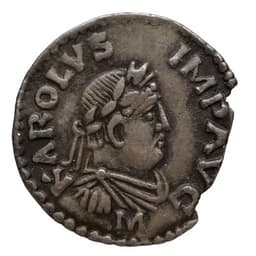
Charlemagne
Emperor · Medieval
71.0Total
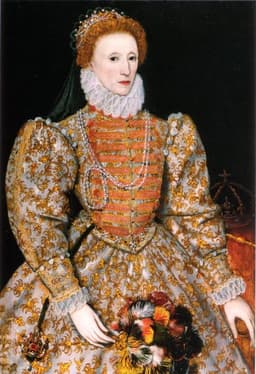
Elizabeth I
Politician · Modern
65.7Total
Basic Information
Born
748
1533
Died
814
1603
Era
Medieval
Modern
Nationality
Frankish Empire
England
Occupation
Emperor
Politician
Civilization
Western
Western
Score Comparison
Military (10%)
80.0
45.0
Political (20%)
78.0
78.0
Influence (20%)
65.0
65.0
Legacy (20%)
65.0
68.0
Leadership (15%)
80.0
75.0
Strategy (15%)
68.0
50.0
TOTAL
71.0
65.7
Charlemagne — Complete Timeline
772 AD
Saxon WarsWar◆ Major
Charlemagne launched a series of campaigns against the Saxons lasting over three decades. He forcibly converted them to Christianity, incorporated their territory into the Frankish Empire, and ordered the execution of thousands at the Massacre of Verden in 782.
ConquestChristianizationWar
Impact: regionaldestructive
774 AD
Conquest of the Lombard KingdomWar◆ Major
Charlemagne answered Pope Adrian I's call for aid against the Lombards. He besieged and captured Pavia, deposed King Desiderius, and annexed the Lombard Kingdom into his domain, assuming the title 'King of the Lombards' and solidifying Frankish control over Italy.
ConquestItalyPapal Alliance
Impact: regional
779 AD
Capitulary of HerstalReform
Charlemagne issued a series of legal and administrative reforms at the assembly in Herstal. He standardized weights and measures, reformed the coinage system, and strengthened the authority of royal officials (missi dominici) to oversee local governance and justice.
Legal ReformAdministrationStandardization
Impact: nationalconstructive
780 AD
Carolingian Renaissance ReformsCultural◆ Major
Charlemagne initiated a program of educational and cultural revival, inviting scholars like Alcuin of York to his court. He standardized Latin script (Carolingian minuscule), established palace schools, and promoted the copying of classical texts, preserving ancient knowledge.
EducationCultural RevivalScript
Impact: globalprogressive
800 AD
Coronation as Holy Roman EmperorPolitical Action
Pope Leo III crowned Charlemagne as Emperor of the Romans in St. Peter's Basilica on Christmas Day. This act revived the Western Roman Empire, established a precedent for papal authority over imperial titles, and created a political entity that shaped medieval European politics.
CoronationHoly Roman EmpirePapacy
Impact: globalconstructive
Elizabeth I — Complete Timeline
1559 AD
Act of Supremacy 1559Political Action◆ Major
Elizabeth I re-established the Church of England's independence from Rome, declaring herself Supreme Governor. This act, part of the Elizabethan Religious Settlement, restored Protestantism while maintaining some Catholic traditions, creating a via media that aimed to unify the nation.
Religious SettlementProtestantismChurch of England
Impact: nationalconstructive
1587 AD
Execution of Mary, Queen of ScotsPolitical Action◆ Major
After years of imprisonment, Elizabeth I signed the death warrant for Mary, Queen of Scots, who had been implicated in the Babington Plot to assassinate Elizabeth and claim the English throne. Mary's execution removed a major Catholic rival and solidified Elizabeth's position.
ExecutionCatholic RivalPlot
Impact: nationaltragic
1588 AD
Defeat of the Spanish ArmadaWar
The English navy under Lord Howard and Sir Francis Drake defeated the Spanish Armada, a massive invasion fleet sent by Philip II. Storms and English fireships scattered the Spanish fleet, preventing the invasion and establishing England as a major naval power.
Naval BattleSpainProtestantism
Impact: globalconstructive
1600 AD
Chartering of the East India CompanyPolitical Action◆ Major
Elizabeth I granted a royal charter to the East India Company, giving it a monopoly on English trade with Asia. This company would become a powerful instrument of British imperialism, eventually controlling large parts of India and shaping global trade.
TradeColonialismCharter
Impact: globalconstructive
1601 AD
Golden SpeechPolitical Action
In her final address to Parliament, Elizabeth I delivered the 'Golden Speech,' expressing her love for her subjects and her dedication to the realm. She addressed grievances over monopolies, promising reform, and cemented her image as a beloved monarch devoted to her people.
SpeechParliamentMonarchy
Impact: nationalconstructive
Expert Analysis
Charlemagne vs Elizabeth I
### The Emperor and the Virgin Queen
On Christmas Day in the year 800, an aging Frankish king knelt before the altar of St. Peter’s Basilica in Rome. As Pope Leo III placed a golden crown upon his head, the congregation erupted in acclamation: “To Charles, the most pious Augustus, crowned by God, great and peace-giving Emperor, life and victory!” It was a moment of supreme theater, a fusion of Roman imperial ambition and Christian divine right. Nearly eight centuries later, on a winter afternoon in 1601, an aging English queen stood before her Parliament, her voice trembling with emotion. “Though God hath raised me high,” she declared, “yet this I count the glory of my crown: that I have reigned with your loves.” One man forged an empire with the sword; one woman held a kingdom together with words. Both shaped the destiny of the West, yet their paths, their powers, and their tragedies could not have been more different.
### Origins: The Anointed and the Orphaned
Charlemagne was born into a world of iron and faith. The year was 748, and the Frankish kingdom was the most formidable power in a Europe fractured by the collapse of Roman order. His father, Pepin the Short, had been crowned king by the Pope himself, a transaction that bound the Frankish throne to the Church in a sacred embrace. Charlemagne grew up in the saddle, learning to hunt, fight, and command. The only books he ever truly loved were Augustine’s *City of God* and the chronicles of barbarian kings. He was a warrior first, a ruler second, and a scholar only by effort.
Elizabeth Tudor, born in 1533, entered a world no less dangerous, but far more subtle. Her father, Henry VIII, had broken with Rome to secure a male heir, and Elizabeth’s birth was a bitter disappointment. Her mother, Anne Boleyn, was executed when Elizabeth was not yet three. She was declared illegitimate, shuffled between households, and survived the paranoid reigns of her brother Edward and her Catholic sister Mary. Where Charlemagne learned to trust his sword, Elizabeth learned to trust no one. Her education was her armor: she mastered Latin, Greek, French, and Italian, and studied rhetoric, history, and theology. She knew that for a woman in power, knowledge was the only shield against the knife.
### Rise to Power: The Sword and the Throne
Charlemagne’s rise was a matter of inheritance and war. When his brother Carloman died suddenly in 771, Charlemagne seized sole rule of the Frankish kingdom. He then spent the next three decades doing what Frankish kings did best: fighting. In 774, he answered Pope Adrian I’s call for aid by besieging Pavia, the Lombard capital, and deposing King Desiderius. He added the Iron Crown of Lombardy to his own. Then came the Saxon Wars, a brutal, thirty-year campaign of conquest and forced conversion. Charlemagne did not merely defeat the Saxons; he annihilated their resistance, executing thousands at the Massacre of Verden in 782. For him, power was a hammer, and Europe was the anvil.
Elizabeth’s rise was a masterpiece of survival. When she became queen in 1558, England was a poor, divided, and militarily weak island. The treasury was empty, the army negligible, and the navy a collection of aging ships. Elizabeth’s first act was to re-establish the Church of England’s independence from Rome with the Act of Supremacy of 1559, declaring herself “Supreme Governor” rather than “Head” to appease both Catholics and Protestants. She knew she could not command obedience through force; she had to weave it through compromise. Her greatest weapon was her own image: the Virgin Queen, wedded to her kingdom, a symbol of unity in a fractured land.
### Leadership & Governance: The Hammer and the Web
Charlemagne ruled through presence and terror. He traveled constantly, holding assemblies like the one at Herstal in 779, where he issued a series of legal and administrative reforms that standardized weights, measures, and coinage across his realm. He appointed counts and missi dominici—royal agents—to enforce his will. But his rule was personal, not institutional. When he was not there, the system often failed. His greatest cultural achievement, the Carolingian Renaissance, was a top-down project: he invited the scholar Alcuin of York to his court, founded palace schools, and ordered every monastery to copy manuscripts. Yet this flowering of learning barely outlived him. It was the work of one man, not a civilization.
Elizabeth governed through indirection and patience. She never married, a decision that baffled her councilors but gave her extraordinary political leverage. She played the great powers of Europe—France and Spain—against each other, using the prospect of her hand as a diplomatic chess piece. She was notoriously frugal, reluctant to spend money on war, and often paralyzed by indecision. Yet when crisis came, she acted. In 1587, after years of agonizing, she signed the death warrant for Mary, Queen of Scots, eliminating the Catholic claimant to her throne. The following year, when Philip II’s Spanish Armada sailed for England, she rode to Tilbury and delivered the most famous speech of her reign: “I know I have the body of a weak and feeble woman, but I have the heart and stomach of a king.”
### Triumph & Tragedy: The Crown and the Cage
Charlemagne’s greatest moment was his coronation as Holy Roman Emperor on Christmas Day, 800. It was a triumph of ambition and symbolism: he had revived the Western Roman Empire, and the Pope had blessed his rule. But the triumph came with a hidden cost. The coronation strained relations with the Byzantine Empire, which considered the title its own, and it tied the Frankish crown forever to the papacy, a bond that would cause centuries of conflict. Charlemagne’s tragedy was that his empire did not outlast his son. He had built a colossus on sand.
Elizabeth’s greatest moment was the defeat of the Spanish Armada in 1588. The English navy, commanded by Lord Howard and Sir Francis Drake, harried the Spanish fleet into chaos, and a providential storm did the rest. It was a victory that cemented England’s status as a naval power and a Protestant bulwark. But Elizabeth’s tragedy was personal. She was the last Tudor. She had no heir, and she refused to name one. As she aged, the question of succession poisoned her court. The golden age she had fostered—the age of Shakespeare, of Drake, of the East India Company—was built on a throne that would pass to her Scottish rival’s son. She had preserved her kingdom, but she had not secured its future.
### Character & Destiny: The Iron Will and the Iron Mask
Charlemagne was a man of immense physical vitality and violent temper. He loved hunting, feasting, and the company of his many children. He was a devout Christian who forced conversion at sword-point. He was a reformer who could not read well but insisted his children learn. His personality drove his destiny: he believed that the world could be shaped by will, that faith and force were one. This made him a conqueror, but it also made his empire brittle.
Elizabeth was a woman of extraordinary intelligence and profound caution. She was vain, capricious, and deeply insecure. She surrounded herself with brilliant men—William Cecil, Francis Walsingham, Robert Dudley—but trusted none of them completely. Her personality drove her destiny: she believed that survival was the highest virtue, that a queen must be a mirror, not a hammer. This made her a master of politics, but it also made her reign a cage of her own making.
### Legacy: The Father of Europe and the Golden Age
Charlemagne is remembered as the “Father of Europe,” the man who gave the West its first post-Roman political unity. His empire fragmented, but the idea of a united Christendom endured. The Carolingian Renaissance preserved classical learning and laid the groundwork for medieval scholarship. His legal reforms influenced the development of feudal law. He is a saint in some traditions, a symbol of empire in others.
Elizabeth is remembered as the architect of England’s golden age. Her reign saw the flourishing of English Renaissance drama, the establishment of Protestantism, and the birth of the British Empire with the chartering of the East India Company in 1600. She is Gloriana, the Virgin Queen, a symbol of national pride and feminine power. Her legacy is not a crumbling empire but a lasting nation.
### Conclusion
Two rulers, two worlds. Charlemagne believed that power was a force to be applied from above, by a single, anointed will. Elizabeth believed that power was a web to be woven from the center, by a clever, patient hand. One built an empire that collapsed; one built a kingdom that endured. Their differences are the difference between the sword and the scepter, between the hammer and the web. In the end, both understood a truth that every leader must face: that history does not remember what you intended, only what you left behind.
Rankings
🥇
CharlemagneLeader
Mil: 80.0Pol: 78.0Inf: 65.0
71.0
🥈
Elizabeth I
Mil: 45.0Pol: 78.0Inf: 65.0
65.7
+5.3 behind
How This Comparison Works
Algorithm
Each figure is scored on 6 dimensions (0—100 scale) based on structured historical data: Military (10%), Political (20%), Influence (20%), Legacy (20%), Leadership (15%), Strategy (15%). The weighted total produces the final ranking.
Data Sources
Scores are computed from structured sub-indicators in the database. Scale factors adjust for era (Ancient ×0.85, Modern ×1.0) and civilization size (Eastern ×1.05, Other ×0.80) to account for differences in population and military scale.
Maximum 3 Figures
Comparisons are limited to 2—3 figures to ensure readability and statistical meaningfulness.
Error Margins
±5 points per dimension — Sub-scores are derived from historical records with inherent uncertainty. Two figures within 5 points on a dimension should be considered roughly equivalent in that area.
Total Score Accuracy
±3 points overall — The weighted combination of 6 dimensions produces a total score with approximately ±3 points of uncertainty. Differences of less than 3 points are not statistically significant— the figures are effectively tied.
Known Limitations
- Historical records are incomplete and uneven across civilizations
- Figures from oral-tradition societies may be underrepresented
- Occupation labels can misclassify multi-role figures
- Scores measure capability and impact, not moral character
- Quantitative scoring is a comparison tool, not absolute truth
Capability Radar
Military (10%) — Battles & Warfare
Battles
85
45
Win Rate
90
70
Expansion
88
55
Political (20%) — Governance & Reform
Reform
90
80
Diplomacy
80
85
Economy
75
80
Influence (20%) — Cultural & Global Reach
Cultural
85
85
Global
80
80
Legacy (20%) — Historical Impact
Historical
90
85
Longevity
85
85
Leadership (15%) — Power & Stability
Tenure
85
90
Stability
70
75
Strategy (15%) — Tactics & Innovation
Strategy
85
75
Tactics
75
60
Reform
80
65
Similar Comparisons
Comments & Discussion
Frank the Forger6/16/2026
Charlemagne's coronation was a pure power grab dressed as piety. He didn't "save" Europe—he plundered Saxons for 30 years, forced conversion at swordpoint, and mass-executed 4,500 captives at Verden in 782. That's not a Christian emperor; that's a warlord using the Church as PR. Elizabeth had actual political intelligence. She balanced Catholics and Puritans, outmaneuvered Spain without constant bloodbaths. Give me the queen who could rule with rhetoric over a king who needed genocide to feel le
斧头与权杖6/16/2026
拿查理曼跟伊丽莎白比,就像拿铁锤比绣花针。一个砸碎半个欧洲建起基督教帝国,强项是打仗和砍头;另一个靠嫁给英国本身,没生一儿一女却成了民族之母。但别搞错了,我更服伊丽莎白。查理曼的帝国三代就散架了,伊丽莎白的英格兰打下了往后三百年的海上霸权。剑快一时,话说一世,哪个更高明用脚趾头都想得通。
Data Don6/16/2026
Let’s be honest: the comparison is weak because their metrics of success are incomparable. Charlemagne controlled roughly 1.1 million square kilometers by 814; Elizabeth ruled about 150,000. He minted standardized silver pennies across his realm; she inherited a bankrupt treasury and spent decades fighting inflation. He had an empire; she had an island. Saying one is "better" ignores scale, context, and the fact that no medieval state could maintain a bureaucratic apparatus like early modern Eng
伪君子的盛宴6/16/2026
伊丽莎白年代的”黄金时代”是被吹出来的。她迟迟不结婚,搞出一个”童贞女王”神话,根本是政治忽悠术。至于宗教宽容?她迫害了多少天主教徒?1581年《法令》直接让耶稣会教士当叛国者处死。她杀了玛丽·斯图亚特,还假装很无奈。查理曼至少对教会的统治是直白的:顺我者昌,逆我者砍。论诚实,那个拎着人头走天下的皇帝比那个笑眯眯设陷阱的女王体面得多。
Classics Grad6/16/2026
Charlemagne’s court called itself a “new Athens,” importing scholars like Alcuin to revive Latin literacy when most of Europe couldn't read. Elizabeth had Shakespeare, Drake, and the defeat of the Armada, sure—but she stood on the shoulders of centuries of recovery. Charlemagne built the school from nothing. He personally learned to write (badly, but he tried), standardized script, and preserved classical texts. Elizabeth inherited a university system he essentially made possible. Without Charle