Loading...
Charlemagne vs Deng Xiaoping
Charlemagne leads by 5.0 pts · 2 figures compared
…
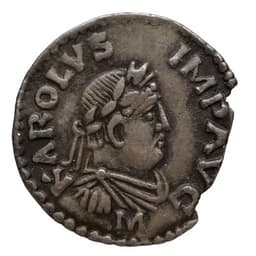
Charlemagne
Emperor · Medieval
71.0Total
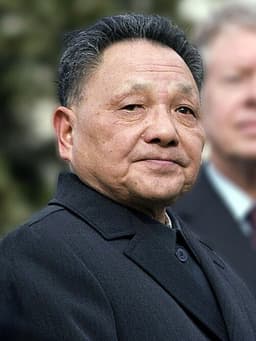
Deng Xiaoping
Politician · Modern
66.0Total
Basic Information
Born
748
1904
Died
814
1997
Era
Medieval
Modern
Nationality
Frankish Empire
China
Occupation
Emperor
Politician
Civilization
Western
Eastern
Score Comparison
Military (10%)
80.0
30.0
Political (20%)
78.0
90.0
Influence (20%)
65.0
68.0
Legacy (20%)
65.0
65.0
Leadership (15%)
80.0
78.0
Strategy (15%)
68.0
45.0
TOTAL
71.0
66.0
Charlemagne — Complete Timeline
772 AD
Saxon WarsWar◆ Major
Charlemagne launched a series of campaigns against the Saxons lasting over three decades. He forcibly converted them to Christianity, incorporated their territory into the Frankish Empire, and ordered the execution of thousands at the Massacre of Verden in 782.
ConquestChristianizationWar
Impact: regionaldestructive
774 AD
Conquest of the Lombard KingdomWar◆ Major
Charlemagne answered Pope Adrian I's call for aid against the Lombards. He besieged and captured Pavia, deposed King Desiderius, and annexed the Lombard Kingdom into his domain, assuming the title 'King of the Lombards' and solidifying Frankish control over Italy.
ConquestItalyPapal Alliance
Impact: regional
779 AD
Capitulary of HerstalReform
Charlemagne issued a series of legal and administrative reforms at the assembly in Herstal. He standardized weights and measures, reformed the coinage system, and strengthened the authority of royal officials (missi dominici) to oversee local governance and justice.
Legal ReformAdministrationStandardization
Impact: nationalconstructive
780 AD
Carolingian Renaissance ReformsCultural◆ Major
Charlemagne initiated a program of educational and cultural revival, inviting scholars like Alcuin of York to his court. He standardized Latin script (Carolingian minuscule), established palace schools, and promoted the copying of classical texts, preserving ancient knowledge.
EducationCultural RevivalScript
Impact: globalprogressive
800 AD
Coronation as Holy Roman EmperorPolitical Action
Pope Leo III crowned Charlemagne as Emperor of the Romans in St. Peter's Basilica on Christmas Day. This act revived the Western Roman Empire, established a precedent for papal authority over imperial titles, and created a political entity that shaped medieval European politics.
CoronationHoly Roman EmpirePapacy
Impact: globalconstructive
Deng Xiaoping — Complete Timeline
1978 AD
Third Plenum of the 11th Central CommitteePolitical Action
Deng Xiaoping consolidated power and announced the policy of Reform and Opening-Up. This meeting marked the end of Maoist class struggle as the national priority and shifted focus to economic modernization, initiating market-oriented reforms.
Economic ReformOpening-UpChina Modernization
Impact: globalconstructive
1980 AD
Establishment of Special Economic ZonesReform◆ Major
Deng Xiaoping approved the creation of Special Economic Zones in Shenzhen, Zhuhai, Shantou, and Xiamen. These zones offered tax incentives and market freedoms to attract foreign investment and technology, serving as experimental laboratories for capitalist practices within a socialist framework.
Economic ZonesForeign InvestmentMarket Reforms
Impact: nationalconstructive
1984 AD
Sino-British Joint Declaration on Hong KongPolitical Action◆ Major
Deng Xiaoping negotiated with British Prime Minister Margaret Thatcher to agree on the return of Hong Kong to Chinese sovereignty in 1997. The declaration established the 'One Country, Two Systems' principle, allowing Hong Kong to maintain its capitalist system for 50 years.
Hong KongDiplomacyOne Country Two Systems
Impact: globalconstructive
1989 AD
Tiananmen Square Protests CrackdownPolitical Action
Deng Xiaoping authorized the military to suppress pro-democracy protests in Tiananmen Square. The crackdown resulted in hundreds of civilian deaths and injuries, leading to international condemnation and a tightening of political control while economic reforms continued.
TiananmenSuppressionHuman Rights
Impact: globaldestructive
1992 AD
Southern Tour (Nanxun)Political Action◆ Major
Deng Xiaoping traveled to southern China to reaffirm the course of economic reform after conservative backlash. His speeches in Shenzhen and other cities revitalized market-oriented policies, accelerating foreign investment and pushing China toward a socialist market economy.
Economic ReformNanxunMarket Economy
Impact: nationalconstructive
Expert Analysis
Charlemagne vs Deng Xiaoping
### The Emperor and the Architect
On a winter morning in 800 AD, an aging Frankish king knelt before an altar in St. Peter’s Basilica. Pope Leo III placed a golden crown upon his head, and the congregation roared, “To Charles, the most pious Augustus, crowned by God!” The man who rose was no longer merely a king; he was Charlemagne, Emperor of the Romans, a living bridge between the fallen glory of Rome and the uncertain future of Christendom.
Twelve centuries later, in the spring of 1992, an 88-year-old Chinese man stepped off a train in the southern city of Shenzhen. He wore a simple grey Mao suit and a straw hat, but his words carried the weight of a nation’s future. Deng Xiaoping, the “paramount leader” who had never held the highest formal title, was on a Southern Tour to save his life’s work from conservative backlash. He pointed at the skyscrapers rising from what had been fishing villages and declared that reform was not a retreat from socialism, but its salvation.
One man built an empire with swords and scripture. The other rebuilt a civilization with markets and pragmatism. Both were architects of worlds, but their blueprints could not have been more different.
### Origins
Charlemagne was born in 748 into a world of warring tribes and crumbling certainties. His father, Pepin the Short, had deposed the last Merovingian king and seized the throne with the Pope’s blessing. From boyhood, Charlemagne learned that power was a physical thing—won on horseback, sealed in blood, and sanctified by the Church. He grew up speaking Frankish and Latin, hunting in the dense forests of the Rhine, and watching his father campaign against Lombards and Saxons. The world he inherited was a patchwork of feuding duchies, pagan tribes, and decaying Roman institutions. To rule was to conquer.
Deng Xiaoping came of age in 1904, a time when China was the “sick man of Asia.” Born into a prosperous farming family in Sichuan, he left for France at sixteen as part of a work-study program. In the factories of Paris and the cafes of Lyon, he encountered not only Marxism but the industrial might of the West. He saw how railways, electricity, and mass production had transformed Europe. When he returned to China, he joined the Communist revolution not as a romantic idealist but as a practical organizer. Where Charlemagne saw a world to be converted and conquered, Deng saw a nation to be lifted from poverty through sheer economic discipline.
### Rise to Power
Charlemagne’s path was straightforward: he inherited the kingdom of the Franks in 768 upon his father’s death, initially co-ruling with his brother Carloman. When Carloman died suddenly in 771, Charlemagne absorbed his territories and began three decades of relentless expansion. His rise was a story of military campaigns—the conquest of the Lombard kingdom in 774, the long and brutal Saxon Wars beginning in 772, and campaigns into Bavaria and Spain. Each victory added land, tribute, and souls to the Frankish realm. The turning point came on Christmas Day 800, when Pope Leo III crowned him Emperor. It was an act of political theater that revived the Roman Empire in the West and cemented Charlemagne’s authority as God’s chosen ruler.
Deng Xiaoping’s ascent was far more treacherous. He was a veteran of the Long March and a key figure in Mao Zedong’s China, but he fell from favor during the Cultural Revolution, purged and sent to work in a tractor factory. He survived by keeping his head down and waiting. In 1978, after Mao’s death and the fall of the Gang of Four, Deng emerged as the paramount leader at the Third Plenum of the 11th Central Committee. He did not seize power in a dramatic coup; he outmaneuvered rivals through bureaucratic patience, forming alliances with reform-minded colleagues. His rise was not a coronation but a consolidation—a quiet, methodical takeover of the party apparatus.
### Leadership & Governance
Charlemagne ruled through personal presence and constant movement. He had no fixed capital; he traveled from palace to palace, holding assemblies, issuing decrees, and dispensing justice. His Capitulary of Herstal in 779 standardized weights, measures, and legal procedures across his vast domain. He reformed the Church, promoted literacy, and invited the scholar Alcuin of York to his court, sparking the Carolingian Renaissance. But his governance was fundamentally martial. The Saxon Wars lasted over thirty years, and Charlemagne’s solution to resistance was mass baptism and, when that failed, mass execution. He was a reformer with a sword.
Deng governed from a distance, through institutions and incentives. He never held the top titles of party chairman or president; he ruled as chairman of the Central Military Commission, pulling strings from behind the scenes. His reforms were radical but carefully managed. The Special Economic Zones established in 1980—Shenzhen, Zhuhai, Shantou, and Xiamen—were experiments in capitalism within a socialist framework. Deng let local officials innovate, then scaled up what worked. He decollectivized agriculture, opened China to foreign investment, and encouraged private enterprise. But he also maintained the Communist Party’s monopoly on power. When pro-democracy protests erupted in Tiananmen Square in 1989, he authorized a violent crackdown. For Deng, economic freedom and political control were not contradictions; they were two sides of the same pragmatic coin.
### Triumph & Tragedy
Charlemagne’s greatest moment was his coronation in 800 AD—the revival of the Roman Empire in the West. It gave him a legitimacy that transcended tribal kingship and set the stage for the medieval papacy’s entanglement with secular power. But his legacy was fragile. His empire fragmented among his grandsons within a generation, and the Carolingian Renaissance, for all its brilliance, remained confined to a small clerical elite. His greatest tragedy was the Saxon Wars: the forced conversions, the massacre of 4,500 prisoners at Verden in 782, and the cultural destruction of pagan traditions. He united Europe, but he did so through violence that left deep scars.
Deng’s triumph was the transformation of China from a poor, isolated nation into an economic superpower. His Southern Tour in 1992 reignited reform after the Tiananmen crackdown had chilled the political climate. He visited factories, spoke to workers, and told the nation, “Development is the absolute principle.” The results were staggering: hundreds of millions lifted from poverty, a middle class created, and China integrated into the global economy. But his tragedy was the Tiananmen Square crackdown itself. It saved the party’s control, but it destroyed the possibility of political liberalization and left a wound in China’s relationship with the world that has never fully healed.
### Character & Destiny
Charlemagne was a man of immense physical vitality—tall, strong, and tireless. He ate sparingly, drank little, and loved hunting and swimming. He was also deeply religious, attending Mass daily and insisting on the strict observance of Church doctrine. His character was a fusion of warrior and monk: ruthless in battle, devout in prayer. This duality drove his destiny. He believed he was chosen by God to spread Christianity and restore order, and this conviction gave him the energy for decades of war and reform. But it also blinded him to the limits of force. He could conquer a people, but he could not make them love him.
Deng was short, slight, and chain-smoked cigarettes. He was known for his pragmatism, his refusal to engage in ideological debates, and his famous saying, “It doesn’t matter whether a cat is black or white, as long as it catches mice.” He had survived the Cultural Revolution by keeping silent, and he carried a deep distrust of ideological purity. His character was shaped by survival: he had seen the disasters of Mao’s Great Leap Forward and the chaos of the Cultural Revolution. His destiny was to undo the damage while keeping the system intact. He succeeded because he understood that in China, stability was the highest value.
### Legacy
Charlemagne is remembered as the “Father of Europe.” His empire laid the foundations for modern France, Germany, and the Low Countries. The Carolingian Renaissance preserved classical learning and set the stage for the intellectual flowering of the High Middle Ages. But his legacy is also contested. He is a saint in some Christian traditions and a symbol of forced conversion in others. His empire was a brilliant flash that faded, but its memory shaped European identity for a thousand years.
Deng Xiaoping is remembered as the architect of modern China. His reforms lifted more people out of poverty than any other leader in history. The Special Economic Zones became models for development worldwide. But his legacy is also ambiguous. China’s economic miracle came at the cost of political freedom, environmental degradation, and vast inequality. He is revered by the party as a visionary, but his name is rarely spoken by ordinary Chinese in public, for fear of political scrutiny.
### Conclusion
Standing in St. Peter’s Basilica in 800, Charlemagne believed he was restoring an eternal empire. Standing in Shenzhen in 1992, Deng Xiaoping believed he was building a new one. Both were right, and both were wrong. Charlemagne’s empire crumbled, but the idea of a united Europe endured. Deng’s economic reforms transformed China, but the political structure he preserved may yet prove brittle. What connects them is a shared recognition that power is not an end in itself—it is a tool for shaping a world that will outlast the hand that wields it. One used a sword; the other, a balance sheet. Both changed history, and both left us with questions that still have no easy answers.
Rankings
🥇
CharlemagneLeader
Mil: 80.0Pol: 78.0Inf: 65.0
71.0
🥈
Deng Xiaoping
Mil: 30.0Pol: 90.0Inf: 68.0
66.0
+5.0 behind
How This Comparison Works
Algorithm
Each figure is scored on 6 dimensions (0—100 scale) based on structured historical data: Military (10%), Political (20%), Influence (20%), Legacy (20%), Leadership (15%), Strategy (15%). The weighted total produces the final ranking.
Data Sources
Scores are computed from structured sub-indicators in the database. Scale factors adjust for era (Ancient ×0.85, Modern ×1.0) and civilization size (Eastern ×1.05, Other ×0.80) to account for differences in population and military scale.
Maximum 3 Figures
Comparisons are limited to 2—3 figures to ensure readability and statistical meaningfulness.
Error Margins
±5 points per dimension — Sub-scores are derived from historical records with inherent uncertainty. Two figures within 5 points on a dimension should be considered roughly equivalent in that area.
Total Score Accuracy
±3 points overall — The weighted combination of 6 dimensions produces a total score with approximately ±3 points of uncertainty. Differences of less than 3 points are not statistically significant— the figures are effectively tied.
Known Limitations
- Historical records are incomplete and uneven across civilizations
- Figures from oral-tradition societies may be underrepresented
- Occupation labels can misclassify multi-role figures
- Scores measure capability and impact, not moral character
- Quantitative scoring is a comparison tool, not absolute truth
Capability Radar
Military (10%) — Battles & Warfare
Battles
85
36
Win Rate
90
37
Expansion
88
41
Political (20%) — Governance & Reform
Reform
90
95
Diplomacy
80
80
Economy
75
95
Influence (20%) — Cultural & Global Reach
Cultural
85
70
Global
80
90
Legacy (20%) — Historical Impact
Historical
90
90
Longevity
85
85
Leadership (15%) — Power & Stability
Tenure
85
85
Stability
70
75
Strategy (15%) — Tactics & Innovation
Strategy
85
47
Tactics
75
48
Reform
80
49
Similar Comparisons
Comments & Discussion
No comments yet. Be the first to share your thoughts!