Loading...
Charlemagne vs Cleopatra VII
Charlemagne leads by 23.8 pts · 2 figures compared
…
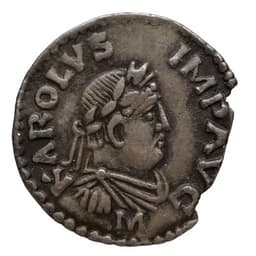
Charlemagne
Emperor · Medieval
71.0Total
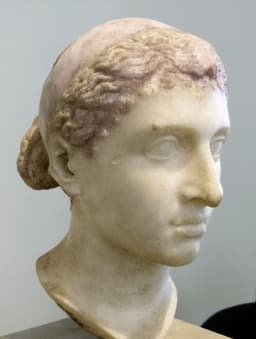
Cleopatra VII
Politician · Ancient
47.2Total
Basic Information
Born
748
-69
Died
814
-30
Era
Medieval
Ancient
Nationality
Frankish Empire
Egypt
Occupation
Emperor
Politician
Civilization
Western
Middle Eastern
Score Comparison
Military (10%)
80.0
20.0
Political (20%)
78.0
45.0
Influence (20%)
65.0
40.0
Legacy (20%)
65.0
80.0
Leadership (15%)
80.0
40.0
Strategy (15%)
68.0
25.0
TOTAL
71.0
47.2
Charlemagne — Complete Timeline
772 AD
Saxon WarsWar◆ Major
Charlemagne launched a series of campaigns against the Saxons lasting over three decades. He forcibly converted them to Christianity, incorporated their territory into the Frankish Empire, and ordered the execution of thousands at the Massacre of Verden in 782.
ConquestChristianizationWar
Impact: regionaldestructive
774 AD
Conquest of the Lombard KingdomWar◆ Major
Charlemagne answered Pope Adrian I's call for aid against the Lombards. He besieged and captured Pavia, deposed King Desiderius, and annexed the Lombard Kingdom into his domain, assuming the title 'King of the Lombards' and solidifying Frankish control over Italy.
ConquestItalyPapal Alliance
Impact: regional
779 AD
Capitulary of HerstalReform
Charlemagne issued a series of legal and administrative reforms at the assembly in Herstal. He standardized weights and measures, reformed the coinage system, and strengthened the authority of royal officials (missi dominici) to oversee local governance and justice.
Legal ReformAdministrationStandardization
Impact: nationalconstructive
780 AD
Carolingian Renaissance ReformsCultural◆ Major
Charlemagne initiated a program of educational and cultural revival, inviting scholars like Alcuin of York to his court. He standardized Latin script (Carolingian minuscule), established palace schools, and promoted the copying of classical texts, preserving ancient knowledge.
EducationCultural RevivalScript
Impact: globalprogressive
800 AD
Coronation as Holy Roman EmperorPolitical Action
Pope Leo III crowned Charlemagne as Emperor of the Romans in St. Peter's Basilica on Christmas Day. This act revived the Western Roman Empire, established a precedent for papal authority over imperial titles, and created a political entity that shaped medieval European politics.
CoronationHoly Roman EmpirePapacy
Impact: globalconstructive
Cleopatra VII — Complete Timeline
48 BC
Alliance with Julius CaesarPolitical Action◆ Major
Cleopatra allied with Julius Caesar during the Roman civil war. She had herself smuggled into his palace in Alexandria rolled in a carpet. Caesar supported her claim to the throne, defeating her brother Ptolemy XIII and restoring her as co-ruler of Egypt.
Impact: regional
47 BC
Birth of CaesarionPolitical Action◆ Major
Cleopatra gave birth to Ptolemy XV Caesar (Caesarion), claiming he was Julius Caesar's son. This birth strengthened her political position and provided a potential heir to both Egypt and Rome, though Caesar never officially acknowledged him as his heir.
Impact: regional
41 BC
Alliance with Mark AntonyPolitical Action◆ Major
Cleopatra formed a political and romantic alliance with Mark Antony, a Roman triumvir. She provided him with financial and military support for his campaigns in the East. Their relationship produced three children and solidified her control over Egypt.
Impact: regional
31 BC
Battle of ActiumWar
The combined naval forces of Cleopatra and Mark Antony were decisively defeated by Octavian's fleet under Agrippa at Actium in Greece. Cleopatra fled with her ships, and Antony followed, leading to their eventual downfall and Octavian's rise as Augustus.
Impact: globaltragic
30 BC
Death of CleopatraPolitical Action
After Octavian's forces captured Alexandria, Cleopatra died by suicide, traditionally said to be from the bite of an asp. Her death ended the Ptolemaic dynasty and Egypt became a Roman province, marking the end of Hellenistic Egypt's independence.
Impact: globaltragic
Expert Analysis
Charlemagne vs Cleopatra VII
# The Emperor and the Queen: Two Paths to Immortality
On Christmas Day in the year 800, a middle-aged Frankish king knelt before the altar of St. Peter's Basilica in Rome. As Pope Leo III placed a golden crown upon his head, the congregation erupted in acclamation: "To Charles, the most pious Augustus, crowned by God, great and peace-giving Emperor, life and victory!" Across the Mediterranean, sixteen centuries earlier on a summer morning in 30 BCE, a woman of thirty-nine lay dead in a palace in Alexandria, her body discovered by Roman soldiers who found her dressed in her finest royal robes, two small puncture wounds on her arm. Charlemagne rose to found an empire that would shape Europe for a millennium. Cleopatra VII fell to become the most legendary queen in history. Their scores—Charlemagne's total of 75.0 against Cleopatra's 46.8—tell only part of a far more complex story about power, circumstance, and the strange alchemy of historical memory.
Origins
Charlemagne was born in 748 into a world of chaos. The Merovingian kings who had ruled the Franks had become figureheads, and his father, Pepin the Short, had seized the throne with the blessing of the Pope. The young Charles grew up in a warrior culture where strength was measured in swords and loyalty, where the Church was the only institution that stretched beyond local horizons. He learned to read Latin but never fully mastered writing—a detail that speaks volumes about the priorities of his world.
Cleopatra entered history in 69 BCE, born into the Ptolemaic dynasty, a Greek-Macedonian family that had ruled Egypt for nearly three centuries. Unlike Charlemagne, she was steeped in learning from childhood. She spoke nine languages fluently—including Egyptian, which no other Ptolemy had bothered to learn—and studied philosophy, rhetoric, and science under the greatest scholars of Alexandria. Where Charlemagne's world was being built, Cleopatra's was already ancient, and she knew it.
Rise to Power
Charlemagne became king at twenty in 768, but his path was neither smooth nor solitary. He ruled jointly with his brother Carloman until the latter's sudden death in 771. This was a stroke of fortune, but Charlemagne made his own luck through relentless action. Within three years, he had answered Pope Adrian I's call for aid and besieged the Lombard capital of Pavia in 774, deposing King Desiderius and adding the Iron Crown of Lombardy to his own. The pattern was set: opportunity met with overwhelming force.
Cleopatra's ascent was far more precarious. She became queen at eighteen in 51 BCE, co-ruling with her younger brother Ptolemy XIII, who was both her husband and her enemy. Within two years, she had been driven from Alexandria by his advisors. Her genius lay not in military might—her score of 25.0 in that category is telling—but in audacious political theater. In 48 BCE, she had herself smuggled into Julius Caesar's palace rolled in a carpet. When it unrolled before the most powerful man in the Roman world, she was not a supplicant but a queen making her entrance. The alliance that followed secured her throne and gave her a son, Caesarion, born in 47 BCE.
Leadership & Governance
Charlemagne ruled through constant movement. He never stayed in one place for more than a few months, traveling across his vast domains to enforce justice, collect tribute, and crush rebellion. The Saxon Wars, launched in 772, consumed thirty years of his reign, a brutal campaign of forced conversion and mass execution that culminated in the baptism of the Saxon leader Widukind. Yet Charlemagne was no mere warlord. His Capitulary of Herstal in 779 standardized weights and measures across the Frankish realm, and his Carolingian Renaissance reforms beginning in 780 brought scholars like Alcuin of York to his court, establishing schools that trained the administrators who would run his empire.
Cleopatra governed through diplomacy and charm, but also through ruthless calculation. She understood that Egypt's survival depended on Roman favor, and she navigated the shifting alliances of Rome's civil wars with remarkable skill. Her alliance with Mark Antony in 41 BCE was both romantic and strategic—she provided the financial resources that funded his campaigns, and he provided the military protection that kept her on her throne. She reformed Egypt's economy, stabilized grain prices during famines, and presented herself to her subjects not as a Greek queen but as the living incarnation of the goddess Isis.
Triumph & Tragedy
Charlemagne's coronation as Holy Roman Emperor in 800 was the supreme achievement of his life. It revived the Roman Empire in the West, established the Pope as a kingmaker, and set the stage for a thousand years of conflict between Church and State. But the triumph was fragile. His empire depended entirely on his personal authority, and when he died in 814, it began to fragment almost immediately.
Cleopatra's tragedy unfolded at the Battle of Actium in 31 BCE. Her combined naval forces with Mark Antony were decisively defeated by Octavian's fleet under Agrippa. The queen fled, and Antony followed, a moment immortalized as romantic betrayal but more likely a calculated retreat that failed. When Octavian's forces captured Alexandria in 30 BCE, Cleopatra's options vanished. Her death by suicide—traditionally attributed to the bite of an asp—was her final act of sovereignty, denying Octavian the spectacle of parading her through Rome in chains.
Character & Destiny
Charlemagne was a man of enormous appetites and contradictions. He loved hunting, feasting, and his many wives and concubines, yet he rose at dawn for prayer and insisted on attending church daily. He could order the execution of thousands of Saxon rebels and then weep over the death of a beloved friend. His personality—restless, devout, ruthless, curious—drove him to conquer, build, and reform on a scale that no one in Western Europe had attempted since the fall of Rome.
Cleopatra was defined by intelligence and adaptability. She was not the great beauty of legend—ancient coins show a woman with a strong nose and sharp features—but she possessed a magnetism that captivated the most powerful men of her age. She understood that in a world dominated by Roman military might, her weapons had to be words, wit, and will. Her tragedy was that she played a game she could not ultimately win, because the rules were written by men with armies.
Legacy
Charlemagne's legacy is written into the fabric of Europe. He is called the "Father of Europe," and the Carolingian Renaissance he sponsored preserved classical learning that would otherwise have been lost. His empire provided the template for the Holy Roman Empire, which lasted until Napoleon abolished it in 1806. His scores—80.0 for leadership, 80.0 for legacy—reflect a man who built institutions that outlived him.
Cleopatra's legacy is more complex and more intimate. She is remembered not for institutions but for her story—the queen who seduced Caesar and Antony, who died by her own hand rather than submit. Her score of 50.0 for legacy understates her cultural impact. She has been immortalized in Shakespeare, in paintings, in film, a symbol of feminine power and tragic beauty that continues to fascinate two thousand years after her death.
Conclusion
What drove the difference between these two figures? Charlemagne built an empire because his world was being born—there was raw material to shape, chaos to order, a civilization to create. Cleopatra lost her kingdom because her world was dying—the Hellenistic age was giving way to Roman domination, and no amount of brilliance could reverse the tide of history. Charlemagne's total score of 75.0 reflects the advantages of timing and opportunity as much as personal ability. Cleopatra's 46.8 reflects the tragedy of a woman who played a losing hand with extraordinary skill.
In the end, both achieved immortality, but of different kinds. Charlemagne's name became a title—"Kaiser" and "Tsar" both derive from "Caesar," the name he revived. Cleopatra's name became a legend, a story told and retold until the woman herself dissolved into myth. One built, the other burned bright. History remembers both, but for reasons that tell us more about ourselves than about them.
Rankings
🥇
CharlemagneLeader
Mil: 80.0Pol: 78.0Inf: 65.0
71.0
🥈
Cleopatra VII
Mil: 20.0Pol: 45.0Inf: 40.0
47.2
+23.8 behind
How This Comparison Works
Algorithm
Each figure is scored on 6 dimensions (0—100 scale) based on structured historical data: Military (10%), Political (20%), Influence (20%), Legacy (20%), Leadership (15%), Strategy (15%). The weighted total produces the final ranking.
Data Sources
Scores are computed from structured sub-indicators in the database. Scale factors adjust for era (Ancient ×0.85, Modern ×1.0) and civilization size (Eastern ×1.05, Other ×0.80) to account for differences in population and military scale.
Maximum 3 Figures
Comparisons are limited to 2—3 figures to ensure readability and statistical meaningfulness.
Error Margins
±5 points per dimension — Sub-scores are derived from historical records with inherent uncertainty. Two figures within 5 points on a dimension should be considered roughly equivalent in that area.
Total Score Accuracy
±3 points overall — The weighted combination of 6 dimensions produces a total score with approximately ±3 points of uncertainty. Differences of less than 3 points are not statistically significant— the figures are effectively tied.
Known Limitations
- Historical records are incomplete and uneven across civilizations
- Figures from oral-tradition societies may be underrepresented
- Occupation labels can misclassify multi-role figures
- Scores measure capability and impact, not moral character
- Quantitative scoring is a comparison tool, not absolute truth
Capability Radar
Military (10%) — Battles & Warfare
Battles
85
20
Win Rate
90
15
Expansion
88
10
Political (20%) — Governance & Reform
Reform
90
40
Diplomacy
80
85
Economy
75
55
Influence (20%) — Cultural & Global Reach
Cultural
85
80
Global
80
85
Legacy (20%) — Historical Impact
Historical
90
85
Longevity
85
90
Leadership (15%) — Power & Stability
Tenure
85
60
Stability
70
35
Strategy (15%) — Tactics & Innovation
Strategy
85
30
Tactics
75
25
Reform
80
10
Similar Comparisons
Comments & Discussion
CROWNED BY GOD, RAZED BY TIME6/16/2026
Sure, Charlemagne unified Europe and revived the Empire, but let's not pretend his legacy isn't as much myth as fact. His "renaissance" produced maybe a handful of literate monks, while Cleopatra personally spoke nine languages and ran a sophisticated Hellenistic bureaucracy. Charlemagne couldn't even write his own name. She commanded fleets, seduced Caesar, and made Alexandria the intellectual capital of the world. He conquered with swords; she conquered with minds. Charlemagne's score is infla
沙漠女王在世6/16/2026
说查理曼是欧洲之父?他不过是个挥舞斧头的军阀,靠烧杀抢掠把半个欧洲踩在脚下。克利奥帕特拉才是真正的大师——她用一张嘴、一颗脑子,跟罗马两巨头周旋,保埃及二十年和平。查理曼连自己名字都写不全,历史却给他75分?笑话。她46.8分?你来告诉我,谁更值得被记住:一个靠剑的莽夫,还是一个靠智慧活下来的女王?
THE ALEXANDER TEST6/16/2026
Score aside, the real question is: could you drop either of them into a radically different era and still have them dominate? Charlemagne's whole act—sword, crown, incense—only works in the dark ages. Put him in Cleopatra's Ptolemaic court, and he'd be lost without his bishops and his wife's family alliances. Cleopatra? Drop her into Aachen, and she'd have Charlemagne wrapped around her finger by dinner, convincing him to make Egypt a favored ally. She was adaptable; he was a product of his time
帝国的影子6/16/2026
查理曼75分?这个分数来自那些只爱看地图变大的历史学家。帝国会碎,但神话长存。克利奥帕特拉的故事两千年来没断过——莎士比亚、伊丽莎白·泰勒、每一本关于权力与美的书里都有她。查理曼是个中世纪的铁锤,但Cleopatra是个永恒的谜。她会死,但她不会老。这才是历史的真正货币:不是你能占领多少土地,而是你能活多久在被人的记忆里。