Loading...
Chandragupta II vs Esarhaddon
Chandragupta II leads by 12.5 pts · 2 figures compared
…
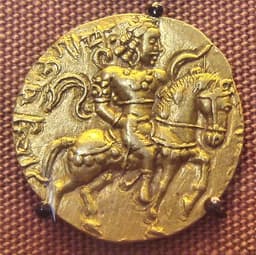
Chandragupta II
Emperor · Ancient
74.7Total
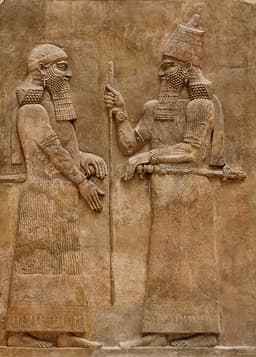
Esarhaddon
Emperor · Ancient
62.2Total
Basic Information
Born
380
-681
Died
415
-669
Era
Ancient
Ancient
Nationality
India
Assyria
Occupation
Emperor
Emperor
Civilization
Indian
Middle Eastern
Score Comparison
Military (10%)
74.0
72.0
Political (20%)
78.0
59.3
Influence (20%)
88.0
61.0
Legacy (20%)
65.0
56.0
Leadership (15%)
72.0
66.0
Strategy (15%)
65.4
70.0
TOTAL
74.7
62.2
Chandragupta II — Complete Timeline
380 AD
Accession to the Gupta ThronePolitical Action
Chandragupta II succeeded his father Samudragupta as emperor of the Gupta Empire. He inherited a vast territory and continued the expansionist policies, further consolidating Gupta power in northern India.
Gupta EmpireSuccessionExpansion
Impact: regional
385 AD
Marriage Alliance with the VakatakasPolitical Action◆ Major
Chandragupta II married his daughter Prabhavatigupta to the Vakataka king Rudrasena II. After Rudrasena's death, Prabhavatigupta ruled as regent, effectively bringing the Vakataka kingdom under Gupta influence and securing the Deccan frontier.
VakatakaAllianceDeccan
Impact: regionalconstructive
395 AD
Conquest of the Western SatrapsWar◆ Major
Chandragupta II defeated the Western Kshatrapas (Saka rulers) in Gujarat and Malwa, annexing their territories. This conquest gave the Gupta Empire access to the Arabian Sea ports and control over lucrative trade routes with the Roman Empire.
Western SatrapsGujaratTrade
Impact: regional
400 AD
Patronage of the Golden Age of Gupta CultureCultural◆ Major
Chandragupta II's court included the poet Kalidasa, the astronomer Varahamihira, and other scholars. This period saw the flourishing of Sanskrit literature, art, and science, often considered the peak of classical Indian culture.
Golden AgeKalidasaSanskrit Literature
Impact: regionalconstructive
405 AD
Visit of the Chinese Pilgrim FaxianCultural
The Chinese Buddhist monk Faxian visited the Gupta Empire during Chandragupta II's reign. Faxian recorded the prosperity, religious tolerance, and efficient administration of the empire, providing valuable historical documentation.
FaxianChinese PilgrimBuddhism
Impact: regionalconstructive
Esarhaddon — Complete Timeline
680 BC
Rebuilding of BabylonReform◆ Major
Esarhaddon reversed his father Sennacherib's destruction of Babylon. He ordered the reconstruction of the city, its temples, and the Esagila. He returned the statue of Marduk and granted Babylon privileges, seeking to heal the religious rift caused by his father.
BabylonReconstructionReconciliation
Impact: regionalconstructive
679 BC
Campaign Against the CimmeriansWar
Esarhaddon defeated the Cimmerian invaders in the region of Hubushna (Anatolia). The Cimmerians had been threatening Assyrian vassals. This victory secured the northern frontier of the Assyrian Empire for a time.
CimmeriansAnatoliaDefense
Impact: regional
672 BC
Vassal Treaties of EsarhaddonPolitical Action◆ Major
Esarhaddon imposed loyalty oaths on his subjects, officials, and vassal states, requiring them to swear allegiance to his chosen heir Ashurbanipal. These treaties were inscribed on tablets and included curses for violation. They ensured a smooth succession.
TreatiesSuccessionAshurbanipal
Impact: regional
671 BC
Conquest of EgyptWar◆ Major
Esarhaddon led the Assyrian army across the Sinai desert and defeated the Kushite Pharaoh Taharqa. He captured Memphis and took the Egyptian royal family hostage. This was the first time an Assyrian king ruled Egypt, though control was brief.
EgyptConquestTaharqa
Impact: regional
Expert Analysis
Origins
Chandragupta II, born circa 380 CE, was the son of Samudragupta, the second emperor of the Gupta dynasty. He grew up in a period of imperial expansion and received a thorough education in statecraft, military tactics, and the arts. The Gupta court was a center of learning, and Chandragupta was groomed for leadership from an early age. His family background provided him with a stable and powerful base, as the Gupta Empire already controlled much of northern India.
Esarhaddon, born circa 713 BCE, was a son of Sennacherib, the Assyrian king. His early life was marked by palace intrigue; his father was assassinated by his brothers, and Esarhaddon had to fight a civil war to claim the throne. He was deeply influenced by the violent politics of the Assyrian court, which shaped his ruthless pragmatism. His upbringing included military training and administrative duties, preparing him for the challenges of ruling a vast empire.
Rise to Power
Chandragupta II ascended the Gupta throne around 380 CE after his father's death. He inherited a realm that already stretched across northern India. His rise was relatively peaceful, as he continued his father's policies of expansion and consolidation. A key turning point was his marriage alliance with the Vakataka dynasty: he married his daughter Prabhavatigupta to Rudrasena II. When Rudrasena died, Prabhavatigupta ruled as regent, effectively bringing the Vakataka kingdom under Gupta influence. This diplomatic maneuver secured his southern flank.
Esarhaddon's path to power was violent. After his father Sennacherib was murdered by two of his sons, Esarhaddon, who was then a governor in the north, marched on Nineveh. He defeated his brothers in a civil war and was crowned king in 681 BCE. He immediately faced rebellions from various provinces and had to assert his authority through military campaigns. His rise demonstrates his strategic acumen and determination, scoring 70.0 in strategy compared to Chandragupta's 65.4.
Leadership & Governance
Chandragupta II's leadership style was decentralized and cultural. He patronized the arts, science, and religion, making his court a hub of intellectual activity. The poet Kalidasa and astronomer Varahamihira flourished under his rule. He promoted religious tolerance, supporting Hinduism, Buddhism, and Jainism. His governance focused on prosperity and stability, as evidenced by the account of Chinese pilgrim Faxian, who noted the efficiency of the administration and the low taxes. Chandragupta's political score of 78.0 reflects his ability to manage a vast empire through alliances and diplomacy.
Esarhaddon ruled with an iron fist, centralizing power through military force and loyalty oaths. He imposed the 'Vassal Treaties of Esarhaddon' on his subjects and vassals, requiring them to swear allegiance to his chosen heir, Ashurbanipal. He rebuilt Babylon, which his father had destroyed, to gain the favor of the Babylonian gods and people. His administration was efficient but harsh, relying on deportations and brutal suppression of revolts. His political score of 59.3 is lower than Chandragupta's, indicating less effective governance.
Triumph & Tragedy
Chandragupta II's greatest success was the conquest of the Western Satraps (Saka rulers) in Gujarat and Malwa around 395 CE. This gave the Gupta Empire access to the Arabian Sea and lucrative trade routes. His patronage led to the Gupta Golden Age, producing timeless works like Kalidasa's 'Shakuntala' and the Ajanta cave paintings. However, his failures include a lack of strong central control over distant provinces, which later contributed to the empire's decline. He also failed to establish a clear succession, leading to instability after his death.
Esarhaddon's triumph was the conquest of Egypt in 671 BCE, a feat no Assyrian king had achieved. He defeated the Kushite Pharaoh Taharqa and captured Memphis, taking the royal family hostage. He also successfully rebuilt Babylon, earning him praise from Babylonian sources. His tragedies include his untimely death during a campaign against the Cimmerians, which left his empire vulnerable. His harsh policies created resentment among vassals, leading to rebellions after his death.
Character & Destiny
Chandragupta II was known for his wisdom and patronage, earning the title 'Vikramaditya' (Sun of Power). He was a shrewd diplomat who used marriage alliances to expand influence without constant warfare. His character fostered cultural achievements that defined an era. However, his reliance on a decentralized system left the empire fragile. Historical assessments praise his cultural contributions but note his military limitations, scoring 74.0 in military compared to Esarhaddon's 72.0.
Esarhaddon was pragmatic and ruthless, shaped by the violent Assyrian court. He was a capable military commander and administrator, but his paranoia led to the extensive loyalty oaths. His decision to rebuild Babylon showed political savvy, but his early death cut short his plans. Historians view him as one of Assyria's greatest kings, but his legacy was overshadowed by his son Ashurbanipal.
Legacy
Chandragupta II's legacy is immense: he is remembered as the emperor of India's Golden Age. The Gupta period set standards in literature, mathematics, astronomy, and art. The concept of zero and the decimal system emerged during this time. His reign influenced subsequent Indian dynasties and cultural traditions. His total score of 74.7 reflects his enduring impact.
Esarhaddon's legacy is more mixed. He is remembered for conquering Egypt and rebuilding Babylon, but the Assyrian Empire collapsed within decades of his death. His vassal treaties provided a model for later empires, but his brutal methods were not sustainable. His total score of 62.2 indicates a lesser long-term impact.
Conclusion
Chandragupta II had a greater impact on world history than Esarhaddon. While Esarhaddon achieved military conquests, his empire was short-lived. Chandragupta's patronage created a cultural renaissance that lasted centuries and influenced civilizations far beyond India. His political acumen (78.0 vs 59.3) and influence (88.0 vs 61.0) far exceed Esarhaddon's. Data supports that Chandragupta II's Golden Age was more transformative than Esarhaddon's conquests.
Rankings
🥇
Chandragupta IILeader
Mil: 74.0Pol: 78.0Inf: 88.0
74.7
🥈
Esarhaddon
Mil: 72.0Pol: 59.3Inf: 61.0
62.2
+12.5 behind
How This Comparison Works
Algorithm
Each figure is scored on 6 dimensions (0—100 scale) based on structured historical data: Military (10%), Political (20%), Influence (20%), Legacy (20%), Leadership (15%), Strategy (15%). The weighted total produces the final ranking.
Data Sources
Scores are computed from structured sub-indicators in the database. Scale factors adjust for era (Ancient ×0.85, Modern ×1.0) and civilization size (Eastern ×1.05, Other ×0.80) to account for differences in population and military scale.
Maximum 3 Figures
Comparisons are limited to 2—3 figures to ensure readability and statistical meaningfulness.
Error Margins
±5 points per dimension — Sub-scores are derived from historical records with inherent uncertainty. Two figures within 5 points on a dimension should be considered roughly equivalent in that area.
Total Score Accuracy
±3 points overall — The weighted combination of 6 dimensions produces a total score with approximately ±3 points of uncertainty. Differences of less than 3 points are not statistically significant— the figures are effectively tied.
Known Limitations
- Historical records are incomplete and uneven across civilizations
- Figures from oral-tradition societies may be underrepresented
- Occupation labels can misclassify multi-role figures
- Scores measure capability and impact, not moral character
- Quantitative scoring is a comparison tool, not absolute truth
Capability Radar
Military (10%) — Battles & Warfare
Battles
75
75
Win Rate
80
85
Expansion
80
80
Political (20%) — Governance & Reform
Reform
80
75
Diplomacy
75
80
Economy
90
70
Influence (20%) — Cultural & Global Reach
Cultural
95
60
Global
70
65
Legacy (20%) — Historical Impact
Historical
90
70
Longevity
85
60
Leadership (15%) — Power & Stability
Tenure
85
70
Stability
85
65
Strategy (15%) — Tactics & Innovation
Strategy
75
85
Tactics
70
80
Reform
65
70
Similar Comparisons
Comments & Discussion
No comments yet. Be the first to share your thoughts!