Loading...
This comparison has not been analyzed yet.
One-time AI generation (~1 minute). Scores and timeline are already available below.
Chai Rong vs Kebek
Chai Rong leads by 10.4 pts · 2 figures compared
…

Chai Rong
Emperor · Medieval
65.7Total
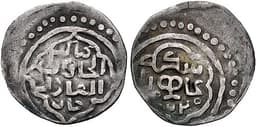
Kebek
Emperor · Medieval
55.3Total
Basic Information
Born
921
1280
Died
959
1325
Era
Medieval
Medieval
Nationality
China
Chagatai Khanate
Occupation
Emperor
Emperor
Civilization
Eastern
Eastern
Score Comparison
Military (10%)
82.0
38.3
Political (20%)
71.2
68.0
Influence (20%)
60.0
52.5
Legacy (20%)
54.0
44.2
Leadership (15%)
72.0
74.0
Strategy (15%)
75.0
60.0
TOTAL
65.7
55.3
Chai Rong — Complete Timeline
954 AD
Battle of GaopingWar◆ Major
Chai Rong personally led Later Zhou forces to defeat a combined Northern Han and Liao army at Gaoping. This victory secured his throne and demonstrated his military capability.
Later ZhouNorthern HanBattle
Impact: regionalconstructive
Ascended as Emperor Shizong of Later ZhouPolitical Action◆ Major
Chai Rong succeeded his adoptive father Guo Wei as emperor of Later Zhou. He immediately began reforms to strengthen the state, including military reorganization and economic policies.
Later ZhouSuccessionReform
Impact: nationalconstructive
955 AD
Military campaigns against Later Shu and Southern TangWar◆ Major
Chai Rong launched successful campaigns against Later Shu and Southern Tang, capturing key territories in the southwest and south. These conquests significantly expanded Later Zhou's territory.
Later ZhouConquestExpansion
Impact: regionalconstructive
Reforms to centralize powerReform◆ Major
Chai Rong implemented administrative and military reforms, including reducing the power of regional military governors and strengthening the central bureaucracy. These reforms laid the groundwork for later Song unification.
Later ZhouReformCentralization
Impact: nationalconstructive
959 AD
Died during campaign against LiaoWar
Chai Rong died suddenly at age 38 while leading a campaign to recover the Sixteen Prefectures from the Liao dynasty. His death ended Later Zhou's momentum and allowed the Song dynasty to rise.
Later ZhouLiaoDeath
Impact: nationaltragic
Kebek — Complete Timeline
1309 AD
Became Khan of the Chagatai KhanatePolitical Action◆ Major
Kebek became Khan of the Chagatai Khanate in 1309, succeeding his brother Esen Buqa I. His reign focused on administrative and economic reforms, moving the khanate toward greater stability and centralization.
Chagatai KhanateKhanEsen Buqa I
Impact: regional
1310 AD
Reformed Coinage SystemReform◆ Major
Kebek introduced a standardized silver coinage system across the Chagatai Khanate, replacing the diverse local currencies. The coins, known as 'Kebek dirhams,' facilitated trade and tax collection, strengthening the khanate's economy.
CoinageEconomic ReformTrade
Impact: regionalconstructive
1312 AD
Implemented Administrative ReformsReform◆ Major
Kebek reorganized the Chagatai Khanate's administration, dividing it into provinces (tumens) governed by appointed officials. He also established a centralized tax system and a postal relay network, improving governance and communication.
AdministrationTax ReformCentralization
Impact: regionalconstructive
1314 AD
Defeated by the Yuan DynastyWar
Kebek's forces were defeated by the Yuan dynasty in a border conflict in 1314. The loss forced him to pay tribute to the Yuan, acknowledging their supremacy and ending Kebek's expansionist ambitions in the east.
Yuan DynastyDefeatTribute
Impact: regionaldestructive
This comparison has not been analyzed yet.
One-time AI generation (~1 minute). Scores and timeline are already available below.
Rankings
🥇
Chai RongLeader
Mil: 82.0Pol: 71.2Inf: 60.0
65.7
🥈
Kebek
Mil: 38.3Pol: 68.0Inf: 52.5
55.3
+10.4 behind
How This Comparison Works
Algorithm
Each figure is scored on 6 dimensions (0—100 scale) based on structured historical data: Military (10%), Political (20%), Influence (20%), Legacy (20%), Leadership (15%), Strategy (15%). The weighted total produces the final ranking.
Data Sources
Scores are computed from structured sub-indicators in the database. Scale factors adjust for era (Ancient ×0.85, Modern ×1.0) and civilization size (Eastern ×1.05, Other ×0.80) to account for differences in population and military scale.
Maximum 3 Figures
Comparisons are limited to 2—3 figures to ensure readability and statistical meaningfulness.
Error Margins
±5 points per dimension — Sub-scores are derived from historical records with inherent uncertainty. Two figures within 5 points on a dimension should be considered roughly equivalent in that area.
Total Score Accuracy
±3 points overall — The weighted combination of 6 dimensions produces a total score with approximately ±3 points of uncertainty. Differences of less than 3 points are not statistically significant— the figures are effectively tied.
Known Limitations
- Historical records are incomplete and uneven across civilizations
- Figures from oral-tradition societies may be underrepresented
- Occupation labels can misclassify multi-role figures
- Scores measure capability and impact, not moral character
- Quantitative scoring is a comparison tool, not absolute truth
Capability Radar
Military (10%) — Battles & Warfare
Battles
75
30
Win Rate
80
35
Expansion
70
35
Political (20%) — Governance & Reform
Reform
88
65
Diplomacy
70
50
Economy
80
60
Influence (20%) — Cultural & Global Reach
Cultural
50
30
Global
30
25
Legacy (20%) — Historical Impact
Historical
65
35
Longevity
40
30
Leadership (15%) — Power & Stability
Tenure
55
50
Stability
75
55
Strategy (15%) — Tactics & Innovation
Strategy
82
40
Tactics
78
40
Reform
85
45
Similar Comparisons
Comments & Discussion
No comments yet. Be the first to share your thoughts!