Loading...
Catherine the Great vs Cyrus the Great
Cyrus the Great leads by 17.1 pts · 2 figures compared
…
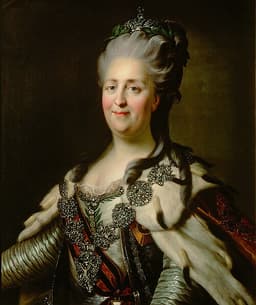
Catherine the Great
Emperor · Modern
66.8Total
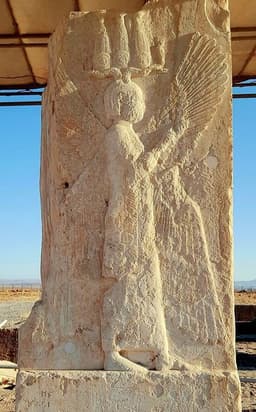
Cyrus the Great
Emperor · Ancient
83.9Total
Basic Information
Born
1729
-600
Died
1796
-530
Era
Modern
Ancient
Nationality
Russia
Persia
Occupation
Emperor
Emperor
Civilization
Western
Middle Eastern
Score Comparison
Military (10%)
78.5
82.0
Political (20%)
90.0
85.0
Influence (20%)
65.0
85.0
Legacy (20%)
40.0
90.0
Leadership (15%)
80.0
78.0
Strategy (15%)
72.0
75.0
TOTAL
66.8
83.9
Catherine the Great — Complete Timeline
1762 AD
Coup d'État of 1762Political Action
Catherine II led a coup d'
CoupAccessionPower
Impact: national
1764 AD
Hermitage Museum FoundedCultural◆ Major
Catherine the Great founded the Hermitage Museum in St. Petersburg by purchasing a large collection of paintings from Berlin. The museum grew into one of the world's largest art collections, reflecting her patronage of Enlightenment culture.
ArtMuseumEnlightenment
Impact: globalconstructive
1768 AD
Russo-Turkish War (1768-1774)War◆ Major
Catherine the Great initiated a war against the Ottoman Empire, resulting in Russian victory. The Treaty of K
WarOttoman EmpireExpansion
Impact: regional
1783 AD
Annexation of CrimeaPolitical Action◆ Major
Catherine the Great formally annexed the Crimean Peninsula from the Ottoman Empire. This strategic acquisition gave Russia a dominant position in the Black Sea and a warm-water port, fulfilling a long-standing imperial ambition.
AnnexationCrimeaBlack Sea
Impact: regional
1785 AD
Charter to the Gentry GrantedReform◆ Major
Catherine the Great issued the Charter to the Gentry, which codified the rights and privileges of the Russian nobility. It exempted nobles from taxation and military service, solidifying their social status and support for her rule.
NobilityReformSocial Structure
Impact: nationalconstructive
Cyrus the Great — Complete Timeline
550 BC
Founding of the Achaemenid EmpirePolitical Action
Cyrus led a rebellion against the Median Empire, defeating King Astyages and capturing Ecbatana. He then united the Persian and Median tribes, establishing the Achaemenid Empire, which became the largest empire the world had yet seen.
Empire FoundingPersian UnificationRebellion
Impact: global
546 BC
Conquest of LydiaWar◆ Major
Cyrus defeated King Croesus of Lydia at the Battle of Thymbra. The Lydian capital Sardis was captured, and Croesus was taken prisoner. This conquest brought Anatolia under Persian control and secured access to the Aegean coast.
Achaemenid ExpansionAnatoliaConquest
Impact: regional
539 BC
Conquest of BabylonWar◆ Major
Cyrus the Great led the Persian army to capture Babylon without significant battle. The city's gates were opened, and Cyrus entered peacefully. This conquest added Mesopotamia to the Achaemenid Empire and marked the end of the Neo-Babylonian Empire.
Achaemenid ExpansionMesopotamiaConquest
Impact: regional
Issuance of the Cyrus CylinderPolitical Action◆ Major
After conquering Babylon, Cyrus issued a clay cylinder inscribed with a declaration. It described his policy of restoring temples, repatriating displaced peoples, and allowing religious freedom. The cylinder is often cited as an early charter of human rights.
Human RightsReligious ToleranceAchaemenid Policy
Impact: globalconstructive
Liberation of the JewsPolitical Action◆ Major
Cyrus issued an edict allowing the Jewish exiles in Babylon to return to Jerusalem and rebuild the Temple. This event is recorded in the biblical Book of Ezra and is a key moment in Jewish history, ending the Babylonian captivity.
Jewish HistoryReligious FreedomReturn from Exile
Impact: regionalconstructive
Expert Analysis
Cyrus the Great vs Catherine the Great
# The Conqueror and the Philosopher Queen
In the spring of 539 BCE, an aging Persian king stood before the walls of Babylon, the greatest city of the ancient world. He did not batter its gates or starve its people. Instead, he diverted the Euphrates River, marched his army through the dry riverbed, and took the city with barely a sword drawn. Twenty-three centuries later, a German princess turned Russian empress stood in a St. Petersburg palace, plotting the overthrow of her own husband. One conquered with a river; the other with a whisper. Both would reshape the world, yet one is remembered as a liberator, the other as an enlightened despot. What drove these two rulers—Cyrus the Great and Catherine the Great—to such different outcomes?
Origins
Cyrus was born around 600 BCE into a world of warring empires. The Medes and Persians were cousins in language and culture, but the Medes held power. According to legend, Cyrus’s grandfather, the Median king Astyages, dreamed that his grandson would overthrow him—and tried to have the infant killed. The child survived, raised by a humble shepherd, a story that echoes Moses and Romulus. This myth of humble beginnings would shape Cyrus’s identity as a ruler who understood the pain of exile and the value of mercy.
Catherine, born Sophie of Anhalt-Zerbst in 1729, was a minor German princess in a world of arranged marriages and courtly intrigue. Her father was a Prussian general; her mother was ambitious and cold. At age fourteen, Sophie was summoned to Russia to marry the heir to the throne, the future Peter III. She converted to Orthodox Christianity, took the name Catherine, and learned to survive in a court where a wrong word could mean exile or death. While Cyrus grew up among shepherds, Catherine grew up among spies.
Rise to Power
Cyrus’s path was forged in open rebellion. In 550 BCE, he led the Persians against the Medes, defeating King Astyages and capturing Ecbatana. This was no palace coup but a national uprising—a people claiming their destiny. He then turned westward, crushing the Lydian king Croesus at the Battle of Thymbra in 546 BCE, a victory that added the wealth of Asia Minor to his growing empire. Each conquest was a gamble, a test of will and strategy.
Catherine’s rise was quieter and deadlier. On July 9, 1762, she led a coup d’état with the help of the Orlov brothers and the Imperial Guard. Her husband, Emperor Peter III, was a weak, pro-Prussian ruler who had alienated the nobility and the church. Catherine, by contrast, had cultivated allies for years—charming generals, bribing guards, and studying Enlightenment philosophy. The coup succeeded in hours. Peter was arrested and soon died under mysterious circumstances. Catherine became empress, and Russia would never be the same.
Leadership & Governance
Cyrus governed with a vision of empire as a family of nations. After conquering Babylon in 539 BCE, he issued the Cyrus Cylinder, a clay declaration that restored local temples, allowed deported peoples to return home, and respected local customs. Most famously, he freed the Jewish exiles in Babylon, allowing them to return to Jerusalem and rebuild their Temple—an act recorded in the Hebrew Bible and celebrated for millennia. His empire was held together not by terror but by tolerance. He appointed local governors, respected religious diversity, and built roads that connected the Mediterranean to the Indus.
Catherine governed with a different philosophy: enlightened absolutism. She corresponded with Voltaire and Diderot, founded the Hermitage Museum in 1764, and reformed education, opening schools for girls and promoting the arts. But her reforms stopped where her power began. In 1785, she issued the Charter to the Gentry, codifying the privileges of the nobility—and tightening the bonds of serfdom for the peasants. She admired the Enlightenment but ruled as an autocrat. Her empire expanded dramatically: the Russo-Turkish War of 1768–1774 brought the Black Sea coast under Russian control, and the 1783 annexation of Crimea gave Russia a warm-water port. Yet these gains came at a brutal cost in lives and freedom.
Triumph & Tragedy
Cyrus’s greatest triumph was the conquest of Babylon—a city so mighty that its fall seemed impossible. He achieved it with minimal bloodshed, a masterpiece of psychological warfare and engineering. His tragedy came later: he died around 530 BCE while campaigning against nomadic tribes on the eastern frontier. The exact circumstances are unclear, but his body was returned to Pasargadae and buried in a simple tomb. The empire he built would last two hundred years, but his death left a succession crisis that eventually led to its decline.
Catherine’s triumph was the transformation of Russia into a European great power. She expanded its borders, modernized its administration, and made St. Petersburg a capital of culture. Her tragedy was the Pugachev Rebellion of 1773–1775, a massive peasant uprising that exposed the brutality of serfdom. Catherine crushed it with savage force, and thereafter abandoned her early liberal ideals. She became more conservative, more suspicious of reform. The philosopher queen became a cold autocrat.
Character & Destiny
Cyrus was a man of vision and mercy. He believed that an empire built on fear would collapse, while one built on loyalty would endure. His personality—patient, calculating, but genuinely respectful of other cultures—shaped a destiny of unification. He saw himself not as a conqueror but as a restorer of order.
Catherine was a woman of intellect and ambition. She read voraciously, wrote plays, and managed a court of scheming nobles with ruthless pragmatism. Her personality—brilliant, sensual, and deeply insecure about her legitimacy—shaped a destiny of expansion and contradiction. She wanted to be both Plato’s philosopher-king and Machiavelli’s prince. She succeeded at neither and both.
Legacy
Cyrus is remembered as a liberator. The Cyrus Cylinder is often called the first charter of human rights. His policies of religious and cultural tolerance influenced the American Founders, who saw in him a model of enlightened rule. Modern Iranians still revere him as the father of their nation.
Catherine is remembered as a reformer and imperialist. The Hermitage Museum remains one of the world’s greatest cultural institutions. Her annexation of Crimea is still a flashpoint in geopolitics. She expanded Russia’s borders, but she also deepened its internal divisions. Her legacy is complex: a woman who brought the Enlightenment to Russia but left serfdom intact.
Conclusion
Two rulers, two worlds. Cyrus conquered with tolerance; Catherine ruled with ambition. One built an empire that lasted centuries; the other built a legacy that still shapes Russian identity. Their differences are rooted in their eras—Cyrus in the dawn of empire, Catherine in the age of reason—and in their characters: one a shepherd who became a king, the other a princess who became an empress. But perhaps their deepest difference is this: Cyrus believed that power should serve humanity, while Catherine believed that humanity should serve power. In that contrast lies the eternal tension of leadership—and the enduring question of what it means to rule well.
Rankings
🥇
Cyrus the GreatLeader
Mil: 82.0Pol: 85.0Inf: 85.0
83.9
🥈
Catherine the Great
Mil: 78.5Pol: 90.0Inf: 65.0
66.8
+17.1 behind
How This Comparison Works
Algorithm
Each figure is scored on 6 dimensions (0—100 scale) based on structured historical data: Military (10%), Political (20%), Influence (20%), Legacy (20%), Leadership (15%), Strategy (15%). The weighted total produces the final ranking.
Data Sources
Scores are computed from structured sub-indicators in the database. Scale factors adjust for era (Ancient ×0.85, Modern ×1.0) and civilization size (Eastern ×1.05, Other ×0.80) to account for differences in population and military scale.
Maximum 3 Figures
Comparisons are limited to 2—3 figures to ensure readability and statistical meaningfulness.
Error Margins
±5 points per dimension — Sub-scores are derived from historical records with inherent uncertainty. Two figures within 5 points on a dimension should be considered roughly equivalent in that area.
Total Score Accuracy
±3 points overall — The weighted combination of 6 dimensions produces a total score with approximately ±3 points of uncertainty. Differences of less than 3 points are not statistically significant— the figures are effectively tied.
Known Limitations
- Historical records are incomplete and uneven across civilizations
- Figures from oral-tradition societies may be underrepresented
- Occupation labels can misclassify multi-role figures
- Scores measure capability and impact, not moral character
- Quantitative scoring is a comparison tool, not absolute truth
Capability Radar
Military (10%) — Battles & Warfare
Battles
85
85
Win Rate
80
90
Expansion
90
92
Political (20%) — Governance & Reform
Reform
90
90
Diplomacy
85
95
Economy
85
80
Influence (20%) — Cultural & Global Reach
Cultural
85
90
Global
80
90
Legacy (20%) — Historical Impact
Historical
85
95
Longevity
80
95
Leadership (15%) — Power & Stability
Tenure
95
70
Stability
80
85
Strategy (15%) — Tactics & Innovation
Strategy
85
88
Tactics
75
80
Reform
90
75
Similar Comparisons
Comments & Discussion
River King6/16/2026
Cyrus's river-diverting strategy at Babylon is the single most underappreciated military feat in ancient history. Modern generals still study water tactics, but folks romanticize Alexander's battles while ignoring this bloodless genius. Forcing a city to surrender without siege? That's not just leadership—that's psychological warfare perfected.
Classics Nerd6/16/2026
居鲁士那套“解放者”人设全靠希罗多德一支笔吹出来的。巴比伦泥板明明记载过他屠杀抵抗者,你们西方经典学就是爱挑着读。真要比仁政,居鲁士圆筒跟凯瑟琳的《训谕》一样,政治宣传罢了,别吹过头了。
Data Doubter6/16/2026
"Catherine expanded territory by 518,000 square kilometers"—sounds impressive until you realize she bought most of it through wars her lovers started. Potemkin gets the credit for Crimea, Rumyantsev for Poland. Meanwhile, Cyrus actually led his own troops into battle at 60 years old. One’s a figurehead; the other's a field commander.
历史杠精6/16/2026
拿居鲁士和凯瑟琳比根本是关公战秦琼。一个活在铁器时代靠神权统治,一个靠启蒙运动搞开明专制。凯瑟琳的农奴制比沙皇伊凡雷帝还残酷,农民起义被她镇压得血流成河。居鲁士至少释放了巴比伦之囚。进步性?凯瑟琳可能还不如她老公彼得三世。
Revisionist Hacker6/16/2026
catherine_fan_girls.txt detected. Let's talk about her 1775 "Provincial Reform"—that "decentralization" just created more noble police states. Peasants lost every right while she posed with Voltaire. Cyrus at least standardized weights and allowed local cults. Pick your "enlightened" poison.