Loading...
Analysis will be generated on first visit.
Scores and timeline are available below. The page will refresh automatically when ready.
Catherine I of Russia vs Julius Caesar
Julius Caesar leads by 31.8 pts · 2 figures compared
…

Catherine I of Russia
Emperor · Modern
51.5Total
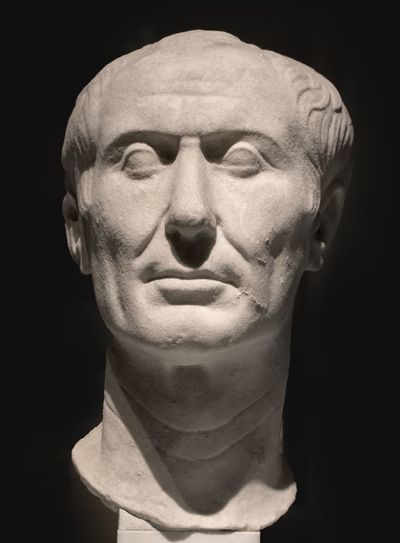
Julius Caesar
General · Ancient
83.3Total
Basic Information
Born
1684
-100
Died
1727
-44
Era
Modern
Ancient
Nationality
Russia
Roman Republic
Occupation
Emperor
General
Civilization
Western
Western
Score Comparison
Military (10%)
45.0
88.0
Political (20%)
44.3
78.0
Influence (20%)
67.1
85.0
Legacy (20%)
51.2
82.0
Leadership (15%)
37.9
82.0
Strategy (15%)
58.9
88.0
TOTAL
51.5
83.3
Rankings
🥇
Julius CaesarLeader
Mil: 88.0Pol: 78.0Inf: 85.0
83.3
🥈
Catherine I of Russia
Mil: 45.0Pol: 44.3Inf: 67.1
51.5
+31.8 behind
How This Comparison Works
Algorithm
Each figure is scored on 6 dimensions (0—100 scale) based on structured historical data: Military (10%), Political (20%), Influence (20%), Legacy (20%), Leadership (15%), Strategy (15%). The weighted total produces the final ranking.
Data Sources
Scores are computed from structured sub-indicators in the database. Scale factors adjust for era (Ancient ×0.85, Modern ×1.0) and civilization size (Eastern ×1.05, Other ×0.80) to account for differences in population and military scale.
Maximum 3 Figures
Comparisons are limited to 2—3 figures to ensure readability and statistical meaningfulness.
Error Margins
±5 points per dimension — Sub-scores are derived from historical records with inherent uncertainty. Two figures within 5 points on a dimension should be considered roughly equivalent in that area.
Total Score Accuracy
±3 points overall — The weighted combination of 6 dimensions produces a total score with approximately ±3 points of uncertainty. Differences of less than 3 points are not statistically significant— the figures are effectively tied.
Known Limitations
- Historical records are incomplete and uneven across civilizations
- Figures from oral-tradition societies may be underrepresented
- Occupation labels can misclassify multi-role figures
- Scores measure capability and impact, not moral character
- Quantitative scoring is a comparison tool, not absolute truth
Capability Radar
Military (10%) — Battles & Warfare
Battles
36
95
Win Rate
40
92
Expansion
44
97
Political (20%) — Governance & Reform
Reform
10
90
Diplomacy
20
85
Economy
10
82
Influence (20%) — Cultural & Global Reach
Cultural
10
88
Global
10
94
Legacy (20%) — Historical Impact
Historical
15
95
Longevity
10
96
Leadership (15%) — Power & Stability
Tenure
10
75
Stability
15
60
Strategy (15%) — Tactics & Innovation
Strategy
46
94
Tactics
51
96
Reform
49
88
Analysis will be generated on first visit.
Scores and timeline are available below. The page will refresh automatically when ready.
Catherine I of Russia — Complete Timeline
1707 AD
Marriage to Peter the GreatPolitical Action◆ Major
Marta Skowronska, a Lithuanian peasant, married Tsar Peter I of Russia. This marriage elevated her from obscurity to the imperial court, eventually leading to her coronation as Empress Catherine I after Peter's death.
MarriageRoyal CourtPeter the Great
Impact: national
1724 AD
Coronation as Empress of RussiaPolitical Action◆ Major
Peter the Great crowned his wife Catherine as Empress consort in a formal ceremony at the Dormition Cathedral in Moscow. This was a rare honor for a woman of low birth and signaled her importance in Peter's reign.
CoronationImperial RussiaPeter the Great
Impact: nationalconstructive
1725 AD
Accession to the Russian ThronePolitical Action
Following Peter the Great's death without a clear male heir, Catherine I was proclaimed Empress regnant by the Imperial Guard and the Senate. She became the first woman to rule Russia in her own right, with the support of Alexander Menshikov.
SuccessionEmpressMenshikov
Impact: national
1726 AD
Establishment of the Supreme Privy CouncilReform◆ Major
Catherine I created the Supreme Privy Council as an advisory body to assist in governing the Russian Empire. The council, dominated by Alexander Menshikov, effectively reduced Catherine's direct role in state affairs and concentrated power among a few nobles.
Government ReformCouncilMenshikov
Impact: national
1727 AD
Death of Catherine IOther◆ Major
Catherine I died of tuberculosis at the age of 43 in Saint Petersburg. Her death ended her brief two-year reign and led to the accession of Peter II, the grandson of Peter the Great, under the regency of the Supreme Privy Council.
DeathSuccessionPeter II
Impact: nationaltragic
Similar Comparisons
Comments & Discussion
No comments yet. Be the first to share your thoughts!