Loading...
Analysis will be generated on first visit.
Scores and timeline are available below. The page will refresh automatically when ready.
Alexander II of Russia vs Julius Caesar
Julius Caesar leads by 16.6 pts · 2 figures compared
…

Alexander II of Russia
Emperor · Modern
66.7Total
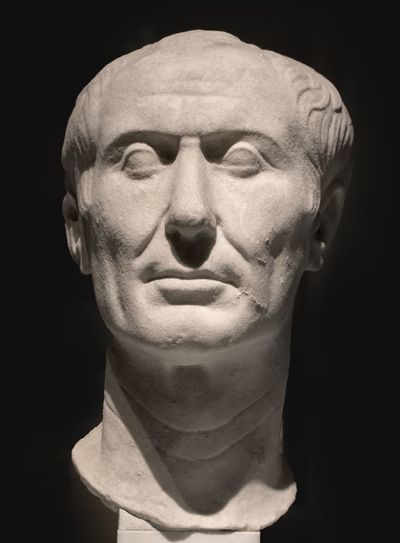
Julius Caesar
General · Ancient
83.3Total
Basic Information
Born
1818
-100
Died
1881
-44
Era
Modern
Ancient
Nationality
Russia
Roman Republic
Occupation
Emperor
General
Civilization
Western
Western
Score Comparison
Military (10%)
19.2
88.0
Political (20%)
80.0
78.0
Influence (20%)
66.7
85.0
Legacy (20%)
75.0
82.0
Leadership (15%)
78.6
82.0
Strategy (15%)
57.8
88.0
TOTAL
66.7
83.3
Rankings
🥇
Julius CaesarLeader
Mil: 88.0Pol: 78.0Inf: 85.0
83.3
🥈
Alexander II of Russia
Mil: 19.2Pol: 80.0Inf: 66.7
66.7
+16.6 behind
How This Comparison Works
Algorithm
Each figure is scored on 6 dimensions (0—100 scale) based on structured historical data: Military (10%), Political (20%), Influence (20%), Legacy (20%), Leadership (15%), Strategy (15%). The weighted total produces the final ranking.
Data Sources
Scores are computed from structured sub-indicators in the database. Scale factors adjust for era (Ancient ×0.85, Modern ×1.0) and civilization size (Eastern ×1.05, Other ×0.80) to account for differences in population and military scale.
Maximum 3 Figures
Comparisons are limited to 2—3 figures to ensure readability and statistical meaningfulness.
Error Margins
±5 points per dimension — Sub-scores are derived from historical records with inherent uncertainty. Two figures within 5 points on a dimension should be considered roughly equivalent in that area.
Total Score Accuracy
±3 points overall — The weighted combination of 6 dimensions produces a total score with approximately ±3 points of uncertainty. Differences of less than 3 points are not statistically significant— the figures are effectively tied.
Known Limitations
- Historical records are incomplete and uneven across civilizations
- Figures from oral-tradition societies may be underrepresented
- Occupation labels can misclassify multi-role figures
- Scores measure capability and impact, not moral character
- Quantitative scoring is a comparison tool, not absolute truth
Capability Radar
Military (10%) — Battles & Warfare
Battles
30
95
Win Rate
40
92
Expansion
60
97
Political (20%) — Governance & Reform
Reform
85
90
Diplomacy
70
85
Economy
65
82
Influence (20%) — Cultural & Global Reach
Cultural
55
88
Global
65
94
Legacy (20%) — Historical Impact
Historical
75
95
Longevity
60
96
Leadership (15%) — Power & Stability
Tenure
75
75
Stability
40
60
Strategy (15%) — Tactics & Innovation
Strategy
45
94
Tactics
35
96
Reform
70
88
Analysis will be generated on first visit.
Scores and timeline are available below. The page will refresh automatically when ready.
Alexander II of Russia — Complete Timeline
1861 AD
Emancipation of the SerfsReform
Alexander II signed the Emancipation Reform, freeing over 23 million serfs from personal bondage. The reform granted peasants legal rights and the ability to own land, though they had to pay redemption payments. This was the most significant social reform in 19th-century Russia.
EmancipationSerfdomSocial Reform
Impact: nationalprogressive
1864 AD
Judicial Reform of 1864Reform◆ Major
Alexander II introduced a new judicial system based on Western principles, including trial by jury, independent judges, and public proceedings. This reform established equality before the law and reduced the power of the nobility in legal matters.
Judicial ReformLegal SystemModernization
Impact: nationalprogressive
1867 AD
Sale of Alaska to the United StatesPolitical Action◆ Major
Alexander II approved the sale of Russian America to the United States for $7.2 million. The decision was motivated by financial difficulties and the difficulty of defending the remote territory. The acquisition was criticized by some Russians as a loss of imperial territory.
Alaska PurchaseTerritorial SaleDiplomacy
Impact: global
1881 AD
Assassination of Alexander IIPolitical Action
Alexander II was killed by a bomb thrown by Ignacy Hryniewiecki of the revolutionary group Narodnaya Volya in St. Petersburg. The assassination occurred hours after he approved a plan for a representative assembly, ending hopes for constitutional reform.
AssassinationNarodnaya VolyaTerrorism
Impact: nationaltragic
Similar Comparisons
Comments & Discussion
No comments yet. Be the first to share your thoughts!