Loading...
Carl von Clausewitz vs Matthew Ridgway
Carl von Clausewitz leads by 0.6 pts · 2 figures compared
…
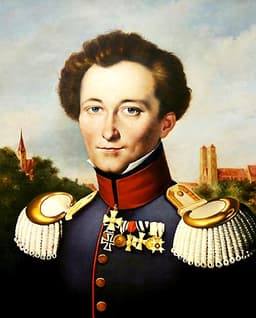
Carl von Clausewitz
General · Modern
61.3Total
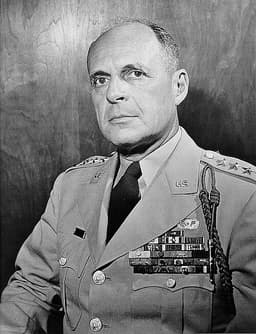
Matthew Ridgway
General · Modern
60.7Total
Basic Information
Born
1780
1895
Died
1831
1993
Era
Modern
Modern
Nationality
Prussia
United States
Occupation
General
General
Civilization
Western
Western
Score Comparison
Military (10%)
46.7
82.0
Political (20%)
32.2
46.6
Influence (20%)
85.0
56.7
Legacy (20%)
71.4
58.0
Leadership (15%)
40.4
62.0
Strategy (15%)
66.3
75.0
TOTAL
61.3
60.7
Carl von Clausewitz — Complete Timeline
1806 AD
Battle of Jena-AuerstedtWar◆ Major
Clausewitz served as aide-de-camp to Prince August of Prussia during the disastrous double battle against Napoleon. The Prussian army was shattered, leading to the collapse of the Prussian state and Clausewitz's capture. This defeat profoundly shaped his later theories on war and the need for a strong state.
Napoleonic WarsPrussian DefeatMilitary Theory
Impact: nationaltragic
1812 AD
Joined the Russian ArmyPolitical Action◆ Major
Refusing to serve Napoleon after Prussia's forced alliance, Clausewitz joined the Russian Imperial Army. He participated in the 1812 campaign, including the Battle of Borodino, and witnessed the French army's catastrophic retreat from Moscow. This experience provided firsthand insight into the nature of war and the role of chance and friction.
Napoleonic WarsRussian CampaignExile
Impact: regional
Convention of TauroggenPolitical Action
As a Prussian officer in Russian service, Clausewitz helped negotiate the Convention of Tauroggen, a secret agreement between Prussian General Yorck and Russia. This neutralized the Prussian corps allied with Napoleon, effectively breaking the Franco-Prussian alliance and sparking the Prussian War of Liberation.
War of LiberationDiplomacyPrussian Independence
Impact: regionalconstructive
1832 AD
Publication of On WarCultural
Clausewitz's unfinished magnum opus, Vom Kriege (On War), was published posthumously by his wife Marie von Br
Military TheoryPhilosophyClassic Text
Impact: globalconstructive
Matthew Ridgway — Complete Timeline
1942 AD
Appointed Commander of the 82nd Airborne DivisionOther◆ Major
Ridgway was appointed commander of the 82nd Airborne Division in August 1942, transforming it into the first American airborne division. He trained the division for parachute and glider operations, establishing airborne tactics and doctrine that would be used in World War II.
World War IIAirborneTraining
Impact: national
1943 AD
Led the 82nd Airborne in Operation HuskyOther◆ Major
Ridgway led the 82nd Airborne Division in the invasion of Sicily (Operation Husky) in July 1943. The division conducted parachute and glider landings, though the operation suffered from poor coordination and friendly fire incidents. Despite these problems, the division secured key objectives.
World War IISicilyAirborne Assault
Impact: regional
1944 AD
Commanded the 82nd Airborne in Operation OverlordOther◆ Major
Ridgway commanded the 82nd Airborne Division during the D-Day landings on June 6, 1944. Paratroopers landed behind German lines in Normandy, securing key bridges and causeways. The division suffered heavy casualties but successfully disrupted German defenses and supported the beach landings.
World War IID-DayAirborne Assault
Impact: globalconstructive
1950 AD
Appointed Commander of Eighth Army in KoreaOther◆ Major
Ridgway was appointed commander of the U.S. Eighth Army in Korea in December 1950, replacing General Walton Walker who had died. He took command during a period of retreat after Chinese intervention, and immediately began restoring morale and reorganizing defensive positions.
Korean WarCommandMorale
Impact: regional
1951 AD
Revived UN Forces in the Korean WarWar◆ Major
Ridgway launched a series of offensives in early 1951 that reversed the Chinese advance and recaptured Seoul. His aggressive tactics, including Operation Thunderbolt and Operation Ripper, pushed Chinese forces back across the 38th parallel, restoring the front line and stabilizing the war.
Korean WarOffensiveVictory
Impact: regionalconstructive
Appointed Supreme Commander of Allied Powers in JapanOther◆ Major
Ridgway was appointed Supreme Commander of Allied Powers in Japan in April 1951, replacing General Douglas MacArthur. He oversaw the occupation of Japan and the transition to the post-occupation period, including the signing of the Treaty of San Francisco in 1951.
Korean WarJapanOccupation
Impact: regional
1953 AD
Appointed Chief of Staff of the U.S. ArmyOther◆ Major
Ridgway was appointed Chief of Staff of the U.S. Army in August 1953, serving until 1955. He advocated for a strong conventional military force and opposed the Eisenhower administration's 'New Look' policy that emphasized nuclear weapons over ground forces, arguing it weakened the Army.
Post-WarMilitary PolicyLeadership
Impact: national
Expert Analysis
Origins
Carl von Clausewitz (1780-1831) was born into a modest Prussian family in Burg bei Magdeburg. His father was a retired lieutenant, and Clausewitz entered the Prussian army at age 12 as a lance corporal. He received a limited formal education but immersed himself in military literature and philosophy, later studying at the Prussian War Academy under Gerhard von Scharnhorst. His early experiences in the Revolutionary and Napoleonic Wars shaped his thinking.
Matthew Ridgway (1895-1993) was born in Fort Monroe, Virginia, into a military family; his father was a colonel. He graduated from West Point in 1917 and served in various staff and command roles. Unlike Clausewitz, Ridgway's education was formal and practical, focusing on engineering and infantry tactics. He spent interwar years in Latin America and the Philippines, gaining experience in small-unit operations.
Rise to Power
Clausewitz's rise was intellectual rather than positional. He served as aide-de-camp to Prince August and fought at the Battle of Jena-Auerstedt in 1806, where Prussia was crushed by Napoleon. Refusing to serve Napoleon after Prussia's forced alliance, Clausewitz joined the Russian army in 1812, participating in the campaign that ended with Napoleon's retreat. He helped negotiate the Convention of Tauroggen in 1812, a turning point that allowed Prussian forces to switch sides. After the war, he became director of the Prussian War Academy but died before completing his magnum opus, *On War*, published posthumously by his wife.
Ridgway's rise was through command and combat. He was appointed commander of the 82nd Airborne Division in 1942, transforming it into the first U.S. airborne division. He led the division in Operation Husky (invasion of Sicily) in 1943 and Operation Overlord (D-Day) in 1944. His airborne troops secured key objectives behind enemy lines, and Ridgway's leadership earned him corps command. In December 1950, he was appointed commander of the U.S. Eighth Army in Korea, replacing General Walton Walker, who had died in a jeep accident. This was his moment of greatest challenge.
Leadership & Governance
Clausewitz never held high independent command; his leadership was theoretical. He advocated for the concept of "friction" in war—the unpredictable chaos that separates plans from reality. His governance style was analytical, emphasizing the primacy of policy over military action: "War is a continuation of politics by other means." He scored 46.7 in military and 40.4 in leadership, reflecting his limited battlefield command.
Ridgway, scoring 82.0 in military and 62.0 in leadership, was a hands-on commander. In Korea, he revitalized demoralized UN forces by restoring aggressive patrolling, improving logistics, and demanding accountability. He personally visited front-line units, replacing incompetent officers. His leadership style was direct and inspirational; he famously wore a hand grenade on his chest as a symbol of readiness. He launched offensives like Operation Killer and Operation Ripper in early 1951, pushing Chinese forces back and recapturing Seoul. His governance of the Eighth Army was decisive and morale-boosting.
Triumph & Tragedy
Clausewitz's greatest success was his intellectual legacy: *On War* remains a foundational text in military theory. His insights on the nature of war, the fog of war, and the importance of morale are still studied. His tragedy was dying of cholera in 1831, before completing his work. He never saw his ideas implemented on a large scale, and his book was initially ignored.
Ridgway's triumph was reversing the course of the Korean War. In early 1951, his offensives stabilized the front and inflicted heavy casualties on Chinese forces. He restored UN morale and prevented defeat. His tragedy was the war's stalemate; after he succeeded General MacArthur as overall commander in April 1951, truce talks began, and the conflict settled into a bloody stalemate. Ridgway's aggressive tactics could not achieve total victory due to political constraints. He scored 75.0 in strategy, reflecting his operational acumen.
Character & Destiny
Clausewitz was introspective, philosophical, and frustrated by his lack of influence during his lifetime. His character was shaped by Prussia's defeat and his desire to understand war's essence. His destiny was posthumous fame; his ideas became central to modern military thought, influencing figures like Moltke, Lenin, and modern strategists.
Ridgway was pragmatic, forceful, and resilient. He was known for his physical toughness and moral courage. His character suited the crisis in Korea: he was unflappable and determined. His destiny was to be the savior of the Eighth Army, but he is less remembered than MacArthur or Eisenhower. His influence score of 56.7 reflects his lower public profile compared to Clausewitz's 85.0.
Legacy
Clausewitz's legacy is immense in theory. His influence score of 85.0 and legacy of 71.4 reflect his impact on military education and strategic thought. *On War* is required reading in war colleges worldwide. His concepts—friction, the trinity of war, the primacy of politics—are enduring.
Ridgway's legacy is operational and institutional. He shaped the U.S. Army's airborne doctrine and demonstrated the importance of leadership in crisis. His legacy score of 58.0 is lower, but his impact on the Korean War was immediate. He is remembered as a competent, no-nonsense commander who saved a desperate situation.
Conclusion
While Ridgway scored higher in military (82.0) and leadership (62.0), Clausewitz's total score of 61.3 edges Ridgway's 60.7 due to his immense influence (85.0). Clausewitz had greater long-term impact: his ideas shaped how nations understand war itself. Ridgway's achievements were situational and less enduring. Therefore, Clausewitz is the more significant historical figure, as his theoretical contributions transcend his era, while Ridgway's practical successes, though vital, are confined to a specific conflict.
Rankings
🥇
Carl von ClausewitzLeader
Mil: 46.7Pol: 32.2Inf: 85.0
61.3
🥈
Matthew Ridgway
Mil: 82.0Pol: 46.6Inf: 56.7
60.7
+0.6 behind
How This Comparison Works
Algorithm
Each figure is scored on 6 dimensions (0—100 scale) based on structured historical data: Military (10%), Political (20%), Influence (20%), Legacy (20%), Leadership (15%), Strategy (15%). The weighted total produces the final ranking.
Data Sources
Scores are computed from structured sub-indicators in the database. Scale factors adjust for era (Ancient ×0.85, Modern ×1.0) and civilization size (Eastern ×1.05, Other ×0.80) to account for differences in population and military scale.
Maximum 3 Figures
Comparisons are limited to 2—3 figures to ensure readability and statistical meaningfulness.
Error Margins
±5 points per dimension — Sub-scores are derived from historical records with inherent uncertainty. Two figures within 5 points on a dimension should be considered roughly equivalent in that area.
Total Score Accuracy
±3 points overall — The weighted combination of 6 dimensions produces a total score with approximately ±3 points of uncertainty. Differences of less than 3 points are not statistically significant— the figures are effectively tied.
Known Limitations
- Historical records are incomplete and uneven across civilizations
- Figures from oral-tradition societies may be underrepresented
- Occupation labels can misclassify multi-role figures
- Scores measure capability and impact, not moral character
- Quantitative scoring is a comparison tool, not absolute truth
Capability Radar
Military (10%) — Battles & Warfare
Battles
30
75
Win Rate
35
80
Expansion
20
60
Political (20%) — Governance & Reform
Reform
15
30
Diplomacy
25
50
Economy
10
20
Influence (20%) — Cultural & Global Reach
Cultural
85
40
Global
85
55
Legacy (20%) — Historical Impact
Historical
90
65
Longevity
90
50
Leadership (15%) — Power & Stability
Tenure
20
40
Stability
15
45
Strategy (15%) — Tactics & Innovation
Strategy
85
90
Tactics
60
85
Reform
70
70
Similar Comparisons
Comments & Discussion
No comments yet. Be the first to share your thoughts!