Loading...
This comparison has not been analyzed yet.
One-time AI generation (~1 minute). Scores and timeline are already available below.
Carl von Clausewitz vs Miyoshi Nagayoshi
Carl von Clausewitz leads by 4.4 pts · 2 figures compared
…
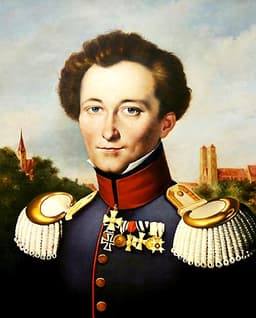
Carl von Clausewitz
General · Modern
61.3Total

Miyoshi Nagayoshi
General · Modern
56.9Total
Basic Information
Born
1780
1522
Died
1831
1564
Era
Modern
Modern
Nationality
Prussia
Japan
Occupation
General
General
Civilization
Western
Eastern
Score Comparison
Military (10%)
46.7
74.7
Political (20%)
32.2
45.0
Influence (20%)
85.0
56.4
Legacy (20%)
71.4
49.2
Leadership (15%)
40.4
72.0
Strategy (15%)
66.3
55.0
TOTAL
61.3
56.9
Carl von Clausewitz — Complete Timeline
1806 AD
Battle of Jena-AuerstedtWar◆ Major
Clausewitz served as aide-de-camp to Prince August of Prussia during the disastrous double battle against Napoleon. The Prussian army was shattered, leading to the collapse of the Prussian state and Clausewitz's capture. This defeat profoundly shaped his later theories on war and the need for a strong state.
Napoleonic WarsPrussian DefeatMilitary Theory
Impact: nationaltragic
1812 AD
Joined the Russian ArmyPolitical Action◆ Major
Refusing to serve Napoleon after Prussia's forced alliance, Clausewitz joined the Russian Imperial Army. He participated in the 1812 campaign, including the Battle of Borodino, and witnessed the French army's catastrophic retreat from Moscow. This experience provided firsthand insight into the nature of war and the role of chance and friction.
Napoleonic WarsRussian CampaignExile
Impact: regional
Convention of TauroggenPolitical Action
As a Prussian officer in Russian service, Clausewitz helped negotiate the Convention of Tauroggen, a secret agreement between Prussian General Yorck and Russia. This neutralized the Prussian corps allied with Napoleon, effectively breaking the Franco-Prussian alliance and sparking the Prussian War of Liberation.
War of LiberationDiplomacyPrussian Independence
Impact: regionalconstructive
1832 AD
Publication of On WarCultural
Clausewitz's unfinished magnum opus, Vom Kriege (On War), was published posthumously by his wife Marie von Br
Military TheoryPhilosophyClassic Text
Impact: globalconstructive
Miyoshi Nagayoshi — Complete Timeline
1527 AD
Battle of Katsura RiverWar
Nagayoshi fought alongside Hosokawa Harumoto against Hosokawa Takakuni at the Battle of Katsura River. Their victory led to Takakuni's defeat and Nagayoshi's rise in power.
BattleVictoryHosokawa
Impact: regional
1549 AD
Seized power in KyotoPolitical Action◆ Major
Nagayoshi defeated Hosokawa Harumoto and seized control of Kyoto and the Ashikaga shogunate. He became the de facto ruler of the capital region, displacing the Hosokawa clan.
KyotoShogunatePower seizure
Impact: national
1564 AD
Conflict with the Miyoshi TriumvirateWar◆ Major
Nagayoshi died during a conflict with the Miyoshi Triumvirate, a group of his former retainers who rebelled. His death led to the decline of the Miyoshi clan's power.
MiyoshiRebellionDeath
Impact: regionaltragic
This comparison has not been analyzed yet.
One-time AI generation (~1 minute). Scores and timeline are already available below.
Rankings
🥇
Carl von ClausewitzLeader
Mil: 46.7Pol: 32.2Inf: 85.0
61.3
🥈
Miyoshi Nagayoshi
Mil: 74.7Pol: 45.0Inf: 56.4
56.9
+4.4 behind
How This Comparison Works
Algorithm
Each figure is scored on 6 dimensions (0—100 scale) based on structured historical data: Military (10%), Political (20%), Influence (20%), Legacy (20%), Leadership (15%), Strategy (15%). The weighted total produces the final ranking.
Data Sources
Scores are computed from structured sub-indicators in the database. Scale factors adjust for era (Ancient ×0.85, Modern ×1.0) and civilization size (Eastern ×1.05, Other ×0.80) to account for differences in population and military scale.
Maximum 3 Figures
Comparisons are limited to 2—3 figures to ensure readability and statistical meaningfulness.
Error Margins
±5 points per dimension — Sub-scores are derived from historical records with inherent uncertainty. Two figures within 5 points on a dimension should be considered roughly equivalent in that area.
Total Score Accuracy
±3 points overall — The weighted combination of 6 dimensions produces a total score with approximately ±3 points of uncertainty. Differences of less than 3 points are not statistically significant— the figures are effectively tied.
Known Limitations
- Historical records are incomplete and uneven across civilizations
- Figures from oral-tradition societies may be underrepresented
- Occupation labels can misclassify multi-role figures
- Scores measure capability and impact, not moral character
- Quantitative scoring is a comparison tool, not absolute truth
Capability Radar
Military (10%) — Battles & Warfare
Battles
30
75
Win Rate
35
70
Expansion
20
65
Political (20%) — Governance & Reform
Reform
15
50
Diplomacy
25
60
Economy
10
55
Influence (20%) — Cultural & Global Reach
Cultural
85
40
Global
85
30
Legacy (20%) — Historical Impact
Historical
90
50
Longevity
90
35
Leadership (15%) — Power & Stability
Tenure
20
55
Stability
15
45
Strategy (15%) — Tactics & Innovation
Strategy
85
68
Tactics
60
72
Reform
70
60
Similar Comparisons
Comments & Discussion
No comments yet. Be the first to share your thoughts!