Loading...
Cao Cao vs Otto I the Great
Cao Cao leads by 2.3 pts · 2 figures compared
…
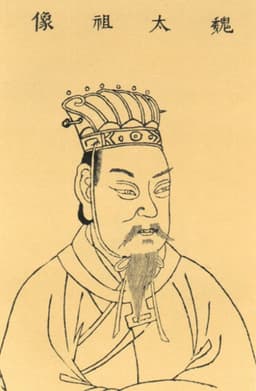
Cao Cao
General · Ancient
77.5Total
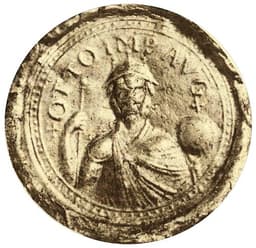
Otto I the Great
Emperor · Medieval
75.2Total
Basic Information
Born
155
912
Died
220
973
Era
Ancient
Medieval
Nationality
China
Holy Roman Empire
Occupation
General
Emperor
Civilization
Eastern
Western
Score Comparison
Military (10%)
88.0
82.0
Political (20%)
59.0
70.0
Influence (20%)
82.0
88.0
Legacy (20%)
83.0
65.0
Leadership (15%)
64.4
78.0
Strategy (15%)
89.4
65.4
TOTAL
77.5
75.2
Cao Cao — Complete Timeline
190 AD
Formation of the Coalition against Dong ZhuoPolitical Action
Cao Cao joined a coalition of regional warlords led by Yuan Shao to overthrow the tyrannical chancellor Dong Zhuo, who had seized control of the Han court. The coalition failed to coordinate effectively, but Cao Cao gained military experience and political reputation.
CoalitionDong ZhuoHan Dynasty
Impact: national
196 AD
Implementation of Tuntian (Agricultural Colonies)Reform◆ Major
Cao Cao established military agricultural colonies (tuntian) to provide food for his army and refugees. Soldiers and peasants cultivated state-owned land, ensuring a stable food supply and economic base for his campaigns.
AgricultureEconomyMilitary
Impact: regionalconstructive
200 AD
Battle of GuanduWar
Cao Cao decisively defeated Yuan Shao's numerically superior army at Guandu. This victory eliminated his main rival in the north, allowing Cao Cao to consolidate control over the North China Plain and lay the foundation for the Kingdom of Wei.
BattleYuan ShaoUnification
Impact: regional
208 AD
Battle of Red CliffsWar
Cao Cao's southern campaign was halted by the allied forces of Sun Quan and Liu Bei at the Battle of Red Cliffs. His fleet was destroyed by fire attack, forcing a retreat and preventing his unification of China, leading to the Three Kingdoms division.
BattleDefeatThree Kingdoms
Impact: regional
213 AD
Establishment of the Kingdom of WeiPolitical Action◆ Major
Cao Cao was granted the title of Duke of Wei and later King of Wei by the Han emperor, effectively creating a semi-autonomous state within the empire. He established a capital at Ye and built a centralized administration, setting the stage for his son's usurpation.
WeiStatehoodHan Dynasty
Impact: national
Otto I the Great — Complete Timeline
951 AD
Diplomatic Marriage to Adelaide of ItalyPolitical Action◆ Major
Otto married Adelaide, the widowed queen of Italy, after intervening in Italian politics. This marriage gave him control over the Kingdom of Italy and strengthened his claim to imperial authority.
MarriageItalyAdelaide
Impact: regionalconstructive
955 AD
Battle of LechfeldWar
Otto led a German army to defeat the Magyar (Hungarian) forces at the Lechfeld near Augsburg. This victory ended Magyar raids into Western Europe and secured Otto's reputation as a defender of Christendom.
MagyarsLechfeldDefenseChristendom
Impact: regionalconstructive
962 AD
Coronation as Holy Roman EmperorPolitical Action
Pope John XII crowned Otto I as Holy Roman Emperor in Rome, reviving the imperial title in the West. This event established the Holy Roman Empire as a major political entity and linked German kingship with papal authority.
CoronationHoly Roman EmpirePapacy
Impact: globalconstructive
Expert Analysis
Origins
Cao Cao (155-220 CE) was born into a powerful but controversial family in the late Eastern Han dynasty. His father was a foster son of a eunuch, which gave Cao Cao both privilege and stigma. He rose through the ranks as a local official, gaining a reputation for strict justice and military competence. Otto I (912-973 CE) was the son of Henry the Fowler, King of East Francia. Born into royalty, Otto inherited the throne at age 24 after his father's death. His origins were stable, but he faced immediate challenges from rebellious dukes and external invaders like the Magyars.
Rise to Power
Cao Cao's rise was a masterclass in opportunism. During the collapse of Han authority, he formed a coalition against the tyrant Dong Zhuo, then defeated rival warlords one by one. His decisive victory at the Battle of Guandu (200 CE) over Yuan Shao cemented his control over northern China. Otto I's rise was more straightforward: he was crowned king in 936 CE and spent years subduing rebellious dukes, including his own brother. His victory at the Battle of Lechfeld (955 CE) over the Magyars made him a national hero and paved the way for his imperial coronation.
Leadership & Governance
Cao Cao was a pragmatic ruler who implemented the Tuntian system, where soldiers farmed in peacetime, ensuring food security and a stable army. He also recruited talent based on merit, not birth, and was a patron of literature. However, he remained a chancellor under a puppet emperor, never claiming the throne himself. Otto I was a traditional medieval monarch who strengthened the Church as a counterbalance to nobles, appointing bishops and abbots as loyal administrators. He also used strategic marriages, like his own to Adelaide of Italy, to expand influence. Otto centralized power but relied heavily on religious institutions.
Triumph & Tragedy
Cao Cao's greatest triumph was unifying northern China, a feat of military and political genius. His greatest tragedy was the Battle of Red Cliffs (208 CE), where his southern campaign was crushed by Sun Quan and Liu Bei, preventing him from conquering all of China. He died in 220 CE, having established the Kingdom of Wei, which later unified China under the Jin dynasty. Otto's triumph was the defeat of the Magyars at Lechfeld, ending their raids and securing his reputation. He was crowned Holy Roman Emperor in 962 CE, reviving Charlemagne's empire. His tragedy was the failure to secure a stable succession; his son Otto II faced immediate rebellions.
Character & Destiny
Cao Cao was cunning, ruthless, and intellectually gifted. He was a poet and writer, but also known for his paranoia and cruelty, as seen in the execution of his physician Hua Tuo. His destiny was to be a unifier who never achieved full unification, leaving a legacy of ambition and controversy. Otto I was pious, strategic, and resilient. He endured family betrayals and invasions, emerging as a protector of Christendom. His destiny was to restore imperial authority in the West, though his empire relied heavily on his personal prestige.
Legacy
Cao Cao's legacy is mixed: admired as a brilliant strategist and administrator but vilified as a usurper in Chinese opera and literature. His military tactics are studied today, and his poems are classics. Otto I's legacy is more straightforward: he is celebrated as the founder of the Holy Roman Empire, a medieval superpower that lasted until 1806. His defeat of the Magyars saved Western Europe from further invasions. Both men shaped their respective civilizations, but Cao Cao's influence is more personal and literary, while Otto's is institutional.
Conclusion
Comparing Cao Cao and Otto I requires weighing their contexts. Cao Cao faced a fragmented empire and built a state from chaos; Otto inherited a kingdom and expanded it into an empire. In military innovation, Cao Cao edges ahead with his strategic genius (score: 88 vs 82). In political acumen, Otto's ability to manage nobles and the Church gives him a slight edge (70 vs 59). In leadership, Cao Cao's meritocratic reforms and cultural patronage are impressive (83 vs 65). Overall, Cao Cao's higher total score (78 vs 75) reflects his broader impact on Chinese history, but Otto's legacy as a founder of a millennium-long empire is equally significant. Both were great, but Cao Cao's versatility as a general, poet, and administrator makes him the more formidable figure in a direct comparison.
Rankings
🥇
Cao CaoLeader
Mil: 88.0Pol: 59.0Inf: 82.0
77.5
🥈
Otto I the Great
Mil: 82.0Pol: 70.0Inf: 88.0
75.2
+2.3 behind
How This Comparison Works
Algorithm
Each figure is scored on 6 dimensions (0—100 scale) based on structured historical data: Military (10%), Political (20%), Influence (20%), Legacy (20%), Leadership (15%), Strategy (15%). The weighted total produces the final ranking.
Data Sources
Scores are computed from structured sub-indicators in the database. Scale factors adjust for era (Ancient ×0.85, Modern ×1.0) and civilization size (Eastern ×1.05, Other ×0.80) to account for differences in population and military scale.
Maximum 3 Figures
Comparisons are limited to 2—3 figures to ensure readability and statistical meaningfulness.
Error Margins
±5 points per dimension — Sub-scores are derived from historical records with inherent uncertainty. Two figures within 5 points on a dimension should be considered roughly equivalent in that area.
Total Score Accuracy
±3 points overall — The weighted combination of 6 dimensions produces a total score with approximately ±3 points of uncertainty. Differences of less than 3 points are not statistically significant— the figures are effectively tied.
Known Limitations
- Historical records are incomplete and uneven across civilizations
- Figures from oral-tradition societies may be underrepresented
- Occupation labels can misclassify multi-role figures
- Scores measure capability and impact, not moral character
- Quantitative scoring is a comparison tool, not absolute truth
Capability Radar
Military (10%) — Battles & Warfare
Battles
95
75
Win Rate
88
80
Expansion
92
70
Political (20%) — Governance & Reform
Reform
88
80
Diplomacy
82
85
Economy
86
70
Influence (20%) — Cultural & Global Reach
Cultural
85
65
Global
75
70
Legacy (20%) — Historical Impact
Historical
92
80
Longevity
90
75
Leadership (15%) — Power & Stability
Tenure
85
85
Stability
78
75
Strategy (15%) — Tactics & Innovation
Strategy
96
75
Tactics
97
70
Reform
90
65
Similar Comparisons
Comments & Discussion
No comments yet. Be the first to share your thoughts!