Loading...
Cao Cao vs Isabella I of Castile
Cao Cao leads by 0.3 pts · 2 figures compared
…
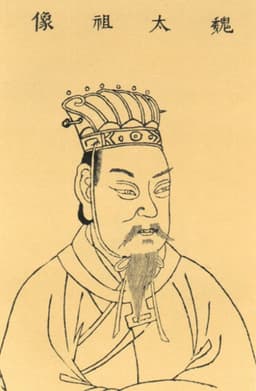
Cao Cao
General · Ancient
77.5Total
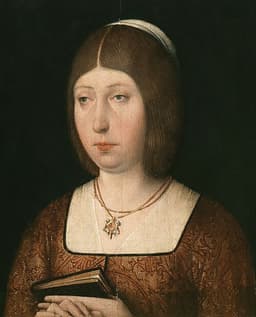
Isabella I of Castile
Emperor · Medieval
77.2Total
Basic Information
Born
155
1451
Died
220
1504
Era
Ancient
Medieval
Nationality
China
Spain
Occupation
General
Emperor
Civilization
Eastern
Western
Score Comparison
Military (10%)
88.0
76.0
Political (20%)
59.0
78.0
Influence (20%)
82.0
80.0
Legacy (20%)
83.0
75.0
Leadership (15%)
64.4
78.0
Strategy (15%)
89.4
75.0
TOTAL
77.5
77.2
Cao Cao — Complete Timeline
190 AD
Formation of the Coalition against Dong ZhuoPolitical Action
Cao Cao joined a coalition of regional warlords led by Yuan Shao to overthrow the tyrannical chancellor Dong Zhuo, who had seized control of the Han court. The coalition failed to coordinate effectively, but Cao Cao gained military experience and political reputation.
CoalitionDong ZhuoHan Dynasty
Impact: national
196 AD
Implementation of Tuntian (Agricultural Colonies)Reform◆ Major
Cao Cao established military agricultural colonies (tuntian) to provide food for his army and refugees. Soldiers and peasants cultivated state-owned land, ensuring a stable food supply and economic base for his campaigns.
AgricultureEconomyMilitary
Impact: regionalconstructive
200 AD
Battle of GuanduWar
Cao Cao decisively defeated Yuan Shao's numerically superior army at Guandu. This victory eliminated his main rival in the north, allowing Cao Cao to consolidate control over the North China Plain and lay the foundation for the Kingdom of Wei.
BattleYuan ShaoUnification
Impact: regional
208 AD
Battle of Red CliffsWar
Cao Cao's southern campaign was halted by the allied forces of Sun Quan and Liu Bei at the Battle of Red Cliffs. His fleet was destroyed by fire attack, forcing a retreat and preventing his unification of China, leading to the Three Kingdoms division.
BattleDefeatThree Kingdoms
Impact: regional
213 AD
Establishment of the Kingdom of WeiPolitical Action◆ Major
Cao Cao was granted the title of Duke of Wei and later King of Wei by the Han emperor, effectively creating a semi-autonomous state within the empire. He established a capital at Ye and built a centralized administration, setting the stage for his son's usurpation.
WeiStatehoodHan Dynasty
Impact: national
Isabella I of Castile — Complete Timeline
1469 AD
Marriage to Ferdinand of AragonPolitical Action
Isabella married Ferdinand II of Aragon in Valladolid, uniting the kingdoms of Castile and Aragon. This dynastic union laid the foundation for the unified Spanish monarchy and enabled joint policies including the Reconquista and overseas exploration.
Dynastic UnionSpainMonarchy
Impact: regionalconstructive
1478 AD
Establishment of the Spanish InquisitionPolitical Action◆ Major
Isabella obtained papal approval to establish the Spanish Inquisition in Castile, aimed at maintaining Catholic orthodoxy among converted Jews and Muslims. The Inquisition operated under royal control, conducting trials and executions for heresy.
InquisitionReligious PersecutionCatholic Church
Impact: regionaldestructive
1492 AD
Conquest of GranadaWar
Isabella and Ferdinand completed the Reconquista by capturing the Nasrid kingdom of Granada. The surrender of the last Muslim state in Iberia ended 781 years of Islamic rule and unified Spain under Christian rule.
ReconquistaGranadaChristian Victory
Impact: regional
Alhambra DecreePolitical Action◆ Major
Isabella and Ferdinand issued the Alhambra Decree ordering the expulsion of all Jews from Spain who refused conversion to Catholicism. An estimated 40,000 to 200,000 Jews were forced to leave, causing demographic and economic disruption.
ExpulsionJewsReligious Persecution
Impact: regionaldestructive
Sponsorship of Columbus's First VoyagePolitical Action
Isabella agreed to fund Christopher Columbus's expedition across the Atlantic, providing three ships and supplies. Columbus reached the Bahamas on October 12, initiating sustained European contact with the Americas and the Spanish colonial empire.
ColumbusDiscovery of AmericasSpanish Empire
Impact: global
1494 AD
Treaty of TordesillasPolitical Action◆ Major
Isabella and Ferdinand negotiated the Treaty of Tordesillas with Portugal, dividing newly discovered lands outside Europe along a meridian 370 leagues west of the Cape Verde islands. This agreement shaped colonial claims in the Americas and Africa.
Colonial DivisionSpainPortugal
Impact: global
Expert Analysis
Origins
Cao Cao (155-220 CE) emerged from the chaos of the late Eastern Han dynasty, born into a powerful eunuch-related family. He rose as a regional warlord during the Yellow Turban Rebellion, leveraging his political acumen and military talent. In contrast, Isabella I (1451-1504) was born into the turbulent Kingdom of Castile, a realm divided by noble factions and weak monarchy. Her half-brother Henry IV's reign was marked by civil strife, and Isabella had to navigate a treacherous path to secure her claim to the throne.
Rise to Power
Cao Cao's rise was meteoric: he defeated rival warlords like Lü Bu and Yuan Shu, and famously crushed the numerically superior Yuan Shao at the Battle of Guandu (200 CE), which gave him control of northern China. He then consolidated power by implementing the Tuntian agricultural colonies, which ensured stable food supplies for his armies. Isabella's rise was equally dramatic: she married Ferdinand of Aragon in 1469 against her brother's wishes, and upon Henry IV's death in 1474, she fought a civil war against Joanna la Beltraneja, ultimately prevailing to become queen of Castile.
Leadership & Governance
Cao Cao was a masterful administrator: he reformed taxation, promoted agriculture, and recruited talent based on merit rather than birth. He also surrounded himself with brilliant advisers like Xun Yu and Guo Jia. However, his rule was authoritarian, and he famously said, "I would rather betray the world than have the world betray me." Isabella, too, was a hands-on ruler: she centralized power, reformed the bureaucracy, and established the Santa Hermandad (Holy Brotherhood) as a police force. She and Ferdinand created a joint monarchy that effectively unified Spain, though their reign was marred by religious intolerance.
Triumph & Tragedy
Cao Cao's greatest triumph was unifying northern China after decades of war, but his greatest tragedy was the Battle of Red Cliffs (208 CE), where his southern invasion was thwarted by Sun Quan and Liu Bei, preventing him from conquering all of China. This defeat defined his legacy as a conqueror who fell short of total unification. Isabella's triumph was the conquest of Granada in 1492, ending 781 years of Muslim rule in Spain. Her tragedy was the Alhambra Decree (1492) and the Spanish Inquisition (established 1478), which expelled Jews and persecuted Muslims, causing immense suffering and loss of cultural diversity.
Character & Destiny
Cao Cao was a complex figure: a brilliant poet and strategist, but also ruthless and paranoid. He famously killed his friend Lü Boshe after misinterpreting a threat. His destiny was to lay the foundation for the Kingdom of Wei, but he never claimed the imperial title, leaving it to his son Cao Pi. Isabella was deeply religious, viewing herself as God's instrument to purify Spain. Her destiny was to create a unified Spain that would become a global power, but her policies of religious homogeneity sowed seeds of future conflict.
Legacy
Cao Cao's legacy is immense: he is a central figure in Chinese history and literature, particularly in the classic novel "Romance of the Three Kingdoms." He is often portrayed as a cunning villain, but modern historians recognize his administrative genius. Isabella's legacy is equally profound: she unified Spain, sponsored Christopher Columbus's voyages, and began the Spanish Empire. However, her sponsorship of the Inquisition and expulsion of Jews darken her reputation. Both figures are remembered as nation-builders who used ruthless methods to achieve unity.
Conclusion
Cao Cao scores higher overall (82.8 vs 77.6) due to superior military and political scores. His unification of northern China and administrative reforms were foundational for the Three Kingdoms period. Isabella's unification of Spain and Columbus's voyages had global impact, but her religious persecution and expulsion policies diminish her legacy. While Isabella's achievements were more lasting in terms of empire, Cao Cao's strategic brilliance and cultural influence give him the edge. Thus, Cao Cao emerges as the greater historical figure.
**Scores**: Cao Cao: 82.8 | Isabella I: 77.6
Rankings
🥇
Cao CaoLeader
Mil: 88.0Pol: 59.0Inf: 82.0
77.5
🥈
Isabella I of Castile
Mil: 76.0Pol: 78.0Inf: 80.0
77.2
+0.3 behind
How This Comparison Works
Algorithm
Each figure is scored on 6 dimensions (0—100 scale) based on structured historical data: Military (10%), Political (20%), Influence (20%), Legacy (20%), Leadership (15%), Strategy (15%). The weighted total produces the final ranking.
Data Sources
Scores are computed from structured sub-indicators in the database. Scale factors adjust for era (Ancient ×0.85, Modern ×1.0) and civilization size (Eastern ×1.05, Other ×0.80) to account for differences in population and military scale.
Maximum 3 Figures
Comparisons are limited to 2—3 figures to ensure readability and statistical meaningfulness.
Error Margins
±5 points per dimension — Sub-scores are derived from historical records with inherent uncertainty. Two figures within 5 points on a dimension should be considered roughly equivalent in that area.
Total Score Accuracy
±3 points overall — The weighted combination of 6 dimensions produces a total score with approximately ±3 points of uncertainty. Differences of less than 3 points are not statistically significant— the figures are effectively tied.
Known Limitations
- Historical records are incomplete and uneven across civilizations
- Figures from oral-tradition societies may be underrepresented
- Occupation labels can misclassify multi-role figures
- Scores measure capability and impact, not moral character
- Quantitative scoring is a comparison tool, not absolute truth
Capability Radar
Military (10%) — Battles & Warfare
Battles
95
75
Win Rate
88
80
Expansion
92
85
Political (20%) — Governance & Reform
Reform
88
90
Diplomacy
82
80
Economy
86
75
Influence (20%) — Cultural & Global Reach
Cultural
85
85
Global
75
95
Legacy (20%) — Historical Impact
Historical
92
95
Longevity
90
90
Leadership (15%) — Power & Stability
Tenure
85
85
Stability
78
70
Strategy (15%) — Tactics & Innovation
Strategy
96
85
Tactics
97
70
Reform
90
90
Similar Comparisons
Comments & Discussion
No comments yet. Be the first to share your thoughts!