Loading...
Burnaburiash I vs Yujiulu Shelun
Yujiulu Shelun leads by 9.6 pts · 2 figures compared
…
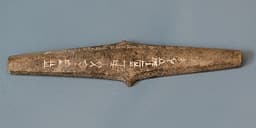
Burnaburiash I
Emperor · Ancient
43.1Total

Yujiulu Shelun
Emperor · Ancient
52.7Total
Basic Information
Born
-1500
391
Died
-1480
410
Era
Ancient
Ancient
Nationality
Kassite Dynasty
Rouran Khaganate
Occupation
Emperor
Emperor
Civilization
Middle Eastern
Eastern
Score Comparison
Military (10%)
25.9
70.0
Political (20%)
40.8
45.1
Influence (20%)
47.1
51.0
Legacy (20%)
38.3
44.2
Leadership (15%)
62.2
64.0
Strategy (15%)
36.8
55.0
TOTAL
43.1
52.7
Burnaburiash I — Complete Timeline
1490 BC
Treaty with AssyriaPolitical Action◆ Major
Burnaburiash I established a formal treaty with the Assyrian king, likely defining borders and trade relations. This agreement stabilized the northern frontier of the Kassite kingdom and set a precedent for diplomatic relations between the two powers.
Kassite DynastyAssyriaDiplomacy
Impact: regionalconstructive
Yujiulu Shelun — Complete Timeline
402 AD
Foundation of the Rouran KhaganatePolitical Action◆ Major
Yujiulu Shelun united the Rouran tribes and declared himself Khagan, founding the Rouran Khaganate. He established a nomadic empire on the Mongolian steppe, adopting the title 'Khagan' and organizing a powerful cavalry force that threatened Northern Wei.
Dynasty FoundationRouran Khaganate
Impact: regionalconstructive
404 AD
Raid on Northern Wei (404 AD)War
Shelun led a major raid into Northern Wei territory, penetrating deep into the frontier. The Rouran cavalry looted settlements and captured prisoners, but were eventually repelled by Northern Wei forces. This raid established the Rouran as a persistent threat.
RaidRouran-Northern Wei War
Impact: regionaldestructive
410 AD
Defeat by Northern Wei at the Battle of the DesertWar◆ Major
Yujiulu Shelun was defeated by a Northern Wei army under Emperor Daowu (Tuoba Gui) in a battle in the Gobi Desert. The Rouran suffered heavy losses, and Shelun was forced to flee. This defeat temporarily weakened the Rouran Khaganate.
BattleRouran-Northern Wei War
Impact: regionaldestructive
Death of Yujiulu ShelunOther
After his defeat by Northern Wei, Yujiulu Shelun died under uncertain circumstances, possibly killed by his own followers or in battle. His death led to a succession struggle among the Rouran, but the khaganate survived under his successors.
DeathSuccession
Impact: regionaltragic
Expert Analysis
Origins
Burnaburiash I ruled the Kassite dynasty of Babylon in the late 16th century BCE, likely around 1500 BCE. His exact birth year is unknown, but he was a descendant of the Kassite line that conquered Babylonia. As a young king, he inherited a realm still consolidating control over Mesopotamia. The Kassites had adopted Babylonian culture, and Burnaburiash I was educated in the traditions of the region. His background was one of maintaining a foreign dynasty's legitimacy through diplomacy and cultural integration.
Yujiulu Shelun, born around 370 CE, was a Xianbei chieftain who founded the Rouran Khaganate. He emerged from the Xianbei confederation, a nomadic group on the Mongolian steppe. His early life involved tribal warfare and the struggle to unite scattered clans. Unlike Burnaburiash I, Shelun's upbringing was steeped in steppe warfare, horse archery, and the need for constant mobility. He had no formal education in statecraft but learned through battle and alliance-building.
Rise to Power
Burnaburiash I rose to power through inheritance, but his reign was defined by a pivotal treaty with Ashur-uballit I of Assyria. This treaty, one of the earliest recorded, formalized borders and trade between Babylon and Assyria around 1440 BCE. It stabilized the northern frontier, allowing Burnaburiash I to focus on internal consolidation. His political score of 40.8 reflects this diplomatic achievement, though his military score of 25.9 indicates limited martial ambition.
Yujiulu Shelun's rise was more turbulent. Around 402 CE, he united the Rouran tribes after defeating rival chieftains, declaring himself Khagan. He quickly built a nomadic empire by raiding neighboring states, particularly the Northern Wei dynasty. His military score of 70.0 is evidenced by his ability to field large cavalry armies. However, his political score of 45.1 shows he struggled with long-term governance, relying on plunder rather than administration.
Leadership & Governance
Burnaburiash I governed through diplomacy and legal continuity. He maintained the Kassite tradition of adopting Babylonian laws and religious practices, which helped legitimize his rule. His treaty with Assyria exemplified a preference for negotiated stability over war. He scored 62.2 in leadership, indicating competent but unremarkable administration. His strategy score of 36.8 suggests he was reactive rather than proactive, focusing on preserving the status quo.
Yujiulu Shelun led through personal charisma and military prowess. As Khagan, he organized the Rouran into a hierarchical system of tribes under his direct command. He led raids deep into Northern Wei territory, such as the 404 CE raid that reached the frontier. However, his governance lacked institutional depth; the Khaganate relied on his personal authority. His leadership score of 64.0 is slightly higher than Burnaburiash I's, but his strategy score of 55.0 shows better tactical than strategic thinking.
Triumph & Tragedy
Burnaburiash I's greatest success was the Assyrian treaty, which brought decades of peace and secured Babylon's northern border. This allowed trade and cultural flourishing. His greatest failure was likely the lack of expansion; he did not significantly increase Kassite territory or influence. His legacy score of 38.3 reflects this modest impact.
Yujiulu Shelun's triumph was founding the Rouran Khaganate, which would dominate the steppe for over a century. His military campaigns, though costly, established the Rouran as a major power. However, his tragedy was his defeat by Northern Wei at the Battle of the Desert around 405 CE. This battle shattered his army and led to his death under mysterious circumstances, possibly assassinated. His legacy score of 44.2 is higher than Burnaburiash I's, as the Khaganate outlasted him.
Character & Destiny
Burnaburiash I appears cautious and diplomatic. His treaty-making suggests a pragmatic character focused on stability. This cautiousness likely prevented overreach, but also limited his historical footprint. His destiny was to be a placeholder king, remembered mostly for the treaty.
Yujiulu Shelun was ambitious and aggressive. His character drove him to unite tribes and challenge a major dynasty. However, his impulsiveness led to overconfidence and defeat. His destiny was to be a founder who died before consolidating his gains. Historians view him as a classic steppe conqueror whose legacy was built on military success but undone by it.
Legacy
Burnaburiash I's legacy is the treaty with Assyria, which influenced later diplomatic relations in Mesopotamia. It set a precedent for border agreements. However, his impact is limited to specialist history. He scores 38.3 in legacy.
Yujiulu Shelun's legacy is the Rouran Khaganate itself, which shaped steppe politics for generations. The Rouran system of tribal hierarchy influenced later Mongol and Turkic empires. His military tactics, such as swift cavalry raids, were adopted by successors. He scores 44.2 in legacy, reflecting a broader impact on Eurasian history.
Conclusion
Yujiulu Shelun had greater impact than Burnaburiash I. While Burnaburiash I's treaty was a diplomatic achievement, it did not alter the course of history beyond stabilizing one border. In contrast, Shelun founded an empire that changed the power balance in East Asia, influencing the Northern Wei and later nomadic states. His total score of 52.7 versus Burnaburiash I's 43.1 reflects this. Shelun's military score of 70.0 dwarfs Burnaburiash I's 25.9, and his influence score of 51.0 is higher. Though both were competent rulers, Shelun's creation of a lasting political entity gives him the edge.
Rankings
🥇
Yujiulu ShelunLeader
Mil: 70.0Pol: 45.1Inf: 51.0
52.7
🥈
Burnaburiash I
Mil: 25.9Pol: 40.8Inf: 47.1
43.1
+9.6 behind
How This Comparison Works
Algorithm
Each figure is scored on 6 dimensions (0—100 scale) based on structured historical data: Military (10%), Political (20%), Influence (20%), Legacy (20%), Leadership (15%), Strategy (15%). The weighted total produces the final ranking.
Data Sources
Scores are computed from structured sub-indicators in the database. Scale factors adjust for era (Ancient ×0.85, Modern ×1.0) and civilization size (Eastern ×1.05, Other ×0.80) to account for differences in population and military scale.
Maximum 3 Figures
Comparisons are limited to 2—3 figures to ensure readability and statistical meaningfulness.
Error Margins
±5 points per dimension — Sub-scores are derived from historical records with inherent uncertainty. Two figures within 5 points on a dimension should be considered roughly equivalent in that area.
Total Score Accuracy
±3 points overall — The weighted combination of 6 dimensions produces a total score with approximately ±3 points of uncertainty. Differences of less than 3 points are not statistically significant— the figures are effectively tied.
Known Limitations
- Historical records are incomplete and uneven across civilizations
- Figures from oral-tradition societies may be underrepresented
- Occupation labels can misclassify multi-role figures
- Scores measure capability and impact, not moral character
- Quantitative scoring is a comparison tool, not absolute truth
Capability Radar
Military (10%) — Battles & Warfare
Battles
10
55
Win Rate
10
60
Expansion
10
60
Political (20%) — Governance & Reform
Reform
30
40
Diplomacy
50
50
Economy
30
35
Influence (20%) — Cultural & Global Reach
Cultural
20
30
Global
20
35
Legacy (20%) — Historical Impact
Historical
30
45
Longevity
20
40
Leadership (15%) — Power & Stability
Tenure
40
55
Stability
40
40
Strategy (15%) — Tactics & Innovation
Strategy
10
55
Tactics
10
50
Reform
10
45
Similar Comparisons
Comments & Discussion
No comments yet. Be the first to share your thoughts!