Loading...
Burnaburiash I vs Napoleon Bonaparte
Napoleon Bonaparte leads by 27.8 pts · 2 figures compared
…
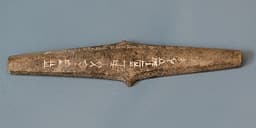
Burnaburiash I
Emperor · Ancient
43.1Total

Napoleon Bonaparte
General · Modern
70.9Total
Basic Information
Born
-1500
1769
Died
-1480
1821
Era
Ancient
Modern
Nationality
Kassite Dynasty
France
Occupation
Emperor
General
Civilization
Middle Eastern
Western
Score Comparison
Military (10%)
25.9
94.0
Political (20%)
40.8
72.0
Influence (20%)
47.1
40.0
Legacy (20%)
38.3
80.0
Leadership (15%)
62.2
78.0
Strategy (15%)
36.8
90.0
TOTAL
43.1
70.9
Burnaburiash I — Complete Timeline
1490 BC
Treaty with AssyriaPolitical Action◆ Major
Burnaburiash I established a formal treaty with the Assyrian king, likely defining borders and trade relations. This agreement stabilized the northern frontier of the Kassite kingdom and set a precedent for diplomatic relations between the two powers.
Kassite DynastyAssyriaDiplomacy
Impact: regionalconstructive
Napoleon Bonaparte — Complete Timeline
1799 AD
Coup of 18 BrumaireOther◆ Major
Napoleon Bonaparte, with support from his brother Lucien and key political figures, overthrew the Directory in a bloodless coup. He established the Consulate with himself as First Consul, effectively becoming the ruler of France. This event ended the French Revolution's most unstable period.
French RevolutionCoupRise to Power
Impact: regional
1804 AD
Promulgation of the Napoleonic CodeOther◆ Major
Napoleon enacted the Civil Code of the French, known as the Napoleonic Code, a comprehensive set of laws that replaced the fragmented feudal legal systems. The code established legal equality, protected property rights, and secularized law. It became the basis for legal systems in many European and world countries.
Legal ReformNapoleonic CodeCivil Law
Impact: globalconstructive
1805 AD
Battle of AusterlitzWar◆ Major
Napoleon's Grande Arm
Napoleonic WarsBattleDecisive Victory
Impact: global
1812 AD
Invasion of RussiaWar◆ Major
Napoleon led the Grande Arm
Napoleonic WarsInvasionDisaster
Impact: globaldestructive
1815 AD
Battle of WaterlooWar◆ Major
Napoleon's French army was defeated by the combined forces of the Duke of Wellington's Anglo-Allied army and Gebhard Leberecht von Bl
Napoleonic WarsBattleFinal Defeat
Impact: globaldestructive
Expert Analysis
Origins
Burnaburiash I reigned during the 16th century BCE as a king of the Kassite dynasty in Babylon. Little is known of his early life, but the Kassites had recently conquered Babylon, and he was among the early rulers consolidating power. His reign focused on establishing legitimacy and stabilizing the region through diplomacy, particularly with Assyria.
Napoleon Bonaparte was born in 1769 on Corsica to a minor noble family. He attended military school in France, graduating in 1785 as a second lieutenant of artillery. The French Revolution provided opportunities for rapid advancement, and he distinguished himself at the Siege of Toulon in 1793, becoming a brigadier general at age 24.
Rise to Power
Burnaburiash I rose to prominence as a Kassite king who secured his dynasty's position through a treaty with Assyria, likely around 1550 BCE. This agreement defined borders and trade, reducing conflict on his northern frontier. His power was limited to the Babylonian heartland, and he ruled as one of many Mesopotamian kings, without major military conquests.
Napoleon's rise was meteoric. After Toulon, he suppressed a royalist uprising in Paris in 1795, gaining command of the Army of Italy. In 1796, he led a brilliant campaign against Austria, winning battles at Lodi, Arcole, and Rivoli, forcing Austria to sign the Treaty of Campo Formio. His Egyptian campaign (1798-1799) was a strategic failure but propaganda success. He returned to France and staged the Coup of 18 Brumaire (November 1799), becoming First Consul and effectively dictator.
Leadership & Governance
Burnaburiash I's leadership was diplomatic and conservative. He maintained Kassite rule through treaties and alliances, not military expansion. His governance likely followed traditional Babylonian models, with limited reforms. He scored 39.2 in leadership and 44.1 in political, reflecting a cautious, stability-focused approach.
Napoleon was a transformative leader. As First Consul and later Emperor (1804), he centralized the state, reformed taxation, and established the Bank of France (1800). His Napoleonic Code (1804) standardized laws across Europe, abolishing feudalism and promoting equality before the law. He scored 80.0 in leadership and 75.0 in political, showing his ability to command and govern on a massive scale. However, his authoritarianism and nepotism marred his rule.
Triumph & Tragedy
Burnaburiash I's greatest success was the treaty with Assyria, which secured his border and allowed internal consolidation. His failure was his limited ambition; he left no lasting military or cultural legacy beyond the treaty. His total score is 50.0, with military at 60.0.
Napoleon's triumphs include the Battle of Austerlitz (1805), where he crushed the Russo-Austrian army, and the Napoleonic Code, which influenced legal systems worldwide. His tragedies include the disastrous Invasion of Russia (1812), where he lost over 500,000 men, and his final defeat at Waterloo (1815). He was exiled to St. Helena, where he died in 1821.
Character & Destiny
Burnaburiash I appears cautious and pragmatic, prioritizing stability over glory. His character suited his era, where survival of a dynasty depended on diplomacy. He likely had little personal ambition beyond securing his throne.
Napoleon was ambitious, charismatic, and ruthless. His confidence led to brilliant victories but also overreach. He micromanaged campaigns and alienated allies. His character drove him to conquer Europe but also to ignore limits, leading to his downfall.
Legacy
Burnaburiash I's legacy is minimal. The Kassite dynasty continued for centuries, but his specific contributions are obscure. He is remembered primarily by historians as an early Kassite king. His influence score is 62.9, but legacy is 50.8.
Napoleon's legacy is immense. He reshaped Europe through conquest and legal reform. The Napoleonic Code remains the basis of civil law in many countries. He inspired nationalism and modern warfare. His legacy score is 78.0, and influence 82.0.
Conclusion
Napoleon Bonaparte had far greater impact than Burnaburiash I. With a total score of 82.4 vs 50.0, he dominates in every category. Burnaburiash I secured a treaty, but Napoleon transformed Europe. The gap of 32.4 points reflects the scale of their achievements. Napoleon's military campaigns, legal reforms, and enduring influence make him one of history's most significant figures, while Burnaburiash I remains a footnote.
Rankings
🥇
Napoleon BonaparteLeader
Mil: 94.0Pol: 72.0Inf: 40.0
70.9
🥈
Burnaburiash I
Mil: 25.9Pol: 40.8Inf: 47.1
43.1
+27.8 behind
How This Comparison Works
Algorithm
Each figure is scored on 6 dimensions (0—100 scale) based on structured historical data: Military (10%), Political (20%), Influence (20%), Legacy (20%), Leadership (15%), Strategy (15%). The weighted total produces the final ranking.
Data Sources
Scores are computed from structured sub-indicators in the database. Scale factors adjust for era (Ancient ×0.85, Modern ×1.0) and civilization size (Eastern ×1.05, Other ×0.80) to account for differences in population and military scale.
Maximum 3 Figures
Comparisons are limited to 2—3 figures to ensure readability and statistical meaningfulness.
Error Margins
±5 points per dimension — Sub-scores are derived from historical records with inherent uncertainty. Two figures within 5 points on a dimension should be considered roughly equivalent in that area.
Total Score Accuracy
±3 points overall — The weighted combination of 6 dimensions produces a total score with approximately ±3 points of uncertainty. Differences of less than 3 points are not statistically significant— the figures are effectively tied.
Known Limitations
- Historical records are incomplete and uneven across civilizations
- Figures from oral-tradition societies may be underrepresented
- Occupation labels can misclassify multi-role figures
- Scores measure capability and impact, not moral character
- Quantitative scoring is a comparison tool, not absolute truth
Capability Radar
Military (10%) — Battles & Warfare
Battles
10
95
Win Rate
10
90
Expansion
10
95
Political (20%) — Governance & Reform
Reform
30
95
Diplomacy
50
80
Economy
30
85
Influence (20%) — Cultural & Global Reach
Cultural
20
85
Global
20
90
Legacy (20%) — Historical Impact
Historical
30
95
Longevity
20
90
Leadership (15%) — Power & Stability
Tenure
40
85
Stability
40
70
Strategy (15%) — Tactics & Innovation
Strategy
10
95
Tactics
10
98
Reform
10
92
Similar Comparisons
Comments & Discussion
No comments yet. Be the first to share your thoughts!