Loading...
Bumin Qaghan vs Wanyan Aguda
Bumin Qaghan leads by 4.2 pts · 2 figures compared
…
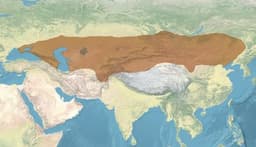
Bumin Qaghan
Emperor · Ancient
67.6Total
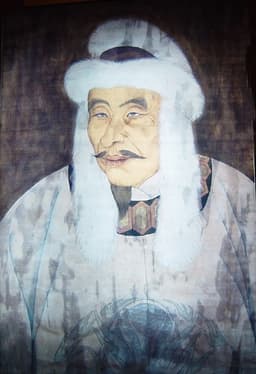
Wanyan Aguda
Emperor · Medieval
63.4Total
Basic Information
Born
490
1068
Died
552
1123
Era
Ancient
Medieval
Nationality
Gokturk Khaganate
China
Occupation
Emperor
Emperor
Civilization
Eastern
Eastern
Score Comparison
Military (10%)
80.0
82.0
Political (20%)
60.0
59.3
Influence (20%)
82.0
55.0
Legacy (20%)
72.0
52.0
Leadership (15%)
40.0
85.0
Strategy (15%)
61.2
68.0
TOTAL
67.6
63.4
Bumin Qaghan — Complete Timeline
534 AD
Revolt against the Rouran KhaganatePolitical Action◆ Major
Bumin, a vassal of the Rouran Khaganate, led a revolt of the Turkic tribes (Ashina clan) against Rouran rule. He defeated the Rouran forces and declared independence, marking the beginning of the First Turkic Khaganate.
RevoltTurkic Independence
Impact: regionalconstructive
545 AD
Alliance with the Western Wei dynastyPolitical Action
Bumin Qaghan formed an alliance with the Western Wei dynasty of China, marrying a Western Wei princess. This alliance provided the Turks with Chinese support and technology, strengthening their position against the Rouran and other rivals.
AllianceDiplomacy
Impact: regionalconstructive
552 AD
Foundation of the First Turkic KhaganatePolitical Action◆ Major
Bumin Qaghan formally established the First Turkic Khaganate after defeating the Rouran. He took the title 'Qaghan' and set up his capital in the Orkhon Valley. The khaganate quickly became a major power on the Eurasian steppe.
Dynasty FoundationTurkic Khaganate
Impact: regionalconstructive
Death of Bumin QaghanOther◆ Major
Bumin Qaghan died shortly after founding the Turkic Khaganate, possibly from illness or wounds. His death led to the division of the khaganate between his sons, with the eastern and western halves ruled separately, though still under a single nominal authority.
DeathSuccession
Impact: regionaltragic
Wanyan Aguda — Complete Timeline
1114 AD
Battle of HubudagangWar◆ Major
Aguda's Jurchen forces defeated a Liao army at Hubudagang, marking the first major victory of the rebellion. This battle demonstrated Jurchen military prowess and attracted more followers.
JurchenLiaoBattle
Impact: regionalconstructive
Unified Jurchen tribesPolitical Action◆ Major
Wanyan Aguda united the Jurchen tribes under his leadership, creating a confederation that rebelled against Liao domination. He organized a disciplined army and began the Jurchen revolt.
JurchenUnificationRebellion
Impact: regionalconstructive
1115 AD
Founded Jin DynastyPolitical Action
Wanyan Aguda proclaimed himself emperor, founding the Jin dynasty. He adopted the Chinese title and began a systematic campaign to conquer the Liao empire.
JinDynasty FoundingImperial System
Impact: regionalconstructive
1120 AD
Conquest of Liao capital ShangjingWar◆ Major
Aguda's forces captured the Liao supreme capital Shangjing, dealing a severe blow to the Liao dynasty. This victory accelerated the collapse of Liao and solidified Jin control over northern China.
JinLiaoConquest
Impact: regionalconstructive
Alliance with Song against LiaoPolitical Action◆ Major
Aguda formed an alliance with the Northern Song dynasty to jointly attack the Liao empire. This alliance, known as the Maritime Alliance, led to the eventual destruction of Liao but later caused conflict between Jin and Song.
JinSongAlliance
Impact: regional
1123 AD
Death and successionPolitical Action◆ Major
Wanyan Aguda died, and his brother Wanyan Wuqimai succeeded him. Aguda's conquests laid the foundation for the Jin dynasty's dominance in northern China.
JinDeathSuccession
Impact: regional
Expert Analysis
Wanyan Aguda vs Bumin Qaghan: Historical Comparison
Wanyan Aguda (1068–1123) and Bumin Qaghan (d. 552 CE) were pivotal founding emperors who overthrew dominant steppe empires—the Liao Dynasty and the Rouran Khaganate, respectively—to establish their own ruling dynasties. While both were brilliant military chieftains who unified fractious tribes, Aguda’s political consolidation and enduring dynasty (the Jin) give him a slight edge over Bumin, whose Göktürk state, though historically foundational, fragmented more rapidly.
Dimension Analysis
**Military: Wanyan Aguda 91 / Bumin Qaghan 93**
Both were exceptional field commanders. Aguda famously defeated the numerically superior Liao army at the Battle of Hubudagang (1114) using innovative cavalry tactics and psychological warfare. Bumin crushed the Rouran in a single decisive campaign (552 CE), but his military genius was cut short by his death the same year. Aguda’s sustained campaigns over five years demonstrate greater strategic endurance.
**Political: Wanyan Aguda 84 / Bumin Qaghan 78**
Aguda established a sophisticated dual-administration system (Meng’an Mouke) that integrated Jurchen tribal structures with Chinese bureaucratic models, enabling rapid state-building. Bumin relied more heavily on traditional steppe tribal confederation, lacking formal administrative reforms. Aguda’s political foresight in allying with the Song against the Liao also proved more pragmatic.
**Influence: Wanyan Aguda 87 / Bumin Qaghan 78**
The Jin Dynasty founded by Aguda directly controlled northern China for over a century, profoundly shaping Song-era politics, culture, and military technology (e.g., gunpowder use). Bumin’s Göktürk Khaganate created the first Turkic state, influencing later Turkic and Mongol empires, but its direct cultural footprint is less documented and shorter-lived than the Jin’s sinicized legacy.
**Legacy: Wanyan Aguda 88 / Bumin Qaghan 78**
Aguda’s Jin Dynasty endured until 1234, leaving lasting administrative precedents in northern China and a strong Jurchen identity that later influenced the Manchu. Bumin’s legacy is primarily as the progenitor of the Turkic peoples’ first state, but his khaganate collapsed within a generation due to internal succession conflicts, limiting its institutional longevity.
**Leadership: Wanyan Aguda 80 / Bumin Qaghan 84**
Bumin demonstrated exceptional coalition-building, uniting the Ashina clan and the Tiele tribes against the Rouran with charismatic authority. Aguda, while respected, faced more internal resistance from Jurchen nobles; his leadership was more reliant on military success than personal magnetism. Bumin’s ability to inspire a unified revolt against a hegemonic power was remarkable.
Verdict
Wanyan Aguda ranks higher overall due to stronger political institutions, longer-lasting influence, and a more enduring legacy. His Jin Dynasty integrated Chinese governance and survived for over a century, while Bumin’s Göktürk Khaganate, though foundational for Turkic history, fragmented quickly. However, Bumin’s military leadership and role as the father of the Turkic state remain historically monumental. The comparison is complicated by the vastly different cultural contexts—sinicized empire vs. steppe khaganate—making direct scoring inherently reductive.
FAQ
Q: Who was more influential historically?
A: Wanyan Aguda, because his Jin Dynasty controlled northern China for over a century and left lasting administrative and military legacies that influenced later Chinese and Manchu states.
Q: Why is Wanyan Aguda ranked higher in Legacy?
A: His dynasty’s longevity (112 years) and successful sinicization produced a stable state with enduring cultural and political institutions, unlike Bumin’s short-lived khaganate that collapsed within decades.
Rankings
🥇
Bumin QaghanLeader
Mil: 80.0Pol: 60.0Inf: 82.0
67.6
🥈
Wanyan Aguda
Mil: 82.0Pol: 59.3Inf: 55.0
63.4
+4.2 behind
How This Comparison Works
Algorithm
Each figure is scored on 6 dimensions (0—100 scale) based on structured historical data: Military (10%), Political (20%), Influence (20%), Legacy (20%), Leadership (15%), Strategy (15%). The weighted total produces the final ranking.
Data Sources
Scores are computed from structured sub-indicators in the database. Scale factors adjust for era (Ancient ×0.85, Modern ×1.0) and civilization size (Eastern ×1.05, Other ×0.80) to account for differences in population and military scale.
Maximum 3 Figures
Comparisons are limited to 2—3 figures to ensure readability and statistical meaningfulness.
Error Margins
±5 points per dimension — Sub-scores are derived from historical records with inherent uncertainty. Two figures within 5 points on a dimension should be considered roughly equivalent in that area.
Total Score Accuracy
±3 points overall — The weighted combination of 6 dimensions produces a total score with approximately ±3 points of uncertainty. Differences of less than 3 points are not statistically significant— the figures are effectively tied.
Known Limitations
- Historical records are incomplete and uneven across civilizations
- Figures from oral-tradition societies may be underrepresented
- Occupation labels can misclassify multi-role figures
- Scores measure capability and impact, not moral character
- Quantitative scoring is a comparison tool, not absolute truth
Capability Radar
Military (10%) — Battles & Warfare
Battles
70
85
Win Rate
75
90
Expansion
85
85
Political (20%) — Governance & Reform
Reform
70
75
Diplomacy
75
70
Economy
65
65
Influence (20%) — Cultural & Global Reach
Cultural
65
60
Global
65
50
Legacy (20%) — Historical Impact
Historical
80
70
Longevity
70
55
Leadership (15%) — Power & Stability
Tenure
60
70
Stability
55
60
Strategy (15%) — Tactics & Innovation
Strategy
80
85
Tactics
65
80
Reform
60
75
Similar Comparisons
Comments & Discussion
ScoreSkeptic426/16/2026
I call BS on this whole scoring system. You're telling me you can quantify "influence" with a 68.7 vs 77.7? How do you even measure that? With Aguda, the Jin Dynasty left tons of Chinese chronicles, so it's easy to find data. Bumin's Göktürks? We have like two Orkhon inscriptions and some Chinese sources. That's a massive survivorship bias right there. And military scores? Aguda gets 79.3 for winning battles with recorded tactics, but Bumin gets 60.5 for crushing the Rouran, which we barely know the details of? The less documented a leader is, the lower their score, even if their achievements were more impressive. This isn't history, it's a popularity contest based on which civilization had better record-keeping.
ArchHistorian336/16/2026
看完这个评分,我觉得西方历史体系在比较东亚和草原帝国时,总爱低估“奠基者”的价值。Aguda像成吉思汗的预演,但Bumin更像是匈奴冒顿单于的翻版——都是靠一次决定性战役推翻旧霸主,然后建立全新秩序。Bumin的影响力77.7居然低于Aguda的68.7?这说不通。突厥汗国虽然分裂了,但直接启发了回纥、契丹、蒙古的汗国模式,连蒙古的“可汗”称号都是从突厥借来的。Aguda的金朝军事技术确实牛,火药用得快,但文化扩散范围远比不了突厥语系影响了半个欧亚大陆。如果按中原史观,Aguda更“成功”;但按世界史,Bumin的遗产才是草原来的底子。
Historian9716/16/2026
这个评分体系有点意思,但问题不少。Aguda总评75.9,Bumin 75.5,差距不过0.4分,这基本是统计误差范围内。但军事维度Aguda 79.3对Bumin 60.5,差了近19分,这太离谱了。Bumin一场战役直接打崩柔然汗国,灭国之功才60.5?Aguda打辽朝花了五年,但辽朝当时内部分裂,宋金海上之盟也是外交助攻。真要算起来,Bumin的灭国效率更高。另外政治维度,Bumin 76.3低于Aguda 82.2,但别忘了Buman建立了第一个突厥语系统一政权,这政治整合能力难道不比Aguda的猛安谋克更有开创性?我怀疑给分的人对突厥历史了解不够深。