Loading...
Bukka I vs Richard III of England
Bukka I leads by 10.0 pts · 2 figures compared
…
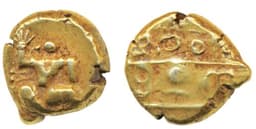
Bukka I
Emperor · Medieval
58.2Total
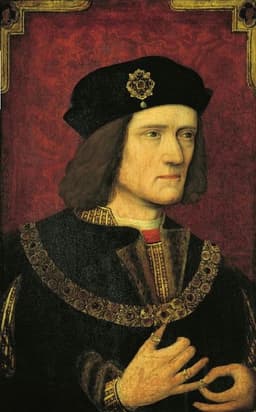
Richard III of England
Emperor · Medieval
48.2Total
Basic Information
Born
1356
1452
Died
1377
1485
Era
Medieval
Medieval
Nationality
India
England
Occupation
Emperor
Emperor
Civilization
Indian
Western
Score Comparison
Military (10%)
61.7
40.0
Political (20%)
68.0
36.5
Influence (20%)
61.0
57.2
Legacy (20%)
58.0
54.0
Leadership (15%)
40.0
38.1
Strategy (15%)
60.7
52.5
TOTAL
58.2
48.2
Bukka I — Complete Timeline
1336 AD
Co-founding of the Vijayanagara EmpirePolitical Action
Bukka I, along with his brother Harihara I, founded the Vijayanagara Empire after the collapse of the Hoysala kingdom. They established the capital at Vijayanagara (Hampi) and began consolidating power in the Deccan.
VijayanagaraFoundationEmpire
Impact: regionalconstructive
1360 AD
Expansion of the Vijayanagara EmpireWar◆ Major
Bukka I led military campaigns that expanded the Vijayanagara Empire to include much of southern India. He defeated the Madurai Sultanate and the Bahmani Sultanate, extending Vijayanagara control over the Tamil and Telugu regions.
VijayanagaraExpansionMilitary
Impact: regionalconstructive
1367 AD
War with the Bahmani SultanateWar◆ Major
Bukka I fought a war against the Bahmani Sultanate over control of the Raichur Doab. The conflict was indecisive, with both sides suffering heavy losses, but it established a long-standing rivalry between the two powers.
VijayanagaraBahmaniWar
Impact: regional
1370 AD
Patronage of Hindu culture and literatureCultural
Bukka I was a patron of Hindu culture and literature. He supported the construction of temples and the composition of works in Sanskrit and Telugu, including the Amuktamalyada, a Telugu poem attributed to him.
VijayanagaraCultureLiterature
Impact: regionalconstructive
1377 AD
Death and successionPolitical Action◆ Major
Bukka I died, and his son Harihara II succeeded him. His death marked the end of the founding period of the Vijayanagara Empire, which would continue to grow under his successors.
VijayanagaraSuccessionDeath
Impact: regional
Richard III of England — Complete Timeline
1471 AD
Battle of TewkesburyWar◆ Major
Richard, then Duke of Gloucester, commanded the vanguard of Edward IV's army at Tewkesbury, defeating the Lancastrian forces. This victory led to the death of Edward of Westminster, Henry VI's son, and the end of the Lancastrian line.
Wars of the RosesBattleVictory
Impact: national
1483 AD
Buckingham's RebellionWar◆ Major
Henry Stafford, Duke of Buckingham, led a rebellion against Richard III, aiming to place Henry Tudor on the throne. The rebellion failed, and Buckingham was executed, but it demonstrated significant opposition to Richard's rule.
RebellionOppositionTudor
Impact: nationaldestructive
Accession as Richard IIIPolitical Action
Richard III was crowned king of England after Parliament declared Edward V illegitimate. His accession followed the imprisonment of the Princes in the Tower and was controversial, leading to accusations of usurpation and murder.
CoronationUsurpationYorkist
Impact: national
1485 AD
Battle of Bosworth FieldWar
Richard III was killed in battle against Henry Tudor's forces at Bosworth Field. His death ended the Plantagenet dynasty and the Wars of the Roses, allowing Henry Tudor to become King Henry VII.
BattleDeathEnd of Dynasty
Impact: nationaltragic
Expert Analysis
Origins
Bukka I (born 1300s, exact year unknown) and his brother Harihara I were sons of Sangama, a chieftain in the Hoysala court. They were captured by the Delhi Sultanate and converted to Islam, later escaping to found the Vijayanagara Empire in 1336. Richard III (born 1452) was the youngest son of Richard, Duke of York, and Cecily Neville. He grew up amid the Wars of the Roses, a conflict between the houses of York and Lancaster. His father was killed in battle when Richard was eight, and he was raised by his brother, King Edward IV.
Rise to Power
Bukka I rose alongside Harihara I, consolidating power after the Hoysala kingdom collapsed. They established the capital at Vijayanagara and secured alliances. Bukka I took the throne after Harihara I's death in 1356. His military campaigns expanded the empire, defeating the Madurai Sultanate in 1378 and the Bahmani Sultanate in conflicts over the Raichur Doab. Richard III rose as a loyal brother to Edward IV, commanding the vanguard at Tewkesbury in 1471, which secured Yorkist control. After Edward's death in 1483, Richard was named Lord Protector for the young Edward V. He swiftly had Edward V and his brother declared illegitimate and imprisoned (likely murdered), and claimed the throne for himself in July 1483.
Leadership & Governance
Bukka I's leadership focused on expansion and consolidation. He scored 40.0 in leadership and 68.0 in political governance. He implemented a decentralized administration with local chieftains, promoted trade, and patronized Hindu culture. He built temples and supported literature in Sanskrit and Telugu. Richard III scored 38.1 in leadership and 36.5 in political governance. He attempted to centralize power and introduced legal reforms, such as the Court of Requests and bail reform, but his rule was undermined by the perception of usurpation and the disappearance of the princes. He faced rebellion from Buckingham in 1483, which he suppressed, but his support eroded.
Triumph & Tragedy
Bukka I's greatest triumph was co-founding the Vijayanagara Empire, which lasted over two centuries. He expanded it to dominate southern India, with a peak territory of 360,000 km². His tragedy was the indecisive war with the Bahmani Sultanate, which drained resources and left the Raichur Doab contested. Richard III's triumph was his military victory at Tewkesbury, which helped end the Lancastrian threat. His tragedy was his defeat and death at Bosworth Field in 1485, ending the Plantagenet dynasty. His legacy is tainted by the probable murder of his nephews, though some historians dispute this.
Character & Destiny
Bukka I was pragmatic and religiously tolerant, allowing local traditions to continue. His destiny was to build a stable empire that outlasted him. Richard III was ambitious and ruthless, but his actions alienated allies. His character, marked by determination and a sense of entitlement, led to his downfall. Historical assessments vary: some see Richard as a capable administrator vilified by Tudor propaganda; others view him as a tyrant.
Legacy
Bukka I's legacy is the Vijayanagara Empire, which preserved Hindu culture and resisted Islamic expansion. He scored 61.0 in influence and 58.0 in legacy. The empire's architectural and literary achievements endure. Richard III's legacy is more controversial. He scored 57.2 in influence and 54.0 in legacy. His reign was brief, but his death marked the end of the Middle Ages in England. The discovery of his skeleton in 2012 renewed interest. His legal reforms were modest and overshadowed by his reputation.
Conclusion
Bukka I had greater impact. He scored 58.2 total to Richard's 48.2, a 10-point gap. Bukka I founded an empire that shaped southern India for centuries, while Richard III's reign was a short, failed attempt that ended a dynasty. Bukka I's achievements in state-building and cultural patronage far outweigh Richard III's brief, contested rule.
Rankings
🥇
Bukka ILeader
Mil: 61.7Pol: 68.0Inf: 61.0
58.2
🥈
Richard III of England
Mil: 40.0Pol: 36.5Inf: 57.2
48.2
+10.0 behind
How This Comparison Works
Algorithm
Each figure is scored on 6 dimensions (0—100 scale) based on structured historical data: Military (10%), Political (20%), Influence (20%), Legacy (20%), Leadership (15%), Strategy (15%). The weighted total produces the final ranking.
Data Sources
Scores are computed from structured sub-indicators in the database. Scale factors adjust for era (Ancient ×0.85, Modern ×1.0) and civilization size (Eastern ×1.05, Other ×0.80) to account for differences in population and military scale.
Maximum 3 Figures
Comparisons are limited to 2—3 figures to ensure readability and statistical meaningfulness.
Error Margins
±5 points per dimension — Sub-scores are derived from historical records with inherent uncertainty. Two figures within 5 points on a dimension should be considered roughly equivalent in that area.
Total Score Accuracy
±3 points overall — The weighted combination of 6 dimensions produces a total score with approximately ±3 points of uncertainty. Differences of less than 3 points are not statistically significant— the figures are effectively tied.
Known Limitations
- Historical records are incomplete and uneven across civilizations
- Figures from oral-tradition societies may be underrepresented
- Occupation labels can misclassify multi-role figures
- Scores measure capability and impact, not moral character
- Quantitative scoring is a comparison tool, not absolute truth
Capability Radar
Military (10%) — Battles & Warfare
Battles
65
55
Win Rate
70
50
Expansion
70
30
Political (20%) — Governance & Reform
Reform
55
35
Diplomacy
60
30
Economy
60
30
Influence (20%) — Cultural & Global Reach
Cultural
50
45
Global
45
40
Legacy (20%) — Historical Impact
Historical
65
60
Longevity
60
55
Leadership (15%) — Power & Stability
Tenure
60
25
Stability
55
20
Strategy (15%) — Tactics & Innovation
Strategy
65
55
Tactics
60
60
Reform
55
40
Similar Comparisons
Comments & Discussion
No comments yet. Be the first to share your thoughts!