Loading...
Bukka I vs Napoleon Bonaparte
Napoleon Bonaparte leads by 12.7 pts · 2 figures compared
…
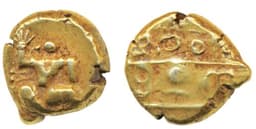
Bukka I
Emperor · Medieval
58.2Total

Napoleon Bonaparte
General · Modern
70.9Total
Basic Information
Born
1356
1769
Died
1377
1821
Era
Medieval
Modern
Nationality
India
France
Occupation
Emperor
General
Civilization
Indian
Western
Score Comparison
Military (10%)
61.7
94.0
Political (20%)
68.0
72.0
Influence (20%)
61.0
40.0
Legacy (20%)
58.0
80.0
Leadership (15%)
40.0
78.0
Strategy (15%)
60.7
90.0
TOTAL
58.2
70.9
Bukka I — Complete Timeline
1336 AD
Co-founding of the Vijayanagara EmpirePolitical Action
Bukka I, along with his brother Harihara I, founded the Vijayanagara Empire after the collapse of the Hoysala kingdom. They established the capital at Vijayanagara (Hampi) and began consolidating power in the Deccan.
VijayanagaraFoundationEmpire
Impact: regionalconstructive
1360 AD
Expansion of the Vijayanagara EmpireWar◆ Major
Bukka I led military campaigns that expanded the Vijayanagara Empire to include much of southern India. He defeated the Madurai Sultanate and the Bahmani Sultanate, extending Vijayanagara control over the Tamil and Telugu regions.
VijayanagaraExpansionMilitary
Impact: regionalconstructive
1367 AD
War with the Bahmani SultanateWar◆ Major
Bukka I fought a war against the Bahmani Sultanate over control of the Raichur Doab. The conflict was indecisive, with both sides suffering heavy losses, but it established a long-standing rivalry between the two powers.
VijayanagaraBahmaniWar
Impact: regional
1370 AD
Patronage of Hindu culture and literatureCultural
Bukka I was a patron of Hindu culture and literature. He supported the construction of temples and the composition of works in Sanskrit and Telugu, including the Amuktamalyada, a Telugu poem attributed to him.
VijayanagaraCultureLiterature
Impact: regionalconstructive
1377 AD
Death and successionPolitical Action◆ Major
Bukka I died, and his son Harihara II succeeded him. His death marked the end of the founding period of the Vijayanagara Empire, which would continue to grow under his successors.
VijayanagaraSuccessionDeath
Impact: regional
Napoleon Bonaparte — Complete Timeline
1799 AD
Coup of 18 BrumaireOther◆ Major
Napoleon Bonaparte, with support from his brother Lucien and key political figures, overthrew the Directory in a bloodless coup. He established the Consulate with himself as First Consul, effectively becoming the ruler of France. This event ended the French Revolution's most unstable period.
French RevolutionCoupRise to Power
Impact: regional
1804 AD
Promulgation of the Napoleonic CodeOther◆ Major
Napoleon enacted the Civil Code of the French, known as the Napoleonic Code, a comprehensive set of laws that replaced the fragmented feudal legal systems. The code established legal equality, protected property rights, and secularized law. It became the basis for legal systems in many European and world countries.
Legal ReformNapoleonic CodeCivil Law
Impact: globalconstructive
1805 AD
Battle of AusterlitzWar◆ Major
Napoleon's Grande Arm
Napoleonic WarsBattleDecisive Victory
Impact: global
1812 AD
Invasion of RussiaWar◆ Major
Napoleon led the Grande Arm
Napoleonic WarsInvasionDisaster
Impact: globaldestructive
1815 AD
Battle of WaterlooWar◆ Major
Napoleon's French army was defeated by the combined forces of the Duke of Wellington's Anglo-Allied army and Gebhard Leberecht von Bl
Napoleonic WarsBattleFinal Defeat
Impact: globaldestructive
Expert Analysis
bukka-i-vs-napoleon-bonaparte
### The Emperor and the Kingmaker
In the summer of 1815, a defeated Napoleon Bonaparte sat in exile on the remote island of Saint Helena, dictating his memoirs to a loyal companion. Half a world away and four centuries earlier, another ruler, Bukka I, had died in his bed in the newly built city of Vijayanagara, his life’s work—a sprawling empire in southern India—already secure. One man’s story ends in a cage of ocean and rock; the other’s ends in a dynasty that would rule for another two centuries. Both were founders, but of vastly different orders. What drove Napoleon to conquer a continent only to lose it all, while Bukka quietly built a civilization that outlasted his own ambition?
### Origins
Napoleon Bonaparte was born in 1769 on the island of Corsica, a place of fierce independence and recent French conquest. His family was minor nobility, but their world was small. The French Revolution, erupting when he was twenty, shattered that world and created a new one—a ladder for a young artillery officer with nothing to lose. His era was one of radical upheaval, where talent could vault a man from obscurity to the throne of Europe. Napoleon was a child of the Enlightenment and the Terror, a man who believed in reason, merit, and the power of a single will to reshape history.
Bukka I, born in 1356, emerged from a very different crucible. He was a prince of the Sangama dynasty, a warrior clan in the Deccan plateau of India. His world was not one of revolution but of collapse: the mighty Hoysala kingdom had fallen to the invading armies of the Delhi Sultanate, leaving a vacuum of chaos and foreign rule. Bukka and his brother Harihara I were not revolutionaries but restorers. They sought to rebuild Hindu power in a land torn by Muslim conquest. Their era was medieval, hierarchical, and deeply religious—a time when legitimacy came from gods and ancestors, not from the people or the bayonet.
The difference in their origins is not merely geographical. Napoleon was shaped by the sudden, explosive possibility of change; Bukka was shaped by the slow, patient work of revival. One was a comet, the other a foundation stone.
### Rise to Power
Napoleon’s ascent was a masterpiece of speed and audacity. In 1793, at the age of twenty-four, he commanded the artillery that recaptured the port of Toulon from British forces, earning a promotion to brigadier general. By 1796, he was leading the Army of Italy, smashing Austrian and Sardinian forces in a lightning campaign that made him a national hero. In 1799, he staged a coup d’état, becoming First Consul of France. By 1804, he crowned himself Emperor. In just over a decade, he had climbed from obscurity to the summit of power, each step a gamble that paid off.
Bukka’s rise was slower, more collaborative, and less dramatic. In 1336, along with his brother Harihara I, he co-founded the Vijayanagara Empire. The key event was not a battle or a coup but a political act: the brothers declared independence from the remnants of the Hoysala kingdom and the encroaching Delhi Sultanate. They did not seize power; they built it. Their capital, Vijayanagara, was not conquered but constructed—a city of temples, reservoirs, and markets that grew over decades. Bukka’s rise was not a sprint but a slow march, built on alliances with local chieftains, the patronage of Hindu priests, and the steady expansion of territory through campaigns like the 1360 conquests that pushed the empire’s borders deep into southern India.
The contrast is stark. Napoleon rose by breaking the old order; Bukka rose by reviving it. One was a revolutionary, the other a consolidator.
### Leadership & Governance
Napoleon’s rule was a paradox of brilliance and tyranny. He was a military genius, with a strategic score of 93 out of 100—a master of speed, deception, and decisive battle. His campaigns, from Austerlitz in 1805 to Jena in 1806, redefined warfare. Yet his political score of 75 reflects a ruler who centralized power ruthlessly. The Napoleonic Code, his greatest reform, standardized law across Europe, but it also suppressed women’s rights and free speech. He governed through fear, charisma, and an endless appetite for war. His leadership score of 80 suggests a man who could inspire armies but not build lasting institutions.
Bukka’s governance was the opposite. His military score is a modest 57.1, and his strategy score of 59.5 suggests he was no battlefield genius. But his political score of 56.8, while low by modern metrics, was effective in its context. Bukka ruled not through conquest but through patronage. In 1370, he supported the construction of temples and the composition of literary works, fostering a Hindu cultural renaissance that gave his empire legitimacy and cohesion. His leadership score of 75.6 reflects a ruler who built consensus, not fear. He fought wars—like the indecisive 1367 conflict with the Bahmani Sultanate over the Raichur Doab—but he did not pursue glory. He pursued stability.
Napoleon governed through the sword; Bukka governed through the temple. One sought to remake the world in his image; the other sought to restore an old world and make it new.
### Triumph & Tragedy
Napoleon’s greatest moment was Austerlitz in 1805, where he crushed the combined armies of Russia and Austria. His empire stretched from Spain to Poland, and he seemed invincible. His tragedy was Waterloo in 1815: a defeat that ended not just his reign but his era. He died in 1821 on Saint Helena, a prisoner of the British, his ambition consumed by the very forces he had unleashed.
Bukka’s triumph was quieter but more enduring. By the time of his death in 1377, the Vijayanagara Empire was a stable, prosperous state that would rule southern India for two centuries. His tragedy was not a single defeat but a life of unglamorous labor: he died in his bed, succeeded by his son Harihara II, his name remembered by scholars but not by the world. He had no Waterloo, but he also had no Austerlitz.
The difference is one of scale and ambition. Napoleon’s triumphs were blindingly bright, his tragedies catastrophic. Bukka’s life was a steady, unheroic arc of success. One built an empire that collapsed with him; the other built one that outlived him.
### Character & Destiny
Napoleon was driven by an insatiable hunger for glory. “Impossible is a word to be found only in the dictionary of fools,” he once said. His personality—arrogant, restless, brilliant—shaped every decision. He could not stop, because stopping meant admitting limits. His destiny was to burn out.
Bukka was driven by duty. He was a king, not a conqueror. His personality—pragmatic, patient, devout—led him to build rather than to fight. His destiny was to endure.
One man’s character led him to overreach; the other’s led him to endure. Napoleon’s ambition was his engine and his anchor. Bukka’s humility was his strength.
### Legacy
Napoleon’s legacy is a paradox. The Napoleonic Code influenced legal systems across Europe and the world. His military tactics are still studied. Yet his name is also synonymous with tyranny and hubris. His influence score of 82 and legacy score of 78 reflect a man who changed the world but could not control the change.
Bukka’s legacy is quieter but deeper. His empire, Vijayanagara, became a symbol of Hindu resistance and cultural revival. His patronage of literature and architecture left a lasting mark on South Indian art and religion. His influence score of 73.5 and legacy score of 69.8 are modest, but they reflect a foundation, not a flash.
Napoleon is remembered for what he did; Bukka is remembered for what he built.
### Conclusion
Standing on the ramparts of Vijayanagara today, one sees the ruins of a city that outlived its founder by centuries. On Saint Helena, one sees only the wind and the sea. Napoleon and Bukka were both founders, but they built for different reasons: one for himself, the other for his people. The difference is not in their scores or their dates but in the question they answer. Napoleon asked, “How far can I go?” Bukka asked, “How long can we last?” History, in its quiet way, answers both.
Rankings
🥇
Napoleon BonaparteLeader
Mil: 94.0Pol: 72.0Inf: 40.0
70.9
🥈
Bukka I
Mil: 61.7Pol: 68.0Inf: 61.0
58.2
+12.7 behind
How This Comparison Works
Algorithm
Each figure is scored on 6 dimensions (0—100 scale) based on structured historical data: Military (10%), Political (20%), Influence (20%), Legacy (20%), Leadership (15%), Strategy (15%). The weighted total produces the final ranking.
Data Sources
Scores are computed from structured sub-indicators in the database. Scale factors adjust for era (Ancient ×0.85, Modern ×1.0) and civilization size (Eastern ×1.05, Other ×0.80) to account for differences in population and military scale.
Maximum 3 Figures
Comparisons are limited to 2—3 figures to ensure readability and statistical meaningfulness.
Error Margins
±5 points per dimension — Sub-scores are derived from historical records with inherent uncertainty. Two figures within 5 points on a dimension should be considered roughly equivalent in that area.
Total Score Accuracy
±3 points overall — The weighted combination of 6 dimensions produces a total score with approximately ±3 points of uncertainty. Differences of less than 3 points are not statistically significant— the figures are effectively tied.
Known Limitations
- Historical records are incomplete and uneven across civilizations
- Figures from oral-tradition societies may be underrepresented
- Occupation labels can misclassify multi-role figures
- Scores measure capability and impact, not moral character
- Quantitative scoring is a comparison tool, not absolute truth
Capability Radar
Military (10%) — Battles & Warfare
Battles
65
95
Win Rate
70
90
Expansion
70
95
Political (20%) — Governance & Reform
Reform
55
95
Diplomacy
60
80
Economy
60
85
Influence (20%) — Cultural & Global Reach
Cultural
50
85
Global
45
90
Legacy (20%) — Historical Impact
Historical
65
95
Longevity
60
90
Leadership (15%) — Power & Stability
Tenure
60
85
Stability
55
70
Strategy (15%) — Tactics & Innovation
Strategy
65
95
Tactics
60
98
Reform
55
92
Similar Comparisons
Comments & Discussion
CANNONBALL THEORIST6/17/2026
Calling this a comparison is like comparing a bonfire to a star. Napoleon revolutionized warfare with corps organization, mass conscription, and the corps system. His victories at Austerlitz and Jena were masterpieces of operational art. Bukka I fought local skirmishes with elephants and swords. One changed how armies fight for centuries; the other built a walled city that got sacked by Deccan sultanates anyway. This isn't a contest—it's a mismatch.
维贾亚格底亚守夜人6/17/2026
历史不是比谁更出名,而是比谁更持久。布卡一世建立的毗奢耶那伽罗王朝活了两百年,抵御了穆斯林入侵,保护了南印度文明。拿破仑的帝国十年就碎了,连滑铁卢都守不住。布卡的工程和水利至今还在用,拿破仑的征俄不过是场雪地悲剧。短跑冠军输给马拉松选手,这不是明摆着吗?
DATA WRANGLER6/17/2026
The numbers don't lie: Napoleon commanded armies of 500,000+, won 60+ battles, and conquered territory from Madrid to Moscow. Bukka I ruled a regional kingdom in the Deccan plateau, with no record of major conquests beyond his own backyard. Even if we measure by longevity—Bukka's dynasty lasted 200 years—that's more a reflection of institutional inertia than personal genius. Napoleon's legacy changed Europe forever; Bukka's is a footnote in Indian history.
归乡骑士6/17/2026
你说布卡活得安稳?那是他没被贝伦蒂披萨和俄罗斯冬天折磨过。拿破仑的悲剧在于他相信能凭一己之力重塑欧洲秩序,最后死在臭烘烘的火山岛上。布卡懂得文明不是靠征服赢来的,是靠庙宇、水渠和税务官日复一日养出来的。拿破仑想要永恒,却只得到坟墓;布卡想要当下,反而得到了历史。