Loading...
Boris Johnson vs Napoleon Bonaparte
Napoleon Bonaparte leads by 19.3 pts · 2 figures compared
…
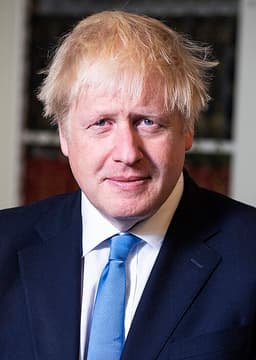
Boris Johnson
Politician · Modern
51.6Total

Napoleon Bonaparte
General · Modern
70.9Total
Basic Information
Born
1964
1769
Died
—
1821
Era
Modern
Modern
Nationality
United Kingdom
France
Occupation
Politician
General
Civilization
Western
Western
Score Comparison
Military (10%)
49.2
94.0
Political (20%)
43.7
72.0
Influence (20%)
55.0
40.0
Legacy (20%)
49.2
80.0
Leadership (15%)
65.7
78.0
Strategy (15%)
41.9
90.0
TOTAL
51.6
70.9
Boris Johnson — Complete Timeline
2008 AD
Elected Mayor of LondonPolitical Action◆ Major
Johnson was elected as the Conservative Mayor of London, defeating incumbent Ken Livingstone. He served two terms until 2016, overseeing the 2012 Olympic Games and introducing the New Routemaster bus.
London MayoraltyConservative Party
Impact: regional
2016 AD
Appointed Foreign SecretaryPolitical Action◆ Major
Prime Minister Theresa May appointed Johnson as Foreign Secretary, a role he held until July 2018. His tenure was marked by controversial statements and the resignation of his aide over a diplomatic incident with Iran.
CabinetForeign Office
Impact: national
2019 AD
Elected Prime MinisterPolitical Action
Johnson won the Conservative Party leadership election, succeeding Theresa May as Prime Minister. He promised to deliver Brexit by October 31, 2019, and formed a government with a mandate to leave the EU.
Prime MinisterBrexit
Impact: national
2020 AD
Delivered BrexitPolitical Action
Johnson oversaw the UK's formal departure from the European Union on January 31, 2020, following the ratification of the Withdrawal Agreement. This ended 47 years of EU membership and initiated a transition period.
BrexitEUReferendum
Impact: global
COVID-19 Pandemic ResponsePolitical Action◆ Major
Johnson led the UK government's response to the COVID-19 pandemic, including national lockdowns and a vaccination program. He was hospitalized with COVID-19 in April 2020. The response faced criticism over timing and deaths.
COVID-19Public Health
Impact: national
2022 AD
Resigned as Prime MinisterPolitical Action◆ Major
Johnson announced his resignation as Prime Minister following a series of ministerial resignations and the Partygate scandal. He remained in office until a successor was chosen, ending his tenure in September 2022.
ResignationScandal
Impact: national
Napoleon Bonaparte — Complete Timeline
1799 AD
Coup of 18 BrumaireOther◆ Major
Napoleon Bonaparte, with support from his brother Lucien and key political figures, overthrew the Directory in a bloodless coup. He established the Consulate with himself as First Consul, effectively becoming the ruler of France. This event ended the French Revolution's most unstable period.
French RevolutionCoupRise to Power
Impact: regional
1804 AD
Promulgation of the Napoleonic CodeOther◆ Major
Napoleon enacted the Civil Code of the French, known as the Napoleonic Code, a comprehensive set of laws that replaced the fragmented feudal legal systems. The code established legal equality, protected property rights, and secularized law. It became the basis for legal systems in many European and world countries.
Legal ReformNapoleonic CodeCivil Law
Impact: globalconstructive
1805 AD
Battle of AusterlitzWar◆ Major
Napoleon's Grande Arm
Napoleonic WarsBattleDecisive Victory
Impact: global
1812 AD
Invasion of RussiaWar◆ Major
Napoleon led the Grande Arm
Napoleonic WarsInvasionDisaster
Impact: globaldestructive
1815 AD
Battle of WaterlooWar◆ Major
Napoleon's French army was defeated by the combined forces of the Duke of Wellington's Anglo-Allied army and Gebhard Leberecht von Bl
Napoleonic WarsBattleFinal Defeat
Impact: globaldestructive
Expert Analysis
boris-johnson-vs-napoleon-bonaparte
# The Emperor and the Etonian: Two Paths to Power, Two Destinies
In the winter of 1812, Napoleon Bonaparte stood before the smoldering ruins of Moscow, his Grand Army of over 600,000 men reduced to shivering specters. Two centuries later, in the spring of 2020, Boris Johnson stood before a television camera in Downing Street, announcing a national lockdown as COVID-19 swept through Britain. One man commanded the largest army Europe had ever seen; the other commanded a parliamentary majority and a public health crisis. Both reached the summit of power, but their journeys—and their falls—could not have been more different. What drives a man to conquer a continent, and another to navigate the corridors of a crumbling empire?
Origins
Napoleon Buonaparte was born in 1769 on the Mediterranean island of Corsica, a year after France had purchased the island from Genoa. His family was minor nobility, speaking Italian-accented French and nursing resentment against their new rulers. At nine, he entered a military academy in mainland France, where classmates mocked his accent and provincial manners. The humiliation forged a steel resolve. By contrast, Boris Johnson, born in New York City in 1964 to an English father and American mother, grew up in the rarefied air of the British elite. His father Stanley was a writer and politician; his mother an artist. Johnson attended Eton College, the cradle of prime ministers, then Oxford. Where Napoleon fought to prove himself, Johnson was born into a world that expected him to lead.
Their eras shaped them as much as their bloodlines. Napoleon came of age in revolutionary France, a time when a commoner with talent could rise to command armies. The old order was crumbling, and a Corsican outsider could become emperor. Johnson matured in post-imperial Britain, a nation shedding its global role but clinging to its self-image. The path to power was not through military glory but through media charisma and party politics.
Rise to Power
Napoleon’s ascent was meteoric and bloody. At 24, he drove the British out of Toulon, earning promotion to brigadier general. At 26, he crushed a royalist uprising in Paris with a “whiff of grapeshot.” At 30, he seized control of France in the coup of 18 Brumaire. His rise was built on battlefield victories—Italy, Egypt, Austerlitz—each triumph adding to his legend. He did not wait for opportunity; he created it.
Johnson’s rise was slower, more calculated, and far less dramatic. After Oxford, he became a journalist for *The Times* and then the *Daily Telegraph*, where his Brussels reporting exaggerated European Union regulations to fuel British Euroscepticism. In 2008, he was elected Mayor of London, a role he held for eight years, cultivating an image of bumbling charm while quietly building a political machine. In 2016, he became Foreign Secretary under Theresa May, a position he used to position himself for the top job. In 2019, he won the Conservative Party leadership and became Prime Minister. His turning point was not a battle but a referendum: Brexit.
Leadership & Governance
Napoleon ruled France with an iron hand wrapped in velvet. He centralized the state, created the Bank of France, and most enduringly, codified the Napoleonic Code—a legal framework that abolished feudal privileges and enshrined meritocracy. He built roads, canals, and schools. But his governance was inseparable from war. He conquered Italy, Germany, Spain, and Poland, installing family members on thrones and redrawing the map of Europe. His military genius was unmatched: he won 60 of his 80 battles, with tactical innovations that turned artillery into a mobile weapon of mass disruption.
Johnson’s governance was the opposite of Napoleonic order. He governed through chaos, appointing loyalists and firing them with equal speed. His signature achievement was delivering Brexit on January 31, 2020, fulfilling a promise that had consumed British politics for three years. But the aftermath—trade deals, Northern Ireland protocol, fishing rights—was a slog of negotiations that revealed the gap between rhetoric and reality. His COVID-19 response was a mixed legacy: a successful vaccination program that saved lives, but also a series of lockdowns that came too late, and a scandal over parties in Downing Street while the country was forbidden from gathering. Where Napoleon imposed order, Johnson thrived in disorder.
Triumph & Tragedy
Napoleon’s greatest moment was Austerlitz in 1805, where he crushed the combined armies of Russia and Austria, a victory so complete that the Holy Roman Empire dissolved. His tragedy was Russia in 1812: the retreat from Moscow killed half a million men, and the disaster broke the myth of his invincibility. Exiled to Elba, he escaped, returned to France for the Hundred Days, and met final defeat at Waterloo in 1815. He died in 1821 on Saint Helena, a prisoner of the British.
Johnson’s triumph was delivering Brexit—a political feat that many thought impossible. His tragedy was the Partygate scandal: revelations that his staff held parties during lockdown while the public obeyed restrictions. The moral authority he needed to lead evaporated. In July 2022, after a cascade of ministerial resignations, he stepped down. Unlike Napoleon, he did not go into exile; he returned to the backbenches, writing memoirs and giving paid speeches.
Character & Destiny
Napoleon was a creature of will. “Impossible is a word to be found only in the dictionary of fools,” he said. He worked eighteen-hour days, slept four hours, and dictated letters while riding. His ambition was boundless, his ego insatiable. That same drive that conquered Europe also destroyed it. He could not stop, could not compromise, could not share power. His character was his destiny.
Johnson’s character was a mask of contradictions. The disheveled hair, the bumbling speech, the classical quotations—these were a performance. Behind it was a ruthless politician who understood that in modern democracy, image is power. But his carelessness with truth, his casual cruelty toward subordinates, and his belief that rules applied to others but not to him proved fatal. His character was also his destiny: a man who could win an election but could not govern.
Legacy
Napoleon’s legacy is written in stone and law. The Napoleonic Code influences legal systems from Louisiana to Japan. He unified Germany and Italy by destroying the old feudal order. He spread nationalism across Europe, a force that would shape the next two centuries. He is remembered as a military genius, a tyrant, a reformer—a figure too vast for simple judgment.
Johnson’s legacy is more modest and more contested. He will be remembered as the man who delivered Brexit, a decision whose consequences are still unfolding. He will also be remembered for the pandemic, for the parties, for the scandals. His political score of 63.8 reflects a leader who achieved his central goal but left office in disgrace. His military score of 37.5 is a reminder that in modern Britain, generals do not become prime ministers.
Conclusion
Napoleon and Johnson both climbed to the pinnacle of power, but they inhabited different worlds. One conquered nations; the other navigated a bureaucracy. One changed the map of Europe; the other changed a trade agreement. Their differences are not just personal but historical: Napoleon lived in an age of empires and armies, Johnson in an age of media and markets. Yet both shared a hunger for power, a talent for performance, and a tragic inability to know when to stop. In the end, the Corsican outsider who became emperor and the Etonian who became prime minister both learned that power is a drug, and the dose that lifts you up is the same one that brings you down.
Rankings
🥇
Napoleon BonaparteLeader
Mil: 94.0Pol: 72.0Inf: 40.0
70.9
🥈
Boris Johnson
Mil: 49.2Pol: 43.7Inf: 55.0
51.6
+19.3 behind
How This Comparison Works
Algorithm
Each figure is scored on 6 dimensions (0—100 scale) based on structured historical data: Military (10%), Political (20%), Influence (20%), Legacy (20%), Leadership (15%), Strategy (15%). The weighted total produces the final ranking.
Data Sources
Scores are computed from structured sub-indicators in the database. Scale factors adjust for era (Ancient ×0.85, Modern ×1.0) and civilization size (Eastern ×1.05, Other ×0.80) to account for differences in population and military scale.
Maximum 3 Figures
Comparisons are limited to 2—3 figures to ensure readability and statistical meaningfulness.
Error Margins
±5 points per dimension — Sub-scores are derived from historical records with inherent uncertainty. Two figures within 5 points on a dimension should be considered roughly equivalent in that area.
Total Score Accuracy
±3 points overall — The weighted combination of 6 dimensions produces a total score with approximately ±3 points of uncertainty. Differences of less than 3 points are not statistically significant— the figures are effectively tied.
Known Limitations
- Historical records are incomplete and uneven across civilizations
- Figures from oral-tradition societies may be underrepresented
- Occupation labels can misclassify multi-role figures
- Scores measure capability and impact, not moral character
- Quantitative scoring is a comparison tool, not absolute truth
Capability Radar
Military (10%) — Battles & Warfare
Battles
31
95
Win Rate
30
90
Expansion
35
95
Political (20%) — Governance & Reform
Reform
40
95
Diplomacy
35
80
Economy
30
85
Influence (20%) — Cultural & Global Reach
Cultural
50
85
Global
55
90
Legacy (20%) — Historical Impact
Historical
55
95
Longevity
30
90
Leadership (15%) — Power & Stability
Tenure
45
85
Stability
20
70
Strategy (15%) — Tactics & Innovation
Strategy
39
95
Tactics
41
98
Reform
41
92
Similar Comparisons
Comments & Discussion
No comments yet. Be the first to share your thoughts!