Loading...
Boris Johnson vs Georges Bidault
Boris Johnson leads by 1.7 pts · 2 figures compared
…
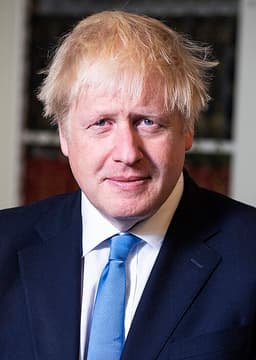
Boris Johnson
Politician · Modern
51.6Total
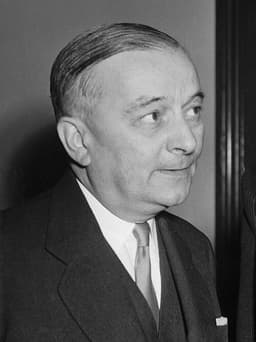
Georges Bidault
Politician · Modern
49.9Total
Basic Information
Born
1964
1899
Died
—
1983
Era
Modern
Modern
Nationality
United Kingdom
France
Occupation
Politician
Politician
Civilization
Western
Western
Score Comparison
Military (10%)
49.2
39.9
Political (20%)
43.7
46.6
Influence (20%)
55.0
51.8
Legacy (20%)
49.2
43.3
Leadership (15%)
65.7
65.0
Strategy (15%)
41.9
54.3
TOTAL
51.6
49.9
Boris Johnson — Complete Timeline
2008 AD
Elected Mayor of LondonPolitical Action◆ Major
Johnson was elected as the Conservative Mayor of London, defeating incumbent Ken Livingstone. He served two terms until 2016, overseeing the 2012 Olympic Games and introducing the New Routemaster bus.
London MayoraltyConservative Party
Impact: regional
2016 AD
Appointed Foreign SecretaryPolitical Action◆ Major
Prime Minister Theresa May appointed Johnson as Foreign Secretary, a role he held until July 2018. His tenure was marked by controversial statements and the resignation of his aide over a diplomatic incident with Iran.
CabinetForeign Office
Impact: national
2019 AD
Elected Prime MinisterPolitical Action
Johnson won the Conservative Party leadership election, succeeding Theresa May as Prime Minister. He promised to deliver Brexit by October 31, 2019, and formed a government with a mandate to leave the EU.
Prime MinisterBrexit
Impact: national
2020 AD
Delivered BrexitPolitical Action
Johnson oversaw the UK's formal departure from the European Union on January 31, 2020, following the ratification of the Withdrawal Agreement. This ended 47 years of EU membership and initiated a transition period.
BrexitEUReferendum
Impact: global
COVID-19 Pandemic ResponsePolitical Action◆ Major
Johnson led the UK government's response to the COVID-19 pandemic, including national lockdowns and a vaccination program. He was hospitalized with COVID-19 in April 2020. The response faced criticism over timing and deaths.
COVID-19Public Health
Impact: national
2022 AD
Resigned as Prime MinisterPolitical Action◆ Major
Johnson announced his resignation as Prime Minister following a series of ministerial resignations and the Partygate scandal. He remained in office until a successor was chosen, ending his tenure in September 2022.
ResignationScandal
Impact: national
Georges Bidault — Complete Timeline
1943 AD
Leadership of the French Resistance and CNRPolitical Action◆ Major
Bidault became president of the National Council of the Resistance (CNR) in 1943, unifying various resistance groups under de Gaulle's authority. He helped coordinate resistance activities and drafted the CNR's program for post-war social and economic reforms, which influenced the Fourth Republic.
French ResistanceWorld War IICNR
Impact: nationalconstructive
1946 AD
First Term as Prime Minister and Foreign PolicyPolitical Action
Bidault served as Prime Minister from June to December 1946, leading a tripartite government of Socialists, Communists, and MRP. He focused on foreign policy, including negotiations for the Marshall Plan and the establishment of the Fourth Republic's constitution, but faced internal coalition tensions.
Fourth RepublicGovernmentPost-War
Impact: nationalconstructive
1949 AD
Second Term as Prime Minister and the Indochina WarPolitical Action◆ Major
Bidault became Prime Minister again in 1949, overseeing France's involvement in the First Indochina War. He supported the creation of the Associated State of Vietnam under Emperor Bao Dai, but the war continued without resolution, and his government fell in 1950 due to economic and colonial issues.
Indochina WarColonial PolicyFourth Republic
Impact: globaldestructive
1958 AD
Opposition to de Gaulle and the Algerian WarPolitical Action◆ Major
Bidault opposed de Gaulle's return to power in 1958 and his policy of Algerian self-determination. He became a leader of the Organisation de l'arm
Algerian WarOASFifth Republic
Impact: nationaldestructive
Expert Analysis
Origins
Boris Johnson was born in New York City in 1964 to a wealthy British family. He attended Eton College and Balliol College, Oxford, where he studied Classics. His father, Stanley Johnson, was a writer and politician, and his mother, Charlotte Fawcett, was an artist. Johnson began his career as a journalist at The Times, but was fired for fabricating a quote. He later worked at The Daily Telegraph, where his colorful reporting from Brussels earned him a reputation as a Eurosceptic.
Georges Bidault was born in Moulins, France, in 1899 to a conservative Catholic family. He studied at the Sorbonne and became a history teacher. A decorated World War I veteran, Bidault entered politics as a journalist and joined the Christian democratic Popular Democratic Party. During World War II, he was a prominent member of the French Resistance, co-founding the Combat resistance movement and later becoming president of the National Council of the Resistance (CNR) in 1943.
Rise to Power
Johnson's political rise began in 2001 when he was elected as Conservative MP for Henley. He gained national attention as a columnist and television personality. In 2008, he was elected Mayor of London, defeating incumbent Ken Livingstone. He served two terms, overseeing the 2012 Olympics. After returning to Parliament as MP for Uxbridge in 2015, he campaigned for Brexit in the 2016 referendum. Appointed Foreign Secretary by Theresa May in 2016, his tenure was marked by controversial statements. Following May's resignation, Johnson won the Conservative leadership election in July 2019 and became Prime Minister.
Bidault's rise came through the Resistance. He was captured by the Vichy regime in 1942 but released and continued his work. In 1943, he became president of the CNR, unifying resistance groups under Charles de Gaulle. After the war, he co-founded the centrist Popular Republican Movement (MRP). He served as Foreign Minister in the provisional government and was a key figure in drafting the Fourth Republic's constitution. He became Prime Minister for the first time in June 1946, leading a tripartite coalition.
Leadership & Governance
Johnson's leadership style was populist and unorthodox. He promised to "Get Brexit Done" and won a landslide majority in the December 2019 general election. He oversaw the UK's departure from the EU on January 31, 2020, and negotiated a trade deal. His COVID-19 response included early lockdowns and a rapid vaccination program, but also criticism over timing and care home policies. Johnson's governance was marked by frequent cabinet reshuffles and scandals, including Partygate. His political score is 43.7, reflecting mixed effectiveness.
Bidault governed in a parliamentary system with shifting coalitions. As Prime Minister his first term focused on foreign policy and reconstruction. His second term (1949-1950) was dominated by the Indochina War, which he supported, and the creation of the Associated State of Vietnam. He opposed de Gaulle's return in 1958 and his Algerian policy, leading him to support the Organisation de l'armée secrète (OAS) in its violent opposition. Bidault's political score is 46.6, slightly higher than Johnson's.
Triumph & Tragedy
Johnson's greatest success was delivering Brexit, fulfilling a campaign promise that reshaped British politics. He also led a successful vaccination rollout during COVID-19. However, his tenure was marred by the Partygate scandal, where lockdown-breaking parties were held in Downing Street, leading to fines and a loss of trust. His handling of the COVID-19 pandemic initially saw high death rates. Johnson was forced to resign in July 2022 after a series of ministerial resignations over his leadership.
Bidault's triumph was his role in the Resistance, helping to unify anti-Nazi forces. As a statesman, he contributed to the early Fourth Republic. However, his tragedy was his later support for the OAS, a terrorist group opposing Algerian independence. This alienated him from mainstream politics, and he was forced into exile in 1962. He was pardoned in 1968 but never regained influence.
Character & Destiny
Johnson was charismatic and ambitious, but often careless with details. His tendency to make gaffes and his casual approach to rules led to his downfall. His character scored 65.7 in leadership, reflecting his ability to connect with voters, but his strategy score of 41.9 indicates poor long-term planning. Historians view him as a divisive figure who achieved Brexit but damaged institutions.
Bidault was principled and committed to his beliefs, but his inflexibility led him to support extremist groups. His leadership score is 65.0, close to Johnson's, but his strategic score of 54.3 shows more careful planning. He is remembered as a resistance hero who later became a cautionary tale about political extremism.
Legacy
Johnson's legacy is dominated by Brexit, which will have long-term economic and political effects. He also reshaped the Conservative Party into a more populist, Eurosceptic force. His influence score is 55.0. However, his reputation is tarnished by scandal.
Bidault's legacy is mixed. He is honored as a Resistance leader, but his involvement with the OAS overshadows his earlier work. His influence score is 51.8, slightly lower than Johnson's. The Fourth Republic's instability and his later actions limit his positive impact.
Conclusion
Boris Johnson had a greater impact on his country than Georges Bidault, despite a slightly higher total score (51.6 vs 49.9). Johnson's decision to deliver Brexit fundamentally altered the UK's trajectory, while Bidault's achievements in the Resistance were later undermined by his extremist turn. Johnson's legacy, though controversial, is more enduring in its effect on national sovereignty and political realignment. Bidault's contributions were crucial for France's liberation, but his later choices diminished his standing. Thus, Johnson's influence on modern British history surpasses Bidault's on France.
Rankings
🥇
Boris JohnsonLeader
Mil: 49.2Pol: 43.7Inf: 55.0
51.6
🥈
Georges Bidault
Mil: 39.9Pol: 46.6Inf: 51.8
49.9
+1.7 behind
How This Comparison Works
Algorithm
Each figure is scored on 6 dimensions (0—100 scale) based on structured historical data: Military (10%), Political (20%), Influence (20%), Legacy (20%), Leadership (15%), Strategy (15%). The weighted total produces the final ranking.
Data Sources
Scores are computed from structured sub-indicators in the database. Scale factors adjust for era (Ancient ×0.85, Modern ×1.0) and civilization size (Eastern ×1.05, Other ×0.80) to account for differences in population and military scale.
Maximum 3 Figures
Comparisons are limited to 2—3 figures to ensure readability and statistical meaningfulness.
Error Margins
±5 points per dimension — Sub-scores are derived from historical records with inherent uncertainty. Two figures within 5 points on a dimension should be considered roughly equivalent in that area.
Total Score Accuracy
±3 points overall — The weighted combination of 6 dimensions produces a total score with approximately ±3 points of uncertainty. Differences of less than 3 points are not statistically significant— the figures are effectively tied.
Known Limitations
- Historical records are incomplete and uneven across civilizations
- Figures from oral-tradition societies may be underrepresented
- Occupation labels can misclassify multi-role figures
- Scores measure capability and impact, not moral character
- Quantitative scoring is a comparison tool, not absolute truth
Capability Radar
Military (10%) — Battles & Warfare
Battles
31
10
Win Rate
30
10
Expansion
35
5
Political (20%) — Governance & Reform
Reform
40
40
Diplomacy
35
45
Economy
30
30
Influence (20%) — Cultural & Global Reach
Cultural
50
20
Global
55
30
Legacy (20%) — Historical Impact
Historical
55
40
Longevity
30
20
Leadership (15%) — Power & Stability
Tenure
45
55
Stability
20
25
Strategy (15%) — Tactics & Innovation
Strategy
39
20
Tactics
41
20
Reform
41
5
Similar Comparisons
Comments & Discussion
No comments yet. Be the first to share your thoughts!