Loading...
Boris Johnson vs Francisco de Quevedo
Boris Johnson leads by 1.1 pts · 2 figures compared
…
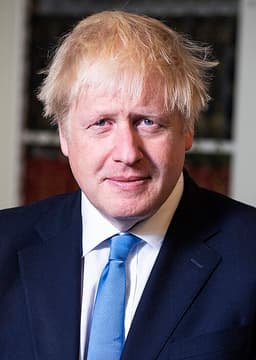
Boris Johnson
Politician · Modern
51.6Total

Francisco de Quevedo
Politician · Modern
50.5Total
Basic Information
Born
1964
1580
Died
—
1645
Era
Modern
Modern
Nationality
United Kingdom
Spain
Occupation
Politician
Politician
Civilization
Western
Western
Score Comparison
Military (10%)
49.2
50.0
Political (20%)
43.7
27.9
Influence (20%)
55.0
72.0
Legacy (20%)
49.2
52.0
Leadership (15%)
65.7
41.5
Strategy (15%)
41.9
41.2
TOTAL
51.6
50.5
Boris Johnson — Complete Timeline
2008 AD
Elected Mayor of LondonPolitical Action◆ Major
Johnson was elected as the Conservative Mayor of London, defeating incumbent Ken Livingstone. He served two terms until 2016, overseeing the 2012 Olympic Games and introducing the New Routemaster bus.
London MayoraltyConservative Party
Impact: regional
2016 AD
Appointed Foreign SecretaryPolitical Action◆ Major
Prime Minister Theresa May appointed Johnson as Foreign Secretary, a role he held until July 2018. His tenure was marked by controversial statements and the resignation of his aide over a diplomatic incident with Iran.
CabinetForeign Office
Impact: national
2019 AD
Elected Prime MinisterPolitical Action
Johnson won the Conservative Party leadership election, succeeding Theresa May as Prime Minister. He promised to deliver Brexit by October 31, 2019, and formed a government with a mandate to leave the EU.
Prime MinisterBrexit
Impact: national
2020 AD
Delivered BrexitPolitical Action
Johnson oversaw the UK's formal departure from the European Union on January 31, 2020, following the ratification of the Withdrawal Agreement. This ended 47 years of EU membership and initiated a transition period.
BrexitEUReferendum
Impact: global
COVID-19 Pandemic ResponsePolitical Action◆ Major
Johnson led the UK government's response to the COVID-19 pandemic, including national lockdowns and a vaccination program. He was hospitalized with COVID-19 in April 2020. The response faced criticism over timing and deaths.
COVID-19Public Health
Impact: national
2022 AD
Resigned as Prime MinisterPolitical Action◆ Major
Johnson announced his resignation as Prime Minister following a series of ministerial resignations and the Partygate scandal. He remained in office until a successor was chosen, ending his tenure in September 2022.
ResignationScandal
Impact: national
Francisco de Quevedo — Complete Timeline
1626 AD
Publication of 'El Buscón'Cultural◆ Major
Francisco de Quevedo published his picaresque novel 'Historia de la vida del Busc
LiteraturePicaresqueSatire
Impact: globalconstructive
1627 AD
Publication of 'Sueños y discursos'Cultural◆ Major
Quevedo published 'Sue
LiteratureSatireCensorship
Impact: nationalconstructive
1632 AD
Appointment as secretary to the kingPolitical Action
Quevedo was appointed secretary to King Philip IV, a position that gave him influence at court. However, his political career was marked by conflicts and rivalries, particularly with the powerful Count-Duke of Olivares.
AppointmentCourtPolitics
Impact: national
1639 AD
Imprisonment in the convent of San MarcosPolitical Action◆ Major
Quevedo was arrested and imprisoned in the convent of San Marcos in Le
ImprisonmentCensorshipOlivares
Impact: nationaldestructive
Expert Analysis
Origins
Boris Johnson (born June 19, 1964, in New York City) is the son of Stanley Johnson, a British writer and environmentalist, and Charlotte Fawcett, an artist. He attended the European School in Brussels and then Eton College, followed by Balliol College, Oxford, where he read Classics. His early life was marked by privilege and a cosmopolitan upbringing. Johnson's early career included journalism at The Times (from which he was fired for fabricating a quote) and later at The Daily Telegraph as a Brussels correspondent, where his Eurosceptic columns gained attention.
Francisco de Quevedo (born September 14, 1580, in Madrid) came from a family of minor nobility; his father was secretary to Princess Maria of Spain, and his mother was a lady-in-waiting. He studied at the University of Alcalá de Henares and later at the University of Valladolid, mastering classical languages, philosophy, and theology. Quevedo's early life was shaped by his family's court connections and his own intellectual precocity. He suffered from poor health and was nearsighted, but his sharp wit and learning were evident from a young age.
Rise to Power
Johnson's political rise began with his election as MP for Henley in 2001. He gained prominence as a charismatic and controversial figure, often making gaffes. In 2008, he was elected Mayor of London (scoring 65.7 in leadership), defeating Ken Livingstone. His tenure included overseeing the successful 2012 Olympics. In 2016, he campaigned for Brexit and was appointed Foreign Secretary by Theresa May, but resigned in 2018 over disagreements with May's Brexit plan. Johnson succeeded May as Prime Minister in July 2019 after winning the Conservative leadership election, promising to deliver Brexit by October 31, 2019.
Quevedo's rise came through his literary talent and patronage. He became a protégé of the Duke of Osuna, who served as Viceroy of Naples. Quevedo acted as his secretary and was involved in political intrigues. His satirical works, such as 'Sueños y discursos' (1605), brought him fame and notoriety. In 1632, he was appointed secretary to King Philip IV, a position he held for several years. However, his sharp tongue and involvement in court rivalries led to conflicts, culminating in his arrest in 1639 for writing satirical verses against the Count-Duke of Olivares.
Leadership & Governance
Johnson's leadership style was populist and confrontational, relying on charisma and media savvy. As Prime Minister, he prioritized Brexit, pushing through the Withdrawal Agreement and leading the UK out of the EU on January 31, 2020. His governance was marked by a focus on 'levelling up' and infrastructure, but also by controversies over COVID-19 response (including his own hospitalization) and partygate scandals. Johnson's political score of 43.7 reflects mixed effectiveness.
Quevedo's governance was indirect, as a courtier and writer. His influence (scoring 72.0) came through his pen, satirizing corruption and hypocrisy. He served as a secretary, but his political career was limited by his abrasive personality. He was imprisoned for over three years (1639-1643) in the convent of San Marcos, a period that curtailed his political activity. Unlike Johnson, Quevedo held no executive power but shaped public opinion through literature.
Triumph & Tragedy
Johnson's greatest triumph was delivering Brexit, fulfilling a promise that had eluded his predecessor. He also oversaw a rapid COVID-19 vaccination rollout. However, his tragedies include the high death toll during the pandemic and the subsequent partygate scandal that led to his resignation in July 2022. His legacy is tarnished by accusations of dishonesty and ethical lapses.
Quevedo's triumph lies in his literary masterpieces: 'El Buscón' (1626) and 'Sueños y discursos' are considered pinnacles of Spanish Golden Age satire. His poetry and prose influenced generations. His tragedy was his imprisonment and the suppression of his works; he died in 1645 shortly after his release, impoverished and disillusioned. His political ambitions were largely unfulfilled.
Character & Destiny
Johnson was an ambitious, risk-taking populist, often described as a 'buffoon' or 'chancer' by critics. His decision-making was impulsive, as seen in his Brexit campaign and handling of COVID-19. His character led to both his rise and fall: his charm won him power, but his lack of discipline led to scandals. Historical assessments are polarized: some see him as a transformative figure, others as a destructive force.
Quevedo was a bitter, cynical intellectual, fiercely proud and combative. His satire reflected a deep pessimism about human nature. His character—arrogant and tactless—made him enemies at court, leading to his downfall. He is remembered as a brilliant but flawed genius, whose literary output far exceeded his political achievements.
Legacy
Johnson's legacy is tied to Brexit, the most significant UK constitutional change since the 19th century. He also reshaped the Conservative Party, making it more populist and Eurosceptic. However, his long-term impact is uncertain; Brexit's consequences are still unfolding. His leadership score of 65.7 and legacy score of 49.2 reflect a divisive figure.
Quevedo's legacy is secure in Spanish literature. His influence score of 72.0 underscores his impact on satire, poetry, and prose. He is studied worldwide as a master of the Spanish language. His political legacy is minor, but his cultural footprint endures.
Conclusion
Comparing a modern politician with a 17th-century writer is challenging, but impact must be measured by scope and duration. Johnson's political actions affected millions directly and changed the UK's trajectory, but his legacy is fragile. Quevedo's literary contributions have endured for 400 years and continue to shape Spanish culture. While Johnson scores higher overall (51.6 vs 50.5), Quevedo's influence score (72.0) and lasting cultural resonance give him a more profound long-term impact. Therefore, Francisco de Quevedo had a greater impact on human history through his literary genius.
Rankings
🥇
Boris JohnsonLeader
Mil: 49.2Pol: 43.7Inf: 55.0
51.6
🥈
Francisco de Quevedo
Mil: 50.0Pol: 27.9Inf: 72.0
50.5
+1.1 behind
How This Comparison Works
Algorithm
Each figure is scored on 6 dimensions (0—100 scale) based on structured historical data: Military (10%), Political (20%), Influence (20%), Legacy (20%), Leadership (15%), Strategy (15%). The weighted total produces the final ranking.
Data Sources
Scores are computed from structured sub-indicators in the database. Scale factors adjust for era (Ancient ×0.85, Modern ×1.0) and civilization size (Eastern ×1.05, Other ×0.80) to account for differences in population and military scale.
Maximum 3 Figures
Comparisons are limited to 2—3 figures to ensure readability and statistical meaningfulness.
Error Margins
±5 points per dimension — Sub-scores are derived from historical records with inherent uncertainty. Two figures within 5 points on a dimension should be considered roughly equivalent in that area.
Total Score Accuracy
±3 points overall — The weighted combination of 6 dimensions produces a total score with approximately ±3 points of uncertainty. Differences of less than 3 points are not statistically significant— the figures are effectively tied.
Known Limitations
- Historical records are incomplete and uneven across civilizations
- Figures from oral-tradition societies may be underrepresented
- Occupation labels can misclassify multi-role figures
- Scores measure capability and impact, not moral character
- Quantitative scoring is a comparison tool, not absolute truth
Capability Radar
Military (10%) — Battles & Warfare
Battles
31
28
Win Rate
30
31
Expansion
35
35
Political (20%) — Governance & Reform
Reform
40
15
Diplomacy
35
25
Economy
30
10
Influence (20%) — Cultural & Global Reach
Cultural
50
70
Global
55
55
Legacy (20%) — Historical Impact
Historical
55
65
Longevity
30
60
Leadership (15%) — Power & Stability
Tenure
45
20
Stability
20
10
Strategy (15%) — Tactics & Innovation
Strategy
39
36
Tactics
41
41
Reform
41
41
Similar Comparisons
Comments & Discussion
No comments yet. Be the first to share your thoughts!