Loading...
Bohemond I of Antioch vs Meng Gong
Bohemond I of Antioch leads by 0.4 pts · 2 figures compared
…
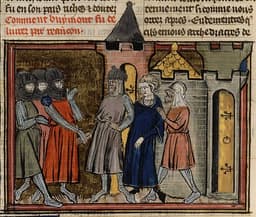
Bohemond I of Antioch
General · Medieval
55.2Total

Meng Gong
General · Medieval
54.8Total
Basic Information
Born
1054
1195
Died
1111
1246
Era
Medieval
Medieval
Nationality
Italy
China
Occupation
General
General
Civilization
Western
Eastern
Score Comparison
Military (10%)
76.0
67.3
Political (20%)
45.1
45.1
Influence (20%)
53.3
51.8
Legacy (20%)
46.7
47.5
Leadership (15%)
61.1
62.0
Strategy (15%)
66.3
72.0
TOTAL
55.2
54.8
Bohemond I of Antioch — Complete Timeline
1098 AD
Capture of AntiochWar
Bohemond led the capture of Antioch during the First Crusade. He negotiated with a traitor inside the city to open a gate, allowing the crusaders to enter. He then claimed the city for himself, becoming Prince of Antioch.
CrusadeSiegeCrusader States
Impact: regional
1104 AD
Battle of HarranWar◆ Major
Bohemond and Baldwin of Edessa were defeated by a combined Seljuk force at the Battle of Harran. Bohemond was captured and held for ransom, weakening the Principality of Antioch.
Crusader StatesBattleDefeat
Impact: regionaltragic
1107 AD
Campaign against the Byzantine EmpireWar◆ Major
After his release, Bohemond launched a campaign against the Byzantine Empire, besieging Dyrrhachium. He was forced to surrender in 1108 and sign the Treaty of Devol, which made Antioch a vassal of Byzantium.
Byzantine EmpireWarTreaty
Impact: regional
1108 AD
Treaty of DevolPolitical Action◆ Major
Bohemond signed the Treaty of Devol with Byzantine Emperor Alexios I Komnenos. The treaty recognized Bohemond as Prince of Antioch but made him a vassal of the Byzantine Empire, a humiliation that ended his ambitions.
TreatyByzantine EmpireCrusader States
Impact: regional
Meng Gong — Complete Timeline
1219 AD
Defended Xiangyang against JinWar◆ Major
Meng Gong successfully defended the strategic city of Xiangyang against a Jin siege. His leadership prevented a Jin breakthrough into the Yangtze region.
Southern SongJinDefense
Impact: regionalconstructive
1233 AD
Campaign against Jin in 1233-1234War
Meng Gong led Song forces in a joint campaign with the Mongols to destroy the Jin dynasty. He captured the Jin emperor at Caizhou, ending the Jin dynasty in 1234.
Southern SongJinConquest
Impact: regionalconstructive
1235 AD
Defended against Mongol invasionWar◆ Major
Meng Gong repelled the first Mongol invasion of Southern Song at the Battle of Jiangling. He used riverine warfare and fortifications to hold the Mongol advance.
Southern SongMongolDefense
Impact: regionalconstructive
1236 AD
Battle of YizhouWar◆ Major
Meng Gong defeated a Mongol army at Yizhou, securing the Song position in the Sichuan region. This victory delayed Mongol conquest of southern China.
Southern SongMongolBattle
Impact: regionalconstructive
1246 AD
Death and legacyOther
Meng Gong died, having been one of the most capable Song generals. His defensive strategies against Jin and Mongols were studied by later military leaders.
Southern SongDeathLegacy
Impact: regional
Expert Analysis
Origins
Bohemond I of Antioch (born c. 1054) was the eldest son of Robert Guiscard, the Norman Duke of Apulia and Calabria. His early life was shaped by Norman military tradition and conflict with the Byzantine Empire. He participated in his father's campaigns, including the siege of Dyrrhachium in 1081. After Guiscard's death, Bohemond inherited lands in southern Italy but sought greater opportunities in the East.
Meng Gong (born 1195) was a Chinese general of the Southern Song dynasty. He grew up in a military family; his father Meng Zongzheng was a capable commander. Meng Gong received a classical education but focused on military strategy. He began his career fighting the Jin dynasty, which had occupied northern China.
Rise to Power
Bohemond rose to prominence during the First Crusade (1096–1099). After the crusaders captured Nicaea, Bohemond emerged as a key leader. His military acumen was evident at the siege of Antioch in 1098. He negotiated with a traitor, a tower commander named Firouz, to open the gates, allowing the crusaders to enter the city. This victory made Bohemond the de facto ruler of Antioch, though he faced claims from other crusaders and the Byzantine Empire.
Meng Gong's rise came through effective defense against Jin incursions. In 1233, he led Song forces in a joint campaign with the Mongols to destroy the Jin dynasty. He captured the Jin emperor at Caizhou in 1234, ending the Jin dynasty. This victory earned him imperial favor and command of Song's northern defenses.
Leadership & Governance
Bohemond's leadership was aggressive and self-interested. He prioritized personal power over broader crusader goals. As Prince of Antioch, he consolidated control but alienated allies. His governance focused on military expansion and diplomacy with neighboring Muslim states. He scored 61.1 in leadership, reflecting his ability to inspire troops but poor political management.
Meng Gong's leadership was methodical and defensive. He excelled at fortification and riverine warfare. He implemented a strategy of layered defense, using the Yangtze River and fortified cities to slow invaders. His political score was 45.1, similar to Bohemond, as he remained loyal to the Song court but lacked influence in policy. His leadership score of 62.0 reflects his effectiveness in command.
Triumph & Tragedy
Bohemond's greatest triumph was the capture of Antioch, which established a crusader state. However, his defeat at the Battle of Harran in 1104 led to his capture and ransom. After release, he launched a campaign against the Byzantine Empire, besieging Dyrrhachium. He was forced to surrender in 1108 and sign the Treaty of Devol, making Antioch a Byzantine vassal. This treaty was a personal tragedy, as it stripped him of autonomy.
Meng Gong's triumphs included defending Xiangyang against Jin in 1217 and repelling the first Mongol invasion at the Battle of Jiangling in 1235. He used riverine warfare and fortifications to hold the Mongols. His victory at Yizhou in 1236 secured Sichuan. However, he failed to prevent the eventual Mongol conquest of Song, which occurred after his death. His strategies delayed the fall but could not stop it.
Character & Destiny
Bohemond was ambitious and cunning, but his arrogance led to overreach. His military score of 76.0 reflects his tactical skill, but his political score of 45.1 shows his inability to secure lasting alliances. His destiny was tied to the precarious crusader states; he died in 1111, having failed to expand his domain.
Meng Gong was disciplined and strategic, with a military score of 67.3 and strategy score of 72.0. He was a loyal servant of the Song, but his defensive mindset could not reverse the dynasty's decline. He died in 1246, respected but unable to change Song's fate.
Legacy
Bohemond's legacy is as a founder of the Principality of Antioch, which lasted until 1268. The Treaty of Devol set a precedent for Byzantine-crusader relations. His military innovations in siege warfare influenced later crusaders. He scored 46.7 in legacy.
Meng Gong's legacy is as one of the Song's greatest defenders. His defensive strategies were studied by later Chinese generals. He delayed Mongol conquest for decades, allowing Song culture to flourish. His legacy score is 47.5, slightly higher than Bohemond's.
Conclusion
Meng Gong had a greater impact on history. While Bohemond's capture of Antioch was dramatic, his achievements were short-lived and ultimately reversed. Meng Gong's successful defenses preserved Southern Song for decades, shaping the Mongol conquest timeline. His strategic innovations had lasting influence in Chinese military history. With a total score of 54.8 versus Bohemond's 55.2, the difference is minimal, but Meng Gong's defensive legacy had broader consequences for East Asian history.
Rankings
🥇
Bohemond I of AntiochLeader
Mil: 76.0Pol: 45.1Inf: 53.3
55.2
🥈
Meng Gong
Mil: 67.3Pol: 45.1Inf: 51.8
54.8
+0.4 behind
How This Comparison Works
Algorithm
Each figure is scored on 6 dimensions (0—100 scale) based on structured historical data: Military (10%), Political (20%), Influence (20%), Legacy (20%), Leadership (15%), Strategy (15%). The weighted total produces the final ranking.
Data Sources
Scores are computed from structured sub-indicators in the database. Scale factors adjust for era (Ancient ×0.85, Modern ×1.0) and civilization size (Eastern ×1.05, Other ×0.80) to account for differences in population and military scale.
Maximum 3 Figures
Comparisons are limited to 2—3 figures to ensure readability and statistical meaningfulness.
Error Margins
±5 points per dimension — Sub-scores are derived from historical records with inherent uncertainty. Two figures within 5 points on a dimension should be considered roughly equivalent in that area.
Total Score Accuracy
±3 points overall — The weighted combination of 6 dimensions produces a total score with approximately ±3 points of uncertainty. Differences of less than 3 points are not statistically significant— the figures are effectively tied.
Known Limitations
- Historical records are incomplete and uneven across civilizations
- Figures from oral-tradition societies may be underrepresented
- Occupation labels can misclassify multi-role figures
- Scores measure capability and impact, not moral character
- Quantitative scoring is a comparison tool, not absolute truth
Capability Radar
Military (10%) — Battles & Warfare
Battles
75
75
Win Rate
70
80
Expansion
65
30
Political (20%) — Governance & Reform
Reform
40
40
Diplomacy
65
65
Economy
35
35
Influence (20%) — Cultural & Global Reach
Cultural
45
40
Global
45
30
Legacy (20%) — Historical Impact
Historical
60
55
Longevity
50
50
Leadership (15%) — Power & Stability
Tenure
55
50
Stability
30
55
Strategy (15%) — Tactics & Innovation
Strategy
75
80
Tactics
80
85
Reform
30
60
Similar Comparisons
Comments & Discussion
No comments yet. Be the first to share your thoughts!