Loading...
This comparison has not been analyzed yet.
One-time AI generation (~1 minute). Scores and timeline are already available below.
Bodawpaya vs Frederick Francis IV
Bodawpaya leads by 19.3 pts · 2 figures compared
…

Bodawpaya
Emperor · Modern
60.0Total
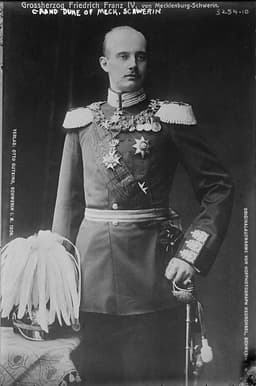
Frederick Francis IV
Emperor · Modern
40.7Total
Basic Information
Born
1745
1882
Died
1819
1945
Era
Modern
Modern
Nationality
Myanmar
Mecklenburg
Occupation
Emperor
Emperor
Civilization
Eastern
Western
Score Comparison
Military (10%)
67.5
21.1
Political (20%)
68.0
30.8
Influence (20%)
56.4
45.5
Legacy (20%)
45.8
33.3
Leadership (15%)
80.0
55.3
Strategy (15%)
55.0
60.0
TOTAL
60.0
40.7
Bodawpaya — Complete Timeline
1785 AD
Invasion of Siam (1785-1786)War◆ Major
Bodawpaya launched a massive invasion of Siam with nine armies totaling over 140,000 men. The campaign aimed to conquer the newly established Rattanakosin kingdom. However, the invasion was repelled by Siamese forces under King Rama I, marking a major defeat.
Burmese-Siamese WarInvasionDefeat
Impact: regional
Annexation of ArakanWar◆ Major
Bodawpaya's forces conquered the kingdom of Arakan (Rakhine) on the western coast of Burma. The annexation brought the region under Konbaung control and led to the flight of many Arakanese refugees into British India, creating tensions with the British East India Company.
ArakanConquestBurma
Impact: regional
1790 AD
Construction of the Mingun PahtodawgyiCultural
Bodawpaya began construction of the Mingun Pahtodawgyi, a massive unfinished stupa near Mandalay. The project was abandoned after a prophecy that its completion would bring disaster. The structure remains the largest pile of bricks in the world.
Mingun PahtodawgyiArchitectureBurma
1808 AD
Construction of the Mingun BellCultural◆ Major
Bodawpaya commissioned the casting of the Mingun Bell, the largest functioning bell in the world at the time. Weighing over 90 tons, it was intended for a massive pagoda at Mingun. The bell remains a major historical artifact and tourist attraction.
Mingun BellArtBurma
Impact: nationalconstructive
Frederick Francis IV — Complete Timeline
1897 AD
Accession as Grand Duke of Mecklenburg-SchwerinPolitical Action◆ Major
Frederick Francis IV became Grand Duke of Mecklenburg-Schwerin on 10 April 1897, succeeding his father Frederick Francis III. He ruled as a minor until 1901 under a regency.
Mecklenburg-SchwerinSuccession
Impact: national
1918 AD
World War I abdicationPolitical Action
On 14 November 1918, during the German Revolution, Frederick Francis IV abdicated the throne of Mecklenburg-Schwerin. He was the last grand duke, and his abdication ended the House of Mecklenburg-Schwerin's rule.
German RevolutionEnd of monarchyMecklenburg
Impact: nationaltragic
1945 AD
Death in exileOther
Frederick Francis IV died on 17 November 1945 at Flensburg, Germany, shortly after the end of World War II. He had lived in retirement since his abdication.
DeathExile
This comparison has not been analyzed yet.
One-time AI generation (~1 minute). Scores and timeline are already available below.
Rankings
🥇
BodawpayaLeader
Mil: 67.5Pol: 68.0Inf: 56.4
60.0
🥈
Frederick Francis IV
Mil: 21.1Pol: 30.8Inf: 45.5
40.7
+19.3 behind
How This Comparison Works
Algorithm
Each figure is scored on 6 dimensions (0—100 scale) based on structured historical data: Military (10%), Political (20%), Influence (20%), Legacy (20%), Leadership (15%), Strategy (15%). The weighted total produces the final ranking.
Data Sources
Scores are computed from structured sub-indicators in the database. Scale factors adjust for era (Ancient ×0.85, Modern ×1.0) and civilization size (Eastern ×1.05, Other ×0.80) to account for differences in population and military scale.
Maximum 3 Figures
Comparisons are limited to 2—3 figures to ensure readability and statistical meaningfulness.
Error Margins
±5 points per dimension — Sub-scores are derived from historical records with inherent uncertainty. Two figures within 5 points on a dimension should be considered roughly equivalent in that area.
Total Score Accuracy
±3 points overall — The weighted combination of 6 dimensions produces a total score with approximately ±3 points of uncertainty. Differences of less than 3 points are not statistically significant— the figures are effectively tied.
Known Limitations
- Historical records are incomplete and uneven across civilizations
- Figures from oral-tradition societies may be underrepresented
- Occupation labels can misclassify multi-role figures
- Scores measure capability and impact, not moral character
- Quantitative scoring is a comparison tool, not absolute truth
Capability Radar
Military (10%) — Battles & Warfare
Battles
65
35
Win Rate
55
41
Expansion
70
41
Political (20%) — Governance & Reform
Reform
45
10
Diplomacy
50
20
Economy
55
15
Influence (20%) — Cultural & Global Reach
Cultural
50
5
Global
30
5
Legacy (20%) — Historical Impact
Historical
45
5
Longevity
40
5
Leadership (15%) — Power & Stability
Tenure
75
30
Stability
60
20
Strategy (15%) — Tactics & Innovation
Strategy
60
43
Tactics
50
47
Reform
40
53
Similar Comparisons
Comments & Discussion
No comments yet. Be the first to share your thoughts!