Loading...
Bhoja vs Yekuno Amlak
Bhoja leads by 2.6 pts · 2 figures compared
…
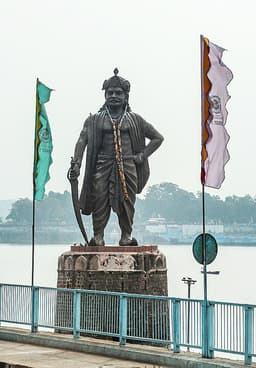
Bhoja
Emperor · Medieval
55.9Total
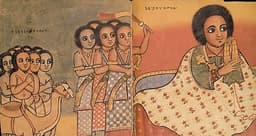
Yekuno Amlak
Emperor · Medieval
53.3Total
Basic Information
Born
1010
1240
Died
1055
1285
Era
Medieval
Medieval
Nationality
India
Ethiopia
Occupation
Emperor
Emperor
Civilization
Indian
Other
Score Comparison
Military (10%)
50.0
40.0
Political (20%)
53.8
46.6
Influence (20%)
58.3
59.0
Legacy (20%)
58.0
54.0
Leadership (15%)
53.2
64.0
Strategy (15%)
57.5
45.0
TOTAL
55.9
53.3
Bhoja — Complete Timeline
1030 AD
Patronage of the University of DharaCultural
Bhoja patronized the university at Dhara, his capital, attracting scholars from across India. He established a library and supported studies in grammar, philosophy, and astronomy. This made Dhara a major center of learning.
EducationPatronageScholarship
Impact: regionalconstructive
1040 AD
Composition of the Samarangana SutradharaCultural◆ Major
Bhoja wrote the Samarangana Sutradhara, a comprehensive treatise on architecture and engineering. The text covers temple construction, town planning, and mechanical devices. It became a foundational work in Indian architectural theory.
ArchitectureEngineeringScholarship
Impact: regionalconstructive
1042 AD
Defeat by the Chaulukya King Bhima IWar◆ Major
Bhoja's army was defeated by the Chaulukya king Bhima I of Gujarat in a battle near the Narmada River. This loss halted Paramara expansion westward and forced Bhoja to pay tribute. It marked a significant setback for his reign.
Chaulukya WarMilitary DefeatGujarat
Impact: regionaltragic
1050 AD
Construction of the Bhojeshwar TempleCultural◆ Major
Bhoja began construction of the Bhojeshwar Temple at Bhojpur, dedicated to Shiva. The temple features a massive lingam and a large dome, but was left incomplete at his death. It remains a significant example of Paramara architecture.
Temple BuildingShivaArchitecture
constructive
Yekuno Amlak — Complete Timeline
1270 AD
Restored the Solomonic dynastyPolitical Action
Yekuno Amlak overthrew the last Zagwe king, Naakueto Laab, and claimed the throne as a descendant of the biblical King Solomon and the Queen of Sheba. This restoration established the Solomonic dynasty that ruled Ethiopia for centuries.
Solomonic restorationDynastic changeEthiopian monarchy
Impact: regionalconstructive
Expert Analysis
Origins
Bhoja, born around 1000 CE, was a Paramara king of Malwa in central India. His father, Sindhuraja, was a successful ruler, but Bhoja's early life is obscure. He received a thorough education in Sanskrit, statecraft, and the sciences, which later shaped his scholarly pursuits. Yekuno Amlak, born around 1240 CE, was an Ethiopian noble from the Amhara region. He claimed descent from the Solomonic line, which had been displaced by the Zagwe dynasty. His early life involved navigating the political landscape of Zagwe rule, and he gained support from monastic factions and local lords.
Rise to Power
Bhoja ascended the Paramara throne around 1010 CE after his father's death. He expanded his kingdom through campaigns against the Chalukyas of Kalyani and the Ghaznavids, but his greatest challenge came from the Chaulukya king Bhima I. In a battle near the Narmada River, Bhoja's forces were defeated, halting Paramara expansion westward. Despite this, he maintained control over Malwa and fostered cultural growth. Yekuno Amlak's rise was a rebellion against the Zagwe king Naakueto Laab. Around 1270 CE, with support from the Ethiopian Orthodox Church and the region of Shewa, he overthrew the Zagwe and claimed the throne. He justified his reign by asserting descent from King Solomon and the Queen of Sheba, a powerful ideological move.
Leadership & Governance
Bhoja governed as a philosopher-king, deeply involved in administration and law. He compiled the 'Bhoja Prabandha' and other works, and his court at Dhara became a center of learning. He established a library and supported scholars, earning a score of 53.8 in political governance. However, his military score of 50.0 reflects the limits of his territorial control. Yekuno Amlak focused on consolidating power and restoring the Solomonic dynasty. He centralized authority, reduced the influence of regional lords, and strengthened the church. His leadership score of 64.0 indicates effective governance, but his political score of 46.6 shows challenges in maintaining stability.
Triumph & Tragedy
Bhoja's greatest triumph was his intellectual legacy. He wrote the Samarangana Sutradhara, a comprehensive treatise on architecture and engineering, covering temple construction and town planning. He also began the Bhojeshwar Temple, featuring a massive lingam, though it remained incomplete. His tragedy was his defeat by Bhima I, which ended Paramara expansion and exposed his military vulnerabilities. Yekuno Amlak's triumph was restoring the Solomonic dynasty, which lasted until 1974. He successfully overthrew the Zagwe and established a new ruling line. His tragedy was the constant rebellions and internal strife that plagued his reign; he struggled to maintain unity among the nobility.
Character & Destiny
Bhoja was a scholar-king, more interested in learning than conquest. His decision to focus on culture over military strength led to his downfall against Bhima I. Historians note his intellectual curiosity but criticize his strategic oversight. Yekuno Amlak was a pragmatic leader who used religion and lineage to legitimize his rule. His character was determined and politically astute, but his reliance on the church and nobility created factions. His destiny was to found a dynasty that would shape Ethiopia for centuries.
Legacy
Bhoja's legacy is cultural. His works on architecture influenced Indian temple design, and his patronage of the University of Dhara attracted scholars. The Bhojeshwar Temple remains a testament to his ambition. He scored 58.3 in influence and 58.0 in legacy. Yekuno Amlak's legacy is political: he restored a dynasty that claimed divine right and ruled for over 700 years. His actions shaped Ethiopian identity and history. His influence score is 59.0, and legacy 54.0.
Conclusion
While Bhoja's intellectual contributions are significant, Yekuno Amlak's impact on the course of Ethiopian history is more profound. Bhoja's military and political limitations (total score 55.9) prevented lasting territorial gains, whereas Yekuno Amlak (total score 53.3) established a dynasty that endured. However, in terms of cultural legacy, Bhoja's writings have influenced generations. Overall, Yekuno Amlak's restoration of the Solomonic line had greater historical impact, as it defined Ethiopia's monarchy for centuries. Thus, Yekuno Amlak edges ahead in impact, despite a lower total score.
Rankings
🥇
BhojaLeader
Mil: 50.0Pol: 53.8Inf: 58.3
55.9
🥈
Yekuno Amlak
Mil: 40.0Pol: 46.6Inf: 59.0
53.3
+2.6 behind
How This Comparison Works
Algorithm
Each figure is scored on 6 dimensions (0—100 scale) based on structured historical data: Military (10%), Political (20%), Influence (20%), Legacy (20%), Leadership (15%), Strategy (15%). The weighted total produces the final ranking.
Data Sources
Scores are computed from structured sub-indicators in the database. Scale factors adjust for era (Ancient ×0.85, Modern ×1.0) and civilization size (Eastern ×1.05, Other ×0.80) to account for differences in population and military scale.
Maximum 3 Figures
Comparisons are limited to 2—3 figures to ensure readability and statistical meaningfulness.
Error Margins
±5 points per dimension — Sub-scores are derived from historical records with inherent uncertainty. Two figures within 5 points on a dimension should be considered roughly equivalent in that area.
Total Score Accuracy
±3 points overall — The weighted combination of 6 dimensions produces a total score with approximately ±3 points of uncertainty. Differences of less than 3 points are not statistically significant— the figures are effectively tied.
Known Limitations
- Historical records are incomplete and uneven across civilizations
- Figures from oral-tradition societies may be underrepresented
- Occupation labels can misclassify multi-role figures
- Scores measure capability and impact, not moral character
- Quantitative scoring is a comparison tool, not absolute truth
Capability Radar
Military (10%) — Battles & Warfare
Battles
45
30
Win Rate
50
40
Expansion
45
40
Political (20%) — Governance & Reform
Reform
65
50
Diplomacy
55
45
Economy
70
35
Influence (20%) — Cultural & Global Reach
Cultural
70
55
Global
40
30
Legacy (20%) — Historical Impact
Historical
65
60
Longevity
60
55
Leadership (15%) — Power & Stability
Tenure
60
55
Stability
60
40
Strategy (15%) — Tactics & Innovation
Strategy
50
35
Tactics
55
30
Reform
40
25
Similar Comparisons
Comments & Discussion
No comments yet. Be the first to share your thoughts!