Loading...
Berke vs Julius Caesar
Julius Caesar leads by 14.4 pts · 2 figures compared
…
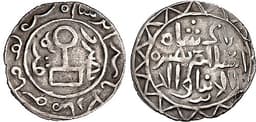
Berke
Emperor · Medieval
68.4Total

Julius Caesar
General · Ancient
82.8Total
Basic Information
Born
1209
-100
Died
1266
-44
Era
Medieval
Ancient
Nationality
Golden Horde
Roman Republic
Occupation
Emperor
General
Civilization
Eastern
Western
Score Comparison
Military (10%)
74.7
88.0
Political (20%)
57.0
78.0
Influence (20%)
68.0
85.0
Legacy (20%)
72.0
82.0
Leadership (15%)
72.0
80.0
Strategy (15%)
66.3
85.0
TOTAL
68.4
82.8
Berke — Complete Timeline
1257 AD
Conversion to IslamCultural
Berke converted to Islam, becoming the first Mongol ruler to adopt the faith. This decision created a religious divide within the Mongol Empire, aligning Berke with the Mamluk Sultanate and against the Ilkhanate, which remained Buddhist and Christian.
ReligionMongol EmpireIslam
Impact: regionalconstructive
1259 AD
Raid on Poland and HungaryWar
Under Berke's command, the Golden Horde launched a major raid into Poland and Hungary, led by general Burundai. The Mongols sacked Sandomierz and Krak
Mongol InvasionEastern EuropeRaid
Impact: regionaldestructive
1261 AD
Alliance with the MamluksPolitical Action◆ Major
Berke formed a diplomatic and military alliance with the Mamluk Sultan Baibars against the Ilkhanate. This alliance included trade agreements and joint military planning, and it helped the Mamluks resist Mongol invasions of Syria.
DiplomacyMamluk SultanateAnti-Ilkhanate
Impact: regionalconstructive
1262 AD
Berke–Hulagu WarWar◆ Major
Berke initiated war against his cousin Hulagu, ruler of the Ilkhanate, after Hulagu's sack of Baghdad and the execution of the Abbasid caliph. Berke allied with the Mamluks, leading to battles in the Caucasus that weakened both Mongol states.
Mongol Civil WarCaucasusMamluk Alliance
Impact: regionaldestructive
Julius Caesar — Complete Timeline
58 BC
Gallic WarsWar◆ Major
Caesar, as proconsul of Gaul, launched a series of campaigns that conquered all of Gaul (modern France, Belgium, and parts of Switzerland). He fought numerous battles, including against the Helvetii, the Belgae, and the Gallic chieftain Vercingetorix. The wars brought immense wealth and a loyal army to Caesar.
Gallic WarsConquestRoman Expansion
Impact: regional
49 BC
Crossing the RubiconPolitical Action◆ Major
Caesar led Legio XIII across the Rubicon River into Italy, defying the Roman Senate's order to disband his army. This act triggered a civil war against Pompey and the Optimates, ultimately leading to Caesar's dictatorship and the end of the Roman Republic.
Roman Civil WarEnd of RepublicPower Struggle
Impact: global
48 BC
Battle of PharsalusWar◆ Major
Caesar's outnumbered army defeated the larger forces of Pompey the Great at Pharsalus in Greece. Caesar's tactical use of a reserve line to counter Pompey's cavalry charge proved decisive. Pompey fled to Egypt, where he was assassinated, leaving Caesar as the undisputed master of the Roman world.
Roman Civil WarBattleDecisive Victory
Impact: regional
44 BC
Appointment as Dictator for LifePolitical Action◆ Major
The Roman Senate appointed Caesar dictator perpetuo (dictator for life), granting him unprecedented personal power. This move concentrated military, legislative, and judicial authority in one person, effectively ending the Roman Republic's traditional system of checks and balances and alarming many senators.
DictatorshipEnd of RepublicPower Consolidation
Impact: regionaldestructive
Assassination on the Ides of MarchPolitical Action◆ Major
A group of Roman senators, led by Marcus Junius Brutus and Gaius Cassius Longinus, stabbed Caesar to death at a meeting of the Senate in the Theatre of Pompey. The assassination was intended to restore the Republic, but instead triggered another civil war that led to the rise of the Roman Empire.
AssassinationRoman PoliticsEnd of Republic
Impact: globaldestructive
Expert Analysis
berke-vs-julius-caesar
### The Rubicon and the Silk Road
In the winter of 1262, on the frozen steppes north of the Caucasus, two Mongol armies clashed in a war that would reshape the Islamic world. On one side rode Berke, Khan of the Golden Horde, a man who had converted to Islam and now fought his own cousin, Hulagu, whose Ilkhanate had just sacked Baghdad and murdered the Caliph. Across the Mediterranean, more than thirteen centuries earlier, a different kind of crossing had occurred. Julius Caesar, standing on the banks of a small Italian river, uttered a phrase that would echo through history: *Alea iacta est* — the die is cast. He led his legions across the Rubicon, plunging the Roman Republic into civil war. Two men, two rivers, two worlds. What drives a leader to break with the past? And what determines whether that break builds an empire or shatters a civilization?
### Origins
Julius Caesar was born into the chaos of the late Roman Republic, a world of senatorial intrigue, slave revolts, and the ghost of a fading aristocratic order. His family, the Julii, claimed descent from the goddess Venus, but their political fortunes had waned. Caesar’s youth was marked by the civil wars of Marius and Sulla, where he learned that survival meant choosing sides carefully. He fled Rome, served in the east, and returned to build a reputation through oratory, lavish games, and calculated alliances. His world was one of marble and law, where power flowed through the Senate and the Forum.
Berke, by contrast, was born into the Mongol Empire in 1209, a world of felt tents, horse archers, and the absolute rule of Genghis Khan. He grew up not in a city but on the open steppe, where loyalty was to the bloodline and the *yassa* — the Mongol legal code — was the only law. His early years were spent in the shadow of his grandfather’s conquests, learning that the world was a vast, flat plain waiting to be ridden across. There were no senators to persuade, no votes to win. Power was proven by the sword, and the only question was whose sword was sharper.
### Rise to Power
Caesar’s rise was a masterpiece of political theater. He climbed the *cursus honorum* — the ladder of Roman offices — through a combination of military command, popular reforms, and a shrewd alliance with the powerful Crassus and Pompey. His conquest of Gaul between 58 and 50 BCE was not merely a war; it was a nine-year campaign of brutal efficiency that brought him immense wealth, a loyal army, and a reputation as Rome’s greatest general. Yet his path to sole power was blocked by the Senate, which feared his ambition. The Rubicon crossing in 49 BCE was his final gamble: by marching on Rome, he chose civil war over submission. He won, and within four years he was dictator for life.
Berke’s rise was different. He inherited the Golden Horde, the westernmost khanate of the Mongol Empire, after the death of his brother Batu in 1255. He did not conquer his way to power; he was born into it, the grandson of Genghis Khan. His challenge was not to seize the throne but to hold it together as the Mongol Empire fractured. The key turning point came in 1257, when Berke converted to Islam. This was not a personal whim but a political masterstroke. By embracing the faith of his subjects, he created a cultural and religious identity for the Golden Horde, setting it apart from the pagan and Buddhist Ilkhanate to the east. It was a move Caesar could never have made — Rome’s gods were political, not personal, and a conversion would have been seen as weakness.
### Leadership & Governance
Caesar governed as a reformer and a dictator. He centralized power, reformed the calendar, granted citizenship to provincials, and launched massive public works. His military genius was unmatched: he wrote his own commentaries, trained his legionaries to build bridges in days, and won battles against overwhelming odds. Yet his political wisdom was brittle. He pardoned his enemies, but he also accumulated titles — dictator perpetuo — that destroyed the Republic’s fragile balance. He ruled by charisma and fear, not by building institutions.
Berke ruled as a steppe emperor, but one who understood diplomacy. His military score (67.1) is lower than Caesar’s (88.0), but his political score (83.9) is higher. He did not lead charges; he orchestrated alliances. In 1261, he allied with the Mamluk Sultan Baibars against the Ilkhanate, a partnership that included military aid, trade, and a shared faith. In 1259, he launched a major raid into Poland and Hungary, but his true strength lay in the war of letters and envoys. He was a consolidator, not a conqueror. Where Caesar broke things to rebuild them, Berke held things together by bending them.
### Triumph & Tragedy
Caesar’s greatest triumph was the conquest of Gaul, a feat that added a vast, wealthy province to Rome and made him the richest man in the Republic. His greatest tragedy was his assassination on the Ides of March, 44 BCE, stabbed by senators he had pardoned. He died believing he was saving Rome, but his death plunged the Republic into another civil war, from which his adopted heir, Octavian, emerged as the first emperor. Caesar’s tragedy was that he could not see that his own ambition was the disease he claimed to cure.
Berke’s greatest triumph was the Berke–Hulagu War, which began in 1262. By fighting his cousin, he stopped the Ilkhanate’s westward expansion, protected the Islamic heartlands, and cemented the Golden Horde’s independence. His greatest tragedy was that the war was a family feud. The Mongol Empire, once the largest contiguous land empire in history, split into rival khanates that would never reunite. Berke died in 1266, probably in battle, leaving a divided legacy. He had saved his faith but fractured his bloodline.
### Character & Destiny
Caesar was driven by *ambitio* — the Roman hunger for glory. He was reckless, generous, and calculating. His charm was legendary, but so was his arrogance. He believed he was destined to rule, and that belief became a self-fulfilling prophecy. His personality shaped his decisions: he pardoned enemies because he thought they would love him; he crossed the Rubicon because he could not imagine losing. In the end, his character was his fate.
Berke was driven by *survival* — not personal glory, but the survival of his people and his faith. He was pragmatic, patient, and ruthless when needed. He converted to Islam not for salvation but for solidarity. He fought his cousin not out of hatred but out of necessity. His personality was shaped by the steppe: adaptable, resilient, and suspicious of grand gestures. Where Caesar sought to be remembered, Berke sought to endure.
### Legacy
Caesar’s legacy is the Roman Empire. His name became a title — *Caesar* — used by emperors for centuries, from Augustus to the Czars of Russia. His writings are still studied in military academies. His assassination is a warning about the fragility of power. He is remembered as a genius and a tyrant, a man who destroyed the Republic to save it.
Berke’s legacy is more subtle. He is remembered as the first Mongol ruler to convert to Islam, a decision that shaped the identity of the Golden Horde and eventually led to the Islamization of the Russian steppes. His alliance with the Mamluks helped preserve the Islamic world against the Mongols. Yet his name is less known in the West. He lives in the histories of the Silk Road, in the mosques of Kazan, and in the bloodlines of later khans. He is a reminder that not all great leaders conquer — some simply choose the right side of history.
### Conclusion
Caesar and Berke never met. They lived in different centuries, different worlds, under different skies. Yet both faced the same fundamental question: what do you do when the old order is dying? Caesar answered by breaking it and building a new one in his image. Berke answered by grafting the new onto the old, turning a Mongol khanate into an Islamic kingdom. One died by the sword of his peers; the other died on the battlefield against his cousin. Their differences are not just about culture or geography — they are about the very nature of power. Caesar believed power was a prize to be seized. Berke believed power was a trust to be maintained. In the end, perhaps the greatest lesson is this: the leaders who change the world are not always the ones who cross the Rubicon. Sometimes they are the ones who choose which river not to cross.
Rankings
🥇
Julius CaesarLeader
Mil: 88.0Pol: 78.0Inf: 85.0
82.8
🥈
Berke
Mil: 74.7Pol: 57.0Inf: 68.0
68.4
+14.4 behind
How This Comparison Works
Algorithm
Each figure is scored on 6 dimensions (0—100 scale) based on structured historical data: Military (10%), Political (20%), Influence (20%), Legacy (20%), Leadership (15%), Strategy (15%). The weighted total produces the final ranking.
Data Sources
Scores are computed from structured sub-indicators in the database. Scale factors adjust for era (Ancient ×0.85, Modern ×1.0) and civilization size (Eastern ×1.05, Other ×0.80) to account for differences in population and military scale.
Maximum 3 Figures
Comparisons are limited to 2—3 figures to ensure readability and statistical meaningfulness.
Error Margins
±5 points per dimension — Sub-scores are derived from historical records with inherent uncertainty. Two figures within 5 points on a dimension should be considered roughly equivalent in that area.
Total Score Accuracy
±3 points overall — The weighted combination of 6 dimensions produces a total score with approximately ±3 points of uncertainty. Differences of less than 3 points are not statistically significant— the figures are effectively tied.
Known Limitations
- Historical records are incomplete and uneven across civilizations
- Figures from oral-tradition societies may be underrepresented
- Occupation labels can misclassify multi-role figures
- Scores measure capability and impact, not moral character
- Quantitative scoring is a comparison tool, not absolute truth
Capability Radar
Military (10%) — Battles & Warfare
Battles
75
95
Win Rate
70
92
Expansion
75
97
Political (20%) — Governance & Reform
Reform
68
90
Diplomacy
80
85
Economy
65
82
Influence (20%) — Cultural & Global Reach
Cultural
65
88
Global
65
94
Legacy (20%) — Historical Impact
Historical
70
95
Longevity
60
96
Leadership (15%) — Power & Stability
Tenure
70
75
Stability
60
60
Strategy (15%) — Tactics & Innovation
Strategy
78
94
Tactics
72
96
Reform
65
88
Similar Comparisons
Comments & Discussion
No comments yet. Be the first to share your thoughts!