Loading...
Berengar I vs Urus Khan
Urus Khan leads by 0.3 pts · 2 figures compared
…
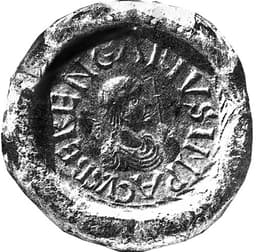
Berengar I
Emperor · Medieval
45.4Total
Urus Khan
Emperor · Medieval
45.7Total
Basic Information
Born
845
1340
Died
924
1377
Era
Medieval
Medieval
Nationality
Italy
Golden Horde
Occupation
Emperor
Emperor
Civilization
Western
Eastern
Score Comparison
Military (10%)
38.3
50.0
Political (20%)
36.5
35.1
Influence (20%)
51.0
48.6
Legacy (20%)
40.8
40.0
Leadership (15%)
58.8
48.4
Strategy (15%)
43.3
60.0
TOTAL
45.4
45.7
Berengar I — Complete Timeline
899 AD
Battle of the Brenta RiverWar◆ Major
Berengar I defeated a Magyar raiding army at the Brenta River in northern Italy. This victory temporarily halted Magyar incursions into Italy and enhanced Berengar's reputation as a defender of the kingdom, leading to his imperial coronation.
BattleMagyarsDefense
Impact: regionalconstructive
915 AD
Crowned Holy Roman EmperorPolitical Action◆ Major
Berengar I was crowned Holy Roman Emperor by Pope John X. This recognition came after his victory over the Magyars at the Battle of the Brenta River, solidifying his authority in Italy and marking the peak of his power.
Holy Roman EmpireCoronationItaly
Impact: regional
922 AD
Loss of Imperial Title to Rudolf IIPolitical Action
Berengar I was forced to recognize Rudolf II of Burgundy as King of Italy after a military defeat. This loss of control over much of northern Italy weakened his position and led to a period of dual kingship, undermining his authority.
Civil WarItalyRivalry
Impact: regionaldestructive
924 AD
Assassination of Berengar IOther◆ Major
Berengar I was assassinated in Verona by a member of his own retinue, possibly at the instigation of his rival, Rudolf II of Burgundy. His death ended his reign and plunged Italy into a period of fragmentation and civil war.
AssassinationItalySuccession Crisis
Impact: regionaltragic
Urus Khan — Complete Timeline
1376 AD
Conflict with TokhtamyshWar◆ Major
Urus Khan, ruler of the Blue Horde, fought against Tokhtamysh, a claimant to the Golden Horde throne. Tokhtamysh, supported by Tamerlane, challenged Urus Khan's authority, leading to military engagements that weakened Urus Khan's position.
Golden HordeCivil WarTokhtamysh
Impact: regionaldestructive
1377 AD
Death in battleWar◆ Major
Urus Khan died in battle against Tokhtamysh's forces. His death marked the end of his rule over the Blue Horde and allowed Tokhtamysh to consolidate power, eventually reuniting the Golden Horde under his leadership.
Golden HordeDeathTokhtamysh
Impact: regionaltragic
Expert Analysis
Origins
Berengar I was born around 845 in Friuli, Italy, into the Carolingian nobility. His father, Eberhard, was Duke of Friuli, and his mother, Gisela, was a daughter of Emperor Louis the Pious. This lineage gave Berengar a claim to the Italian throne, but also entangled him in the complex politics of post-Carolingian Europe. He grew up amid the fragmentation of the Frankish empire, learning the arts of war and diplomacy from a young age.
Urus Khan, born around 1300, was a descendant of Jochi, the eldest son of Genghis Khan. He belonged to the ruling family of the Blue Horde, a semi-independent khanate within the Golden Horde. His early life is poorly documented, but he likely received a traditional Mongol education in horsemanship, archery, and steppe warfare. His claim to power rested on his lineage and his ability to gather loyal followers.
Rise to Power
Berengar I first emerged as a major figure in 888, when he was elected King of Italy after the death of Emperor Charles the Fat. However, his rule was immediately contested by Guy III of Spoleto, who had himself crowned in 889. Berengar was defeated and forced to flee, but returned in 896 after Guy's death. He then faced challenges from Arnulf of Carinthia and Louis the Blind. In 898, he was crowned King of Italy again, but his authority remained fragile. His major breakthrough came in 915, when he led a coalition to victory over the Magyars at the Battle of the Brenta River. This victory earned him the support of Pope John X, who crowned him Holy Roman Emperor in 915. The battle was a turning point: Berengar's military score of 38.3 reflects his ability to win key battles, but his political score of 36.5 shows his struggles to maintain power.
Urus Khan rose to prominence in the 1360s as a powerful khan of the Blue Horde. He established his capital at Sygnak on the Syr Darya River and claimed sovereignty over the entire Golden Horde. His main rival was Tokhtamysh, a prince who sought the throne with the backing of the Central Asian conqueror Tamerlane. Urus Khan's political score of 35.1 indicates his inability to unite the Mongol factions. His military score of 50.0 is higher than Berengar's, but his strategy score of 60.0 shows he was a capable commander. However, he failed to eliminate Tokhtamysh decisively.
Leadership & Governance
Berengar I ruled Italy through a combination of military force and concessions to local magnates. He issued charters to churches and monasteries, granting them immunities and lands in exchange for support. His governance was weak, as he often had to buy loyalty with gifts and titles. For example, he ceded the March of Verona to his rival Rudolf II of Burgundy in 923 after a defeat. This pragmatic approach kept him in power for decades, but also eroded his authority. His leadership score of 58.8 reflects his ability to survive, but his legacy score of 40.8 shows his limited impact.
Urus Khan governed the Blue Horde through traditional Mongol institutions, relying on tribal chieftains (emirs) and a council of nobles. He attempted to centralize power by appointing loyalists to key positions, but faced constant rebellion. His conflict with Tokhtamysh was partly a struggle between centralizing and decentralizing forces. Urus Khan's influence score of 48.6 is modest, as he failed to leave a lasting administrative structure.
Triumph & Tragedy
Berengar I's greatest triumph was his victory at the Brenta River in 915, which ended the Magyar threat to Italy for a generation and earned him the imperial crown. His greatest tragedy was his assassination in 924 by a member of his own retinue, likely hired by Rudolf II. This violent end prevented him from consolidating his gains and led to the collapse of his kingdom.
Urus Khan's greatest success was expanding the Blue Horde's territory and repelling Tokhtamysh's early attacks. His tragedy was his death in battle around 1377, which allowed Tokhtamysh to seize the throne and unite the Golden Horde. Urus Khan's death was a turning point that shifted the balance of power in Central Asia.
Character & Destiny
Berengar I was a pragmatic survivor, willing to compromise and retreat when necessary. His character was shaped by the unstable politics of post-Carolingian Italy, where loyalty was fleeting. He was not a visionary leader but a skilled tactician in a game of thrones. His destiny was to be a transitional figure, bridging the Carolingian and Ottoman eras.
Urus Khan was a proud descendant of Genghis Khan, determined to restore the unity of the Jochid ulus. His character was stubborn and aggressive, which led him to confront Tokhtamysh directly. His destiny was to be a foil for the rise of Tokhtamysh, much as Berengar was for Rudolf II.
Legacy
Berengar I's legacy is mixed. He is remembered as a king who briefly restored order to Italy but ultimately failed to establish a lasting dynasty. His imperial title was the last from Italy until the 20th century, and his reign highlighted the weakness of the Carolingian system. His legacy score of 40.8 reflects his minor long-term impact.
Urus Khan's legacy is similarly limited. He is known primarily as the adversary of Tokhtamysh, and his defeat paved the way for the brief reunification of the Golden Horde. His legacy score of 40.0 is almost identical to Berengar's. Neither figure left a lasting cultural or political mark.
Conclusion
While Urus Khan holds a slightly higher total score (45.7 vs 45.4), the difference is negligible. However, Urus Khan's strategic abilities (60.0) and military prowess (50.0) edge out Berengar's more political survival skills. Yet Berengar's influence (51.0) was broader due to his position as Holy Roman Emperor. Ultimately, Urus Khan had a greater impact on the trajectory of the Golden Horde, as his death allowed Tokhtamysh to unite the horde and challenge Tamerlane, a pivotal event in Central Asian history. Therefore, Urus Khan's influence, though indirect, was more significant. Berengar I remains a footnote in Italian history, while Urus Khan's actions contributed to the rise of a major historical figure. Thus, Urus Khan is the more impactful figure.
Rankings
🥇
Urus KhanLeader
Mil: 50.0Pol: 35.1Inf: 48.6
45.7
🥈
Berengar I
Mil: 38.3Pol: 36.5Inf: 51.0
45.4
+0.3 behind
How This Comparison Works
Algorithm
Each figure is scored on 6 dimensions (0—100 scale) based on structured historical data: Military (10%), Political (20%), Influence (20%), Legacy (20%), Leadership (15%), Strategy (15%). The weighted total produces the final ranking.
Data Sources
Scores are computed from structured sub-indicators in the database. Scale factors adjust for era (Ancient ×0.85, Modern ×1.0) and civilization size (Eastern ×1.05, Other ×0.80) to account for differences in population and military scale.
Maximum 3 Figures
Comparisons are limited to 2—3 figures to ensure readability and statistical meaningfulness.
Error Margins
±5 points per dimension — Sub-scores are derived from historical records with inherent uncertainty. Two figures within 5 points on a dimension should be considered roughly equivalent in that area.
Total Score Accuracy
±3 points overall — The weighted combination of 6 dimensions produces a total score with approximately ±3 points of uncertainty. Differences of less than 3 points are not statistically significant— the figures are effectively tied.
Known Limitations
- Historical records are incomplete and uneven across civilizations
- Figures from oral-tradition societies may be underrepresented
- Occupation labels can misclassify multi-role figures
- Scores measure capability and impact, not moral character
- Quantitative scoring is a comparison tool, not absolute truth
Capability Radar
Military (10%) — Battles & Warfare
Battles
35
45
Win Rate
40
40
Expansion
25
55
Political (20%) — Governance & Reform
Reform
30
25
Diplomacy
40
35
Economy
25
30
Influence (20%) — Cultural & Global Reach
Cultural
20
20
Global
15
10
Legacy (20%) — Historical Impact
Historical
25
25
Longevity
20
15
Leadership (15%) — Power & Stability
Tenure
55
40
Stability
20
20
Strategy (15%) — Tactics & Innovation
Strategy
30
50
Tactics
30
50
Reform
20
30
Similar Comparisons
Comments & Discussion
No comments yet. Be the first to share your thoughts!