Loading...
Charles the Bold vs Urus Khan
Charles the Bold leads by 12.2 pts · 2 figures compared
…
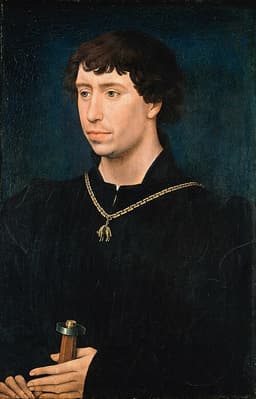
Charles the Bold
Emperor · Medieval
57.9Total
Urus Khan
Emperor · Medieval
45.7Total
Basic Information
Born
1433
1340
Died
1477
1377
Era
Medieval
Medieval
Nationality
Burgundy
Golden Horde
Occupation
Emperor
Emperor
Civilization
Western
Eastern
Score Comparison
Military (10%)
52.5
50.0
Political (20%)
68.0
35.1
Influence (20%)
59.0
48.6
Legacy (20%)
49.2
40.0
Leadership (15%)
65.7
48.4
Strategy (15%)
55.0
60.0
TOTAL
57.9
45.7
Charles the Bold — Complete Timeline
1467 AD
Inherited the Burgundian LandsPolitical Action◆ Major
Charles succeeded his father Philip the Good as Duke of Burgundy. He inherited a wealthy and powerful state comprising the Burgundian Netherlands, Franche-Comt
SuccessionBurgundian State
Impact: regionalconstructive
1468 AD
War with France and the Treaty of PéronneWar◆ Major
Charles forced King Louis XI of France to sign the Treaty of P
TreatyFranco-Burgundian ConflictDiplomacy
Impact: regional
1474 AD
Siege of NeussWar◆ Major
Charles besieged the imperial city of Neuss for nearly a year, defying the Holy Roman Emperor Frederick III. The siege ended inconclusively when an imperial army approached. This conflict alienated the German princes and weakened Charles's political position.
SiegeImperial ConflictBurgundian Wars
Impact: regionaldestructive
1476 AD
Battle of GrandsonWar◆ Major
Charles's army was defeated by the Swiss Confederacy at Grandson. The Burgundians abandoned their camp, which was looted. The defeat was a major setback, shattering the myth of Burgundian invincibility and encouraging further Swiss resistance.
BattleSwiss ConfederacyDefeat
Impact: regionaltragic
Battle of MoratWar◆ Major
Charles suffered a second devastating defeat by the Swiss at Morat. His army was routed, and he lost much of his artillery and baggage. The defeat effectively ended Burgundian ambitions in Switzerland and left Charles's state vulnerable.
BattleSwiss ConfederacyDefeat
Impact: regionaltragic
1477 AD
Battle of Nancy and DeathWar
Charles was killed in battle at Nancy while fighting the Swiss and the Duke of Lorraine. His body was found mutilated. His death ended the Burgundian state as an independent power, and his lands were divided between France and the Habsburgs through his daughter Mary.
BattleDeathEnd of Burgundy
Impact: regionaltragic
Urus Khan — Complete Timeline
1376 AD
Conflict with TokhtamyshWar◆ Major
Urus Khan, ruler of the Blue Horde, fought against Tokhtamysh, a claimant to the Golden Horde throne. Tokhtamysh, supported by Tamerlane, challenged Urus Khan's authority, leading to military engagements that weakened Urus Khan's position.
Golden HordeCivil WarTokhtamysh
Impact: regionaldestructive
1377 AD
Death in battleWar◆ Major
Urus Khan died in battle against Tokhtamysh's forces. His death marked the end of his rule over the Blue Horde and allowed Tokhtamysh to consolidate power, eventually reuniting the Golden Horde under his leadership.
Golden HordeDeathTokhtamysh
Impact: regionaltragic
Expert Analysis
Origins
Charles the Bold (born 1433) was the last Valois Duke of Burgundy, inheriting a wealthy and powerful state from his father Philip the Good. The Burgundian lands included the Low Countries, Franche-Comté, and parts of France, making Charles one of the richest rulers in Europe. He was educated in chivalric ideals and military arts, and from an early age, he was determined to transform his inherited territories into a centralized, independent kingdom.
Urus Khan (born early 14th century, exact date unknown) was a ruler of the Blue Horde, a constituent part of the Golden Horde. He belonged to the Chingisid dynasty and claimed authority over the steppes of modern Kazakhstan and western Siberia. His early life is poorly documented, but he likely rose through tribal politics and military prowess, eventually becoming khan of the Blue Horde. He faced constant challenges from rival claimants, most notably Tokhtamysh, who was supported by the powerful Central Asian conqueror Tamerlane.
Rise to Power
Charles the Bold became Duke of Burgundy in 1467 upon his father's death. He immediately pursued an aggressive expansionist policy, aiming to connect his northern and southern territories by conquering Lorraine and Alsace. A key turning point was the Treaty of Péronne (1468), where Charles captured the French king Louis XI and forced him to recognize Burgundian independence and cede key towns. This diplomatic victory elevated Charles to the status of a major European power broker. He also secured alliances with England through marriage and trade, further strengthening his position.
Urus Khan rose to prominence as the khan of the Blue Horde during the 1360s-1370s, when the Golden Horde was fracturing. He managed to consolidate control over the eastern part of the Horde, but his reign was marked by conflict with Tokhtamysh, a descendant of Genghis Khan who sought to reunify the Horde under his own rule. Tokhtamysh initially sought Urus Khan's support but was rebuffed, leading to open warfare. Urus Khan's rise was thus defined by his struggle to maintain authority against internal and external enemies.
Leadership & Governance
Charles the Bold was a centralized, authoritarian ruler who sought to impose uniformity on his diverse territories. He established a standing army, reformed the financial system, and patronized the arts. His court at Dijon and Brussels became centers of culture. However, his heavy-handed methods alienated local nobles and cities, particularly in the Netherlands and Lorraine. He imposed high taxes to fund his wars, leading to revolts. In contrast, his governance style was direct and personal—he often led armies personally and made decisions without consulting advisers.
Urus Khan's leadership was rooted in steppe traditions of tribal confederation. He relied on the support of Mongol and Turkic clans, rewarding loyalty with plunder and positions. His governance was less centralized than Charles's, as the Blue Horde was a loose federation. He struggled to maintain unity and faced defections to Tokhtamysh. His political score of 35.1 reflects his inability to build stable institutions, whereas Charles scored 68.0 in political acumen.
Triumph & Tragedy
Charles the Bold's greatest triumph was the Treaty of Péronne (1468), which forced Louis XI to recognize Burgundian independence. He also successfully besieged and captured several towns, expanding his territory. However, his greatest failure was his death at the Battle of Nancy (1477), where he was killed, his body mutilated and left on the battlefield. This ended the Burgundian state as an independent power; his lands were divided between France and the Habsburgs. His military score of 52.5 reflects his mixed record: victories early in his reign, but catastrophic defeats at Grandson (1476) and Nancy.
Urus Khan's triumph was briefly holding the Blue Horde against Tokhtamysh's initial attacks. However, his failure was his inability to defeat Tokhtamysh decisively. He died in battle against Tokhtamysh's forces around 1377, after which the Blue Horde was absorbed into Tokhtamysh's Golden Horde. His military score of 50.0 is comparable to Charles's, but his political score of 35.1 is much lower, indicating his inability to secure long-term support.
Character & Destiny
Charles the Bold was ambitious, stubborn, and fearless. He believed in his divine right to rule and refused to compromise. This character led him to repeatedly take risks, such as the Siege of Neuss (1474-1475) against the Holy Roman Emperor, which drained his resources. His refusal to negotiate with the Swiss Confederacy led to his downfall. Historians note that his overconfidence and impatience were his undoing. He scored 65.7 in leadership, reflecting his ability to inspire loyalty, but his strategic score of 55.0 shows his tactical rigidity.
Urus Khan was a typical steppe ruler: pragmatic, ruthless, and focused on maintaining power. He fought to preserve his lineage but lacked the strategic vision to outmaneuver Tokhtamysh and Tamerlane. His strategy score of 60.0 is slightly higher than Charles's, but his leadership score of 48.4 is lower, indicating weaker personal authority. His death in battle shows a willingness to fight personally, but also a failure to secure alliances.
Legacy
Charles the Bold's legacy is complex. He is remembered as the last great medieval duke whose ambitions nearly created a middle kingdom between France and Germany. His defeat led to the rise of the Habsburgs through the marriage of his daughter Mary to Maximilian I. The Burgundian lands eventually became part of the Spanish and Austrian Habsburg empires. His military innovations, such as the use of artillery, influenced later European warfare. His legacy score of 49.2 reflects his historical importance but also his failure.
Urus Khan's legacy is more limited. He is remembered as a minor figure in the history of the Golden Horde, a khan who failed to stop Tokhtamysh. His rule did not produce lasting institutions or cultural achievements. The Blue Horde was absorbed, and his descendants faded from history. His legacy score of 40.0 is the lowest among the compared figures, indicating his limited impact.
Conclusion
Charles the Bold had a greater historical impact than Urus Khan, as reflected in his total score of 57.9 versus Urus Khan's 45.7. Charles's ambitions reshaped European politics, leading to the rise of the Habsburgs and the eventual formation of the Dutch Republic. Urus Khan, while a competent steppe warrior, failed to leave a lasting mark and was quickly overshadowed by Tokhtamysh and Tamerlane. The score gap of 12.2 points underscores the difference in their influence and legacy. Charles the Bold, despite his failures, remains a pivotal figure in late medieval Europe, whereas Urus Khan is a footnote in the decline of the Mongol Empire.
Rankings
🥇
Charles the BoldLeader
Mil: 52.5Pol: 68.0Inf: 59.0
57.9
🥈
Urus Khan
Mil: 50.0Pol: 35.1Inf: 48.6
45.7
+12.2 behind
How This Comparison Works
Algorithm
Each figure is scored on 6 dimensions (0—100 scale) based on structured historical data: Military (10%), Political (20%), Influence (20%), Legacy (20%), Leadership (15%), Strategy (15%). The weighted total produces the final ranking.
Data Sources
Scores are computed from structured sub-indicators in the database. Scale factors adjust for era (Ancient ×0.85, Modern ×1.0) and civilization size (Eastern ×1.05, Other ×0.80) to account for differences in population and military scale.
Maximum 3 Figures
Comparisons are limited to 2—3 figures to ensure readability and statistical meaningfulness.
Error Margins
±5 points per dimension — Sub-scores are derived from historical records with inherent uncertainty. Two figures within 5 points on a dimension should be considered roughly equivalent in that area.
Total Score Accuracy
±3 points overall — The weighted combination of 6 dimensions produces a total score with approximately ±3 points of uncertainty. Differences of less than 3 points are not statistically significant— the figures are effectively tied.
Known Limitations
- Historical records are incomplete and uneven across civilizations
- Figures from oral-tradition societies may be underrepresented
- Occupation labels can misclassify multi-role figures
- Scores measure capability and impact, not moral character
- Quantitative scoring is a comparison tool, not absolute truth
Capability Radar
Military (10%) — Battles & Warfare
Battles
65
45
Win Rate
40
40
Expansion
60
55
Political (20%) — Governance & Reform
Reform
65
25
Diplomacy
45
35
Economy
60
30
Influence (20%) — Cultural & Global Reach
Cultural
50
20
Global
35
10
Legacy (20%) — Historical Impact
Historical
55
25
Longevity
40
15
Leadership (15%) — Power & Stability
Tenure
55
40
Stability
30
20
Strategy (15%) — Tactics & Innovation
Strategy
55
50
Tactics
60
50
Reform
70
30
Similar Comparisons
Comments & Discussion
No comments yet. Be the first to share your thoughts!