Loading...
Bayezid I vs Selim I
Selim I leads by 11.0 pts · 2 figures compared
…
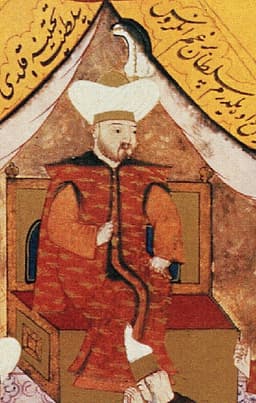
Bayezid I
Emperor · Medieval
59.6Total
Selim I
Emperor · Medieval
70.6Total
Basic Information
Born
1360
1470
Died
1403
1520
Era
Medieval
Medieval
Nationality
Ottoman Empire
Ottoman Empire
Occupation
Emperor
Emperor
Civilization
Middle Eastern
Middle Eastern
Score Comparison
Military (10%)
72.0
78.5
Political (20%)
45.0
70.3
Influence (20%)
56.7
65.0
Legacy (20%)
58.0
68.0
Leadership (15%)
68.0
80.0
Strategy (15%)
68.1
70.0
TOTAL
59.6
70.6
Bayezid I — Complete Timeline
1389 AD
Battle of KosovoWar◆ Major
Bayezid I led the Ottoman army to victory at the Battle of Kosovo against a coalition of Serbian and Balkan forces. Both Sultan Murad I and Serbian Prince Lazar were killed, but the battle solidified Ottoman control over the Balkans.
BattleKosovoBalkans
Impact: regional
1393 AD
Annexation of Bulgarian and Serbian TerritoriesWar◆ Major
Bayezid I conquered the Bulgarian Empire and much of Serbia, incorporating these territories into the Ottoman realm. These conquests expanded Ottoman control over the Balkans and eliminated major Christian states in the region.
ConquestBulgariaSerbia
Impact: regional
1394 AD
Siege of Constantinople (1394-1402)War◆ Major
Bayezid I besieged Constantinople, the Byzantine capital, for eight years. The siege was ultimately lifted due to the Mongol invasion of Anatolia, but it severely weakened the Byzantine Empire and demonstrated Ottoman ambition to capture the city.
SiegeConstantinopleByzantine
Impact: regional
1396 AD
Battle of NicopolisWar◆ Major
Bayezid I defeated a large Crusader army from Hungary, France, and other European states at Nicopolis on the Danube. The victory crushed the last major Crusade against the Ottomans and confirmed Ottoman dominance in the Balkans.
BattleCrusadeNicopolis
Impact: regional
1402 AD
Battle of AnkaraWar
Bayezid I was defeated and captured by Timur at the Battle of Ankara. The defeat led to the collapse of Ottoman unity and a period of civil war (the Ottoman Interregnum), ending Bayezid's reign and temporarily halting Ottoman expansion.
BattleTimurDefeat
Impact: globaltragic
Selim I — Complete Timeline
1513 AD
Execution of Prince Mustafa and Prince KorkutPolitical Action
To secure his succession, Selim I ordered the execution of his brothers, Prince Mustafa and Prince Korkut, who were potential rivals for the throne. This act followed the Ottoman practice of fratricide to prevent civil war. It eliminated internal opposition and consolidated Selim's rule.
FratricideSuccessionOttoman Politics
Impact: nationaldestructive
1514 AD
Battle of ChaldiranWar
Selim I led the Ottoman army against the Safavid Empire under Shah Ismail I at Chaldiran in eastern Anatolia. The Ottomans, using superior artillery and gunpowder tactics, decisively defeated the Safavids. This victory secured Ottoman control over eastern Anatolia and prevented Safavid expansion westward.
BattleSafavid WarOttoman Victory
Impact: regional
1517 AD
Conquest of Egypt and the HejazWar
Selim I led a campaign against the Mamluk Sultanate, defeating them at the Battle of Marj Dabiq and the Battle of Ridaniya. He conquered Cairo and the Hejaz, including the holy cities of Mecca and Medina. This brought the Islamic caliphate under Ottoman control and expanded Ottoman territory into North Africa and Arabia.
ConquestMamluk SultanateCaliphate
Impact: global
Assumption of the CaliphatePolitical Action◆ Major
After conquering Cairo, Selim I received the keys to the Kaaba and the relics of the Prophet Muhammad from the last Abbasid caliph, Al-Mutawakkil III. Selim I assumed the title of Caliph, claiming spiritual leadership of the Islamic world. This transfer established the Ottoman sultans as caliphs until 1924.
CaliphateIslamic LeadershipOttoman Empire
Impact: global
Expert Analysis
Origins
Bayezid I was born around 1360, the son of Sultan Murad I. He grew up in the Ottoman court, receiving military training and administrative experience as a governor. His early exposure to warfare and governance prepared him for swift succession. Selim I, born in 1470, was the son of Sultan Bayezid II. He was raised in the competitive environment of the Ottoman dynasty, marked by fratricidal struggles. Selim's early career included governing Trabzon, where he gained military experience against the Safavids.
Rise to Power
Bayezid I ascended the throne in 1389 after his father's death at the Battle of Kosovo. He immediately consolidated power by executing his brother Yakub, a common practice to prevent civil war. His rise was marked by rapid expansion in the Balkans and Anatolia. Selim I's path was more contentious. He rebelled against his father Bayezid II in 1511, but was initially defeated. After maneuvering and gaining support from the Janissaries, he forced his father's abdication in 1512. Selim then executed his brothers and nephews to secure his position.
Leadership & Governance
Bayezid I was an aggressive military leader, earning the nickname "Yıldırım" (Thunderbolt) for his swift campaigns. He centralized administration, but his governance was overshadowed by constant warfare. He imposed heavy taxes to fund his army, straining relations with conquered peoples. Selim I was a shrewd administrator and military strategist. He reformed the Ottoman navy and expanded the use of gunpowder weapons. His conquest of Egypt brought the caliphate to the Ottomans, enhancing religious legitimacy. Selim's governance was efficient but brutal, exemplified by the execution of 40,000 Alevi in Anatolia.
Triumph & Tragedy
Bayezid I's greatest triumph was the Battle of Nicopolis in 1396, where he crushed a European crusade, securing Ottoman dominance in the Balkans. He also annexed Bulgaria and Serbia. However, his tragedy was the Battle of Ankara in 1402, where he was defeated and captured by Timur. The defeat led to the Ottoman Interregnum, a civil war that nearly destroyed the empire. Selim I's triumph was the conquest of Egypt in 1517, ending the Mamluk Sultanate and controlling the holy cities of Mecca and Medina. He also defeated the Safavids at Chaldiran in 1514, securing eastern Anatolia. His tragedy lay in his ruthless succession: he executed his brothers and sons, leaving a legacy of fratricide.
Character & Destiny
Bayezid I was impulsive and overconfident, traits that led to his downfall. He underestimated Timur and failed to secure his eastern borders. His character scored 68.0 in leadership and 68.1 in strategy, but his political score of 45.0 reflects his poor statecraft. Selim I was calculating and decisive, with a leadership score of 80.0 and political score of 70.3. His ruthlessness ensured stability but at a high human cost. Selim's destiny was to expand the empire and establish Ottoman caliphal authority.
Legacy
Bayezid I's legacy is mixed. He expanded Ottoman territory significantly but his defeat caused a temporary collapse. His scores: military 72.0, influence 56.7, legacy 58.0. Selim I's legacy is more enduring: he doubled the empire's size, conquered Egypt, and assumed the caliphate. His scores: military 78.5, influence 65.0, legacy 68.0. Selim's actions set the stage for the Ottoman golden age under Suleiman the Magnificent.
Conclusion
Selim I had a greater impact on the Ottoman Empire. His total score of 70.6 exceeds Bayezid I's 59.6 by 11.0 points. While Bayezid I's rapid expansion was impressive, his failure at Ankara undid much of his work. Selim's conquests were permanent, and his assumption of the caliphate transformed the Ottoman sultanate into a global Islamic power. Selim I's combination of military prowess (78.5) and political acumen (70.3) made him the more effective ruler.
Rankings
🥇
Selim ILeader
Mil: 78.5Pol: 70.3Inf: 65.0
70.6
🥈
Bayezid I
Mil: 72.0Pol: 45.0Inf: 56.7
59.6
+11.0 behind
How This Comparison Works
Algorithm
Each figure is scored on 6 dimensions (0—100 scale) based on structured historical data: Military (10%), Political (20%), Influence (20%), Legacy (20%), Leadership (15%), Strategy (15%). The weighted total produces the final ranking.
Data Sources
Scores are computed from structured sub-indicators in the database. Scale factors adjust for era (Ancient ×0.85, Modern ×1.0) and civilization size (Eastern ×1.05, Other ×0.80) to account for differences in population and military scale.
Maximum 3 Figures
Comparisons are limited to 2—3 figures to ensure readability and statistical meaningfulness.
Error Margins
±5 points per dimension — Sub-scores are derived from historical records with inherent uncertainty. Two figures within 5 points on a dimension should be considered roughly equivalent in that area.
Total Score Accuracy
±3 points overall — The weighted combination of 6 dimensions produces a total score with approximately ±3 points of uncertainty. Differences of less than 3 points are not statistically significant— the figures are effectively tied.
Known Limitations
- Historical records are incomplete and uneven across civilizations
- Figures from oral-tradition societies may be underrepresented
- Occupation labels can misclassify multi-role figures
- Scores measure capability and impact, not moral character
- Quantitative scoring is a comparison tool, not absolute truth
Capability Radar
Military (10%) — Battles & Warfare
Battles
85
85
Win Rate
80
90
Expansion
85
90
Political (20%) — Governance & Reform
Reform
65
75
Diplomacy
60
80
Economy
70
70
Influence (20%) — Cultural & Global Reach
Cultural
60
60
Global
65
75
Legacy (20%) — Historical Impact
Historical
70
80
Longevity
55
70
Leadership (15%) — Power & Stability
Tenure
70
70
Stability
55
65
Strategy (15%) — Tactics & Innovation
Strategy
80
85
Tactics
75
80
Reform
70
70
Similar Comparisons
Comments & Discussion
No comments yet. Be the first to share your thoughts!