Loading...
Baybars vs Henry the Fowler
Baybars leads by 2.9 pts · 2 figures compared
…
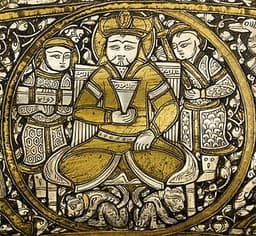
Baybars
Emperor · Medieval
63.8Total
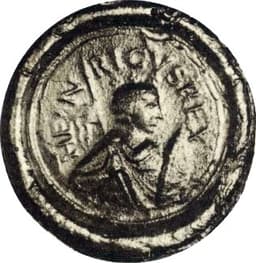
Henry the Fowler
Emperor · Medieval
60.9Total
Basic Information
Born
1223
876
Died
1277
936
Era
Medieval
Medieval
Nationality
Egypt
East Francia
Occupation
Emperor
Emperor
Civilization
Middle Eastern
Western
Score Comparison
Military (10%)
85.0
70.0
Political (20%)
70.0
59.3
Influence (20%)
55.0
55.0
Legacy (20%)
52.0
52.0
Leadership (15%)
72.0
85.0
Strategy (15%)
72.0
55.0
TOTAL
63.8
60.9
Baybars — Complete Timeline
1260 AD
Battle of Ain Jalut (1260)War◆ Major
Baybars served as a key commander under Qutuz at the Battle of Ain Jalut. He led the vanguard and played a crucial role in the Mamluk victory over the Mongols. This battle established his reputation as a military leader.
Mongol InvasionBattleMamluk Victory
Impact: globalconstructive
Accession as Sultan (1260)Political Action◆ Major
After assassinating Qutuz, Baybars proclaimed himself Sultan of Egypt. He was accepted by the Mamluk commanders and the Abbasid Caliph. His reign began a period of Mamluk dominance in the Middle East, lasting for decades.
SuccessionMamluk SultanateAssassination
Impact: regional
1265 AD
Campaigns against the Crusader States (1260s-1270s)War◆ Major
Baybars launched a series of campaigns against the remaining Crusader states in the Levant. He captured key fortresses including Arsuf (1265), Safed (1266), Jaffa (1268), and Antioch (1268). These victories reduced Crusader territory to a few coastal enclaves.
Crusader WarsConquestMamluk Expansion
Impact: regionaldestructive
1277 AD
Defeat of the Mongols at Elbistan (1277)War◆ Major
Baybars defeated a Mongol army at the Battle of Elbistan in Anatolia. He invaded the Seljuk Sultanate of Rum, which was under Mongol suzerainty. Although a tactical victory, Baybars could not hold Anatolia and returned to Syria.
Mongol WarsBattleAnatolia
Impact: regionalconstructive
Death of Baybars (1277)Other◆ Major
Baybars died in Damascus, possibly from poisoning or illness. His death was kept secret for a time to prevent unrest. He was succeeded by his son Al-Said Barakah. Baybars' reign is considered the peak of the early Mamluk Sultanate.
DeathSuccessionMamluk Sultanate
Impact: regionaltragic
Henry the Fowler — Complete Timeline
919 AD
Election as King of East FranciaPolitical Action
Henry the Fowler was elected King of East Francia by the Saxon and Frankish nobles at Fritzlar on May 6, 919. He was the first Saxon king, marking the transition from Carolingian to Ottonian rule. His election was contested by other dukes but he prevailed.
ElectionAccessionOttonian Dynasty
Impact: regionalconstructive
921 AD
Treaty of Bonn (921)Political Action◆ Major
Henry the Fowler signed the Treaty of Bonn with Charles the Simple of West Francia, recognizing each other's royal titles and establishing peaceful relations. This treaty ended Carolingian claims over East Francia and solidified Henry's legitimacy as an independent king.
TreatyRecognitionDiplomacy
Impact: regionalconstructive
924 AD
Nine-Year Truce with the MagyarsPolitical Action◆ Major
Henry the Fowler negotiated a nine-year truce with the Magyars, agreeing to pay tribute in exchange for a halt to their raids. He used this period to fortify towns, reorganize the army, and train cavalry. This strategic pause was crucial for his later military reforms.
TruceMagyarsMilitary Reform
Impact: regionalconstructive
929 AD
Battle of Lenzen (929)War◆ Major
Henry the Fowler's forces defeated a Slavic army at the Battle of Lenzen, securing the eastern frontier of East Francia. This victory allowed Henry to consolidate control over the Elbe region and establish the March of Brandenburg, a key step in German eastward expansion.
BattleSlavic WarsEastern Expansion
Impact: regionalconstructive
933 AD
Battle of Riade (933)War
After the truce with the Magyars expired, Henry the Fowler led a German army to victory at the Battle of Riade (near Merseburg). The defeat of the Magyar cavalry ended their raids into East Francia for a generation and established Henry's reputation as a defender of Christendom.
BattleMagyarsVictory
Impact: regionalconstructive
936 AD
Death of Henry the FowlerOther◆ Major
Henry the Fowler died on July 2, 936, at Memleben. He was succeeded by his son, Otto I, who would become Holy Roman Emperor. Henry's reign laid the foundations for the Ottonian dynasty and the medieval German kingdom.
DeathSuccessionOttonian
Impact: regional
Expert Analysis
Henry the Fowler vs Baybars
# The Throne and the Sword: Henry the Fowler and Baybars
In the summer of 936, as Henry the Fowler lay dying in the Saxon palace of Memleben, he could look back on a reign that had transformed a fractured kingdom into the foundation of an empire. Half a world away and three centuries later, in the spring of 1277, Baybars—the Lion of Egypt—drank a cup of poisoned *kumiz* in Damascus and died in agony, his body hidden in a tomb for months to prevent his enemies from rejoicing. One man built a dynasty through patience and tribute; the other forged an empire through blood and iron. What drove these two medieval rulers down such different paths, and why did their legacies diverge so sharply?
Origins
Henry the Fowler was born in 876 into a world of crumbling Carolingian authority. The grandson of the Saxon duke Liudolf, he grew up in a realm where local strongmen competed for scraps of power, and where Viking and Magyar raiders treated the rivers of East Francia as highways for plunder. The Saxon nobility valued pragmatism over piety, and Henry learned early that survival meant knowing when to fight and when to pay.
Baybars entered history in 1223 as a slave. Born among the Kipchak Turks of the Crimean steppes, he was captured by Mongol raiders as a child and sold in the markets of Syria. His life’s trajectory was determined not by inheritance but by the brutal logic of the Mamluk system: buy young boys, train them as warriors, and let the strongest rise. By the time he reached Cairo, Baybars had already learned that the world was a place of treachery, and that only the sword could guarantee safety.
Rise to Power
Henry’s ascent was a masterpiece of political calculation. In 919, the Saxon and Frankish nobles gathered at Fritzlar and elected him King of East Francia—not because he was the most powerful, but because he was the least threatening. Henry accepted the crown with studied reluctance, refusing unction and coronation, signaling that he would rule as *primus inter pares* rather than as a divine-right monarch. It was a performance of humility that masked iron ambition.
Baybars rose through murder. At the Battle of Ain Jalut in 1260, he commanded the vanguard that shattered the Mongol advance, saving Egypt and Islam. But when Sultan Qutuz refused to reward him with the governorship of Aleppo, Baybars struck him down with his own hands on a hunting expedition. The assassins became sultan, and the Mamluks accepted their new master because they feared him more than they loved him.
Leadership & Governance
Henry governed through patience. The Treaty of Bonn in 921 recognized the King of West Francia as an equal, ending decades of dynastic squabbling. Then came the Magyars, whose raids had terrorized Germany for generations. Henry negotiated a nine-year truce in 924, paying tribute that must have galled his pride. But he used those years to build fortified towns, train heavy cavalry, and stockpile weapons. When the truce expired in 933, he met the Magyars at Riade and crushed them—not through reckless aggression, but through meticulous preparation.
Baybars governed through terror and efficiency. He rebuilt Cairo’s fortifications, established a postal system that could carry messages from Damascus to Cairo in four days, and reformed the navy. But his genius was military. In the 1260s and 1270s, he systematically dismantled the Crusader states, capturing Antioch, Jaffa, and the formidable fortress of Krak des Chevaliers. When the Mongols threatened again in 1277, he marched into Anatolia and defeated them at Elbistan, proving that the terror of the steppes could be beaten.
Triumph & Tragedy
Henry’s greatest triumph was the Battle of Riade, where a king who had once paid tribute now dictated terms. His tragedy was that he never wore the imperial crown. When the Pope offered him the title of Holy Roman Emperor, Henry refused—he was a Saxon duke at heart, and his kingdom needed a builder, not a showman.
Baybars’s triumph was his destruction of the Crusader states, a feat that earned him the title “Panther of the Faith.” His tragedy was that he could never trust anyone. He died at fifty-four, possibly poisoned by a rival or by his own physician, leaving a son too young to hold the throne. The empire he had built with blood began to fracture within a generation.
Character & Destiny
Henry the Fowler was a man who understood that power is often best exercised indirectly. His nickname—derived from his supposed hobby of trapping birds—suggests a ruler who knew the value of patience, who could wait for his prey to come to him. He built the Ottonian dynasty not through conquest but through marriage alliances, careful administration, and the strategic use of tribute.
Baybars was a man who could never stop fighting. Every slave knows that safety is an illusion, and he governed accordingly. He personally led charges, executed rivals, and kept his own death secret for months to prevent a succession crisis. His character was forged in the crucible of the Mamluk system, where loyalty was a commodity and betrayal a constant threat.
Legacy
Henry’s legacy was the Holy Roman Empire. His son Otto I would be crowned Emperor in 962, and the Ottonian dynasty would dominate Europe for a century. Henry is remembered as the founder, the architect who laid the stones that his son would gild.
Baybars left a different legacy. He saved the Middle East from Mongol domination and drove the Crusaders into the sea. But his methods—the assassinations, the calculated cruelty, the reliance on personal terror—ensured that his empire would not outlast his sword. He is remembered as a warrior-king, a figure of awe and fear, but not as a founder.
Conclusion
Two kings, two worlds. Henry the Fowler built a dynasty by knowing when to kneel; Baybars built an empire by never bowing. One understood that power is a river that must be channeled; the other knew that power is a fire that must be fed. In their different fates lies a lesson as old as history: the men who build foundations often remain in the shadows, while those who burn brightest are consumed by their own flame.
Rankings
🥇
BaybarsLeader
Mil: 85.0Pol: 70.0Inf: 55.0
63.8
🥈
Henry the Fowler
Mil: 70.0Pol: 59.3Inf: 55.0
60.9
+2.9 behind
How This Comparison Works
Algorithm
Each figure is scored on 6 dimensions (0—100 scale) based on structured historical data: Military (10%), Political (20%), Influence (20%), Legacy (20%), Leadership (15%), Strategy (15%). The weighted total produces the final ranking.
Data Sources
Scores are computed from structured sub-indicators in the database. Scale factors adjust for era (Ancient ×0.85, Modern ×1.0) and civilization size (Eastern ×1.05, Other ×0.80) to account for differences in population and military scale.
Maximum 3 Figures
Comparisons are limited to 2—3 figures to ensure readability and statistical meaningfulness.
Error Margins
±5 points per dimension — Sub-scores are derived from historical records with inherent uncertainty. Two figures within 5 points on a dimension should be considered roughly equivalent in that area.
Total Score Accuracy
±3 points overall — The weighted combination of 6 dimensions produces a total score with approximately ±3 points of uncertainty. Differences of less than 3 points are not statistically significant— the figures are effectively tied.
Known Limitations
- Historical records are incomplete and uneven across civilizations
- Figures from oral-tradition societies may be underrepresented
- Occupation labels can misclassify multi-role figures
- Scores measure capability and impact, not moral character
- Quantitative scoring is a comparison tool, not absolute truth
Capability Radar
Military (10%) — Battles & Warfare
Battles
85
55
Win Rate
90
60
Expansion
80
60
Political (20%) — Governance & Reform
Reform
80
75
Diplomacy
78
70
Economy
72
65
Influence (20%) — Cultural & Global Reach
Cultural
65
55
Global
65
40
Legacy (20%) — Historical Impact
Historical
75
65
Longevity
60
60
Leadership (15%) — Power & Stability
Tenure
75
70
Stability
70
70
Strategy (15%) — Tactics & Innovation
Strategy
85
65
Tactics
88
50
Reform
82
70
Similar Comparisons
Comments & Discussion
Historian5836/16/2026
Henry the Fowler was a glorified tax collector who built his 'empire' on bribes and castles. Baybars crushed the Mongols at Ain Jalut and the Crusaders at Antioch—real battlefield victories. Henry's biggest win was convincing the Magyars to take silver instead of raiding. Give me the slave-sultan who bled for his throne, not the duke who bought peace.|zh|亨利的德意志统一靠的是给维京人和马扎尔人送银子,顺便建几个城堡自保。拜巴尔斯在阿音扎鲁特用三千马穆鲁克打垮两万蒙古铁骑,那才是真本事。拿个收税官跟战神比,简直就是拿木剑对弯刀。