Loading...
Basdeo Panday vs Napoleon Bonaparte
Napoleon Bonaparte leads by 24.1 pts · 2 figures compared
…
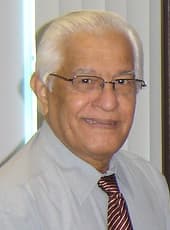
Basdeo Panday
Politician · Modern
46.8Total

Napoleon Bonaparte
General · Modern
70.9Total
Basic Information
Born
1933
1769
Died
—
1821
Era
Modern
Modern
Nationality
Trinidad and Tobago
France
Occupation
Politician
General
Civilization
Other
Western
Score Comparison
Military (10%)
24.9
94.0
Political (20%)
48.0
72.0
Influence (20%)
54.1
40.0
Legacy (20%)
42.5
80.0
Leadership (15%)
58.8
78.0
Strategy (15%)
41.4
90.0
TOTAL
46.8
70.9
Basdeo Panday — Complete Timeline
1989 AD
Founding of the United National CongressPolitical Action◆ Major
Panday founded the United National Congress (UNC), a political party representing primarily Indo-Trinidadian interests. The party became a major force in Trinidadian politics, winning elections and shaping policy.
Political PartyFoundingRepresentation
Impact: nationalconstructive
1995 AD
First Indo-Trinidadian Prime MinisterPolitical Action
Basdeo Panday became the first Prime Minister of Trinidad and Tobago of Indian descent after leading the United National Congress to victory in the 1995 general election. His election marked a milestone in the country's ethnic politics.
Prime MinisterEthnic PoliticsMilestone
Impact: nationalconstructive
1996 AD
Economic Reforms and Austerity MeasuresReform◆ Major
Panday implemented economic reforms, including austerity measures and privatization, to address fiscal deficits. The policies stabilized the economy but were unpopular with labor unions and led to protests.
Economic ReformAusterityPrivatization
Impact: national
2001 AD
Loss of 2001 General Election and Political CrisisPolitical Action◆ Major
Panday's UNC lost the 2001 general election to the People's National Movement, resulting in a tied parliament and a political crisis. The deadlock led to a second election in 2002, which the PNM won, ending Panday's tenure.
ElectionPolitical CrisisDefeat
Impact: nationaltragic
2002 AD
Corruption Allegations and Legal BattlesPolitical Action◆ Major
Panday faced corruption allegations related to a bank scandal, leading to legal battles and his eventual conviction in 2006 for failing to declare a bank account. The case damaged his political reputation and led to his imprisonment.
CorruptionLegalScandal
Impact: nationaldestructive
Napoleon Bonaparte — Complete Timeline
1799 AD
Coup of 18 BrumaireOther◆ Major
Napoleon Bonaparte, with support from his brother Lucien and key political figures, overthrew the Directory in a bloodless coup. He established the Consulate with himself as First Consul, effectively becoming the ruler of France. This event ended the French Revolution's most unstable period.
French RevolutionCoupRise to Power
Impact: regional
1804 AD
Promulgation of the Napoleonic CodeOther◆ Major
Napoleon enacted the Civil Code of the French, known as the Napoleonic Code, a comprehensive set of laws that replaced the fragmented feudal legal systems. The code established legal equality, protected property rights, and secularized law. It became the basis for legal systems in many European and world countries.
Legal ReformNapoleonic CodeCivil Law
Impact: globalconstructive
1805 AD
Battle of AusterlitzWar◆ Major
Napoleon's Grande Arm
Napoleonic WarsBattleDecisive Victory
Impact: global
1812 AD
Invasion of RussiaWar◆ Major
Napoleon led the Grande Arm
Napoleonic WarsInvasionDisaster
Impact: globaldestructive
1815 AD
Battle of WaterlooWar◆ Major
Napoleon's French army was defeated by the combined forces of the Duke of Wellington's Anglo-Allied army and Gebhard Leberecht von Bl
Napoleonic WarsBattleFinal Defeat
Impact: globaldestructive
Expert Analysis
basdeo-panday-vs-napoleon-bonaparte
# The Emperor and the Trade Unionist
On a June morning in 1815, Napoleon Bonaparte watched his imperial guard march into the cannon smoke at Waterloo, their eagle standards dipping into the fog of history. On a November evening in 1995, Basdeo Panday stood before a crowd in Port of Spain, his hand raised in victory as the first Indo-Trinidadian prime minister of a Caribbean nation. One man commanded armies that reshaped continents; the other led a trade union that reshaped a small island. The distance between them is not merely geographical—it spans the gulf between conquest and compromise, between empire and democracy. Yet both were outsiders who rose against the odds, and both discovered that power, once grasped, has a way of devouring those who hold it.
Origins
Napoleon was born in 1769 on Corsica, a Mediterranean island that had been French for barely a year. His family were minor nobility, but they were Italian-speaking and impoverished. At nine, he entered a French military academy, mocked by classmates for his accent and his provincial ways. He grew up in a world of revolution, where old hierarchies crumbled and a young artillery officer could become a general at twenty-four. His era demanded audacity, and he had it in abundance.
Basdeo Panday was born in 1933 in rural Trinidad, the son of Indian indentured laborers who had come to the Caribbean to work sugar plantations. His family was poor, but they valued education. Panday studied law in London, then returned to a Trinidad and Tobago still under British colonial rule. There he became a trade unionist, organizing sugar workers in the same fields his ancestors had worked. His era demanded patience, persistence, and the politics of identity—for Trinidad was split between Afro-Trinidadians and Indo-Trinidadians, and Panday would spend decades navigating that divide.
The difference in their origins is the difference between revolution and evolution. Napoleon inherited a world in flames; Panday inherited a world of slow, grinding negotiation.
Rise to Power
Napoleon’s rise was a series of lightning strikes. In 1793, at the Siege of Toulon, he captured a key fort and forced the British fleet to retreat. He was promoted to brigadier general at twenty-four. In 1796, he took command of the French army in Italy and won a dozen battles in a year, driving the Austrians from the peninsula. By 1799, he had staged a coup and made himself First Consul of France. He was thirty years old. His path was paved with gunpowder and glory.
Panday’s rise was a marathon. He founded the United National Congress (UNC) in 1989, a party built to represent Indo-Trinidadian interests in a nation where Afro-Trinidadians had dominated politics since independence. For six years, he built coalitions, fought elections, and waited. In 1995, his moment came: the UNC won enough seats to form a coalition government, and Panday became prime minister. He was sixty-two years old. His path was paved with speeches, strikes, and the slow accumulation of trust.
Napoleon seized power through force; Panday achieved it through democracy. One was a conqueror, the other a consensus-builder—and each path carried its own risks.
Leadership & Governance
As emperor, Napoleon was a whirlwind of reform. The Napoleonic Code, introduced in 1804, standardized French law and influenced legal systems across Europe and the world. He reorganized education, established the Bank of France, and built roads and canals. But his military genius—scored at 93 in strategy—consumed everything. He conquered Spain, Austria, Prussia, and Russia, only to see his Grande Armée destroyed in the snows of 1812. His political score of 75 reflects a man who could govern but could not stop conquering.
Panday governed a small, multi-ethnic democracy. His economic reforms in 1996 included austerity measures and privatization to address fiscal deficits—unpopular policies that stabilized the economy but cost him support. He navigated the delicate racial politics of Trinidad, trying to build a nation where both Afro-Trinidadians and Indo-Trinidadians could belong. His leadership score of 76 suggests a competent but constrained leader, hemmed in by coalition partners and a tied parliament. He had no army, no empire—only a fragile democracy.
Napoleon’s governance was grand but unsustainable; Panday’s was modest but real. The difference is the difference between a cathedral and a house.
Triumph & Tragedy
Napoleon’s greatest moment was Austerlitz in 1805, where he crushed the Russian and Austrian armies in a single day. His worst was Waterloo in 1815, where his genius failed him—he waited too long to attack, then committed his guard too late. He died in exile on Saint Helena in 1821, a prisoner of the British.
Panday’s greatest moment was 1995, when he became prime minister and proved that an Indo-Trinidadian could lead the nation. His tragedy came in 2001, when a tied election led to a political crisis, and in 2002, when corruption allegations surfaced over a bank scandal. He was convicted in 2006, a fall from grace that tarnished his legacy. He died in 2024, a controversial figure in his country’s memory.
Both men knew triumph and tragedy. But Napoleon’s tragedy was military and epic; Panday’s was political and mundane. One lost an empire; the other lost a reputation.
Character & Destiny
Napoleon was driven by ambition, by a belief that he was destined to reshape the world. “I am the revolution,” he once said, and he meant it. His personality was magnetic, his energy boundless, his ego vast. He could not stop—not after Egypt, not after Austerlitz, not after Moscow. His character pushed him to conquer, and his character destroyed him.
Panday was driven by justice, by a belief that his people deserved a voice. He was a trade unionist at heart—argumentative, persistent, and loyal to his base. But he was also a man of his time, navigating a post-colonial world where race and class were never far from the surface. His character made him a champion; it also made him a target.
Napoleon’s destiny was to be a colossus; Panday’s was to be a symbol. One changed the map of Europe; the other changed the map of his nation’s politics.
Legacy
Napoleon’s legacy is global. His legal code, his military tactics, his myth—they echo in every modern army and every codified legal system. His score of 82 in influence reflects a man who still shapes our world. But he is remembered as a tyrant as well as a reformer, a man who brought both progress and war.
Panday’s legacy is local but profound. He broke a racial barrier in Trinidad and Tobago, proving that democracy could work across ethnic lines. His score of 56 in legacy reflects a mixed reputation—part pioneer, part cautionary tale. He is remembered as a man who opened doors, even if he stumbled through them.
Conclusion
Napoleon and Panday never met, never corresponded, never could have understood each other. One commanded millions; the other led thousands. One died in exile; the other died at home. Yet both were men who rose from the margins to the center of power, and both were broken by the very forces they sought to control. Napoleon’s tragedy was hubris; Panday’s was the grinding reality of democratic politics. In the end, the emperor and the trade unionist remind us that power is always a gamble—and that history, whether written in cannon fire or in ballot boxes, never forgives a losing hand.
Rankings
🥇
Napoleon BonaparteLeader
Mil: 94.0Pol: 72.0Inf: 40.0
70.9
🥈
Basdeo Panday
Mil: 24.9Pol: 48.0Inf: 54.1
46.8
+24.1 behind
How This Comparison Works
Algorithm
Each figure is scored on 6 dimensions (0—100 scale) based on structured historical data: Military (10%), Political (20%), Influence (20%), Legacy (20%), Leadership (15%), Strategy (15%). The weighted total produces the final ranking.
Data Sources
Scores are computed from structured sub-indicators in the database. Scale factors adjust for era (Ancient ×0.85, Modern ×1.0) and civilization size (Eastern ×1.05, Other ×0.80) to account for differences in population and military scale.
Maximum 3 Figures
Comparisons are limited to 2—3 figures to ensure readability and statistical meaningfulness.
Error Margins
±5 points per dimension — Sub-scores are derived from historical records with inherent uncertainty. Two figures within 5 points on a dimension should be considered roughly equivalent in that area.
Total Score Accuracy
±3 points overall — The weighted combination of 6 dimensions produces a total score with approximately ±3 points of uncertainty. Differences of less than 3 points are not statistically significant— the figures are effectively tied.
Known Limitations
- Historical records are incomplete and uneven across civilizations
- Figures from oral-tradition societies may be underrepresented
- Occupation labels can misclassify multi-role figures
- Scores measure capability and impact, not moral character
- Quantitative scoring is a comparison tool, not absolute truth
Capability Radar
Military (10%) — Battles & Warfare
Battles
21
95
Win Rate
24
90
Expansion
25
95
Political (20%) — Governance & Reform
Reform
40
95
Diplomacy
45
80
Economy
35
85
Influence (20%) — Cultural & Global Reach
Cultural
40
85
Global
25
90
Legacy (20%) — Historical Impact
Historical
35
95
Longevity
20
90
Leadership (15%) — Power & Stability
Tenure
30
85
Stability
25
70
Strategy (15%) — Tactics & Innovation
Strategy
30
95
Tactics
35
98
Reform
37
92
Similar Comparisons
Comments & Discussion
No comments yet. Be the first to share your thoughts!