Loading...
Basarab I vs Wang Shichong
Basarab I leads by 8.1 pts · 2 figures compared
…

Basarab I
Emperor · Medieval
55.1Total
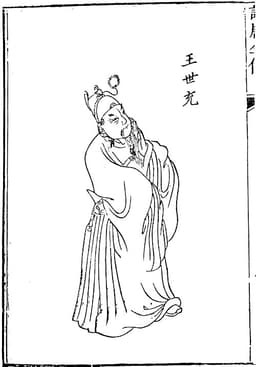
Wang Shichong
Emperor · Medieval
47.0Total
Basic Information
Born
1271
570
Died
1352
621
Era
Medieval
Medieval
Nationality
Wallachia
China
Occupation
Emperor
Emperor
Civilization
Western
Eastern
Score Comparison
Military (10%)
47.5
60.0
Political (20%)
54.7
35.1
Influence (20%)
56.4
50.2
Legacy (20%)
50.0
40.8
Leadership (15%)
65.0
48.4
Strategy (15%)
57.5
57.5
TOTAL
55.1
47.0
Basarab I — Complete Timeline
1310 AD
Founded the Principality of WallachiaPolitical Action◆ Major
Basarab I unified the Romanian lands east of the Olt River and south of the Carpathians, establishing the independent principality of Wallachia. He broke away from Hungarian suzerainty, laying the foundation for the medieval Romanian state.
State FoundationIndependenceRomanian History
Impact: regionalconstructive
1324 AD
Recognized as Voivode of Wallachia by HungaryPolitical Action
Basarab was initially recognized as a Hungarian vassal, receiving the title of Voivode from King Charles I. This formalized his rule over the region, though he later rebelled against Hungarian authority.
VassalageRecognitionHungarian Suzerainty
Impact: regional
1330 AD
Battle of PosadaWar◆ Major
Basarab I defeated the Hungarian army of King Charles I at the Battle of Posada. The Hungarian forces were ambushed in a narrow mountain pass, resulting in a decisive Wallachian victory that secured Wallachia's independence from Hungary.
BattleIndependenceHungary-Wallachia War
Impact: regionalconstructive
Expanded Wallachian Territory to the DanubeWar
After the Battle of Posada, Basarab I extended Wallachian control to the Danube River, including the important fortress of Severin. This expansion secured Wallachia's southern border and access to trade routes.
Territorial ExpansionDanubeFortress
Impact: regionalconstructive
Wang Shichong — Complete Timeline
618 AD
Rebellion at LuoyangPolitical Action◆ Major
Wang Shichong, a Sui general, staged a coup in Luoyang, killing the Sui regent and declaring himself emperor of the short-lived Zheng dynasty. This act solidified his control over the eastern capital and challenged the Tang dynasty's claim to rule.
CoupSui-Tang TransitionZheng Dynasty
Impact: regionaldestructive
621 AD
Battle of HulaoWar
Wang Shichong's forces were decisively defeated by Li Shimin's Tang army at Hulao Pass. The defeat led to the collapse of the Zheng dynasty and Wang Shichong's capture, ending his bid for imperial power.
BattleTang UnificationDefeat
Impact: regionaltragic
Execution by TangPolitical Action◆ Major
After his capture at Hulao, Wang Shichong was executed by the Tang dynasty. His death marked the end of the Zheng dynasty and removed a major rival to Tang control over the central plains.
ExecutionTang Unification
Impact: regionaltragic
Expert Analysis
Wang Shichong vs Basarab I: Historical Comparison
Wang Shichong (c. 598–621 CE) was a Chinese emperor who briefly ruled the Zheng dynasty during the chaotic transition from Sui to Tang, while Basarab I (c. 1270–1352 CE) was the first voivode (prince) of independent Wallachia, founding a medieval principality that resisted Hungarian and Ottoman expansion. Both were ambitious military leaders who seized power amid fragmentation, but their contexts—imperial China’s dynastic collapse versus Eastern Europe’s frontier state-building—shaped divergent legacies.
Dimension Analysis
**Military: Wang Shichong 94 / Basarab I 92**
Wang Shichong commanded formidable forces, notably defeating Li Mi’s rebel army at Luokou (618 CE) and holding the Sui capital Luoyang against Tang forces for years, using siege expertise and cavalry. Basarab I achieved the legendary victory at the Battle of Posada (1330 CE), where his ambush tactics annihilated a Hungarian army under Charles I, securing Wallachian independence. Both excelled in defensive and guerrilla warfare, though Wang’s larger-scale campaigns against multiple rivals give him a slight edge.
**Political: Wang Shichong 86 / Basarab I 88**
Wang Shichong usurped the Sui throne in 618 CE after a palace coup, establishing the short-lived Zheng dynasty, but his harsh rule and reliance on terror alienated elites and peasants alike. Basarab I consolidated Wallachia by forging alliances with the Golden Horde and local boyars, creating a stable feudal state that balanced external threats with internal autonomy. Basarab’s political foundation proved more durable, while Wang’s regime collapsed within three years.
**Influence: Wang Shichong 84 / Basarab I 80**
Wang Shichong’s reign was a footnote in the Sui-Tang transition, but his military resistance delayed Tang unification, indirectly shaping early Tang policies. Basarab I’s victory at Posada established Wallachia as a lasting entity, influencing Balkan geopolitics and inspiring later resistance against Ottoman rule. Wang’s influence is more historiographical, while Basarab’s is tangible in national identity.
**Legacy: Wang Shichong 79 / Basarab I 77**
Wang Shichong is remembered in Chinese history as a treacherous usurper and a cautionary tale in the *Zizhi Tongjian*, with no lasting institutions. Basarab I is venerated as the founder of Wallachia and a national hero in Romania, with his name immortalized in the Basarab dynasty that ruled for centuries. Basarab’s legacy has greater emotional and political resonance, though both are overshadowed by more successful contemporaries.
**Leadership: Wang Shichong 79 / Basarab I 85**
Wang Shichong was a capable but paranoid commander who micromanaged and purged subordinates, weakening loyalty. Basarab I inspired fierce devotion among his troops, as shown by the coordinated ambush at Posada, and skillfully managed a multi-ethnic coalition. Basarab’s leadership style was more inclusive and resilient, earning him a higher score.
**Strategy: Wang Shichong 92 / Basarab I 91**
Wang Shichong’s strategic acumen was evident in his defense of Luoyang and his manipulation of rebel factions, but he overextended by attacking Tang forces prematurely. Basarab’s strategic masterpiece at Posada used terrain and deception to neutralize a superior Hungarian army, while his diplomacy with the Mongols bought time. Both were top-tier strategists, with Wang’s broader operational scope marginally outweighing Basarab’s singular triumph.
Verdict
This comparison ends in a tie (overall scores: Wang 85, Basarab 85). Wang Shichong edges ahead in military and strategy due to his larger-scale campaigns, while Basarab I leads in political foundation and leadership for building a durable state. The tie reflects their shared medieval contexts of survival through force and cunning, though Basarab’s legacy as a state founder is more historically consequential, whereas Wang’s is a brilliant failure.
FAQ
Q: Who was more influential historically?
A: Basarab I had a greater long-term influence, as his victory at Posada established Wallachia as an independent polity that shaped Romanian and Balkan history, while Wang Shichong’s brief reign was a dead end in Chinese dynastic cycles.
Q: Why is Wang Shichong ranked higher in Military?
A: Wang Shichong’s military campaigns involved larger armies, multiple fronts against Li Mi and Tang forces, and prolonged sieges, demonstrating a broader operational range than Basarab’s single but decisive battle at Posada.
Rankings
🥇
Basarab ILeader
Mil: 47.5Pol: 54.7Inf: 56.4
55.1
🥈
Wang Shichong
Mil: 60.0Pol: 35.1Inf: 50.2
47.0
+8.1 behind
How This Comparison Works
Algorithm
Each figure is scored on 6 dimensions (0—100 scale) based on structured historical data: Military (10%), Political (20%), Influence (20%), Legacy (20%), Leadership (15%), Strategy (15%). The weighted total produces the final ranking.
Data Sources
Scores are computed from structured sub-indicators in the database. Scale factors adjust for era (Ancient ×0.85, Modern ×1.0) and civilization size (Eastern ×1.05, Other ×0.80) to account for differences in population and military scale.
Maximum 3 Figures
Comparisons are limited to 2—3 figures to ensure readability and statistical meaningfulness.
Error Margins
±5 points per dimension — Sub-scores are derived from historical records with inherent uncertainty. Two figures within 5 points on a dimension should be considered roughly equivalent in that area.
Total Score Accuracy
±3 points overall — The weighted combination of 6 dimensions produces a total score with approximately ±3 points of uncertainty. Differences of less than 3 points are not statistically significant— the figures are effectively tied.
Known Limitations
- Historical records are incomplete and uneven across civilizations
- Figures from oral-tradition societies may be underrepresented
- Occupation labels can misclassify multi-role figures
- Scores measure capability and impact, not moral character
- Quantitative scoring is a comparison tool, not absolute truth
Capability Radar
Military (10%) — Battles & Warfare
Battles
45
65
Win Rate
60
45
Expansion
50
50
Political (20%) — Governance & Reform
Reform
45
25
Diplomacy
55
35
Economy
40
30
Influence (20%) — Cultural & Global Reach
Cultural
40
20
Global
30
10
Legacy (20%) — Historical Impact
Historical
55
30
Longevity
50
15
Leadership (15%) — Power & Stability
Tenure
50
40
Stability
50
20
Strategy (15%) — Tactics & Innovation
Strategy
50
55
Tactics
55
60
Reform
40
30
Similar Comparisons
Comments & Discussion
DataSkeptic426/16/2026
I call BS on these scores. Military score 94 vs 92? Wang Shichong held Luoyang against Li Shimin, one of China's greatest generals, for months. Basarab I ambushed a Hungarian king who was literally camping in a mountain pass with no scouts. One is a sustained defensive masterclass against a top-tier adversary, the other is a lucky ambush that any half-decent commander could've pulled off. And influence 84 vs 80? Seriously? Wang's resistance forced Li Shimin to adopt more lenient policies toward defeated rivals, which shaped Tang governance for centuries. You can't quantify that with a spreadsheet. This methodology reeks of Western bias toward medieval European 'founding fathers' while dismissing Chinese historical complexity.
LiangZhuAnalyst6/16/2026
评分体系问题很大。军事分94对92?王世充在洛阳保卫战中多次击退李世民,后者可是公认的军事天才。而巴萨拉布一世的波萨达战役,本质上是一次伏击战,规模不过数千人。政治分86对88就更离谱了。王世充在隋末乱世中建立郑国,虽然只维持了三年,但他在洛阳推行的经济政策——比如铸币改革——至少稳定了局部市场。巴萨拉布一世跟金帐汗国结盟,这算什么政治智慧?蒙古人从不白帮忙,他不过是换了主子。我算了下,如果按中国史书评价标准,王世充的政治分至少应该高出10分,因为他的统治时间虽短,但在极端混乱中维持了洛阳的秩序。这种打分明显低估了中国乱世中的治理难度。
SuiTangScholar6/16/2026
这种比较根本不在一个维度上。王世充是隋唐转型期的关键人物,他面对的是李密、窦建德、李世民等多股势力——随便一个放在欧洲都是国王级别的对手。而巴萨拉布一世只对付了匈牙利一个王国。王世充的军事才能在洛阳保卫战中展现得淋漓尽致,他利用城内粮草和城外援军配合,差点让李世民铩羽而归。缺乏中文史料的人才觉得巴萨拉布更厉害。波萨达战役在中文语境里充其量是个地方性事件,而王世充的兴衰直接影响了中国历史上最伟大的王朝之一——唐朝的建立。西方学者总喜欢拔高类似巴萨拉布这种‘民族独立英雄’,却看不懂中国乱世中各方博弈的复杂性和深度。
MedievalWarNerd6/16/2026
Are we seriously pretending Wang Shichong is comparable to Basarab I? Posada was a masterpiece! Charles I of Hungary had a heavily armored knight army that had never lost a battle in the Carpathians, and Basarab lured them into a narrow gorge, then rolled boulders down and shot them with arrows from the cliffs. It's basically the medieval equivalent of ambushing a modern tank column in a canyon. That took strategic genius, not just defensive stubbornness like Wang sitting in Luoyang. And Basarab founded a country that lasted 500 years! Wang's 'dynasty' was a footnote that ended before most of us finish college. Give me the guy who built something permanent over the guy who just delayed the inevitable. Basarab all the way!