Loading...
Bappa Rawal vs Suleiman the Magnificent
Suleiman the Magnificent leads by 25.4 pts · 2 figures compared
…
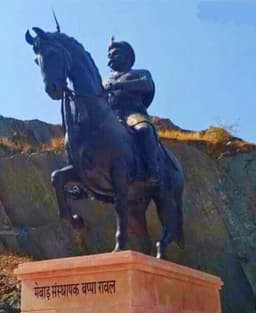
Bappa Rawal
Emperor · Medieval
47.8Total
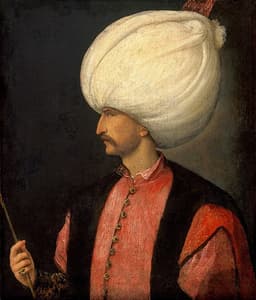
Suleiman the Magnificent
Emperor · Medieval
73.2Total
Basic Information
Born
713
1494
Died
780
1566
Era
Medieval
Medieval
Nationality
India
Ottoman Empire
Occupation
Emperor
Emperor
Civilization
Indian
Middle Eastern
Score Comparison
Military (10%)
10.0
85.0
Political (20%)
35.1
78.0
Influence (20%)
58.0
72.0
Legacy (20%)
50.0
68.0
Leadership (15%)
67.0
72.0
Strategy (15%)
45.0
72.0
TOTAL
47.8
73.2
Bappa Rawal — Complete Timeline
734 AD
Conquest of ChittorWar◆ Major
Bappa Rawal captured the fort of Chittor from the Mori Rajputs, establishing it as the capital of the Mewar kingdom. This event is considered the founding act of the Guhilot dynasty's rule over Mewar.
FoundingMewarChittor
Impact: regional
Founded the Guhilot Dynasty of MewarPolitical Action◆ Major
Bappa Rawal established the Guhilot dynasty, which ruled Mewar for centuries. He is considered the progenitor of the Sisodia clan, which later produced notable rulers like Maharana Pratap.
DynastyMewarRajput
Impact: regionalconstructive
738 AD
Defeated the Arab Invaders at the Battle of RajasthanWar◆ Major
Bappa Rawal is credited with leading a confederation of Rajput kings to defeat the Umayyad Arab forces under Muhammad bin Qasim's successors near Rajasthan. This victory halted Arab expansion into northern India.
Arab InvasionDefenseRajput Confederation
Impact: regional
Suleiman the Magnificent — Complete Timeline
1522 AD
Siege of RhodesWar◆ Major
Suleiman personally led a massive Ottoman campaign against the Knights Hospitaller on Rhodes. After a six-month siege, the knights surrendered and were allowed to leave. This victory secured Ottoman control over the eastern Mediterranean.
SiegeMediterraneanKnights Hospitaller
Impact: regional
1526 AD
Battle of MohácsWar
Suleiman's Ottoman army defeated the Hungarian forces of King Louis II at Moh
BattleHungaryOttoman expansion
Impact: regional
1529 AD
Siege of ViennaWar◆ Major
Suleiman besieged Vienna, the Habsburg capital, with a large army. The siege failed due to supply issues, disease, and strong defenses. This defeat halted Ottoman expansion into central Europe and marked the empire's furthest advance westward.
SiegeViennaDefeat
Impact: regional
1530 AD
Codification of Ottoman lawReform◆ Major
Suleiman oversaw the compilation and standardization of Ottoman legal codes, known as Kanun. These laws regulated criminal justice, land tenure, and taxation, creating a unified legal system that balanced sharia with secular law. He earned the title 'Kanuni' (the Lawgiver).
Legal reformKanunOttoman Empire
Impact: nationalconstructive
1536 AD
Execution of Ibrahim PashaPolitical Action◆ Major
Suleiman ordered the execution of his grand vizier and close friend Ibrahim Pasha, who had served for 13 years. The reasons remain debated, but likely involved Ibrahim's growing power and conflicts with Suleiman's wife, Hurrem Sultan. This event demonstrated the absolute power of the sultan.
ExecutionCourt politicsPower
Impact: nationaltragic
Expert Analysis
Suleiman the Magnificent vs Bappa Rawal
### The Conqueror and the Defender
In the summer of 1529, Suleiman the Magnificent stood before the walls of Vienna, the westernmost bastion of Christendom. His army, the most formidable in the world, had marched for months across the Balkans, dragging massive cannons and siege equipment. Yet the city held. Disease and supply lines frayed, and the Sultan turned back, never to return. A century earlier, in 738, another leader had faced a different kind of invader. On the dusty plains of Rajasthan, Bappa Rawal, a Rajput chieftain, led a confederation of kings against the armies of the Umayyad Caliphate, who had swept through Persia and Sindh. He crushed them. One man failed to break into Europe; the other stopped an empire from entering India. Why did their paths diverge so completely?
### Origins
Suleiman was born in 1494 into the heart of an empire already vast. His father, Selim I, had doubled Ottoman territory, conquering the Mamluk Sultanate and the holy cities of Mecca and Medina. Suleiman was groomed from childhood for absolute rule, educated in law, poetry, and military science. He inherited a machine of war and administration, a state that saw itself as the successor to Rome and the protector of Islam. His world was one of ambition without limit, where the only check on power was death.
Bappa Rawal’s origins are shrouded in legend, but the story is telling. Born in 713, he was a prince of the Guhilot clan, whose kingdom had been shattered by invasions. He spent his youth as a cowherd, learning humility and the ways of the common man. According to tradition, he received a blessing from a sage and a vision of the goddess Bhavani, who promised him a sword to reclaim his heritage. He did not inherit an empire; he had to build one from the ashes. His world was one of survival, where the only check on power was the will of a united people.
### Rise to Power
Suleiman’s rise was seamless. At twenty-six, upon his father’s death in 1520, he became Sultan. There was no struggle, no civil war. He immediately launched campaigns to prove himself, beginning with the conquest of Belgrade in 1521. But his defining early act was the Siege of Rhodes in 1522, where he personally led a massive Ottoman force against the Knights Hospitaller. After six months of brutal fighting, he granted the knights safe passage—a gesture of magnanimity that burnished his reputation as a just ruler. He was already the master of the known world.
Bappa Rawal’s rise was a gamble. In 734, he led a small band of warriors to seize the fort of Chittor from the Mori Rajputs. This was not a grand imperial campaign but a daring raid, a coup d’état by a man with nothing to lose. He succeeded, and from that rocky plateau, he founded the Guhilot dynasty of Mewar. His power was not given; it was taken. And he knew it could be taken back.
### Leadership & Governance
Suleiman ruled through law and bureaucracy. In 1530, he codified the Kanun, a comprehensive legal system that standardized criminal, land, and tax laws across his diverse empire. He balanced Islamic Sharia with secular edicts, creating a framework that allowed Christians and Jews to live under their own communal laws. His court was a center of art and architecture, commissioning the Süleymaniye Mosque in Istanbul, a masterpiece of the architect Sinan. Yet his political wisdom had a dark edge. In 1536, he executed his grand vizier and closest friend, Ibrahim Pasha, on charges of overreach. The reason remains debated—jealousy, fear, or a cold calculation that no man should rival the Sultan. The act revealed the isolation at the heart of absolute power.
Bappa Rawal governed through loyalty and alliance. He did not build a bureaucracy; he built a confederation. After defeating the Umayyad Arabs at the Battle of Rajasthan in 738, he did not impose his rule on the defeated. Instead, he returned to Mewar, strengthening its defenses and fostering a code of honor—Rajputana—that valued courage, fealty, and resistance above all. His leadership was personal, not institutional. He was a king who fought alongside his men, not a sultan who watched from a tent.
### Triumph & Tragedy
Suleiman’s greatest triumph was the Battle of Mohács in 1526, where his army annihilated the Hungarian forces of King Louis II. The king died in the rout, and the victory opened the heart of Europe to Ottoman influence for centuries. But his greatest tragedy was the Siege of Vienna in 1529. It was not a decisive defeat but a strategic failure. Supply lines stretched too thin, disease ravaged his troops, and the autumn rains turned roads to mud. He was forced to retreat, and the Habsburg Empire survived. That failure defined the limits of Ottoman expansion.
Bappa Rawal’s triumph was the Battle of Rajasthan itself. By stopping the Umayyad advance, he preserved Hindu and Rajput sovereignty in the subcontinent. His tragedy is more subtle: he had no successors of equal stature. The dynasty he founded would produce great rulers like Maharana Pratap centuries later, but Bappa Rawal himself faded into legend, his historical details lost. He became a symbol, not a man.
### Character & Destiny
Suleiman was a perfectionist, a poet, and a pragmatist. He wrote verses under the pen name “Muhibbi” (the Lover), yet he could order the execution of a friend without visible emotion. His character drove him to seek universal dominion, but his pragmatism made him accept compromise. He understood that power required spectacle—hence “the Magnificent”—but also that it required law. His destiny was to be the last great Ottoman conqueror, the one who pushed the empire to its zenith and then watched it begin its long, slow decline.
Bappa Rawal was a warrior-ascetic, a man of faith and fire. According to tradition, he abdicated his throne late in life to become a wandering yogi, seeking enlightenment. His character was shaped by loss and renewal. He did not seek to conquer the world; he sought to defend a homeland. His destiny was to be the father of a people, the one who turned defeat into a legend of resistance.
### Legacy
Suleiman’s legacy is written in stone and law. The Kanun influenced Ottoman governance for centuries. The Süleymaniye Mosque still dominates Istanbul’s skyline. His reign is remembered as a golden age of art, architecture, and order. But the seeds of Ottoman decline were also planted in his era—the overcentralization, the stagnation of innovation, the reliance on conquest. He is remembered as the Magnificent, but also as the Lawgiver, a ruler who tried to impose order on chaos.
Bappa Rawal’s legacy is intangible but enduring. He is not remembered for buildings or books but for a spirit. The Guhilot dynasty ruled Mewar for over a millennium, and the Rajput identity he helped forge remains a potent force in Indian culture. He is a folk hero, a symbol of defiance against overwhelming odds. The Battle of Rajasthan is celebrated as a turning point that saved India from Arab conquest, though historians debate its scale. His legacy is not in stone but in bloodlines and ballads.
### Conclusion
Suleiman and Bappa Rawal faced the same fundamental question: how to wield power in a world of empires. Suleiman answered with law, art, and overwhelming force, building a machine that could crush armies but could not adapt. Bappa Rawal answered with faith, alliance, and sacrifice, building a spirit that could endure defeat but could not expand. One died in his tent on a campaign, still trying to conquer. The other died as a wandering sage, having already given away his kingdom. Their stories remind us that greatness is not measured by territory alone. Sometimes the man who stops an empire matters as much as the man who builds one.
Rankings
🥇
Suleiman the MagnificentLeader
Mil: 85.0Pol: 78.0Inf: 72.0
73.2
🥈
Bappa Rawal
Mil: 10.0Pol: 35.1Inf: 58.0
47.8
+25.4 behind
How This Comparison Works
Algorithm
Each figure is scored on 6 dimensions (0—100 scale) based on structured historical data: Military (10%), Political (20%), Influence (20%), Legacy (20%), Leadership (15%), Strategy (15%). The weighted total produces the final ranking.
Data Sources
Scores are computed from structured sub-indicators in the database. Scale factors adjust for era (Ancient ×0.85, Modern ×1.0) and civilization size (Eastern ×1.05, Other ×0.80) to account for differences in population and military scale.
Maximum 3 Figures
Comparisons are limited to 2—3 figures to ensure readability and statistical meaningfulness.
Error Margins
±5 points per dimension — Sub-scores are derived from historical records with inherent uncertainty. Two figures within 5 points on a dimension should be considered roughly equivalent in that area.
Total Score Accuracy
±3 points overall — The weighted combination of 6 dimensions produces a total score with approximately ±3 points of uncertainty. Differences of less than 3 points are not statistically significant— the figures are effectively tied.
Known Limitations
- Historical records are incomplete and uneven across civilizations
- Figures from oral-tradition societies may be underrepresented
- Occupation labels can misclassify multi-role figures
- Scores measure capability and impact, not moral character
- Quantitative scoring is a comparison tool, not absolute truth
Capability Radar
Military (10%) — Battles & Warfare
Battles
40
95
Win Rate
45
90
Expansion
35
95
Political (20%) — Governance & Reform
Reform
30
90
Diplomacy
35
88
Economy
25
85
Influence (20%) — Cultural & Global Reach
Cultural
40
90
Global
20
88
Legacy (20%) — Historical Impact
Historical
45
92
Longevity
50
85
Leadership (15%) — Power & Stability
Tenure
50
95
Stability
40
85
Strategy (15%) — Tactics & Innovation
Strategy
30
92
Tactics
35
85
Reform
25
80
Similar Comparisons
Comments & Discussion
No comments yet. Be the first to share your thoughts!