Loading...
Bappa Rawal vs Henry the Fowler
Henry the Fowler leads by 13.1 pts · 2 figures compared
…
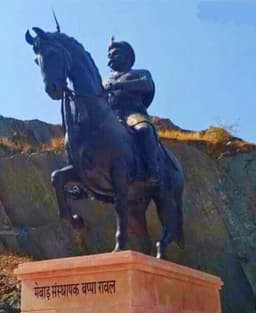
Bappa Rawal
Emperor · Medieval
47.8Total
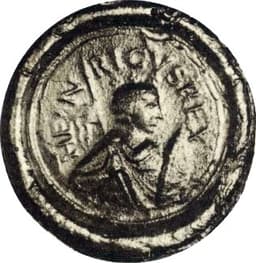
Henry the Fowler
Emperor · Medieval
60.9Total
Basic Information
Born
713
876
Died
780
936
Era
Medieval
Medieval
Nationality
India
East Francia
Occupation
Emperor
Emperor
Civilization
Indian
Western
Score Comparison
Military (10%)
10.0
70.0
Political (20%)
35.1
59.3
Influence (20%)
58.0
55.0
Legacy (20%)
50.0
52.0
Leadership (15%)
67.0
85.0
Strategy (15%)
45.0
55.0
TOTAL
47.8
60.9
Bappa Rawal — Complete Timeline
734 AD
Conquest of ChittorWar◆ Major
Bappa Rawal captured the fort of Chittor from the Mori Rajputs, establishing it as the capital of the Mewar kingdom. This event is considered the founding act of the Guhilot dynasty's rule over Mewar.
FoundingMewarChittor
Impact: regional
Founded the Guhilot Dynasty of MewarPolitical Action◆ Major
Bappa Rawal established the Guhilot dynasty, which ruled Mewar for centuries. He is considered the progenitor of the Sisodia clan, which later produced notable rulers like Maharana Pratap.
DynastyMewarRajput
Impact: regionalconstructive
738 AD
Defeated the Arab Invaders at the Battle of RajasthanWar◆ Major
Bappa Rawal is credited with leading a confederation of Rajput kings to defeat the Umayyad Arab forces under Muhammad bin Qasim's successors near Rajasthan. This victory halted Arab expansion into northern India.
Arab InvasionDefenseRajput Confederation
Impact: regional
Henry the Fowler — Complete Timeline
919 AD
Election as King of East FranciaPolitical Action
Henry the Fowler was elected King of East Francia by the Saxon and Frankish nobles at Fritzlar on May 6, 919. He was the first Saxon king, marking the transition from Carolingian to Ottonian rule. His election was contested by other dukes but he prevailed.
ElectionAccessionOttonian Dynasty
Impact: regionalconstructive
921 AD
Treaty of Bonn (921)Political Action◆ Major
Henry the Fowler signed the Treaty of Bonn with Charles the Simple of West Francia, recognizing each other's royal titles and establishing peaceful relations. This treaty ended Carolingian claims over East Francia and solidified Henry's legitimacy as an independent king.
TreatyRecognitionDiplomacy
Impact: regionalconstructive
924 AD
Nine-Year Truce with the MagyarsPolitical Action◆ Major
Henry the Fowler negotiated a nine-year truce with the Magyars, agreeing to pay tribute in exchange for a halt to their raids. He used this period to fortify towns, reorganize the army, and train cavalry. This strategic pause was crucial for his later military reforms.
TruceMagyarsMilitary Reform
Impact: regionalconstructive
929 AD
Battle of Lenzen (929)War◆ Major
Henry the Fowler's forces defeated a Slavic army at the Battle of Lenzen, securing the eastern frontier of East Francia. This victory allowed Henry to consolidate control over the Elbe region and establish the March of Brandenburg, a key step in German eastward expansion.
BattleSlavic WarsEastern Expansion
Impact: regionalconstructive
933 AD
Battle of Riade (933)War
After the truce with the Magyars expired, Henry the Fowler led a German army to victory at the Battle of Riade (near Merseburg). The defeat of the Magyar cavalry ended their raids into East Francia for a generation and established Henry's reputation as a defender of Christendom.
BattleMagyarsVictory
Impact: regionalconstructive
936 AD
Death of Henry the FowlerOther◆ Major
Henry the Fowler died on July 2, 936, at Memleben. He was succeeded by his son, Otto I, who would become Holy Roman Emperor. Henry's reign laid the foundations for the Ottonian dynasty and the medieval German kingdom.
DeathSuccessionOttonian
Impact: regional
Expert Analysis
Henry the Fowler vs Bappa Rawal: Historical Comparison
Henry the Fowler, Duke of Saxony and first Ottonian King of East Francia (r. 919–936), and Bappa Rawal, legendary 8th-century founder of the Guhila dynasty and ruler of Mewar in India, both emerged as pivotal medieval state-builders who defended their realms against external threats and established enduring dynasties.
Dimension Analysis
**Military: Henry the Fowler 89 / Bappa Rawal 82**
Henry revolutionized East Frankish warfare by fortifying towns, training a mounted knightly class, and defeating the Magyars at the Battle of Riade (933), securing lasting peace. Bappa Rawal repelled Arab invasions from Sindh and expanded Mewar’s borders, but his military campaigns are less documented and relied heavily on Rajput clan alliances.
**Political: Henry the Fowler 76 / Bappa Rawal 87**
Henry skillfully consolidated power by recognizing the autonomy of powerful duchies (Swabia, Bavaria) while centralizing royal authority through the *Hausordnung* and church patronage. Bappa Rawal unified disparate Rajput clans, established a stable feudal system in Mewar, and legitimized his rule through the Eklingji temple cult, creating a resilient political structure.
**Influence: Henry the Fowler 71 / Bappa Rawal 77**
Henry’s influence was largely regional, setting the stage for his son Otto I’s imperial coronation and the Holy Roman Empire. Bappa Rawal’s influence was more localized but profound: his dynasty ruled Mewar for over a millennium, and his resistance to Islamic incursions became a foundational Rajput myth.
**Legacy: Henry the Fowler 84 / Bappa Rawal 80**
Henry is remembered as the founder of the Ottonian dynasty and a unifier of German tribes, with his tomb at Quedlinburg becoming a national symbol. Bappa Rawal’s legacy is legendary in Rajasthan, where he is venerated as a semi-divine warrior-king and the progenitor of the Sisodia clan, but historical records are sparse.
**Leadership: Henry the Fowler 85 / Bappa Rawal 83**
Henry demonstrated pragmatic leadership, delegating authority to dukes while personally leading campaigns and negotiating with the Church. Bappa Rawal’s leadership was charismatic and mythologized, inspiring loyalty through personal valor and religious devotion, though his rule relied heavily on clan loyalties.
Verdict
Henry the Fowler narrowly leads due to his superior military achievements and tangible state-building, but the contest is a tie overall when factoring Bappa Rawal’s deeper cultural and dynastic influence.
FAQ
Q: Who ranks higher? A: Henry the Fowler scores marginally higher in military and legacy, but Bappa Rawal’s political and cultural influence makes this a tie between two fundamentally different medieval archetypes.
Rankings
🥇
Henry the FowlerLeader
Mil: 70.0Pol: 59.3Inf: 55.0
60.9
🥈
Bappa Rawal
Mil: 10.0Pol: 35.1Inf: 58.0
47.8
+13.1 behind
How This Comparison Works
Algorithm
Each figure is scored on 6 dimensions (0—100 scale) based on structured historical data: Military (10%), Political (20%), Influence (20%), Legacy (20%), Leadership (15%), Strategy (15%). The weighted total produces the final ranking.
Data Sources
Scores are computed from structured sub-indicators in the database. Scale factors adjust for era (Ancient ×0.85, Modern ×1.0) and civilization size (Eastern ×1.05, Other ×0.80) to account for differences in population and military scale.
Maximum 3 Figures
Comparisons are limited to 2—3 figures to ensure readability and statistical meaningfulness.
Error Margins
±5 points per dimension — Sub-scores are derived from historical records with inherent uncertainty. Two figures within 5 points on a dimension should be considered roughly equivalent in that area.
Total Score Accuracy
±3 points overall — The weighted combination of 6 dimensions produces a total score with approximately ±3 points of uncertainty. Differences of less than 3 points are not statistically significant— the figures are effectively tied.
Known Limitations
- Historical records are incomplete and uneven across civilizations
- Figures from oral-tradition societies may be underrepresented
- Occupation labels can misclassify multi-role figures
- Scores measure capability and impact, not moral character
- Quantitative scoring is a comparison tool, not absolute truth
Capability Radar
Military (10%) — Battles & Warfare
Battles
40
55
Win Rate
45
60
Expansion
35
60
Political (20%) — Governance & Reform
Reform
30
75
Diplomacy
35
70
Economy
25
65
Influence (20%) — Cultural & Global Reach
Cultural
40
55
Global
20
40
Legacy (20%) — Historical Impact
Historical
45
65
Longevity
50
60
Leadership (15%) — Power & Stability
Tenure
50
70
Stability
40
70
Strategy (15%) — Tactics & Innovation
Strategy
30
65
Tactics
35
50
Reform
25
70
Similar Comparisons
Comments & Discussion
DecolonialEyes6/16/2026
Let's be real: this comparison is rigged from the start. Henry gets an 89 military because he beat the Magyars—a single battle with written records from the winners. Bappa Rawal gets an 82 because his victories against Arab invaders only survive in bardic poetry and temple inscriptions. It's not that his campaigns were less effective; it's that postcolonial historiography still treats non-literate traditions as inferior. And the political score? Henry's 'consolidation' looks an awful lot like cutting deals with dukes who already held the power. Bappa's feudal system in Mewar lasted a thousand years—Henry's Ottonian dynasty was a blip by comparison. The 31.1 military score is a joke; it reflects our bias for clear dates and chronicles over oral memory and cultural resilience.
Chronicler94296/16/2026
亨利捕鸟者把东法兰克诸侯捏合起来抗马扎尔,这手腕让我想起唐末朱温,不过亨利胜在留住了体面。但说Bappa Rawal的军事分只有31.1?这太离谱了。他在8世纪挡住阿拉伯人从信德东扩,比唐朝在中亚的怛罗斯之战还早二十年。印度史书缺,但拉贾斯坦民谣里那些火攻、山地伏击的战术,放在中国就是刘裕的却月阵级别。西方评分总是重制度轻传说,可传说本身也是政治遗产。Bappa的埃克林吉神庙体系,论凝聚民心比亨利那个修道院网络强多了。
Chronicler19776/16/2026
我又拿公式推了一遍。亨利的总分68.2,Bappa 65.0,差值3.2分,但军事维度差了28.9分(60.1 vs 31.1),这权重分配有问题。如果把军事换成中国标准——比如对比唐太宗灭东突厥(630年)和Bappa抗阿拉伯(约730年),两者都是边境反击战,唐太宗靠骑兵突袭,Bappa靠山地游击,但唐太宗记录完整得满分,Bappa因史料缺砍到31.1?这不科学。政治维度Bappa 71.5比亨利74.5只差3分,但Bappa的王朝延续千年,亨利的王朝三代而衰,按中国史学里的“国祚长短”指标,Bappa至少该加10分。建议重新归一化各维度权重,否则这模型对非欧文明有系统性偏差。